Market guide
DC Fast Charging in the US: NEVI, Utility Demand and Hardware Rules
DC fast charging station business USA guide: NEVI minimums (4 ports, 150 kW, 97% uptime), the Buy America 55% to 100% proposal, UL 2202 and 480 V supply.
- Prepared by
- EVCSTAR Engineering Team
- Published
- Reading time
- 4 min
- Sources
- 8 references
At a glance
- NEVI minimum per station
- 4 ports x 150 kW
- Port uptime requirement
- Above 97% a year
- Federal share of NEVI projects
- Up to 80%
- Buy America threshold (proposal, Feb 2026)
- 55% to up to 100%
Key takeaways
- 1NEVI-funded corridor stations must have at least four network-connected DC ports, each rated at 150 kW or more, a permanently attached CCS Type 1 connector, uptime above 97% per port and OCPP 1.6J or higher (OCPP 2.0.1 by 28 February 2024) under 23 CFR Part 680; the rules apply only if you take federal money.
- 2The Buy America waiver for EV chargers currently requires US final assembly and at least 55% US component cost (for chargers made on or after 1 July 2024), and on 12 February 2026 FHWA proposed raising that to up to 100%: check the docket before you plan a NEVI-funded purchase.
- 3Federal funds cover up to 80% of NEVI project costs and the developer at least 20%; NEVI was frozen in February 2025, a district court ruled the freeze unlawful in January 2026, and only about 56-57 NEVI-funded stations were open in early 2025, so progress is state by state.
- 4Only the UC and SC series have North American builds (480 V three-phase input, CCS1 or NACS); a private site not using federal money is not bound by the NEVI minimums, but the utility, UL listing and local permit still are.
On this page
Short answer: a DC fast charging station business in the USA is shaped by three layers that rarely line up: the federal NEVI rules (which bind you only if you take the grant), the utility that decides your demand cost and connection date, and the hardware listing the inspector wants to see, with 480 V three-phase supply, UL-listed equipment and CCS or NACS connectors as the practical baseline.
Federal money and what it buys you into
NEVI’s technical rules read like a purchase specification, and they apply only to funded sites. The programme reimburses up to 80% of eligible costs, with the developer paying the rest (GreenCars, December 2025). The text of 23 CFR Part 680 sets the minimum design:
| Item | NEVI requirement | Section |
|---|---|---|
| Ports per station | At least four network-connected DC ports, able to charge four EVs at once | 680.106(b) |
| Power per port | Continuous rating of at least 150 kW | 680.106(d) |
| DC output voltage | 250 V to 920 V | 680.106(d) |
| Connector | At least one permanently attached CCS Type 1 per port | 680.106(c) |
| Payment | Contactless card plus toll-free phone or SMS; no power limit by payment method | 680.106(f) |
| Availability | 24 hours a day, 7 days a week | 680.106(e) |
| Uptime | Above 97% a year per port | 680.116 |
| Charger-to-network | OCPP 1.6J or higher; OCPP 2.0.1 from 28 February 2024 | 680.108 |
| Certification | NRTL-certified to appropriate UL standards | 680.106(g) |
Where a state has a site-by-state account, see how it plays out in Arizona and Texas. Siting distances were not in the sections we read, and GreenCars reports that the August 2025 guidance dropped specific proximity rules, so read your state DOT’s current solicitation, not the 2022 summaries.
Where the programme stands
NEVI is moving, but state by state. The Electrek report says the Department of Transportation froze funds in early 2025 and that a federal district judge ruled in late January 2026 that the freeze was unlawful. GreenCars counts only about 56-57 NEVI-funded stations open across 15 states in early 2025, and new guidance in August 2025 required states to resubmit plans. Those counts are dated, so ask the state DOT where a given corridor stands. If your business case needs a grant, plan on a long runway and budget the whole project, not just the share you pay.
Buy America, explained
The federal rule on where chargers come from is in motion. FHWA’s 2023 waiver covers EV chargers bought with federal highway funds: final assembly must be in the United States, and for chargers made on or after 1 July 2024 the US-made components must be at least 55% of the cost of all components. The steel and iron housing is excluded from the waiver and follows regular Buy America. On 12 February 2026 FHWA published a notice proposing to raise the 55% threshold to up to 100% (docket FHWA-2025-0070), arguing that supply chains have leveled off and citing national security; if finalized, it would apply immediately to projects obligated after the final notice. We did not find a final decision. Practically: a privately financed site using no federal money is outside this rule, and a NEVI-funded one should get a written statement from the supplier of the domestic-content position before signing. We do not state that any EVCSTAR model meets any Buy America threshold.
UL 2202 and the electrical service
Inspectors look for the listing label; utilities look at your kVA. UL 2202 is the safety standard for off-board DC charging equipment, with a maximum input of 1000 V ac and 1500 V dc, covering construction, protection against shock, leakage current, abnormal-use tests, production dielectric testing and marking (Intertek summary). It is harmonized with CSA C22.2 No. 346 in Canada. Our North American builds take 480 V three-phase input; confirm the service voltage and transformer with the serving utility, since the connection date, not the hardware, is usually the longest lead item. Use the grid capacity calculator before you request a load study, and read the demand charges guide because the monthly kW charge, not energy, decides many US sites’ margins.
Which state or city page is relevant
The US is fifty regulators, so go local next. We have market notes for Texas, Arizona, Georgia, Florida, Colorado, Washington, Illinois and others, plus city guides for Phoenix, Houston and Chicago.
What we can supply for North America
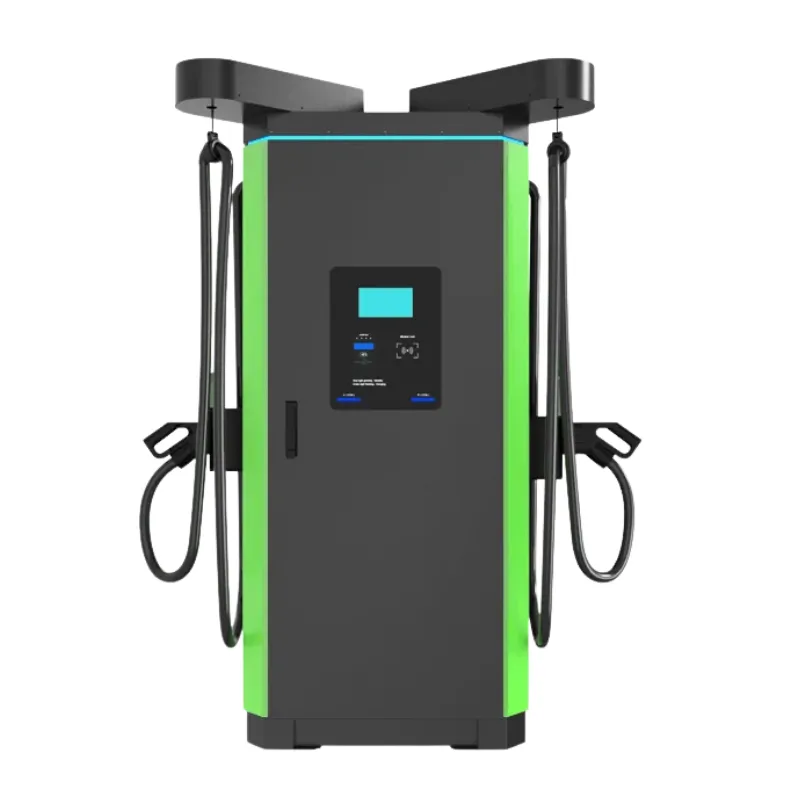
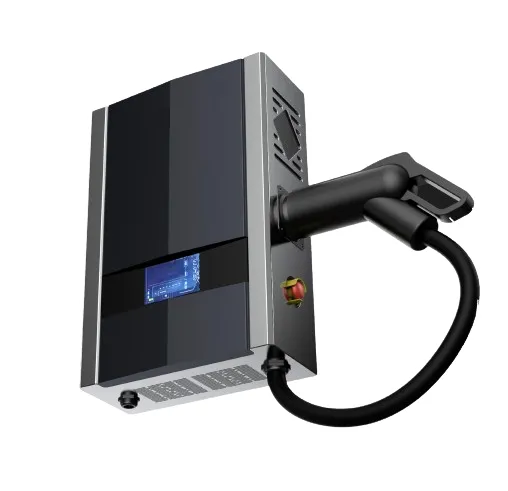
Two series cover the US: UC for corridor hubs, SC for small sites. The UC series is a two-gun cabinet with a North American build of 60-360 kW at 480 V, CCS1 (CCS1 plus CHAdeMO optional, NACS on request), OCPP 1.6J and 2.0.1, operating to +55 °C. Each CCS gun is limited to 200 A, so an 800 V car draws about 160 kW and a 400 V car about 80 kW per gun; judge a site by that, not by the cabinet rating. The SC series (15-30 kW, one CCS gun) suits a small commercial supply. We do not offer other series in a North American build, and we make no statement that any model carries a UL listing for your project or satisfies NEVI or Buy America; we can provide test reports and technical documents to support your application with the state DOT or inspector.
For a configuration proposal and quotation breakdown, send us the state, the utility, the service voltage and kVA, the gun count and whether the project uses federal funds through the contact page.
Grid capacity calculator
- Spare power for charging
- —
- Input current per charger (400 V)
- —
- Chargers at full power
- —
Spare power = kVA × 0.95 power factor × (1 − margin) − existing peak load. Input current ≈ charger kW ÷ (√3 × 400 V), with power factor and 95 % efficiency added for DC chargers. With dynamic load management more chargers can share the same capacity at reduced power. Always confirm with your electrical engineer and the grid operator.
Frequently asked questions
- Do I have to follow NEVI rules to build a fast-charging station in the US?
- Only if you take the money. Part 680 applies to projects funded under the NEVI Formula Program and to publicly accessible chargers built with Title 23 funds. A privately financed station is governed by the utility, electrical code, the authority having jurisdiction and your state, not by the NEVI minimums. Many private operators still copy the four-port, 150 kW layout because drivers and fleets expect it.
- What exactly does NEVI require for a corridor station?
- Under 23 CFR 680.106, at least four network-connected DC fast-charging ports able to charge four vehicles at once, each with a continuous rating of at least 150 kW, DC output between 250 V and 920 V, at least one permanently attached CCS Type 1 connector per port, a contactless card payment method plus a toll-free phone or SMS option, and 24/7 availability. Section 680.116 requires average annual uptime above 97% per port, and section 680.108 requires OCPP 1.6J or higher, with OCPP 2.0.1 from 28 February 2024. We read the eCFR text; the August 2025 FHWA guidance reportedly relaxed some siting rules, so read it too.
- What is Buy America doing to charger purchases?
- For chargers bought with federal highway funds, FHWA's 2023 waiver requires final assembly in the United States and, for chargers made on or after 1 July 2024, at least 55% of component cost from US-made parts, with steel and iron housing parts under the normal Buy America rules. On 12 February 2026 FHWA asked for comments on raising the threshold to up to 100%; we found no final decision. If finalized, it would apply to projects obligated after the final notice. We only explain the rule: whether a particular charger qualifies is a question for the manufacturer and your state DOT.
- Which certification should I ask a supplier for?
- For DC fast charging, ask for the NRTL listing to UL 2202 (DC charging equipment, up to 1000 V ac input and 1500 V dc), which is harmonized with CSA C22.2 No. 346 for Canada. 23 CFR 680.106 asks NEVI chargers to be certified by an OSHA-recognized NRTL to the appropriate UL standards. Get the listing report and the listing mark before you order, and check whether your state or utility asks for additional approvals.
References
- [1]23 CFR 680.106: Minimum station requirements (eCFR). US Code of Federal Regulations (eCFR).
- [2]23 CFR 680.108: Communications and interoperability (eCFR). US Code of Federal Regulations (eCFR).
- [3]23 CFR 680.116: Uptime (eCFR). US Code of Federal Regulations (eCFR).
- [4]Waiver of Buy America Requirements for Electric Vehicle Chargers. Federal Highway Administration, Federal Register, 2023.
- [5]Notice of Proposed Modification of the Waiver of Buy America Requirements for Electric Vehicle Chargers, Docket FHWA-2025-0070. Federal Highway Administration, 12 February 2026.
- [6]Trump can't freeze NEVI funds, so he's trying to stall them again. Electrek, 10 February 2026.
- [7]NEVI charging network reboots in 2026. GreenCars, 2 December 2025.
- [8]UL 2202: Standard testing for EV battery chargers. Intertek.