City guide
Houston Fast Charging Sites: CenterPoint Connections, Heat and Fleet Demand
EV charging station business Houston guide: CenterPoint territory, ERCOT 4CP transmission cost exposure, 393 stations, 1.17% EV share and city permits.
- Prepared by
- EVCSTAR Engineering Team
- Published
- Reading time
- 4 min
- Sources
- 2 references
At a glance
- Registered stations in Houston (2024)
- 393
- Stations per 100,000 residents
- 17 (Austin 63)
- EV share of registered vehicles
- 1.17%
- Harris County EVs (May 2024)
- 39,831
Key takeaways
- 1Most of Houston is wired by CenterPoint Energy Houston Electric, not Oncor, so the connection process in our Texas state guide needs a CenterPoint conversation instead; we could not open a current CenterPoint EV service page, so ask for the commercial new-service process in writing.
- 2ERCOT transmission costs are allocated on four summer 15-minute coincident peaks (June to September); the PUC opened Project 58484 and a March 2026 draft proposes more peaks, longer intervals and minimum demand charges for large loads, with rule amendments due by 31 December 2026.
- 3Houston had 393 registered charging stations in 2024 (about 17 per 100,000 residents against 63 in Austin) and EVs were 1.17% of registered vehicles, so the market is thin but growing: stations were up more than 30% in two months of 2024.
- 4Public chargers cluster on I-10 and Highway 59 and, increasingly, inside the Inner Loop; low-income areas are under-served, which is a gap for fleet, rideshare and neighbourhood sites.
On this page
Short answer: an EV charging station business in Houston means working with CenterPoint Energy Houston Electric on the connection, planning around ERCOT’s summer transmission-peak pricing, and filling a gap, because the nation’s fourth-largest city had only 393 registered charging stations in 2024.
CenterPoint, not Oncor
For most Houston addresses the question is how CenterPoint will serve the load. Our Texas state guide walks through the competitive-market structure with Oncor as the example; the same two-contract logic applies here (wires company plus a retail provider you pick), but the application, studies and timelines are CenterPoint’s. What we found: CenterPoint’s site lists a new-meter request for building or renovation work and quotes 1 to 3 business days for a typical request, and a Texas PUC rate-case filing mentions a proposed EV construction allowance of up to $18,000 toward line extensions for commercially owned public chargers. We could not open the filing or any current CenterPoint EV page, so treat the allowance as unconfirmed.
| Ask CenterPoint | Why it matters |
|---|---|
| Is the parcel in your service area? | Some Houston-area addresses sit with other utilities or co-ops |
| What study and fees apply above a given kW? | Fast-charging loads rarely fit a standard service |
| Is any EV line-extension allowance in force? | Could change the cost of a long run to the cabinet pad |
| Which voltage will it offer? | Decides the transformer and the 480 V equipment |
ERCOT’s four summer peaks
Transmission costs in ERCOT follow demand in four summer moments, which makes June to September the expensive window. Wholesale transmission charges are based on each distribution utility’s load at the 4CP intervals: the highest 15-minute peak in each of June, July, August and September. Utilities then allocate those costs to customer classes. The PUC’s staff calls cutting demand at those moments “4CP avoidance”. Project 58484 was opened on 1 August 2025; the Commission published a draft report on 16 March 2026 proposing, among other items, more coincident peaks, longer intervals, and a minimum demand charge for large loads based on contracted peak for 10 to 15 years. The deadline to amend rules is 31 December 2026.
None of that text mentions EV charging, so we do not claim how it would classify a fast-charging site; the lesson is practical. A site with OCPP 2.0.1 or 1.6J smart charging can lower its power limit in the peak afternoon hours of summer, and a retail contract that passes transmission costs through will reward that. Model the effect with our demand charges guide and the grid capacity calculator.
A thin market with clear corridors
Houston’s charger density is low for its size, and the data point to where private sites fill gaps. In June 2024 Community Impact, using Department of Energy data, reported 393 registered charging stations in Houston, about 17 per 100,000 residents against Austin’s 63, and EVs at 1.17% of registered vehicles against Austin’s 2.61%. Harris County had 39,831 registered EVs in May 2024. Stations in Greater Houston were up more than 30% since April 2024 and had more than doubled in Houston since January 2021. Chargers cluster on I-10 and Highway 59, with a newer concentration in downtown, Montrose and River Oaks; Evolve Houston’s report found little public charging in low-income areas.
These counts are two years old as of this guide and the station total is not a port count, so check the current Alternative Fuels Data Center map before you buy or lease.
City programmes, permits and heat
The city’s own goals and permit process are lighter than the utility’s. Houston’s 2020 Climate Action Plan sets 100% EV municipal light-duty and non-emergency vehicles by 2030, and the Resilient Houston Plan targets EVs at 30% of new car sales by 2030; in 2024 the city applied for a $15 million federal grant for 366 chargers at city facilities. For permits, a search summary of the Houston Permitting Center page (which we could not open) says electrical permits go to registered master electricians through the online portal, that plans are required for a Level 3 outlet, and that fees and a 180-day validity apply; verify all of this with the city. We found no Houston-specific data on rideshare or fleet demand, so use your own counts rather than a generic figure.
Houston heat is a design input for the equipment: shade the cabinets and screens, keep service access clear, and choose gear rated for high ambient temperature.
The right chargers for Houston sites
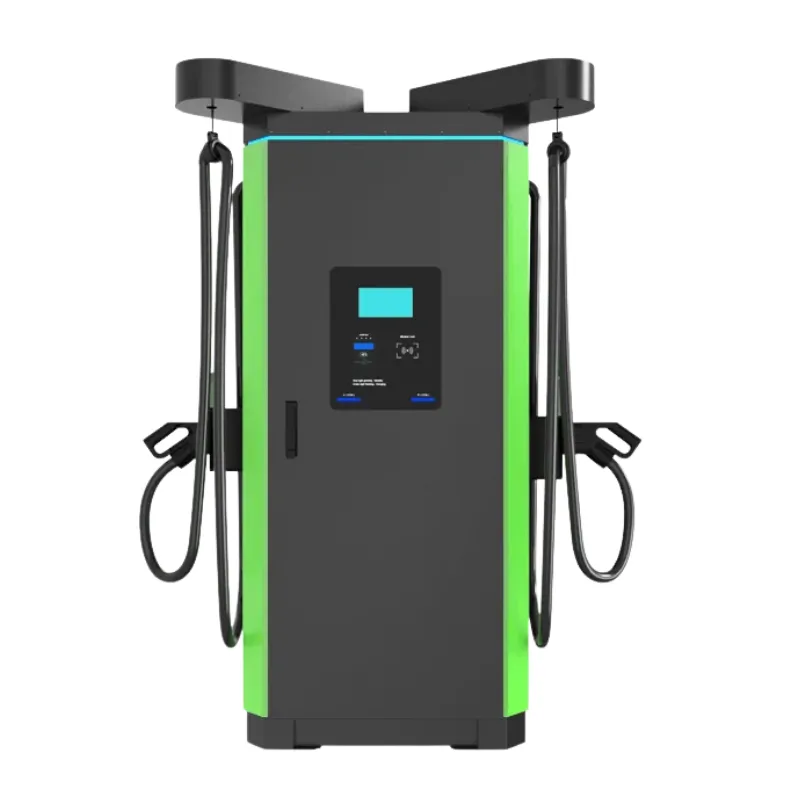
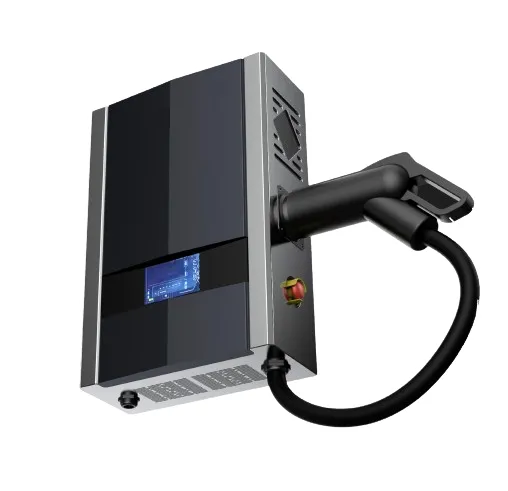
Pair the unit to the load CenterPoint will serve. For corridor, retail or fleet sites with a dedicated service, the UC series (60-360 kW, 480 V input, CCS1 or NACS) fits; its 360 kW cabinet is a two-gun unit and each CCS gun is limited to 200 A, so one car cannot take 360 kW. For depots and small connections the SC series (15-30 kW) is the compact DC option. Both support OCPP 1.6J and 2.0.1 and operate up to +55 °C. See Phoenix for another extreme-heat city.
We cannot state any UL, ETL or Texas approval for a model; we can supply technical documents and test reports for your utility and inspector. Send the CenterPoint service voltage, available capacity, number of bays and connector standards through the contact page and we will reply with a configuration and quotation breakdown.
Grid capacity calculator
- Spare power for charging
- —
- Input current per charger (400 V)
- —
- Chargers at full power
- —
Spare power = kVA × 0.95 power factor × (1 − margin) − existing peak load. Input current ≈ charger kW ÷ (√3 × 400 V), with power factor and 95 % efficiency added for DC chargers. With dynamic load management more chargers can share the same capacity at reduced power. Always confirm with your electrical engineer and the grid operator.
Frequently asked questions
- Does the Texas state page cover Houston?
- Partly. It explains retail choice, the legal position of charger owners and NEVI, using Oncor as the wires utility example. In most of Houston the wires company is CenterPoint Energy Houston Electric, so use that page for the market structure and this one for CenterPoint-specific planning, then confirm the service territory for your address.
- What is 4CP and does it affect a charging site?
- It is the method ERCOT uses to allocate transmission costs, based on each utility area's load in the four summer months. How it reaches a charging customer depends on the tariff and the retail contract, which we did not read for CenterPoint. Ask your retail provider how transmission costs are passed through and whether you can cut load in summer peak hours.
- Is there a utility allowance for connecting an EV charging station in CenterPoint territory?
- A Texas PUC rate-case discussion we found mentions a proposed EV construction allowance of up to $18,000 for line extensions to commercially owned public charging stations, but we could not open the filing or confirm that it was adopted. Ask CenterPoint whether any allowance applies to your project.
- What do I need to start in Houston?
- A utility service request for the proposed load, plans for any Level 3 charger, and a permit pulled by a registered master electrician. Send us your site voltage, service size, bays and connector standards through the contact page and we will reply with a configuration and quotation breakdown.