City guide
Phoenix Fast Charging Sites: APS and SRP Territories, Shade and 110 °F Summers
EV charging station business Phoenix guide: APS DC fast-charging demand cap rider, SRP business rebates up to $40,000 per location, and city port counts.
- Prepared by
- EVCSTAR Engineering Team
- Published
- Reading time
- 5 min
- Sources
- 5 references
At a glance
- Public ports in Phoenix (city page)
- 616
- Days at or above 110 °F, 2024
- 70 (record)
- APS demand cap, Jul 2025–Jun 2028
- 20% load factor
- SRP FY26, 1–4 DC stations
- Up to $20,000 / location
Key takeaways
- 1Which utility serves a plot decides almost everything: the metro is split between APS and SRP, and each has different tariffs and rebates, so check the service-area map before you sign a lease.
- 2APS offers a DC fast-charging pilot rider that caps billed demand at a set load factor (20% from July 2025 to June 2028, 15% from July 2028), limited to 500 accounts and ending after the July 2031 billing period.
- 3SRP's FY26 business program paid up to $20,000 per location for 1–4 DC fast stations (general business, up to 75% of project cost) and up to $40,000 for 5+; the program year changes each 1 May, so confirm the current figure.
- 4The city lists 616 public ports in Phoenix and wants 280,000 EVs by 2030; summers matter: 2024 had 70 days at or above 110 °F, so equipment rating and shade belong in the first design drawing.
On this page
Short answer: an EV charging station business in Phoenix starts with the map, not the charger: the metro is shared by APS and SRP, and the two utilities offer different tools, APS with a rider that caps the billed demand of public DC fast chargers, SRP with per-location rebates, while 110 °F summers decide what equipment and shade you need.
Which utility owns your plot
Get the utility in writing before you design anything. APS states that it serves the Phoenix metropolitan area and offers a downloadable service-area map; SRP is the other utility serving the metro, and we could not open its service-area page (access denied). The APS page does not offer an address lookup, so the safest route is an email to both utilities with the parcel number. The rest of this page is split by utility because the money, and the tariff mechanics, differ.
| APS territory | SRP territory | |
|---|---|---|
| Main DC fast tool | Rate Rider DCFC (demand cap) | Business EV Charging Program (rebate) |
| Minimum charger size | 50 kW | 50 kW (smaller units apply under Level 2 terms) |
| Metering | Separate from other facilities | Separate meter in program terms |
| Duration | Rider ends after July 2031 billing period | Program year runs 1 May to 30 April |
SRP row: minimum size and metering come from SRP’s program documents and a search summary; re-check them in the current terms before you order equipment.
APS: the demand cap in practice
For a lightly used fast-charge site the demand charge is the largest line on the bill, and the APS rider limits it. Rate Rider DCFC (A.C.C. No. 6204, revised March 2024) sets billed demand to the lower of the normal metered demand and a limited demand: monthly kWh divided by (load factor x billing days x 24 hours). The load factor limit is 25% for the first period (from 1 December 2021 to 30 June 2025), 20% from 1 July 2025 to 30 June 2028 and 15% from 1 July 2028 to 30 June 2031. A site that pulls 30,000 kWh in a 30-day month under the 20% limit is billed no more than about 208 kW, even if one session peaked at 400 kW (our arithmetic, for illustration).
Conditions: E-32 TOU Small, Medium or Large rate; chargers of at least 50 kW that are open to the general public; load separately metered, with other buildings on the site billed under a normal retail rate; first come, first served for 500 accounts. The rider changes only demand billing; other terms in the parent schedule continue to apply, and we did not read the E-32 prices. Put the capped demand and the E-32 energy and demand rates into the payback calculator.
SRP: rebates and the paperwork
SRP pays you at installation, not through a rate cap, and the money has deadlines. The FY26 program application (projects installed between 1 May 2025 and 30 April 2026) listed these DC fast charger rebates:
| Customer segment | 1–4 stations | 5+ stations |
|---|---|---|
| General business | Up to $20,000 per location (to 75% of project cost) | Up to $40,000 per location (to 75%) |
| Government, tribal, schools, nonprofit, multifamily | Up to $25,000 per location (to 100%) | Up to $45,000 per location (to 100%) |
Pre-approval is required for projects with an anticipated rebate of $15,000 or more, which covers any DC fast charger project. SRP runs the program through a contracted administrator. A search summary of the current SRP page suggests the FY27 window runs 1 May 2026 to 30 April 2027 with similar figures, but we could not open that page (access was denied), so confirm amounts and dates with SRP before buying equipment. SRP’s own business price-plan page also blocked us; ask which general-service plan an EV site would take.
Heat, shade and what the city says
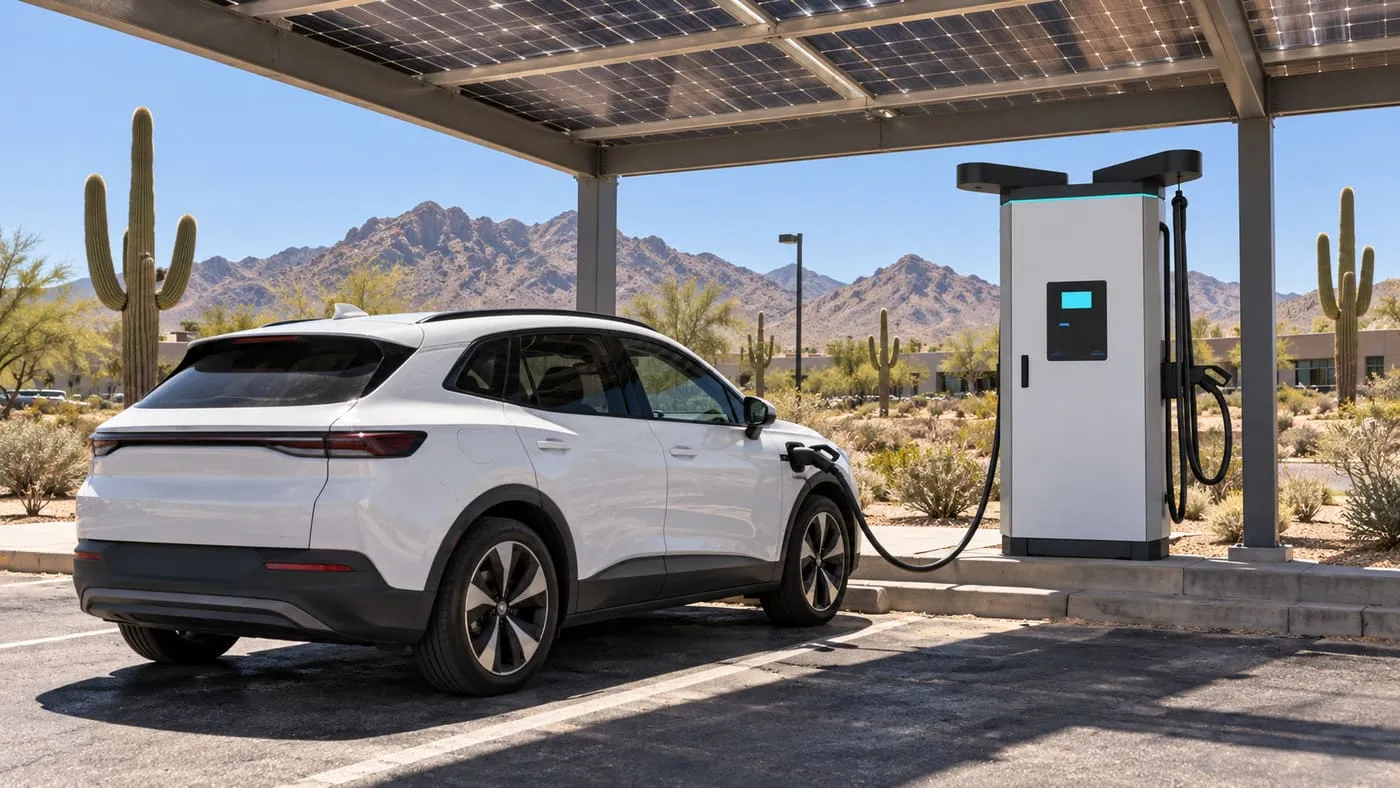
Phoenix recorded 70 days at or above 110 °F in 2024, the most in its history (KTAR citing the National Weather Service), so treat summer as the design case. Specify chargers with an ambient rating above the local peak and ask for the derating curve in the data sheet, not just the headline rating. Shade is a customer-comfort and equipment-life issue; a canopy is also a structure, so ask the city whether it needs its own permit and wind or snow loads. We did not find a source quantifying how much a canopy lowers cabinet temperature, so do not assume a number.
The City of Phoenix reports 616 publicly accessible EV charging ports in the city, 246 of them on city property, with a Transportation Electrification Action Plan goal of 280,000 EVs and 500 public chargers by 2030 (the page does not date the 616 figure). That means the city will be a landlord and a competitor on some plots. For permitting, we found no official City of Phoenix commercial EV checklist: ask the Planning and Development Department about the electrical code edition in force, plan review and fees.
How EVCSTAR equipment fits
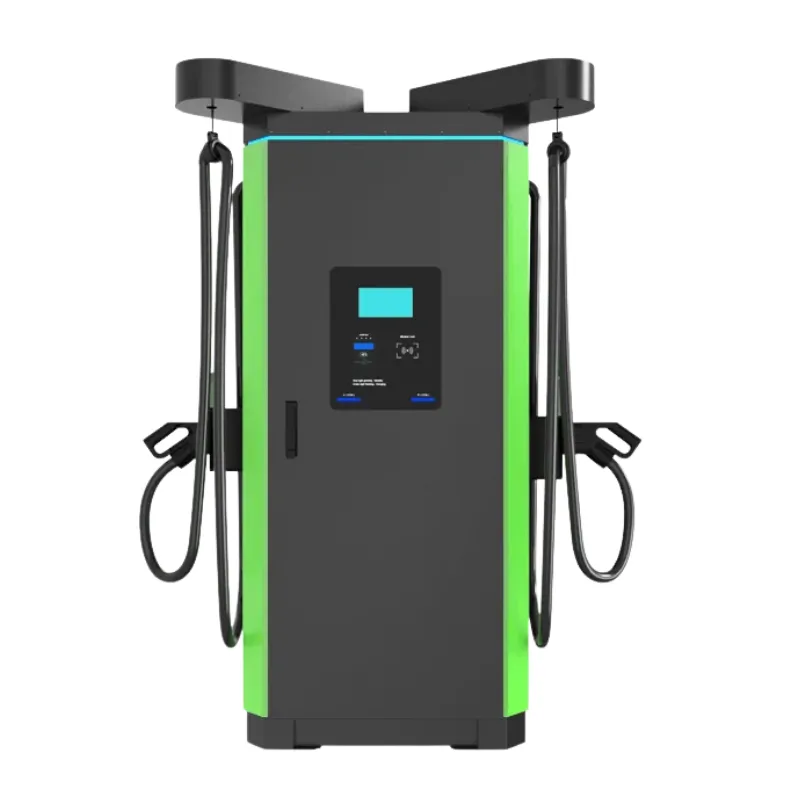
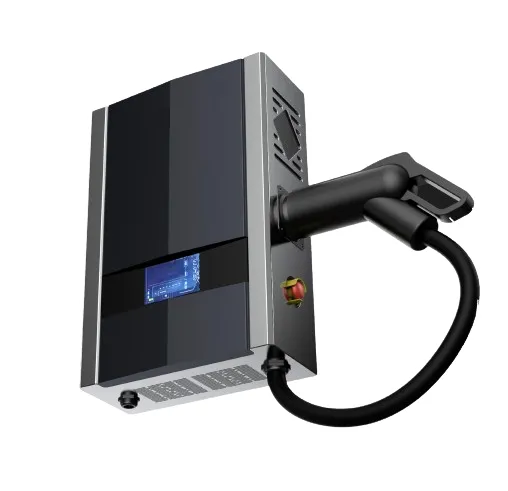
Only the UC series (60–360 kW) and the SC series (15–30 kW) have North American builds (480 V input, CCS1 and NACS). All EVCSTAR chargers operate up to +55 °C ambient. UC suits a retail or corridor fast-charge pad where the 50 kW per-charger threshold for the APS rider and the SRP rebate is easily met. SC units are below 50 kW, so they would not qualify as DC fast chargers under the APS rider; they fit fleet yards and multifamily sites where the connection is small. Both support OCPP 1.6J and 2.0.1. We cannot state a UL or ETL listing for any model; ask us what test reports and technical documents we can supply, then confirm with the utility program administrator, the inspector and the city before ordering. See EV charging standards for what US listings cover.
Payback calculator
Example values are filled in — replace them with your own quotation, tariff and traffic figures.
- Energy sold per month
- —
- Net margin per month
- —
- Simple payback
- —
Simple payback = total investment ÷ (energy sold × (price − energy cost) − fixed costs), using 30 days per month. Taxes, financing, subsidies and utilisation growth are not included.
Frequently asked questions
- Is my Phoenix site in APS or SRP territory?
- It depends on the address, because the two utilities share the metro. APS publishes downloadable service-area maps for the Phoenix metropolitan area but, on the page we read, no address lookup, and SRP territory has to be checked with SRP. Ask both for a written confirmation and a load study before paying for design.
- What is the APS fast-charging rider and who qualifies?
- Rate Rider DCFC is a pilot that limits monthly billed demand for public DC fast-charging stations on the E-32 TOU Small, Medium and Large rates. Chargers must be 50 kW or more, open to the general public, and separately metered from other facilities. The rider is first come, first served for 500 accounts and sunsets after the July 2031 billing period. Billed demand becomes the lower of the metered demand and monthly kWh divided by (load factor x days x 24 hours).
- How does the demand cap work in numbers?
- As an illustration only, a site that uses 30,000 kWh in a 30-day month under the 20% limit (July 2025 to June 2028) cannot be billed above 30,000 / (0.20 x 30 x 24) = about 208 kW, even if its peak session reached 400 kW. The rate per kW and other charges stay as in the parent E-32 schedule, which we did not read here, so run your own bill with APS.
- Do I need a city permit for a commercial charger in Phoenix?
- Plan on it, but we did not find an official City of Phoenix checklist for commercial EV chargers. Contact the Planning and Development Department for the current electrical code edition, plan-review path and fees, and ask whether shade structures need a separate building permit.
References
- [1]Rate Rider DCFC: General Service Direct Current Fast Charging Pilot (A.C.C. No. 6204, effective 8 March 2024). Arizona Public Service.
- [2]SRP FY26 Business EV Charging Program: EV charger and prewire rebate application. Salt River Project.
- [3]Electric vehicle statistics. City of Phoenix Office of Sustainability.
- [4]Phoenix experiences 1st day of 110-plus heat in 2025. KTAR News, 14 June 2025 (citing National Weather Service).
- [5]Service Area Maps. Arizona Public Service.