Market guide
DC Fast Charging in Sri Lanka: Licences, Tariffs and Connectors
EV charger suppliers in Sri Lanka guide: PUCSL exemption, EV tariff for DC fast charging at Rs. 53-111/kWh from April 2026, CEB/LECO steps, CCS2 vs CHAdeMO.
- Prepared by
- EVCSTAR Engineering Team
- Published
- Reading time
- 5 min
- Sources
- 8 references
At a glance
- DC fast tariff, peak / day / off-peak
- Rs. 111 / 87 / 53 per kWh
- EVCS-1 / EVCS-2 split
- 42 kVA
- EV registrations, March 2026
- 8,834
- Supply
- 230 V / 400 V, 50 Hz
Key takeaways
- 1Anyone selling electricity for EV charging needs a PUCSL trading licence or supply exemption before the distribution licensee (CEB or LECO) will connect the station; a PUCSL guideline issued on 1 June 2026 makes that a condition of interconnection.
- 2Since 1 April 2026 stations with a dedicated supply and a PUCSL exemption (or no-objection letter) are billed on an EV tariff: EVCS-1 up to 42 kVA, EVCS-2 above 42 kVA, with DC fast charging at Rs. 111 peak, Rs. 87 day and Rs. 53 off-peak per kWh.
- 3The grid is the constraint: on 17 March 2026 the president said EVs add about 300 MW of night demand and asked owners to charge in the day, so expect pricing that rewards daytime and off-peak charging, and a tariff peak from 6 pm to 10 pm.
- 4Stations in Sri Lanka already install both CCS2 and CHAdeMO (a 30 kW dual-gun unit opened in Jaffna in July 2025), and PUCSL's code asks for signage telling drivers which connector a charger has, so a new site needs a clear connector plan.
On this page
Short answer: EV charger suppliers working in Sri Lanka sell into a market that PUCSL now regulates from licence to tariff: a station needs a PUCSL exemption, a dedicated connection from CEB or LECO, and then buys power on a time-of-use EV tariff in which DC fast charging costs between Rs. 53 and Rs. 111 per kWh depending on the hour.
From exemption to energised: the order of events
The paperwork runs in a fixed sequence, and the utility will not skip a step. The PUCSL interconnection guideline of 1 June 2026 sets it out. A station owner must obtain a trading licence or supply exemption, apply to the distribution licensee (CEB, or LECO in its areas) for a separate connection for the station, and the licensee takes the certificate before granting interconnection. The CPO then submits a declaration, backed by a Chartered Electrical Engineer, that the station was designed to PUCSL codes, pays the grid interconnection charges, and commissions and tests at its own cost. Test reports must come from a Chartered Electrical Engineer listed by the Institute of Engineers Sri Lanka.
| Step | Who | Source clause |
|---|---|---|
| Licence or supply exemption | CPO to PUCSL | Guideline, preface and chapter 1 |
| Separate connection application | CPO to distribution licensee | Chapter 2, item 1 |
| Design declaration by Chartered Electrical Engineer | CPO | Chapter 2, item 5 |
| Pay grid interconnection charges; commission and test | CPO | Chapter 2, items 6 and 7 |
| Renewal of exemption, 3 months before expiry | CPO | Chapter 3, item 2 |
Three conditions catch first-time developers: the whole station must sit on premises the CPO owns or leases and the equipment must be owned by the CPO; the separate connection may be used exclusively for the EV business, and misuse can mean disconnection or fines; and the licensee can ask for real-time data through the CPO’s e-mobility service provider.
The EV tariff in detail
Stations that qualify buy power at a rate set for charging, not at commercial rates. Reports of the April 2026 tariff revision describe two new categories:
| Category | Supply and contract demand |
|---|---|
| EVCS-1 | 400/230 V supply, contract demand up to 42 kVA |
| EVCS-2 | Supply at or above 400/230 V, contract demand above 42 kVA |
| Rate per kWh | DC fast charging | AC Level 2 |
|---|---|---|
| Peak (6 pm to 10 pm) | Rs. 111 | Rs. 90 |
| Day | Rs. 87 | Rs. 70 |
| Off-peak | Rs. 53 | Rs. 40 |
The same revision raised the average tariff by 10%, against the 13.56% CEB had asked for, with individual increases between 4% and 25%. A single 120 kW charger is well above 42 kVA, so it falls into EVCS-2, and a 30 kW unit at 400 V may fit EVCS-1; confirm the contract demand the utility will register. Press reports did not state the off-peak and day hours, fixed charges or whether VAT is included, so get the schedule from CEB or LECO before modelling margins. PUCSL’s code also says charges to drivers must follow its Tariff Methodology, that prices must be shown before a session starts, and that tariff changes follow utility tariff changes. Use the payback calculator with an off-peak, day and peak blend.
The grid is the real limit
A president’s public appeal turned night charging into a policy issue. On 17 March 2026 the president said electric cars add about 300 MW of night-time demand, that the night supply relies on a 900 MW coal plant plus about 1,000 MW of diesel generation, and asked owners to charge during the day when there is surplus solar power; authorities planned tariffs to discourage night charging. The tariff table above then arrived two weeks later. The practical reading for a site developer: daytime and shoulder-hour charging is cheaper for you, depot and workplace charging by day fits the tariff better than a night-time residential model, and solar canopies (the code recommends renewable options) help. PUCSL’s code also recommends V2G-enabled chargers, but we found no Sri Lankan V2G tariff.
Who is buying cars, and which plugs
Registrations are rising fast, and the car mix decides the connector. The Daily Mirror reported 8,834 EV registrations in March 2026, up from 3,332 in February, with BYD leading, and the Khaleej Times says over 10% of imports since the ban was lifted in February 2025 have been fully electric. No source we opened gives a split by connector. In practice, a Colombo site sees both newly imported cars and older used cars. The one DC site we could verify, VOLT Charge at a Keells store in Jaffna (July 2025), uses a 30 kW dual-gun unit with CCS2 and CHAdeMO, and PUCSL’s code asks every site to display the charger type and connector (Type 1, Type 2, CHAdeMO, CCS1, CCS2). Supply is 230 V single-phase and 400 V three-phase at 50 Hz (Depco table).
Site rules you must design to
PUCSL’s Code of Practice reads like a build specification. It asks for at least two dedicated bays, IP65 or higher for outdoor equipment (IP54 indoors), crash bollards, signage, a central charge-point management system with at least two ways to start a session, and real-time availability data. Heavy-vehicle sites are asked for 350 kW to 1 MW ultra-fast charging with CCS2 or MCS. IEC compliance applies, with national standards based on IEC accepted for three years from April 2025. For regional comparison, see Nepal, Bangladesh and Pakistan.
Equipment that fits these rules
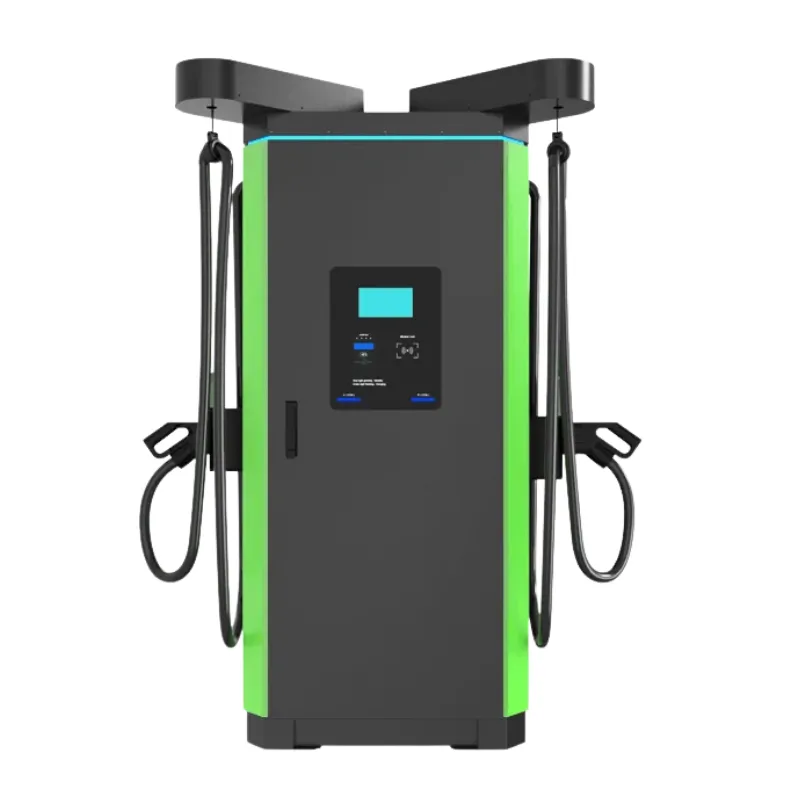
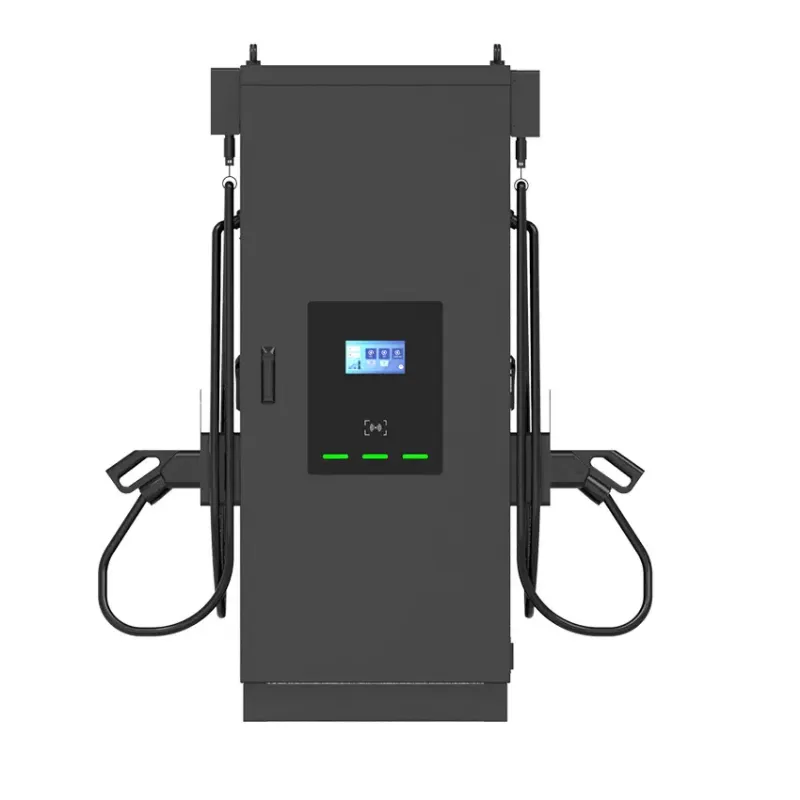
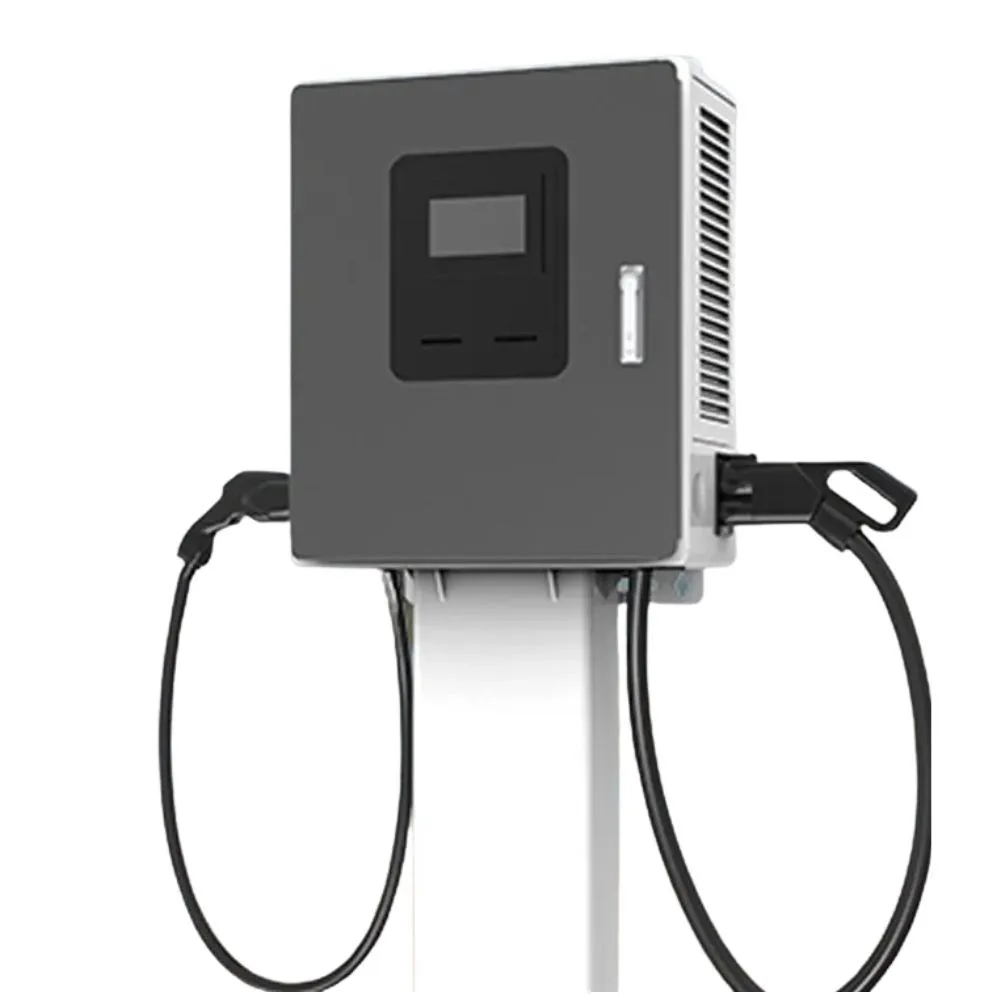
Sri Lankan sites are best served by dual-connector DC with remote management. The HC series (20-60 kW) suits the EVCS-1 band and town sites; the CC series (120 and 180 kW) and the UC series (60-360 kW, power sharing between guns, each CCS gun limited to 200 A) suit EVCS-2 hubs and highway stops. CCS2 is standard; CHAdeMO can be quoted as an option on DC models by configuration, and all models support OCPP 1.6J and 2.0.1 for the management-system rule and run to +55 °C. We make no claim that any model has PUCSL, SLS or CEB approval; we can provide type-test reports and technical documents to support your exemption and interconnection files.
To start, send us the site, the supply and contract demand CEB or LECO has offered, the connector mix you expect and the number of guns through the contact page, and we will reply with a configuration proposal and quotation breakdown.
Payback calculator
Example values are filled in — replace them with your own quotation, tariff and traffic figures.
- Energy sold per month
- —
- Net margin per month
- —
- Simple payback
- —
Simple payback = total investment ÷ (energy sold × (price − energy cost) − fixed costs), using 30 days per month. Taxes, financing, subsidies and utilisation growth are not included.
Frequently asked questions
- Do I need a PUCSL licence to open a public charger in Sri Lanka?
- Yes. PUCSL's 1 June 2026 guideline says that under the Sri Lanka Electricity Act 2024 (as amended) any person selling electricity for EV charging must hold a trading licence or a supply exemption before selling. Its April 2025 Code of Practice adds that the exemption can be revoked for breach of the code. The distribution licensee asks to see the certificate before it grants the interconnection. The code points to PUCSL's Licensing Division for the application steps, which we did not read.
- What will the electricity cost per kWh at an EV station?
- From 1 April 2026 eligible stations (dedicated supply plus a PUCSL exemption or no-objection letter) pay time-of-use rates per kWh: DC fast Rs. 111 peak, Rs. 87 day, Rs. 53 off-peak; AC Level 2 Rs. 90, Rs. 70 and Rs. 40. The Daily FT says peak is 6 pm to 10 pm and does not define the other bands; fixed charges were not reported. Stations that do not qualify fall under the General Purpose tariff. Confirm the schedule, band hours and any fixed charge with CEB or LECO.
- Should I buy CCS2 or CHAdeMO chargers for Sri Lanka?
- We found no official count of vehicles by connector. What we can say is that PUCSL's code expects signage naming the connector (Type 1, Type 2, CHAdeMO, CCS1, CCS2), and that a 30 kW VOLT Charge station in Jaffna (July 2025) uses a dual-gun unit with both CCS2 and CHAdeMO. For a new DC site, a CCS2 gun plus a CHAdeMO option covers both new and older imported cars; check the actual mix of cars in your catchment before choosing the second connector.
- Does the site need a minimum number of bays?
- PUCSL's Code of Practice for CPOs says a site should provide a minimum of two dedicated charging bays (they can be for different vehicle types, for example one for a four-wheeler and one for a two-wheeler), requires an IP65 rating or higher for outdoor equipment and asks for crash bollards in front of ground-mounted chargers. Read the code in full: it also asks for at least two ways to start a charge and a central charge-point management system.
References
- [1]Guidelines for the Interconnection and Operation of Electric Vehicle Charging Stations for Distribution Utilities and CPOs (issued 1 June 2026). Public Utilities Commission of Sri Lanka.
- [2]Code of Practice for EV Charge Point Operators, version 1 (April 2025). Public Utilities Commission of Sri Lanka.
- [3]Electricity tariff hike no April Fool's joke. Daily FT, 31 March 2026.
- [4]New electricity tariff for EV charging stations takes effect April 1. Newswire.lk, 30 March 2026.
- [5]Sri Lanka asks electric vehicle owners to unplug at night. Khaleej Times, 18 March 2026.
- [6]March vehicle registrations expand over 15% as EV adoption accelerates. Daily Mirror, 27 April 2026.
- [7]VOLT, Keells bring first commercial EV fast charging station to the North. Daily Mirror, 25 July 2025.
- [8]Voltage and frequency by country. Depco.