
Charging solutions by site type
The right charger depends on how long vehicles stay and how much power the site can draw. These are our starting configurations for the most common sites.
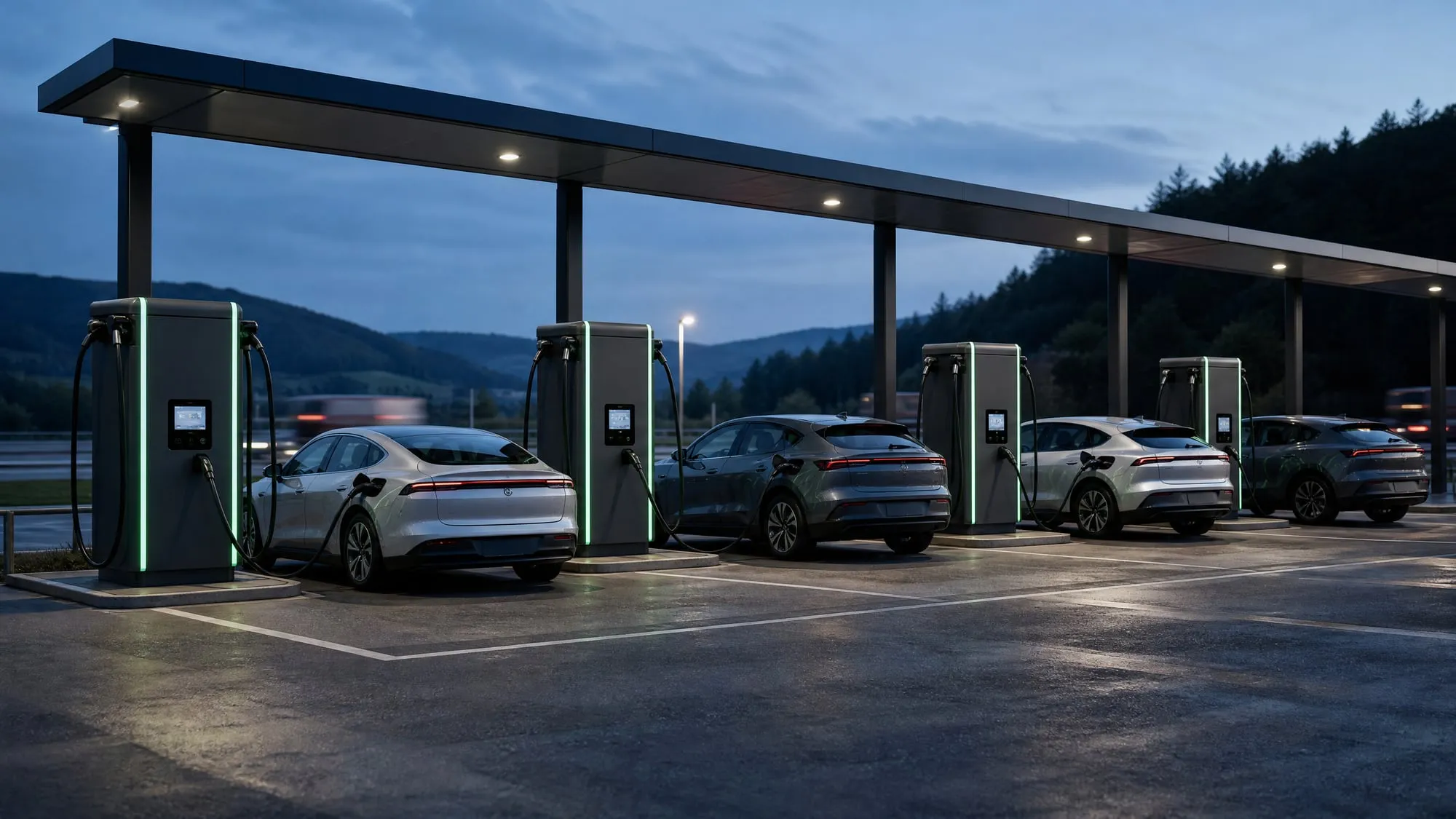
Highway & corridor hubs
Short stops where drivers expect to leave within half an hour. Power per bay matters more than bay count.
- Typical dwell
- 15–30 min
- Starting configuration
- 180–360 kW DC, two guns per cabinet
- Size for peak-hour arrivals, not the daily average.
- Dual-gun cabinets with dynamic power sharing serve two bays from one grid connection.
- Long 6 m cables reach charge ports on either side of the vehicle.
Suitable chargers
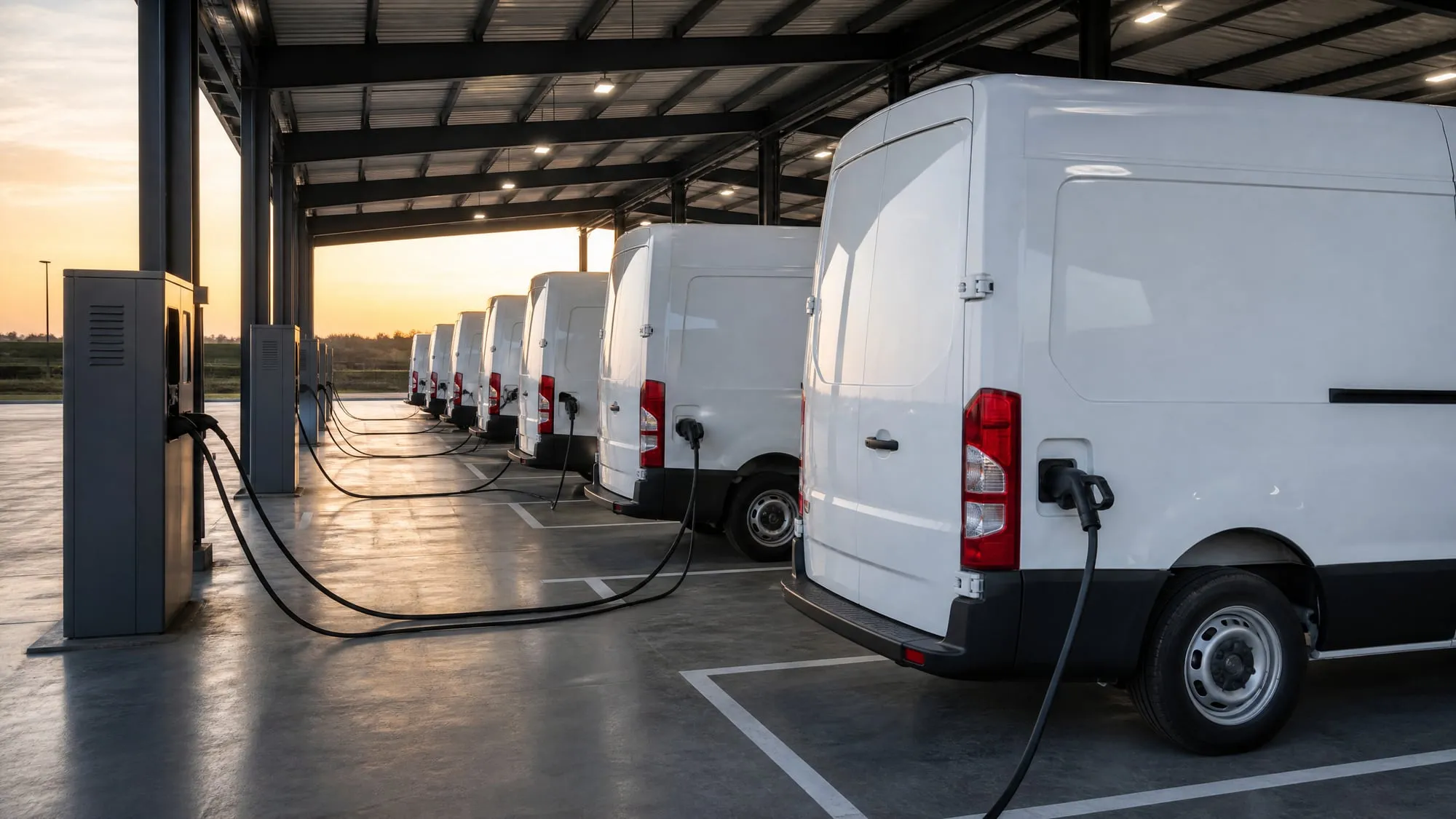
Fleet depots
Vans, taxis and buses that return to base. Most energy goes in overnight; a few vehicles need a fast top-up between shifts.
- Typical dwell
- Overnight + short top-ups
- Starting configuration
- AC for most bays + 60–120 kW DC buffer
- Match DC capacity to the vehicles that turn around fastest, not the whole fleet.
- Group load management keeps total demand under the site limit.
- OCPP lets the fleet software schedule charging around tariffs.
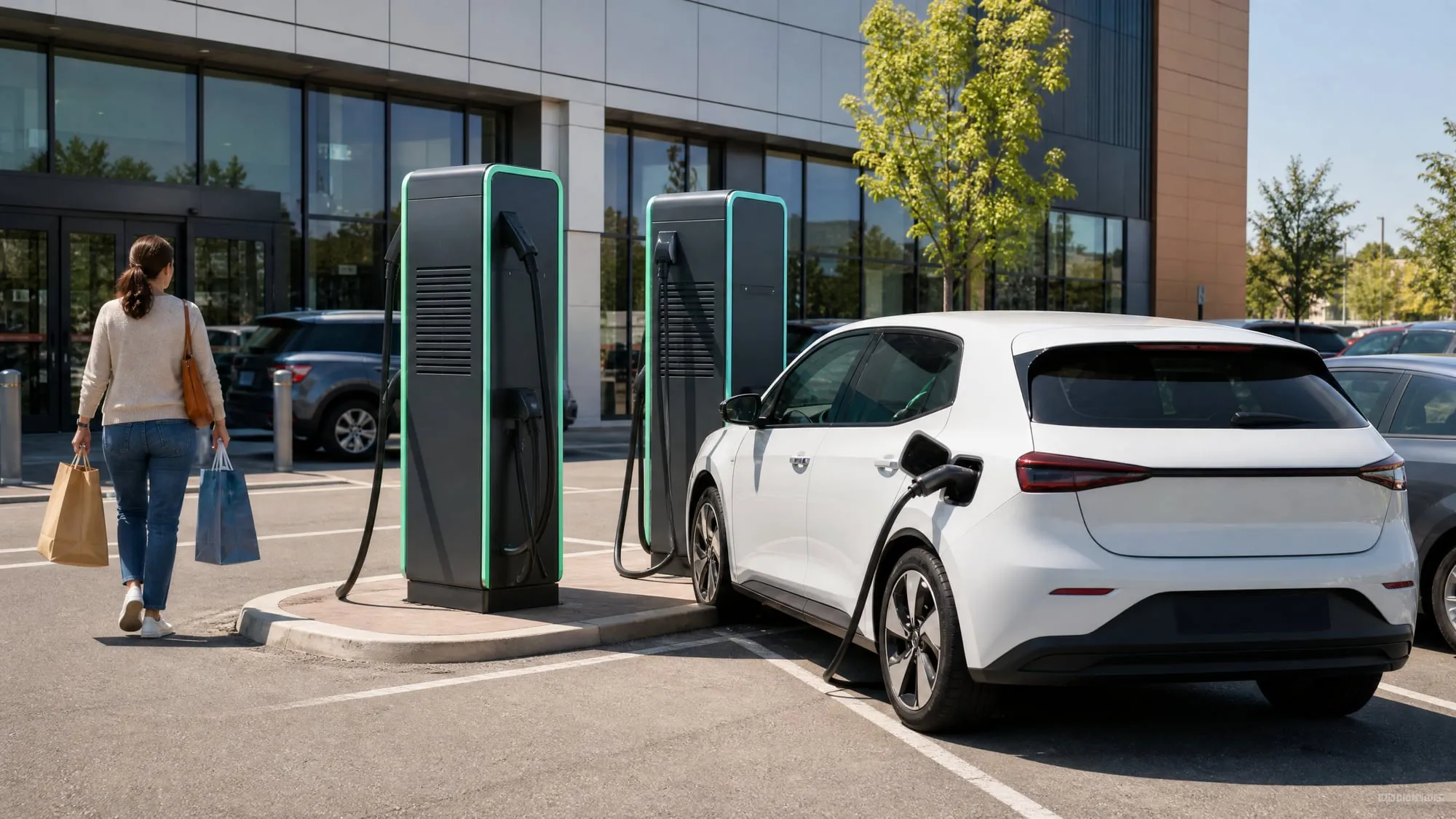
Retail & destination parking
Shopping centres, restaurants and urban hubs where visitors stay 30 to 90 minutes.
- Typical dwell
- 30–90 min
- Starting configuration
- 120–180 kW compact DC or 40–60 kW DC wallbox
- Compact cabinets fit standard parking layouts.
- An optional 21" screen can show advertising between sessions.
- Card terminals or QR-code payment serve drivers without an app account.
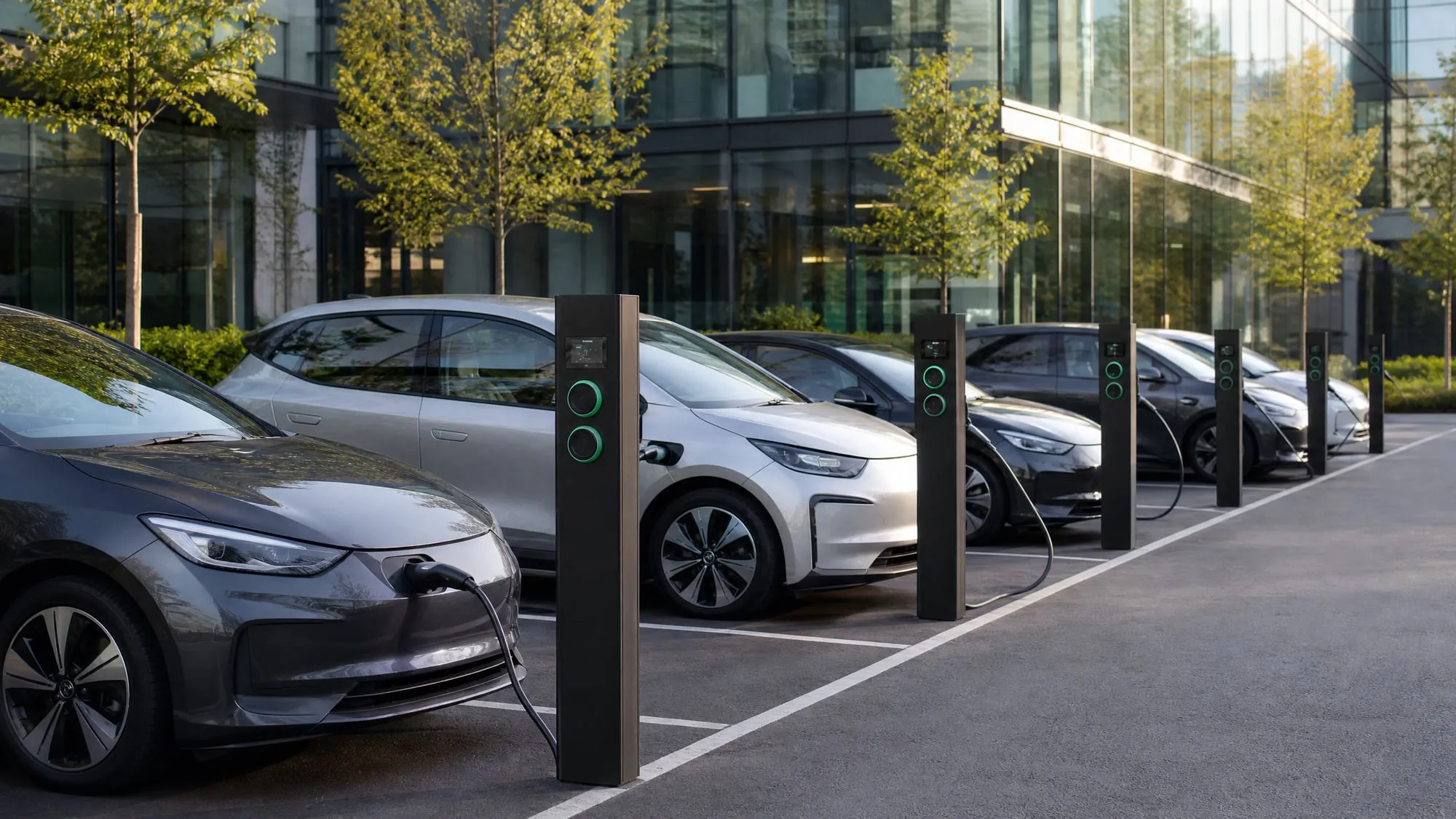
Workplaces & hotels
Cars parked for a working day or overnight. Many bays at moderate power beat a few fast chargers.
- Typical dwell
- 4 h – overnight
- Starting configuration
- 2 × 7.4–22 kW dual-port AC
- One pedestal or wall unit serves two bays.
- RFID cards or app payment separate staff, guests and visitors.
- An MID-certified meter is available where energy is billed.
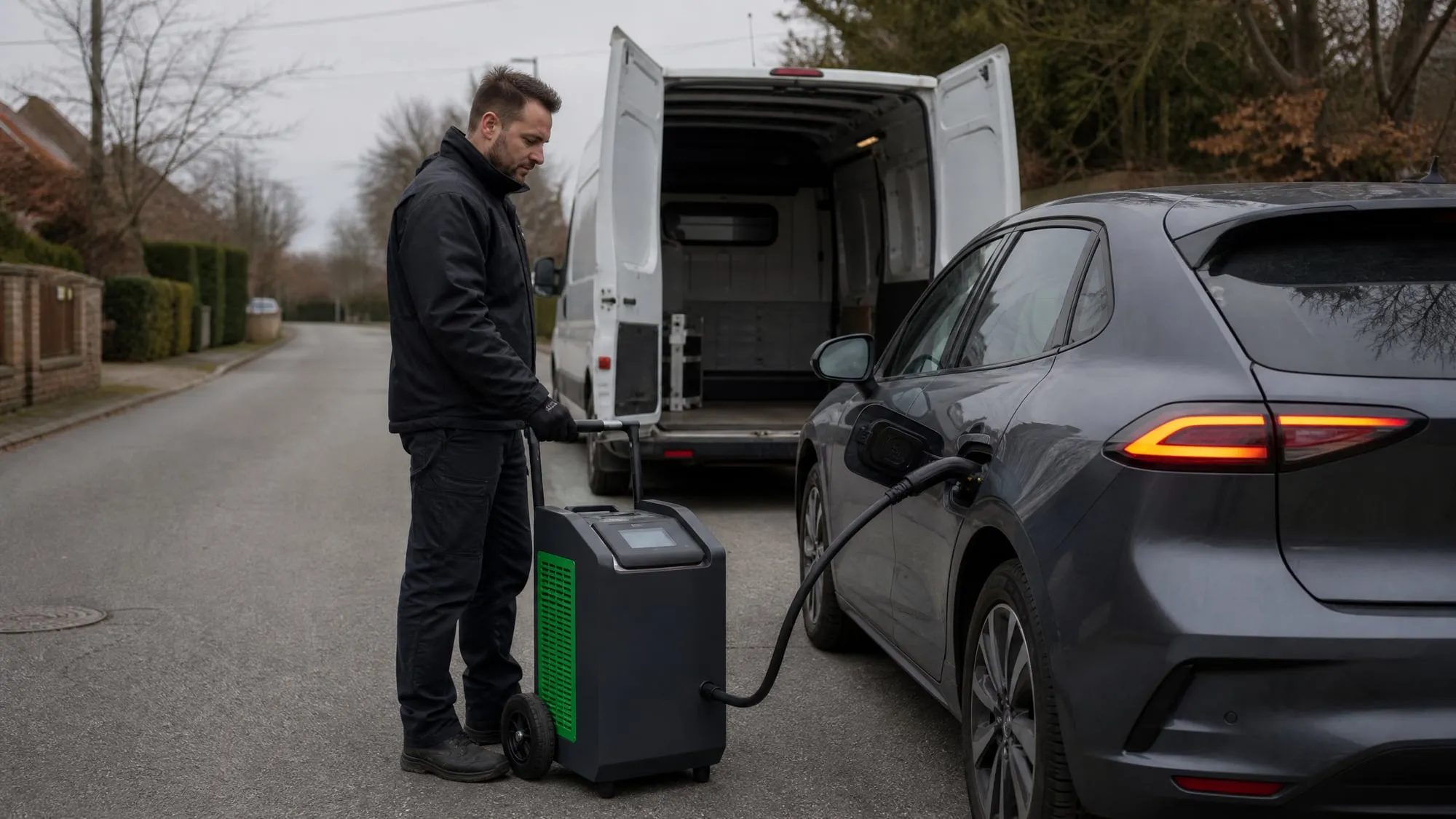
Roadside & mobile service
Breakdown assistance, yards without fixed bays, events and temporary sites where the charger goes to the vehicle.
- Typical dwell
- As needed
- Starting configuration
- 20–80 kW mobile DC on wheels
- Runs from a three-phase supply wherever it is parked.
- Useful for testing vehicles at dealerships and service centres.
- Bridges the gap while a permanent site is being built.
Suitable chargers
Tell us about your charging site
Share the site type, number of bays and grid capacity — our engineers will recommend a charger configuration.