Market guide
EV Charging in Ghana: Licensing, the PURC Charging Tariff and Site Types
EV charging station in Ghana guide: PURC EV tariff of 208.6 pesewas/kWh from July 2026, Energy Commission licence, ECG transformers, 1,000-station target.
- Prepared by
- EVCSTAR Engineering Team
- Published
- Reading time
- 4 min
- Sources
- 6 references
At a glance
- EV charging tariff, from 1 Jul 2026
- 208.6329 pesewas/kWh
- Public station price, Apr 2026
- GH¢4-5 per kWh
- Station target
- 1,000 by 2028
- Supply
- 230 V / 400 V, 50 Hz
Key takeaways
- 1PURC created a dedicated EV charging tariff from 1 April 2026 (201.6 pesewas per kWh) and raised it to 208.6329 pesewas per kWh from 1 July 2026, about US$0.19 at the GH¢11.2228 per dollar rate PURC used, while licensed public stations were charging GH¢4 to GH¢5 per kWh in April.
- 2You need both a licence from the Energy Commission and access to a dedicated transformer from ECG; the tariff is only offered at designated charging points with dedicated transformers and higher-voltage supply.
- 3The Energy Commission is finalising Draft EV Charging Infrastructure and Battery Swap Systems Regulations, with prior approval before a station is built, so confirm the current status before you buy equipment.
- 4Government targets 1,000 charging stations by 2028 (about 30 a month) from roughly 50 public charging and battery-swap stations, mostly in Accra, so the supply gap is very large outside the capital.
On this page
Short answer: an EV charging station in Ghana is now a regulated, tariffed business: PURC set a dedicated charging tariff of 208.6329 pesewas per kWh from 1 July 2026, the Energy Commission licenses stations, and ECG decides whether you get a dedicated transformer, so the order of work is power access first, equipment second.
What the grid gives you
Ghana’s low-voltage supply is 230 V single-phase and 400 V three-phase at 50 Hz, according to a standards reference table (Depco), with type D and G sockets. For AC wallboxes that is the familiar European-style supply; for a DC fast charger the question is the transformer, not the voltage class. The Daily Graphic quotes PURC saying the commercial EV tariff is for licensed operators at designated charging points that have dedicated transformers and higher-voltage systems, and that investors must contact ECG first. We could not read ECG’s own connection standards, so supply capacity, the cost of the transformer and the lead time are not stated here.
The tariff, in numbers
PURC gave charging its own line in the tariff table, and the number is small next to what stations charge drivers. The tariff came with the second-quarter 2026 adjustment and has been revised quarterly since:
| Date | EV charging tariff (pesewas per kWh) | Source |
|---|---|---|
| 1 April 2026 | 201.6000 | Ghana News Agency, from the July order’s “previous” column |
| 1 July 2026 | 208.6329 | Ghana News Agency, June 2026 |
For comparison, PURC’s July 2026 table lists non-residential above 300 kWh at 224.0395 and special load, high voltage at 188.4762 pesewas per kWh, so the EV tariff sits between them. At the July exchange rate PURC used (GH¢11.2228 per US dollar) the EV tariff is about US$0.19 per kWh, a figure we calculated. The Daily Graphic notes public stations charge GH¢4 to GH¢5 per kWh, which is the headline gap between wholesale and retail. That gap is the working capital for equipment, site rent, payments and idle time, not profit, and it can narrow if competition rises or PURC revises the tariff. Quarterly changes in the exchange rate and inflation feed the adjustment, so model a range, not one number, in the payback calculator.
Licence and approvals
Ghana is moving from informal charging to a licensed sector. The Energy Commission, with the Ghana Standards Authority, developed and gazetted standards for charging facilities in 2023 and is finalising Draft EV Charging Infrastructure and Battery Swap Systems Regulations as a legislative instrument for Parliament. The draft has four parts: residential stations, public and workplace chargers, safety requirements, and placement and wiring. Once passed, it would empower the Commission to license manufacturing, importation, installation and operation of charging equipment. Minister John Jinapor told Parliament’s Assurance Committee on 24 March 2026 that the Commission’s review covers planned capacity, vehicle types and charging rates, with transformer capacity assessed before approval. The GNA also reports the draft would make operating an unregistered charging system illegal. We cannot tell you the date the regulation takes effect, so use “approval required” as the working assumption and ask the Commission for the application route.
Market size and where sites will go
The target is large and the starting point is small. The government plans 1,000 charging stations nationwide by 2028, roughly 30 a month, and about 50 public charging and battery-swap stations operate today, mostly in Accra (Daily Graphic). The Commission also plans a location map for even distribution, and consulted in Accra, Kumasi, Takoradi, Ho and Koforidua. We found no verified corridor plan for the Accra-Kumasi road, so do not assume a highway gap is unserved: check what operators have installed and what the location map shows before you buy land.
| Site type | Why it fits | What to ask |
|---|---|---|
| Fuel-station forecourt | Existing power, traffic and security | Landlord’s share and ECG capacity |
| Mall or office car park | Long dwell, AC or low-power DC | Tenancy and metering arrangement |
| Fleet depot | Predictable use, off-peak charging | Contract with the fleet owner |
| Battery-swap site | Two- and three-wheelers | Separate rules; the draft covers swap systems |
Compare how neighbouring markets are developing in Nigeria and Kenya.
Choosing equipment for Ghana
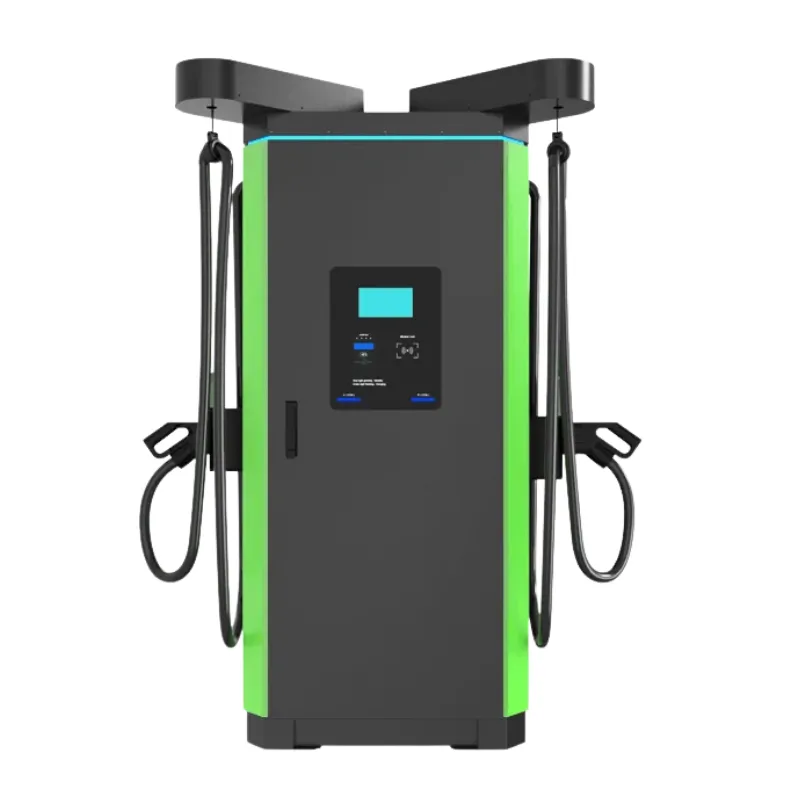
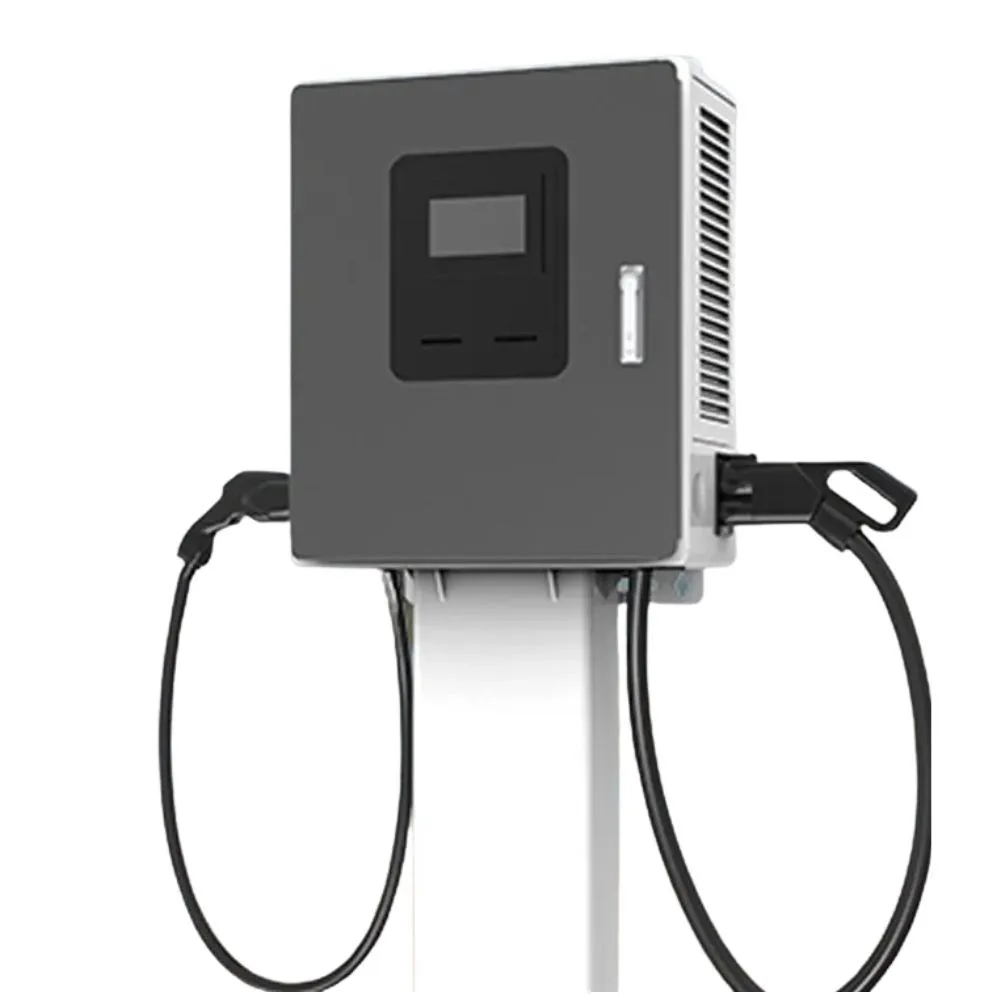
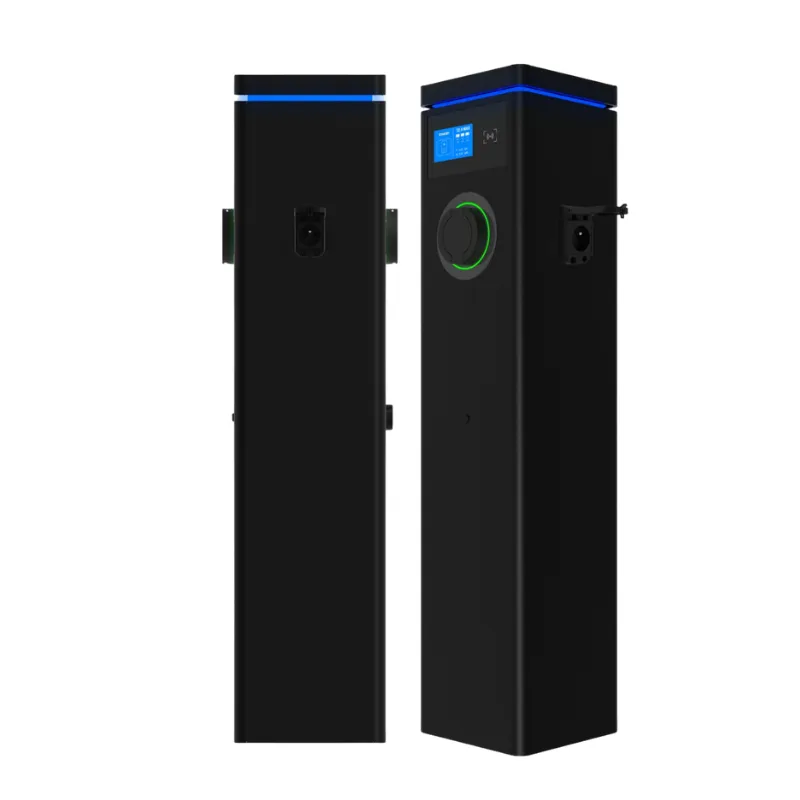
Match the hardware to the transformer you can actually get. For a forecourt with a dedicated transformer and heavy traffic, the UC series (60-360 kW, dynamic power sharing between guns) lets you size the site to the supply and share power when two cars plug in; each CCS gun is limited to 200 A. For a smaller supply or a lower-cost entry, the HC series (20-60 kW) suits sites with long stops, and the CPO series (2 x 3.7-22 kW AC) suits malls and offices. All operate to +55 °C and support OCPP 1.6J and 2.0.1. Connector choice (CCS2 or CHAdeMO, for example) depends on the used and new imported cars you plan to serve, and we have no verified Ghana breakdown. We make no claim that any model has Ghana Standards Authority or Energy Commission approval; we can provide test reports and technical documents to support your application.
To get a configuration proposal and quotation breakdown, send us the site, the transformer size ECG will offer, the number of guns and the vehicle types through the contact page.
Payback calculator
Example values are filled in — replace them with your own quotation, tariff and traffic figures.
- Energy sold per month
- —
- Net margin per month
- —
- Simple payback
- —
Simple payback = total investment ÷ (energy sold × (price − energy cost) − fixed costs), using 30 days per month. Taxes, financing, subsidies and utilisation growth are not included.
Frequently asked questions
- What do I pay ECG for the electricity at an EV charging station?
- PURC set a dedicated EV charging tariff of 201.6 pesewas per kWh from 1 April 2026 and raised it to 208.6329 pesewas per kWh from 1 July 2026 (reported by the Ghana News Agency). The Daily Graphic describes the April rate as "before margins" and available at designated charging points with dedicated transformers and higher-voltage systems. We did not read PURC's tariff schedule, so confirm fixed or service charges, voltage classes and the quarterly adjustment with ECG.
- Do I need a licence to operate a public charger in Ghana?
- Yes, plan on it. PURC's executive secretary told the Daily Graphic that investors must contact ECG for a dedicated transformer and obtain a licence from the Energy Commission. The energy minister told Parliament's Assurance Committee on 24 March 2026 that approval will be required before a station is built, covering planned capacity, vehicle types and charging rates. The regulation was still a draft for Parliament when we read the latest coverage, so check the Energy Commission for the current legal status.
- What power and voltage will I connect to?
- A secondary table lists Ghana at 230 V single-phase, 400 V three-phase, 50 Hz, with type D and G plugs. For a DC fast charger, ECG has to confirm the available capacity and the connection voltage at your exact site, and the Daily Graphic says the commercial tariff applies where a dedicated transformer and higher-voltage system are in place.
- Is the market big enough yet?
- The Daily Graphic reports about 50 public charging and battery-swap stations nationwide, mostly in Accra, with government aiming for 1,000 stations by 2028. We found no verified count of EVs on the road, so size your own demand case with the payback calculator and local traffic data before you commit capital.
References
- [1]PURC provides incentive for EV charging point expansion: cheaper charging tariff takes effect today. Daily Graphic, 1 April 2026.
- [2]Electricity tariff rise by 3.49 per cent, water 0.85 per cent. Ghana News Agency, June 2026.
- [3]EV charging stations must get Energy Commission approval: Jinapor. Citi Newsroom, March 2026.
- [4]Energy Commission urges registration of EV charging systems. Ghana News Agency, March 2026.
- [5]Electric future ahead: Ghana finalises EV charging regulations. Ghana News Agency, 22 February 2026.
- [6]Voltage and frequency by country. Depco.