State guide
Georgia EV Fast Charging: Georgia Power, EMCs and the EV Belt
DC fast charging Georgia business guide: Territorial Act and 900 kW choice, 2027 per-kWh rule and excise tax, NEVI round two (26 sites, $24.4M), $2,500 credit.
- Prepared by
- EVCSTAR Engineering Team
- Published
- Reading time
- 5 min
- Sources
- 5 references
At a glance
- NEVI round two awards (Nov 2025)
- 26 sites, $24.4M
- Business station tax credit
- 10%, up to $2,500
- Customer-choice threshold
- 900 kW connected load
- Per-kWh sales and excise tax
- from 1 Jan 2027
Key takeaways
- 1Who supplies your site is set by territory, not by shopping: under the 1973 Territorial Electric Service Act Georgia Power serves 155 of 159 counties, and 41 EMCs and 52 municipal systems serve the rest; only loads of 900 kW or more get a one-time supplier choice.
- 2From 1 January 2027 public chargers must measure and display electricity per kWh and sales of electricity at public EV charging stations carry an excise tax, taxed per gasoline-gallon equivalent of up to 11 kWh; a provider outside PSC jurisdiction is not a public utility.
- 3Georgia NEVI: round two awarded $24.4 million for 26 sites in November 2025 (at least four DC fast chargers each, 24/7), but only about 9% of the $134 million allocation was obligated by February 2026.
- 4Georgia offers a 10% business tax credit on station cost, capped at $2,500, and ranks second nationally for EV and battery manufacturing; for Georgia sites only our UC and SC series have North American builds.
On this page
Short answer: a DC fast charging business in Georgia starts with a map, not a tariff: the Territorial Electric Service Act assigns your parcel to Georgia Power, an EMC or a municipal system, from 2027 you must price per kWh and pay a motor-fuel-style excise tax on public charging, and the state is pairing 26 federally funded NEVI sites with a 10% business tax credit (capped at $2,500) and a large EV-manufacturing base.
Whose wires you are on
In Georgia the territory decides your supplier. The PSC says competition has been limited since 1973 and gives customers with manufacturing or commercial loads of 900 kW or more a one-time choice of supplier; later switches need all parties to agree, and the Commission resolves territorial disputes. Georgia Power, an investor-owned utility fully regulated by the PSC, serves about 2.7 million customers in 155 of the state’s 159 counties. The PSC counts 41 electric membership corporations (EMCs) and 52 municipal systems, over which it has limited authority.
| Supplier type | Regulator | What it means for a site |
|---|---|---|
| Georgia Power | PSC (full) | Tariff approved by the PSC; most of the state |
| EMC (41) | Limited PSC authority; member-owned | Own rate sheets and service rules; ask for the commercial EV or demand structure |
| Municipal system (52) | Limited PSC authority | City-set rates and policies |
For a hub, find the serving supplier first, then ask for the rate schedule that would apply, how demand is billed, and whether a lower-load-factor schedule exists. We did not find a current Georgia Power or EMC commercial EV rate in the pages we read, so we quote no per-kWh or per-kW figure. Our demand charges guide explains why that structure often decides the business case.
2027: per-kWh sales and a charging excise tax
Georgia has already written the rules for selling charge time, and they bite on 1 January 2027. According to the Department of Energy’s summary of state law, from that date public chargers must measure and display electricity dispensed in kWh, the Department of Revenue can inspect stations and violators may face fines of up to $1,000. Electricity sold at public EV charging stations is taxed by gasoline-gallon equivalent, which may not exceed 11 kWh, and the same summary says the general motor fuel excise rate is $0.26 per gallon, subject to adjustment. The page gives no per-kWh electricity rate, so confirm the number before you finalise pricing. Free electricity from nonprofit-owned chargers on federal interstates is exempt. Providers that are not otherwise under PSC jurisdiction are not classified as public utilities.
Plan for this in equipment choice: you need per-kWh metering, a back office that can bill on kWh, and an OCPP connection that reports consumed energy. Check the metering accuracy and certification expectations of the Department of Revenue before you order.
NEVI in Georgia: slow money, fixed rules
Public money is arriving, but later than planned. EC&M reported in December 2025 that the State Transportation Board awarded $24.4 million for 26 sites out of 33 evaluated (41 proposals), to six private operators under public-private partnership agreements. Each site must have at least four DC fast chargers, run 24 hours a day, and meet NEVI requirements on reliability, open payment and standard connectors, along the Alternative Fuel Corridors. EC&M gives the federal allocation as $135 million; the Southern Alliance for Clean Energy says $134 million.
| NEVI milestone | Detail |
|---|---|
| Round one (2024) | Five sites in development |
| Round two (Nov 2025) | 26 sites, $24.4 million, advancing through federal environmental review |
| Feb 2026 status | 31 sites selected, about $12.1 million (roughly 9%) obligated |
| 23 Jan 2026 | Federal court found funding was unlawfully withheld |
Practically: awarded sites will have subsidised neighbours on interstates such as I-16, where a round-two site is planned in Macon-Bibb. The same source warns that Congress could change the programme, so do not assume further rounds. A private site off the NEVI corridors still needs its own case.
The EV Belt: demand from factories, not only from highways
Georgia’s customers include a growing industrial base. The Southern Alliance for Clean Energy reports that Georgia ranks first in the Southeast and second in the nation for EV and battery manufacturing, with more than $27.3 billion in e-mobility investment announced since 2018 (Georgia Economic Development). For a charging business this points to fleet and workplace charging near plants and logistics parks, suppliers with delivery vans, and corridors that feed them, rather than only to Atlanta commuters. Verify traffic and fleet plans with the employers; we did not find site-level data.
On the incentive side, the state’s business tax credit for charging stations is 10% of the station cost up to $2,500, with unused credit carried forward for up to three years (Georgia Code 48-7-40.16, per the Department of Energy summary). It is a small offset against a DC cabinet, so treat it as a bonus, not a business driver. An older Georgia Power programme (Get Current, 2015) offered a $500 incentive to commercial building owners for Level 2 chargers; we have no evidence it is still available.
Matching equipment to a Georgia site
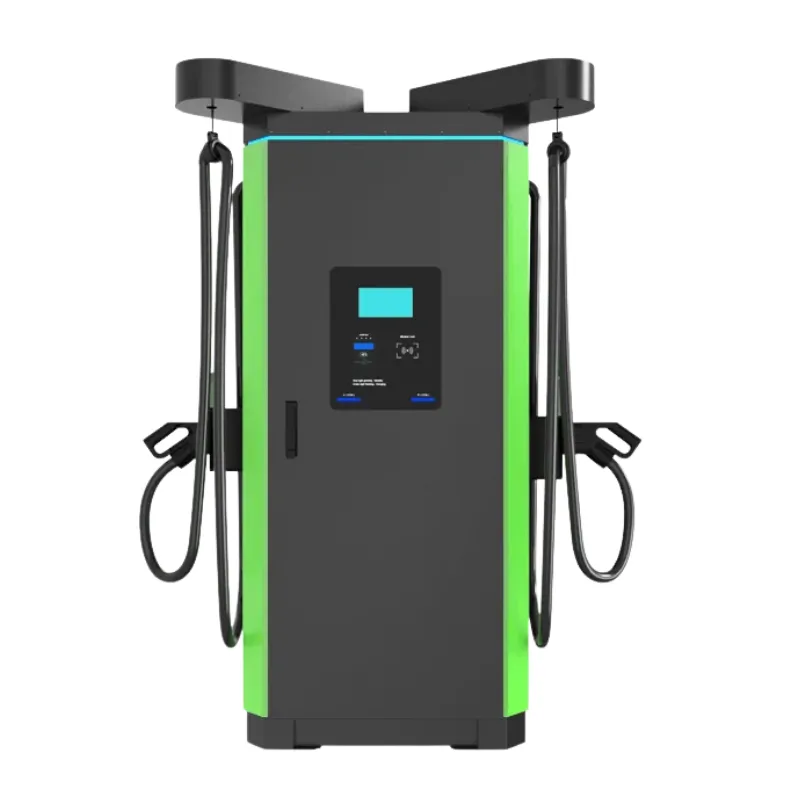
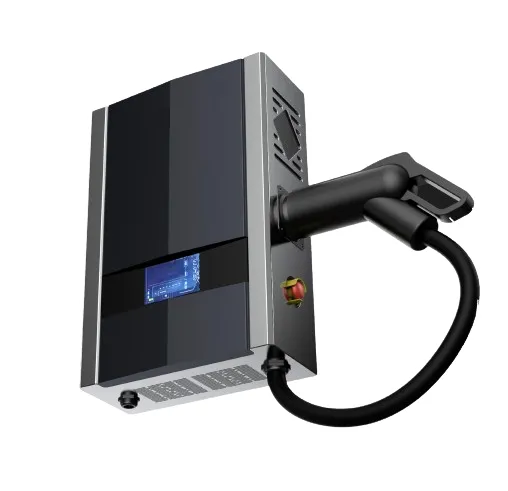
Only the UC and SC series have North American builds, so Georgia projects start there. The UC series (60 to 360 kW, 480 V input, CCS1 or NACS) suits NEVI-style corridor sites; the 360 kW cabinet is a two-gun unit with each CCS gun limited to 200 A, about 200 kW at 1,000 V, so one vehicle cannot draw the full 360 kW. Four chargers per site under NEVI means planning gun count and cabinet count together. The SC series (15 to 30 kW) fits small connections such as fleet yards and workplaces. Both support OCPP 1.6J and 2.0.1 and operate up to +55 °C, which suits Georgia summers.
We cannot state that any model holds a UL listing or meets NEVI or Georgia metering requirements; we can send technical documents and test reports for your permit and grant file. To get a configured proposal and quotation breakdown, send us the serving utility, voltage, number of guns, connector standards and available capacity through the contact page, and compare with our Texas guide if you are weighing both states.
Grid capacity calculator
- Spare power for charging
- —
- Input current per charger (400 V)
- —
- Chargers at full power
- —
Spare power = kVA × 0.95 power factor × (1 − margin) − existing peak load. Input current ≈ charger kW ÷ (√3 × 400 V), with power factor and 95 % efficiency added for DC chargers. With dynamic load management more chargers can share the same capacity at reduced power. Always confirm with your electrical engineer and the grid operator.
Frequently asked questions
- Can I choose between Georgia Power and an EMC for my charging site?
- Usually not. Georgia assigns every area to a supplier under the 1973 Territorial Electric Service Act. The PSC says customers with manufacturing or commercial loads of 900 kW or more get a one-time choice of supplier. We did not find a ruling on whether a charging hub's connected load counts toward that threshold, so ask the PSC or counsel before you plan around it. First check which supplier serves the parcel.
- Do I have to sell electricity per kWh in Georgia?
- From 1 January 2027 public chargers must measure and display electricity dispensed per kWh, according to the Alternative Fuels Data Center summary of Georgia law, and the Department of Revenue can inspect stations, with fines of up to $1,000. Choose chargers with metering and billing that supports per-kWh pricing, and confirm the exact rules with the Department of Revenue before launch.
- How is Georgia taxing EV charging?
- The summary we read says electricity sold at public charging stations is taxed as a motor fuel from 1 January 2027, with a gasoline-gallon equivalent of up to 11 kWh, and that free electricity from nonprofit-owned chargers on interstates is exempt. It gives no per-kWh rate; the general motor fuel rate listed is $0.26 per gallon, subject to adjustment. Confirm the rate with the Department of Revenue.
- How much does a fast-charging site cost?
- It depends on configuration: power level, cable and connector mix, options and site conditions such as transformer and trenching. Send us the site data (utility and voltage, number of guns, connector standards, available capacity) through the contact page and we return a configured proposal with a quotation breakdown. The grid capacity calculator gives a first sizing.
References
- [1]Electric Vehicle Charging laws and incentives: Georgia. U.S. Department of Energy, Alternative Fuels Data Center.
- [2]Electric utilities (Territorial Electric Service Act, customer choice). Georgia Public Service Commission.
- [3]Georgia DOT awards $24.4 million to expand EV charging network statewide (2 December 2025). EC&M.
- [4]Georgia's electric vehicle charging station build-out is back on track. Southern Alliance for Clean Energy.
- [5]Georgia Power launches $12 million EVSE incentive program (30 January 2015). Charged EVs.