State guide
Texas DC Fast Charging: ERCOT, Retail Choice and Corridor Sites
DC fast charging Texas business guide: how retail choice and ERCOT shape power supply, the Oncor service request, and TxDOT NEVI awards (321 stations, $226M).
- Prepared by
- EVCSTAR Engineering Team
- Published
- Reading time
- 5 min
- Sources
- 6 references
At a glance
- NEVI Phase II awards (2026)
- 321 stations
- Federal funds, Phase II
- $226 million
- NEVI Phase I stations open
- 22 (Oct 2026)
- Charging owner = utility?
- Not by itself (SB 1202, 2021)
Key takeaways
- 1Since SB 1202 (effective 1 September 2021) a Texas charging-station owner is not, for that reason alone, an electric utility or retail electric provider, so you can sell charging by the kWh or minute without becoming a power retailer.
- 2In the competitive part of ERCOT the wires company (for example Oncor) builds the connection and a retail electric provider you choose sells you the energy: two contracts, two sets of terms, and the energy contract is yours to shop.
- 3TxDOT has awarded NEVI Phase II: 321 stations backed by $226 million of federal funds (264 in metropolitan planning organization areas, 57 in county seats), reported October 2026; Phase I had 22 stations open.
- 4For Texas sites only our UC and SC series have North American builds (480 V input, CCS1 or NACS); Texas summers suit equipment rated to +55 °C.
On this page
Short answer: a DC fast charging business in Texas is built around two separate relationships, a wires utility that connects the site and a retail electric provider that sells the energy, and the state has kept the business side light, because owning a charger does not by itself make you a utility, while federal NEVI money (321 more stations awarded in Phase II) is opening up corridor and county-seat locations.
Two contracts for one charger
In competitive Texas you buy the connection and the electricity from different companies. The state restructured its electricity market so that customers choose their retail electric provider; the customer-safeguards statute (Utilities Code s. 39.101) entitles a customer “to choose the customer’s retail electric provider”. The wires utility, such as Oncor, still owns the poles, wire and transformers and handles the physical service. Not every Texas address is in the competitive area; cooperatives and municipal utilities may serve a site on their own terms, so the first question for a candidate site is which entity serves it.
| Question | Competitive area | Cooperative / municipal area |
|---|---|---|
| Who builds the connection? | Wires utility (e.g. Oncor) | The local utility |
| Who sells the energy? | A retail electric provider you choose | Usually the same local utility; confirm |
| What to shop? | The energy price and contract term | Tariff only; confirm whether choice exists |
We did not read the PUC rules on how a charger operator is classified when it resells energy; the next section gives what the statute analysis says, and counsel should confirm the rest.
Selling charge time without becoming a utility
SB 1202 removed the biggest legal worry for operators. Per the legislature’s bill analysis, the 2021 law amended the Utilities Code so that “electric utility” and “retail electric provider” do not include a person who owns or operates equipment used solely to provide charging service for an alternatively fueled vehicle, and such a person is not a “retail electric utility” for certificate-of-convenience purposes. The effective date was 1 September 2021. The bill also lets the Public Utility Commission exempt charging providers from those definitions by rule. For you this means pricing per kWh, per minute or by subscription is a business decision, not a licensing application. It does not remove tax, weights-and-measures or consumer-protection rules, which we did not research for Texas: confirm them with your lawyer and the relevant agencies.
Asking the wires utility for service
Start the service request before you sign the lease. Oncor’s New Construction page describes the path: submit an online request when the project needs Oncor construction (new poles, wire or transformers), create an account in its Construction Portal with the same email, then a project manager contacts you after reviewing the submittal. Its EV page says an EV project may mean higher usage and that the New Construction Portal is how to find out whether your location needs an upgrade. Oncor also offers a will-serve letter request for builders and developers.
What to bring: site address, requested service voltage, the connected load of the chargers (size it with the grid capacity calculator), and the phasing of any later expansion. Timelines and cost shares are not published on those pages, so treat the schedule as unknown until the utility gives a written estimate. For CenterPoint Energy Houston Electric we could not open a current EV or new-service page, so confirm its process directly if your site is in its territory. Ask both utilities how delivery demand is billed, and compare the answer with the principles in our demand charges guide.
NEVI: where public money is going
TxDOT is placing federally funded chargers along corridors and in county seats. TxDOT’s February 2026 article reported 14 NEVI-funded stations built (used more than 20,000 times), 23 under construction and 28 in planning. By October 2026 EVwire reported 22 Phase I stations open, five more expected by the end of 2026 and 30 planned for 2027. Phase II awards cover 321 stations backed by $226 million of federal funds: 264 in metropolitan planning organization areas and 57 in county seats.
| Programme data (TxDOT / EVwire) | Figure | Date |
|---|---|---|
| Stations built, funded by NEVI | 14 | Feb 2026 |
| Under construction | 23 | Feb 2026 |
| Phase I open | 22 | Oct 2026 |
| Phase II awarded | 321 stations, $226 million | Oct 2026 |
Two practical readings. First, awarded locations will have subsidised competitors in their catchments, so check the award map before you buy land near a corridor. Second, a private site without grant money still needs its own case: Phase II awards are already made, and technical requirements such as port count, power level and uptime sit in federal and TxDOT documents we did not read, so confirm them with TxDOT if you plan to bid in a later round.
Heat, ERCOT and resilience
Texas summers and a grid that runs on its own system are siting inputs, not footnotes. We did not read ERCOT’s load or price data, so we make no claim about peak days or price spikes. What you can plan for is an operating limit: equipment rated for high ambient heat, shade for cabinets and screens, and OCPP smart charging that can cap site load when needed. Ask your retail provider whether its contract passes real-time wholesale prices through, because a fast-charging load that peaks in the late afternoon is exposed to that choice.
How EVCSTAR equipment fits
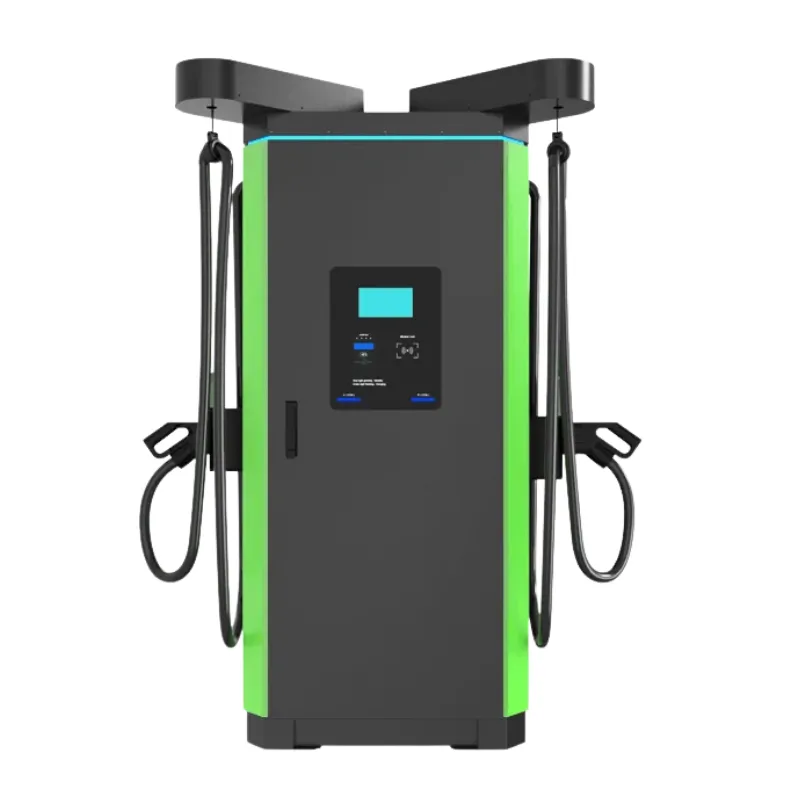
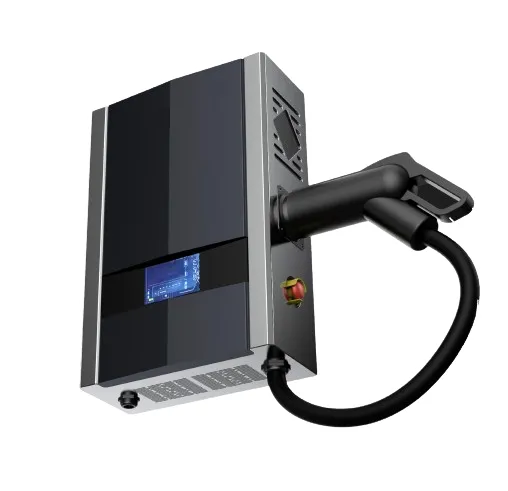
For US sites only the UC series (60–360 kW) and the SC series (15–30 kW) have North American builds, with 480 V input and CCS1 or NACS connectors. UC fits corridor and retail fast-charge sites; the 360 kW cabinet is a two-gun unit with each CCS gun limited to 200 A, about 200 kW at 1,000 V, so one vehicle cannot draw the full 360 kW. SC suits small connections such as fleet yards. Both support OCPP 1.6J and 2.0.1 and operate up to +55 °C.
We cannot state that a model holds a UL or ETL listing or meets any Texas or NEVI requirement. Tell us the project and we will send the technical documents and test reports we can supply; confirm what the utility, the inspector and TxDOT need before ordering. See our standards guide for the US standards in outline.
Grid capacity calculator
- Spare power for charging
- —
- Input current per charger (400 V)
- —
- Chargers at full power
- —
Spare power = kVA × 0.95 power factor × (1 − margin) − existing peak load. Input current ≈ charger kW ÷ (√3 × 400 V), with power factor and 95 % efficiency added for DC chargers. With dynamic load management more chargers can share the same capacity at reduced power. Always confirm with your electrical engineer and the grid operator.
Frequently asked questions
- Do I need to be a licensed electricity retailer to sell charging in Texas?
- Not simply because you own the charger. The 2021 bill analysis for SB 1202 says a person who owns or operates equipment used solely to provide charging service for an alternatively fueled vehicle is not, for that reason alone, an electric utility or retail electric provider, and lets the Public Utility Commission exempt such providers by rule. The PUC rules and any later changes were not in the pages we read, so have counsel confirm the current position for your business model.
- Who do I call first: the retail electric provider or the wires utility?
- The wires utility, because the connection decides what you can build. Oncor, for example, asks for an online request when a project needs new poles, wire or transformers, then opens a construction portal account and assigns a project manager. Shop the energy contract with retail providers once you know the service size and the date.
- Are NEVI funds still available in Texas?
- TxDOT has awarded Phase II (321 stations, $226 million, reported 20 October 2026), so check TxDOT for any remaining solicitations, local-match terms and equipment requirements before you plan around the program. We did not read the federal or state technical requirements, so confirm them with TxDOT before you order chargers.
- How is demand billed for a fast-charging site in Texas?
- It depends on the wires utility tariff and the retail contract, and we did not read either. Ask the utility how it bills the delivery side (demand or per-kW charges) and ask each retail provider how it prices energy for a low-load-factor site, then run both in the grid capacity calculator and payback calculator.
References
- [1]Meeting demand for electric vehicle infrastructure (24 February 2026). Texas Department of Transportation.
- [2]TxDOT: 321 EV charging stations for Texas (20 October 2026). EVwire.
- [3]Bill analysis, SB 1202 (87th Legislature, 2021). Texas Legislature Online.
- [4]Texas Utilities Code s. 39.101, Customer Safeguards. Texas.Public.Law.
- [5]Electric Vehicles. Oncor Electric Delivery.
- [6]Construction and Development: new electric service. Oncor Electric Delivery.