Country guide
UK EV Charging Station Business: DNO Connections, Regulations and Business Rates
UK EV charging station business guide: 15,335 ultra-rapid chargers, Public Charge Point Regulations (99% rapid reliability), DNO connections and rates relief.
- Prepared by
- EVCSTAR Engineering Team
- Published
- Reading time
- 5 min
- Sources
- 7 references
At a glance
- Public chargers (30 Sep 2026)
- 124,738
- Ultra-rapid chargers, 150 kW+
- 15,335
- Rapid-network reliability required
- 99% a year
- Contactless duty from
- 8 kW and above
Key takeaways
- 1At the end of September 2026 Zapmap counted 124,738 public chargers in the UK, of which 14,387 were rapid (50-149 kW) and about 15,335 ultra-rapid (150 kW and above); rapid and ultra-rapid together grew 15% in a year, and 1,070 hubs (eight or more rapid or ultra-rapid chargers) were open to all EVs.
- 2The Public Charge Point Regulations 2023 (in force 24 November 2023) require contactless payment on public chargers of 8 kW and above, 99% average annual reliability for rapid networks, a free 24-hour helpline, open data with status updates within 30 seconds, and price per kWh shown before charging starts; most duties apply to operators that are not micro businesses, the pricing rule to all.
- 3The grid is the gating item: Ofgem says the contracted demand queue rose from 41 GW in November 2024 to 125 GW in June 2025 (29 GW of it connected to distribution networks) and is building reforms (Curate, Plan, Connect) that cover distribution-connected demand, so a charging site should apply early and expect readiness tests.
- 4Business rates are a rare good-news item in England: one council says qualifying standalone charging sites (separately assessed by the VOA, open to the public) get 100% relief until 31 March 2036, but bays inside a larger rated car park do not qualify; the start date varies between council pages, so confirm with yours.
On this page
Short answer: to run a UK EV charging station business you need a DNO connection offer, a charger that meets the Public Charge Point Regulations 2023 (99% annual reliability for rapid networks, contactless payment, a free 24-hour helpline) and a view on business rates, in that order of difficulty.
A market that is rebuilding around ultra-rapid
UK growth has shifted from slow to fast charging, and the hub is now the unit of competition. Zapmap’s end-September 2026 data record 124,738 public chargers, 14,387 rapid and 15,335 ultra-rapid, with the rapid and ultra-rapid group up 15% on the year and 1,070 hubs open to all EVs, plus 66 Tesla-only hub locations.
| Power band | Count (30 Sep 2026) | What it implies |
|---|---|---|
| Rapid, 50-149 kW | 14,387 | The current benchmark for a fast stop |
| Ultra-rapid, 150 kW and above | 15,335 | The category taking new capital |
| Hubs, 8+ rapid or ultra-rapid chargers | 1,070 | Hub scale is the benchmark to beat |
For city and regional detail see Birmingham and Northern Ireland, where the network operator and rules differ.
The regulations every public charger sits under
The Public Charge Point Regulations 2023 turn reliability, payment and data into legal duties. The statutory instrument was made on 2 November 2023 and came into force on 24 November 2023. Defined terms: a rapid charge point is 50 kW or above, and the contactless threshold is 8 kW.
| Duty | Requirement (summary of the text) |
|---|---|
| Contactless payment | New public chargers of 8 kW and above, and existing rapid chargers, within one year |
| Reliability | A network of rapid chargers reliable 99% of the time on average each calendar year, with compliance information published on the operator’s website |
| Helpline | Free to call, staffed 24 hours a day, number shown on or near each charger, quarterly call reports to the Secretary of State |
| Open data | OCPI 2.2.1 data for each public charger; location recorded before first public use; status updated within 30 seconds |
| Price display | Total price per kWh shown clearly, and not increased once charging starts |
Regulations 5 to 10 apply to operators that are not micro businesses; regulation 11 (price) applies to all operators. The practical lesson for a buyer is to specify a charger with OCPP connectivity, a card reader, remote diagnostics and a service plan that can evidence uptime, since 99% is measured per network, not per site. We explain OCPP versions on the standards page.
Getting a grid connection
Treat the DNO as your first customer and give it a package it can say yes to. National Highways’ guide sets out the sequence that applies to any charging site: a pre-application enquiry, a formal application with expected demand and fees, the operator’s capacity and safety review, a connection offer with costs, upgrades and timescales, and a signed agreement. It also advises having a site location plan, a layout plan and the Energy Networks Association EV application form ready, and notes that some sites need a grid upgrade.
Three points specific to hubs:
- Scale and consents. UK Power Networks reports up to 100 hub applications a year, some needing 3 MVA, and has published a guide to the land consents needed before applying (Electrical Contracting News, March 2025).
- G99 versus a demand application. G99 covers generation and storage above about 16 A per phase; an ordinary charging load is, in our understanding, applied for as demand, but solar, batteries or vehicle-to-grid on the same connection bring G99 in. A guide to G99 gives DNOs 45 working days to issue a quotation for low-voltage generation works, with £85 per working day owed when late; NGED’s November 2024 generation fees ranged from £187 to £3,184 depending on size (Reonic). Those are generation figures, not a hub timetable.
- The queue is changing. Ofgem’s February 2026 call for input says total contracted offers in the demand queue rose from 41 GW (17 GW transmission, 24 GW distribution) in November 2024 to 125 GW (97 GW transmission, 29 GW distribution) in June 2025, against a GB peak demand of 45 GW on 11 February 2026. The proposed reforms, Curate, Plan and Connect, include both transmission- and distribution-connected demand, and the document states that its approach reflects current thinking rather than final decisions. The surge is mostly data centres, but the rules will apply to you too. Apply early, with planning permission and land rights in order.
Use the grid capacity calculator to turn a charger mix into kVA before the first enquiry, and the demand charge guide for the running-cost side.
Business rates
In England a standalone public charging site can pay no business rates, but a charger in a car park usually cannot claim it. Warrington Borough Council states that eligible sites receive 100% relief until 31 March 2036 in England, with backdating to 1 April 2023 where the criteria are met. The conditions it lists: the site must be operational, energised and open to the public, consist wholly or mainly of charging points and their bays, have a separate Valuation Office Agency assessment under special category code 718, and not be bays within a larger rated property. Relief is applied automatically from VOA records.
We read one council’s page. Other council pages quoted in search results describe a start from 1 April 2026 and note that final regulations were awaited, so the dates and mechanics are not settled in our sources. Scotland, Wales and Northern Ireland have separate systems that we have not checked. Ask the VOA and your billing authority before you rely on the relief in a business case.
Matching equipment to a UK site
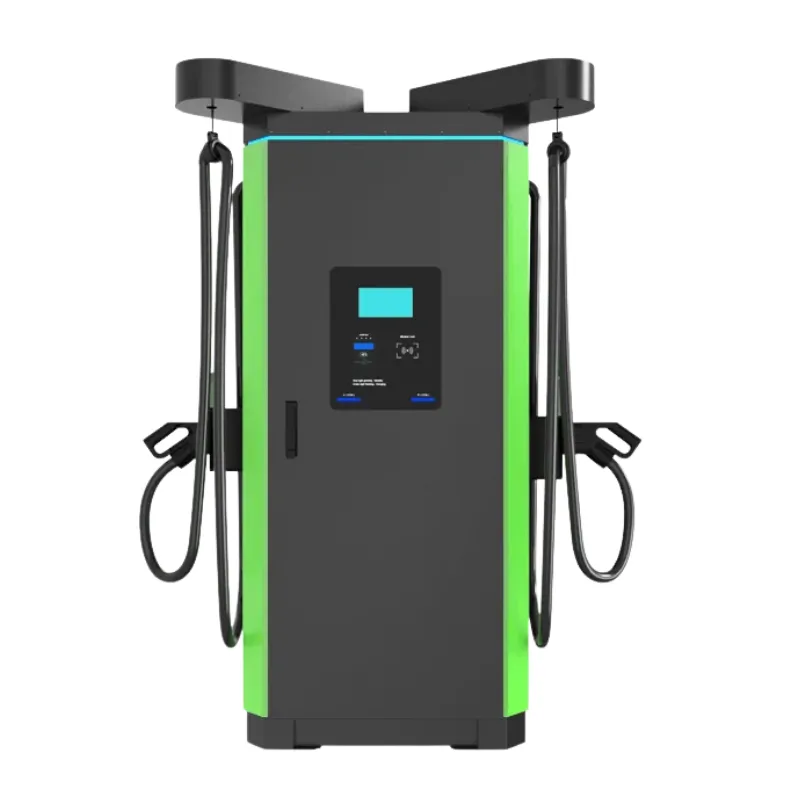
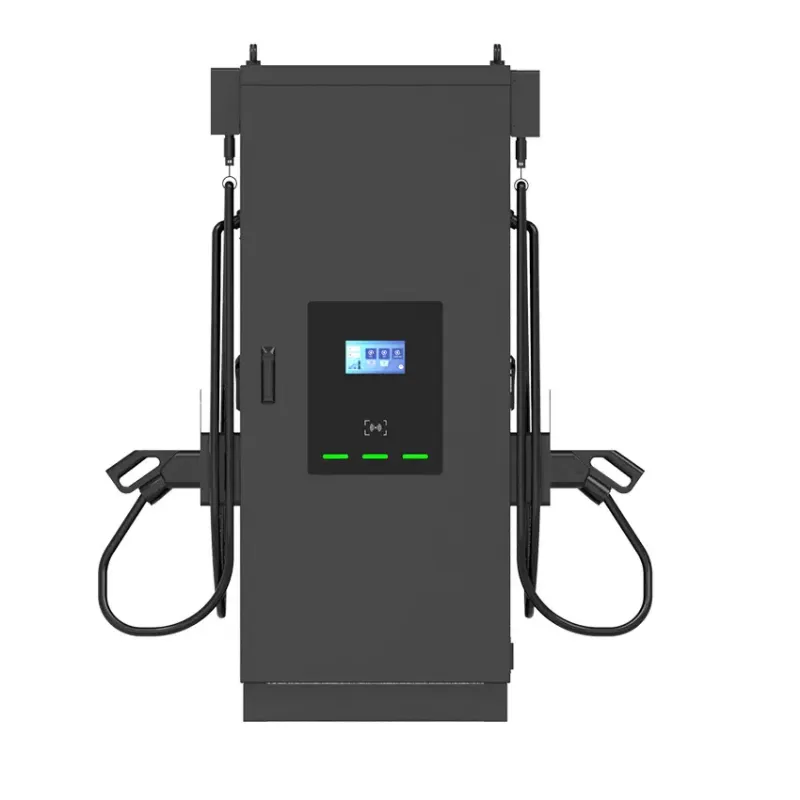
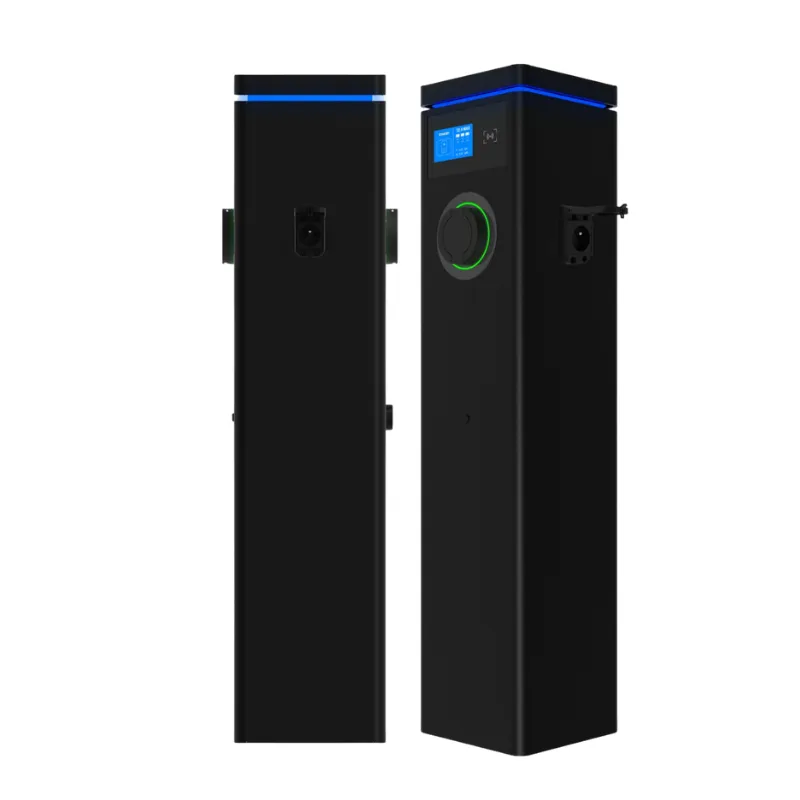
For the UK, specify the European build and ask for the paperwork before you commit. The UC series (60 to 300 kW in the European build; two guns share the cabinet, each CCS gun limited to 200 A, so a single car does not draw the full cabinet rating) suits hubs and forecourts; the CC series fits compact 120 to 180 kW sites; the CPO series provides two AC points per unit with an optional card terminal and a MID meter for billed charging, and PEN fault protection is available for the UK.
UKCA marking and the other UK equipment rules are requirements we explain but do not claim here; we can supply test reports and technical files to support your own conformity route. Installers can see how we work with the trade on the white-label page.
Price depends on configuration: power level, connector and cable mix, payment and metering options, site conditions. Send us your supply voltage, the capacity your DNO has offered, the number of guns, the payment method and the operator back-office you plan to use through the contact page, and we will reply with a configuration and itemised quotation.
Payback calculator
Example values are filled in — replace them with your own quotation, tariff and traffic figures.
- Energy sold per month
- —
- Net margin per month
- —
- Simple payback
- —
Simple payback = total investment ÷ (energy sold × (price − energy cost) − fixed costs), using 30 days per month. Taxes, financing, subsidies and utilisation growth are not included.
Grid capacity calculator
- Spare power for charging
- —
- Input current per charger (400 V)
- —
- Chargers at full power
- —
Spare power = kVA × 0.95 power factor × (1 − margin) − existing peak load. Input current ≈ charger kW ÷ (√3 × 400 V), with power factor and 95 % efficiency added for DC chargers. With dynamic load management more chargers can share the same capacity at reduced power. Always confirm with your electrical engineer and the grid operator.
Frequently asked questions
- Do I need a G99 application for a public charging site?
- G99 is the Energy Networks Association procedure for connecting generation and storage, with a threshold of about 16 A per phase (roughly 3.68 kW single-phase or 11 kW three-phase) for the simpler G98 route. A plain charging load is, in our understanding, a demand connection applied for separately, but a site with solar, a battery or vehicle-to-grid export brings G99 into the picture. Ask your DNO which applications your design needs and send the single-line diagram with the first enquiry.
- How long does a DNO take to give a connection offer?
- We found no single published figure for a charging hub. For generation quotations involving low-voltage works, a guide to G99 says the DNO has 45 working days and owes £85 per working day if late; reinforcement can stretch the timeline from weeks to months. UK Power Networks says correct land access and consents can get sites running in weeks rather than months, but that is its own claim. Ask for a written date and the reinforcement assumptions.
- Which Public Charge Point Regulations duties apply to a new rapid charger?
- For operators that are not micro businesses: contactless payment on chargers of 8 kW and above, 99% average annual reliability for rapid networks, a free staffed helpline 24 hours a day displayed on or near each charger, open data held in OCPI 2.2.1 format with status updated within 30 seconds, and the price per kWh shown clearly. All operators must show the price and cannot raise it once charging has started. Read the regulations for the exact scope and dates.
- Are EV charging stations exempt from business rates?
- One council states that qualifying sites receive 100% relief until 31 March 2036 in England, backdated to 1 April 2023, provided the site is open to the public, consists wholly or mainly of charging points and their bays, has its own Valuation Office Agency assessment under special category code 718, and is energised. Bays that are part of a larger rated property do not qualify. Other councils quote a 1 April 2026 start, so check your council and the VOA.
- Which EVCSTAR charger fits a UK site?
- The European build at 400 V three-phase with CCS2 connectors: UC for hubs and forecourts, CC for compact 120 to 180 kW sites, CPO for dual-port AC bays. We explain UK requirements such as UKCA marking and PEN fault protection but make no claim about approval status here. Price depends on configuration, so send your voltage, capacity offer, number of guns and payment needs through the contact page and we will reply with a configuration and itemised quotation.
References
- [1]EV charging statistics (30 September 2026). Zapmap, updated 27 October 2026.
- [2]The Public Charge Point Regulations 2023 (SI 2023/1168), as made. legislation.gov.uk.
- [3]Demand Connections Reform: call for input. Ofgem, 12 February 2026.
- [4]Business rates relief for EV charging points and EV-only forecourts. Warrington Borough Council.
- [5]Step 3: Detailed design, grid connection and pre-construction. National Highways.
- [6]New guide to help speed up EV charging hubs. Electrical Contracting News, on UK Power Networks' guide, March 2025.
- [7]G99 application and DNO approval guide. Reonic (installer software vendor).