Market guide
EV Chargers in Albania: Supply, Rules and Coastal Sites
EV charger Albania guide: ERE set charging at 22 lek/kWh from Nov 2025, 6,378 EVs at end-2024, state OSHEE Charge launched, and a mapped gap south of Durrës.
- Prepared by
- EVCSTAR Engineering Team
- Published
- Reading time
- 4 min
- Sources
- 3 references
At a glance
- Battery-electric vehicles (end 2024)
- 6,378
- ERE charging tariff from 1 Nov 2025
- 22 lek/kWh
- ERE peak-hour tariff
- 25.3 lek/kWh
- OSHEE Charge first station
- 10 fast units
Key takeaways
- 1Albania had 6,378 battery-electric vehicles at the end of 2024, up 92% in a year, and electric cars were 16.6% of new car sales, according to a 2026 Albanian Riviera charging guide; the same guide reports the energy regulator ERE set the price for charging stations above 11 kW at 22 lek/kWh, 25.3 lek at peak, from 1 November 2025, up from 14 lek.
- 2Public charging is thin: the guide's September 2026 check found about seven stations nationwide on Electromaps, none south of Durrës, and on the whole Riviera only a handful of fast chargers in Vlora, Lukovë and Saranda; the state utility has announced OSHEE Charge, starting with 10 fast units at the Tirana entrance.
- 3The government itself said the charging market is unregulated and expensive because there is no unified framework for reselling energy, so retail rules for operators are still moving; confirm licensing with ERE before you design a business.
- 4Summer is the stress test: a blackout hit Sarandë on the evening of 13 August 2026 in peak season, reportedly when one of three feeders failed under heavy demand, so coastal sites should plan for network limits at the exact time they are busiest.
On this page
Short answer: an EV charger in Albania is a bet on a small but fast-growing fleet and a thin network, where the regulator’s tariff (22 lek/kWh since November 2025, 25.3 at peak) matters less than whether the local feeder can carry a coastal site in August.
A fleet growing faster than the network
Electric cars are already one sale in six, but the chargers have not followed. The Albanian Riviera charging guide (Himara.net, June 2026, data checked September 2026) reports 6,378 battery-electric vehicles registered at the end of 2024, a 92% increase on the year, and electric cars at 16.6% of new car sales. It also says about 80% of electric vehicles on the road are Chinese-made, which is worth remembering when you decide which connectors and payment methods to offer.
| Place | Verified fast charging (September 2026 check) |
|---|---|
| Nationwide | About 7 stations on Electromaps; none south of Durrës; PlugoAL runs five 280 kW stations |
| Vlora | A 180 kW unit, two 60 kW units and two EVBox points |
| Lukovë | One 60 kW unit, the only verified fast charger between Vlora and Saranda |
| Sarandë | One fast charger; a 180 kW “Pit Stop” listed as opening soon |
| Himarë, Dhermi, Llogara, Ksamil | None mapped |
The author’s list covers the Riviera only and reports inconsistent distances between chargers (about 95 km in one section and 125 km in another), so treat the table as a snapshot, not a census.
Who sets the rules
ERE sets the energy price, OSHEE is both the distributor and a competitor, and the resale framework is unfinished. On the tariff, the Riviera guide reports that ERE fixed the price for charging stations above 11 kW at 22 lek/kWh, rising to 25.3 lek/kWh at peak, effective 1 November 2025, up from 14 lek/kWh, and that the only operator publishing a retail price was iCharge, from €0.40/kWh. We could not open ERE’s decision; a 2026 distribution-tariff update may also apply, so check the current schedule with ERE.
On rules, the Ministry for Infrastructure and Energy launched OSHEE Charge: a first station at the entrance to Tirana on the TEG-Farkë segment with 10 fast-charging units, expansion to tourist corridors and underserved urban areas, and renewable energy supply. The minister said the existing market is unregulated and expensive because there is no unified framework for energy resale; the page gives no opening date. A private operator therefore faces a regulator who is still deciding the terms, and a state-owned utility that is also the connection provider.
Coastal load in the tourist season
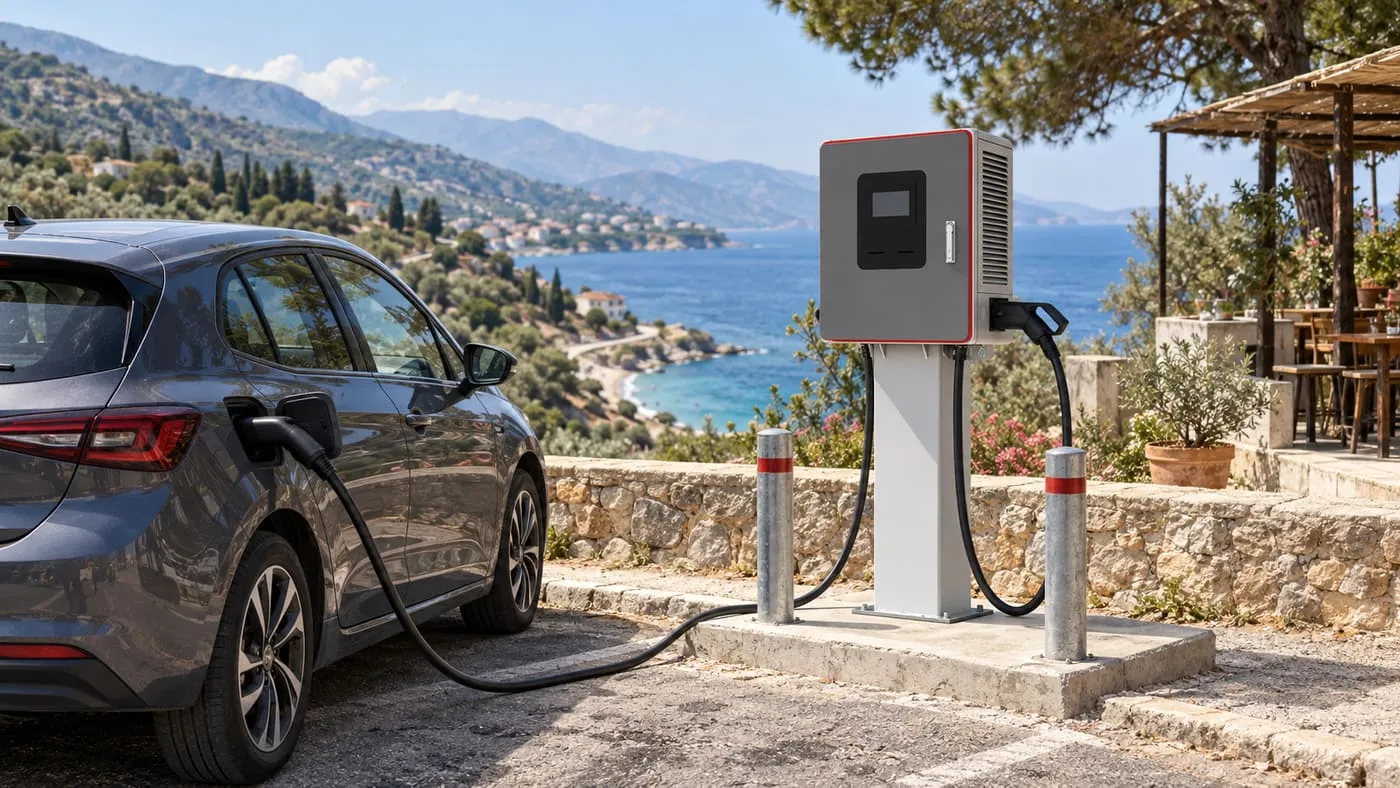
The coast has the demand and the weakest grid at the same moment. On Thursday 13 August 2026, around 9:30 p.m., Sarandë lost power during the peak season; preliminary reports pointed to heavy demand causing one of the three feeders supplying the line to fail, and the article does not say when power returned (Albanian Daily News, 14 August 2026). The Riviera guide notes that 95-99% of Albania’s electricity comes from hydropower; it gives no grid-capacity or voltage details, so those come from OSHEE.
Practical steps for a coastal site:
- Ask OSHEE which feeder and which substation would supply the site, and for its August loading and outage record.
- Size the connection with a margin and use the grid capacity calculator to compare 2 x 60 kW, 120 kW and 180 kW cases.
- Agree a site power limit with the host. Ask us how the charger can cap site demand so that a peak-hour surge next door does not trip the supply.
- Plan for heat. All EVCSTAR chargers are specified for ambient temperatures up to +55 °C, but shade and ventilation still change cabinet temperature.
Where Albania sits among its neighbours
Neighbouring markets show the same questions in different answers. Compare the permitting and tariff stories in North Macedonia and Serbia, and the tourism-route logic in Greece. On connectors, the Riviera guide notes that one operator fits GB/T alongside CCS2 because of the Chinese-made share of the fleet; the standards guide explains the connector choice.
Choosing equipment for an Albanian site
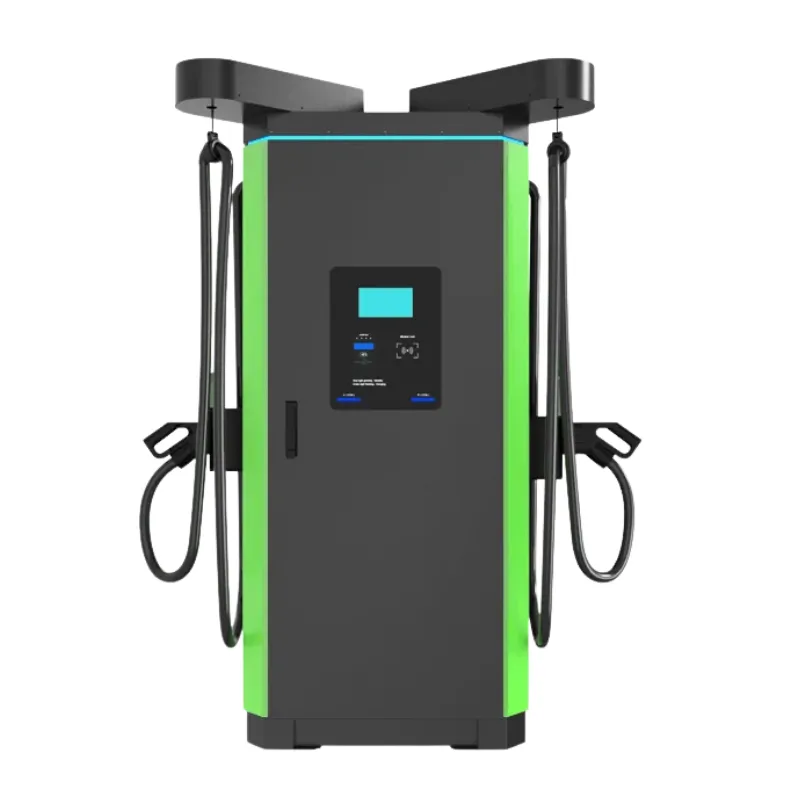
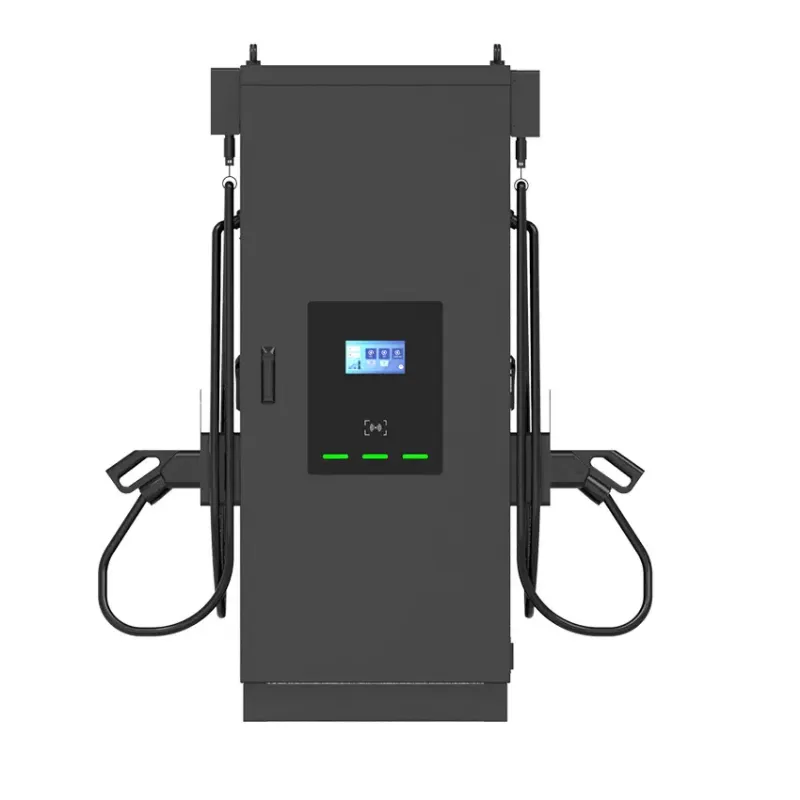
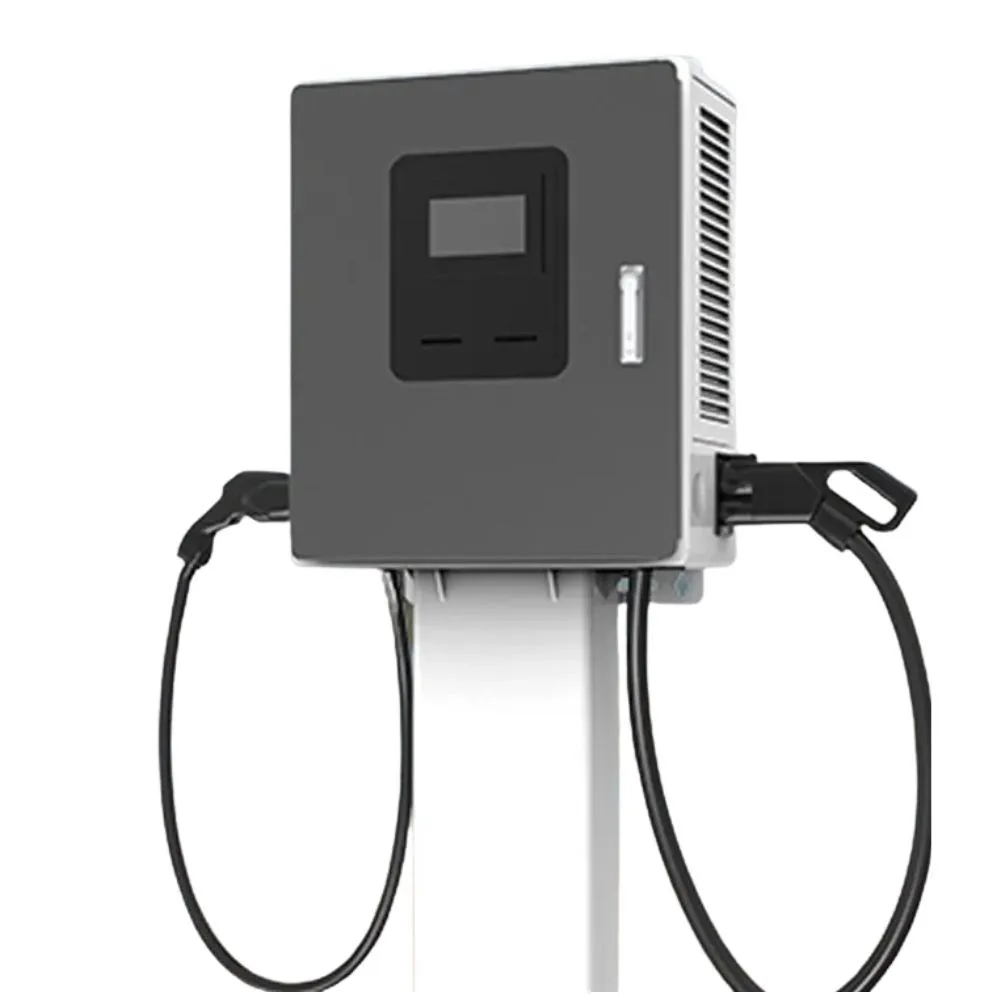
Start with the European build at 400 V three-phase (confirm the supply with OSHEE) and decide connector mix last. The UC series works for a corridor or Tirana-area hub: two guns share the cabinet power and each CCS gun is limited to 200 A, so no single car takes the full cabinet rating. The CC series suits a hotel or town-centre site that can only secure 120 to 180 kW, and the HC series fits a smaller DC point.
Price depends on configuration: power level, connector and cable mix, payment and load-management options, site conditions. Send the supply voltage, the capacity OSHEE has offered, the number of guns and the cars you expect to serve through the contact page, and we will reply with a configuration and itemised quotation. We can supply test reports and technical files for any local approval; confirm current import and conformity requirements with your customs agent.
Grid capacity calculator
- Spare power for charging
- —
- Input current per charger (400 V)
- —
- Chargers at full power
- —
Spare power = kVA × 0.95 power factor × (1 − margin) − existing peak load. Input current ≈ charger kW ÷ (√3 × 400 V), with power factor and 95 % efficiency added for DC chargers. With dynamic load management more chargers can share the same capacity at reduced power. Always confirm with your electrical engineer and the grid operator.
Frequently asked questions
- What does electricity cost an EV charging operator in Albania?
- A 2026 guide to Riviera charging reports that the regulator ERE set the price for charging stations above 11 kW at 22 lek/kWh, 25.3 lek/kWh at peak hours, from 1 November 2025, up from 14 lek/kWh. We could not open ERE's own decision, so check the notice and any 2026 tariff update with ERE and the distribution company OSHEE before you model margins.
- Who regulates EV charging in Albania?
- Electricity tariffs are set by the regulator ERE, and the state-owned distribution utility is OSHEE, which has launched its own charging service, OSHEE Charge. The infrastructure minister said at its launch that the resale of energy for charging is not covered by a unified framework, so confirm with ERE and the ministry what licence or registration a private operator needs.
- How many EV chargers does Albania have?
- We found no authoritative national count. A September 2026 check reported about seven stations on Electromaps, none south of Durrës, with five 280 kW ultra-fast stations run by PlugoAL and a few 60 to 180 kW units around Vlora and Saranda. A 2023 tender had aimed for 200 to 300 stations by 2025; the same guide found no completion notice for the Himarë section.
- Which EVCSTAR charger fits an Albanian site?
- Assuming a standard European 400 V three-phase supply (confirm with OSHEE), the European build applies: UC for corridors and large hubs, CC for compact 120 to 180 kW sites, HC for smaller DC points. Connector options are agreed per order. Price depends on configuration, so send your voltage, number of guns and the capacity OSHEE has confirmed through the contact page and we will reply with a configuration and itemised quotation.
References
- [1]EV charging on the Albanian Riviera. Himara.net, 18 June 2026 (charger data checked 20 September 2026).
- [2]OSHEE Charge launches as Albania's new public service for clean-energy electric vehicle charging. Ministry for Infrastructure and Energy, Albania.
- [3]Power outage leaves Albania's Sarandë without electricity amid tourist season. Albanian Daily News, 14 August 2026.