City guide
Birmingham Fast Charging Sites: NGED Connections and Clean Air Zone Demand
EV charging station business Birmingham guide: 1,000+ public chargers, Clean Air Zone EV exemption, 394 taxi-led council chargers, NGED connections.
- Prepared by
- EVCSTAR Engineering Team
- Published
- Reading time
- 3 min
- Sources
- 6 references
At a glance
- Public chargers in Birmingham (Oct 2024)
- 1,000+
- West Midlands public chargers (Apr 2025)
- 4,000+
- Council taxi-led rollout (2020)
- 394 points
- CAZ treatment of electric vehicles
- Exempt
Key takeaways
- 1Birmingham grew from 90 to over 1,000 public chargers between October 2019 and October 2024 (University of Birmingham), and the West Midlands county had more than 4,000 in April 2025; the gap now is rapid and ultra-rapid DC, not slow AC.
- 2Electric vehicles are exempt from Clean Air Zone charges, and the council has pushed taxi and private hire drivers to electric since 2019 licensing rules, so cab and minicab depot-style charging is a real demand pool.
- 3The council's own network with ESB was announced in 2020 as 394 fast and rapid points (about 197 sites) and a city-centre first hub on Navigation Street with 4 x 50 kW and 2 x 22 kW points; big new hubs are coming from the Combined Authority (3 sites of 20 DC chargers, due 2026).
- 4Your connection will come from the local distribution network operator (NGED, National Grid Electricity Distribution), but we could not open its connection pages, so request a quote and a written date before you commit to a lease.
On this page
Short answer: for an EV charging station business in Birmingham the opening is rapid DC capacity for taxis, private hire and shift workers inside and around the Clean Air Zone, on a site where NGED can give you enough supply. Slow public chargers have multiplied since 2019; the unknown is a connection date, which only NGED can give.
What the Clean Air Zone changes for chargers
The zone does not mandate chargers, but it moves the licensed fleet toward electric. Birmingham’s Licensing and Public Protection Committee approved age limits for licensed taxis and private hire vehicles on 10 April 2019, applying from 1 January 2020 as preparation for the Clean Air Zone. The council says electric vehicles are exempt from the charge, and it fitted Euro 6 LPG engines to 65 hackney carriages so they are not charged either (Birmingham City Council, March 2026). For a driver with a petrol or diesel car that does not meet the standard, the daily charge sits on Brum Breathes; confirm the current amounts there.
A cab or minicab works long shifts and cannot wait for a 7 kW point, which is why the council’s 2020 plan was built around fast and rapid points.
What the council and the region have already built
Public chargers grew roughly elevenfold in five years, but the council and the Combined Authority are still adding rapid sites. Birmingham went from 90 to over 1,000 public chargers between October 2019 and October 2024; Coventry reached nearly 2,500 and Walsall and Sandwell lag behind (University of Birmingham, 2025). In August 2020 the council announced 394 fast and rapid points with ESB EV Solutions, funded with £2.92 million from OLEV, starting in the city centre to serve taxis but open to the public. Its first hub on Navigation Street was described by the ESB Energy page with 4 x 50 kW rapid and 2 x 22 kW fast points (the council gave up to 197 sites for the OLEV award). The region’s ultra-rapid pipeline is larger: nine ultra-fast hubs with 200+ points existed in April 2025 and three new 20-charger DC sites were secured in February 2025 to open in 2026 (electrive, 2025), funded through LEVI and CRSTS.
| Item | Detail | Year |
|---|---|---|
| Birmingham public chargers | 90 to 1,000+ | 2019 to 2024 |
| West Midlands county public chargers | 4,000+ | 2025 |
| Council rollout with ESB | 394 fast and rapid points | 2020 |
| New Combined Authority DC sites | 3 sites x 20 chargers | open 2026 |
| NEC charging park | up to 180 vehicles, 30 HPC points | opened 2023 |
Where a private site fits
Aim at gaps the public programmes do not reach: depots, arrival points and outer districts. Council hubs are city-centre, taxi-focused and tied to public land. Private opportunities are retail and leisure parks near the A4540 Middleway ring (the edge of the zone), minicab operator yards, airport-corridor car parks and sites in boroughs the university study says are behind. Check each site’s planning and parking rules with the council; we did not read planning policy for this guide.
Connecting to the network
NGED will be the party that decides timing, and we could not see its current figures. The operator serves Birmingham, Bristol and Cardiff according to its own published material, and has an online application tool for EV chargers; beyond that, we could not open its pages (they blocked automated access). For a multi-bay DC site, request a connection offer early, ask what reinforcement is assumed, and use the grid capacity calculator to turn your bay count into a kVA request. Phased power (start with a dual-gun cabinet, add later) can shorten the first offer.
How EVCSTAR equipment fits
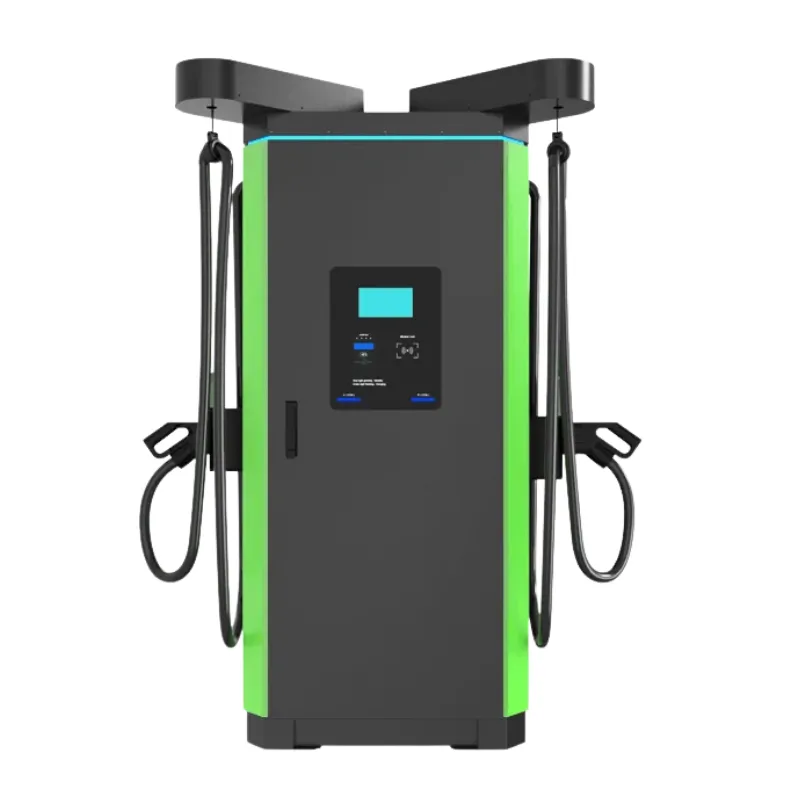
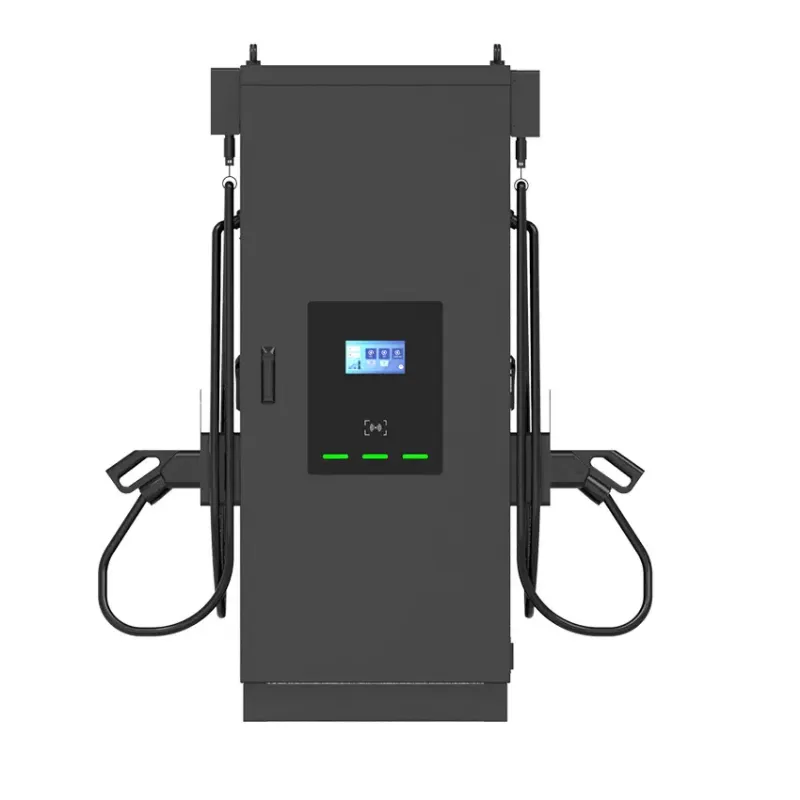
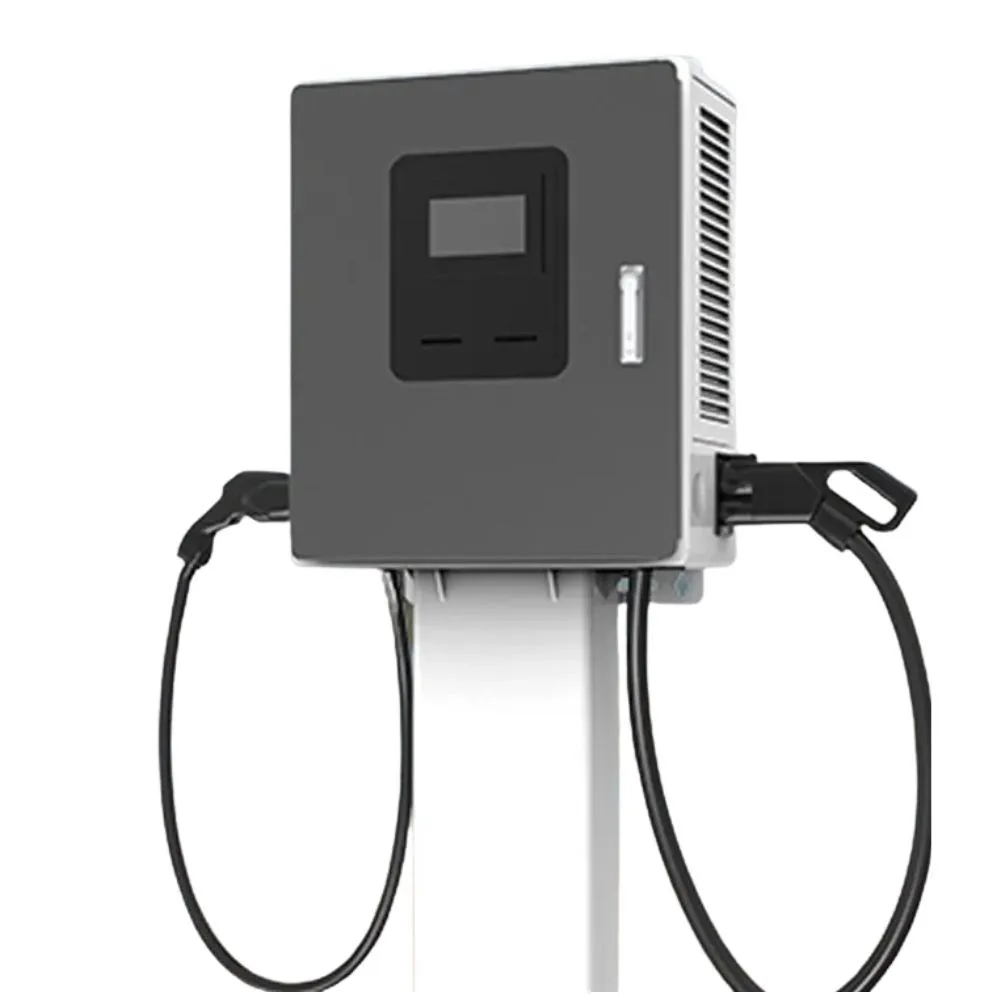
Taxi-focused rapid sites suit the CC series or the UC series in a 400 V European build with CCS2. A UC cabinet has two guns sharing power; each CCS gun is limited to 200 A, about 200 kW at 1,000 V, so a single car cannot take the 300 kW or 360 kW cabinet total. Lower-power depots can use the HC series. Output of 50 kW is typical for cab top-ups; confirm with your drivers what their vehicles accept. We can provide test reports and technical documents to support UK regulatory and DNO paperwork; we do not state that any model already complies with a specific UK scheme. Read standards for the CE and UKCA background.
Grid capacity calculator
- Spare power for charging
- —
- Input current per charger (400 V)
- —
- Chargers at full power
- —
Spare power = kVA × 0.95 power factor × (1 − margin) − existing peak load. Input current ≈ charger kW ÷ (√3 × 400 V), with power factor and 95 % efficiency added for DC chargers. With dynamic load management more chargers can share the same capacity at reduced power. Always confirm with your electrical engineer and the grid operator.
Frequently asked questions
- Who connects a charging site in Birmingham to the grid?
- The distribution network operator for the West Midlands is NGED (National Grid Electricity Distribution). We could not open its connection pages or fee schedules, so we cannot quote lead times or costs. Ask for a formal connection offer for the exact kVA you need, and compare it with the grid capacity calculator on this site.
- Does the Clean Air Zone help EV charging demand?
- It helps indirectly. Birmingham says electric vehicles are exempt from Clean Air Zone charges, and Euro 6 LPG hackney cabs are not charged either. Taxi and private hire licensing has set maximum vehicle ages since 1 January 2020 to prepare for the zone. The current charge levels for non-compliant vehicles are on Brum Breathes; check them there.
- Is the city already full of chargers?
- No hard answer exists for DC specifically. Public chargers rose from 90 to over 1,000 between 2019 and 2024, and the region has over 4,000, but the university analysis says the build-out is uneven and recommends funding high-power chargers and grid upgrades in lagging boroughs. Walk the area you want and count rapid points directly.
- What connector and protocol standards apply?
- UK public DC chargers use CCS2, and UK rules require 99% average availability for public chargers under the Public Charge Point Regulations, as cited by the university analysis. Our UC and CC series support OCPP 1.6J and 2.0.1; the exact compliance steps for UK regulations should be confirmed with your installer.
References
- [1]Taxis and private hire vehicles (What else is Birmingham doing about air pollution?). Birmingham City Council, updated 25 March 2026.
- [2]Brum Breathes - Clean Air Zone. Birmingham City Council.
- [3]Challenges and opportunities for electric vehicles in the West Midlands. University of Birmingham CityREDI, 2025.
- [4]Thousands more charging points for the West Midlands. electrive, 30 April 2025.
- [5]Birmingham City Council takes major step with 400-strong EV charger rollout. EV Infrastructure News, 12 August 2020.
- [6]Birmingham's electric vehicle charging network is changing. ESB Energy.