Market guide
EV Fast Charging in Northern Ireland: NIE Networks Rules and Sites
EV charging station business Northern Ireland: 368 rapid chargers (Sept 2026), 19 public chargers per 100,000 people, NIE connection charging changes July 2026.
- Prepared by
- EVCSTAR Engineering Team
- Published
- Reading time
- 3 min
- Sources
- 6 references
At a glance
- Rapid / ultra-rapid chargers (30 Sep 2026)
- 368
- Public chargers per 100,000 (Apr 2024)
- 19
- NIE connection charging changes apply to
- Applications after 1 Jul 2026
- Ionity Belfast hub (2024)
- 11 x 350 kW
Key takeaways
- 1Northern Ireland had 368 rapid and ultra-rapid chargers at 30 September 2026 (Zapmap), second-lowest of the UK regions, and an April 2024 analysis put public provision at 19 chargers per 100,000 residents against 56 in England and 69 in Scotland.
- 2The grid operator is NIE Networks, which asks to be told about every EV charger so it can check capacity; its connection charging rules change for applications received after 1 July 2026, so any new site gets the new regime.
- 3The government task-force priority is a rapid DC network for long-distance, light-commercial and cross-border trips, and the Department for Infrastructure says it plans to resolve capacity constraints at identified corridor sites.
- 4Big names are arriving (Ionity: 11 x 350 kW in Belfast in 2024; ESB: a Levelling Up Fund project for five 200 kW hubs), so the room for a private operator is secondary corridors, towns and fleet sites.
On this page
Short answer: an EV charging station business in Northern Ireland is a small, thinly served market where the first big operators have only just arrived. With 368 rapid chargers and low per-head provision, a private site can still fill a gap, provided NIE Networks can supply enough power under the connection regime that changed on 1 July 2026.
How thin the network is
Northern Ireland is the second-lowest UK region for rapid charging. Zapmap counted 368 rapid or ultra-rapid chargers there at 30 September 2026, against 1,011 in the North East, the only region with fewer, in a UK total of 29,722. Earlier, Agenda NI (April 2024) put public provision at 19 chargers per 100,000 residents, compared with 69 in Scotland, 56 in England and 47 in Wales. Mixed measures and dates, but they point the same way.
| Measure | Northern Ireland | Source and date |
|---|---|---|
| Rapid / ultra-rapid chargers | 368 | Zapmap, Sept 2026 |
| Public chargers per 100,000 | 19 | Agenda NI, Apr 2024 |
| Homes suitable for home charging | about 80% | DfI task-force, via Agenda NI |
| Residents with off-street parking in some urban areas | about 60% | Agenda NI, Apr 2024 |
The last two rows matter to a business plan: most drivers can charge at home, so public DC demand comes from long trips, people without a driveway, taxis and light commercial vans.
Who has already moved in
Ionity and ESB define the top end, so a new site should not copy them. Ionity opened its first Northern Irish site on the A6 at Toome and then an 11 x 350 kW hub at the Kennedy Centre in Belfast in March 2024, a combined investment of about GBP 3 million (EV Powered, 2024). In November 2021 ESB won GBP 3.27 million from the Levelling Up Fund to double the number of rapid chargers and introduce 200 kW hubs at five strategic locations (Downtown Radio, 2021). We did not verify the delivery status of the ESB hubs, so check current maps before you pick a site.
Policy: what the Department for Infrastructure wants
Government direction favours rapid DC on corridors and cross-border routes. The EV Infrastructure Task-Force, set up by the Department for Infrastructure in 2022, recommended prioritising rapid charging for long-distance trips, light commercial logistics and cross-border travel. DfI says it plans to resolve electrical capacity constraints at identified charging sites along transport corridors, as set out in the EV Infrastructure Action Plan and the Path to Net Zero Action Plan 2024 (Agenda NI, 2024). We did not find open grant schemes for private operators; ask DfI before assuming any.
Getting power from NIE Networks
Treat the connection application as the critical path, and note the date change. NIE Networks says it is committed to supporting charge point installations, wants to be told about every one so that it can check whether local capacity is enough, and uses that information to plan upgrades (NIE Networks, 2022). Its page on connection charging states that the change applies to applications received after 1 July 2026; the page does not describe the charges themselves, and the Utility Regulator licence modification we saw mentioned elsewhere was not read in full. So: apply with your kVA requirement, ask for a firm offer, and check the offer against the grid capacity calculator. For a payback test use the payback calculator.
How EVCSTAR equipment fits
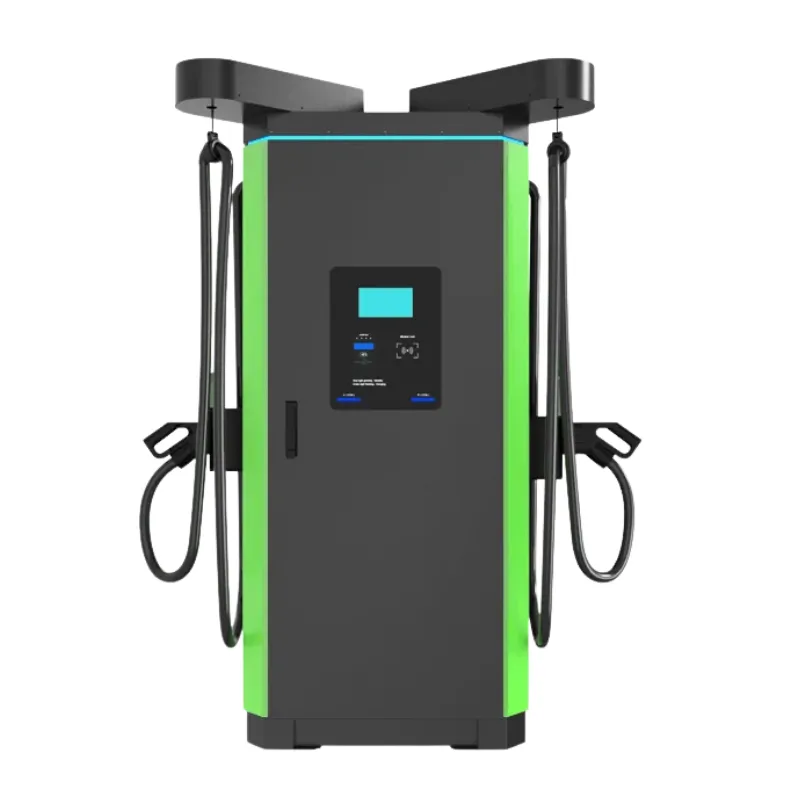
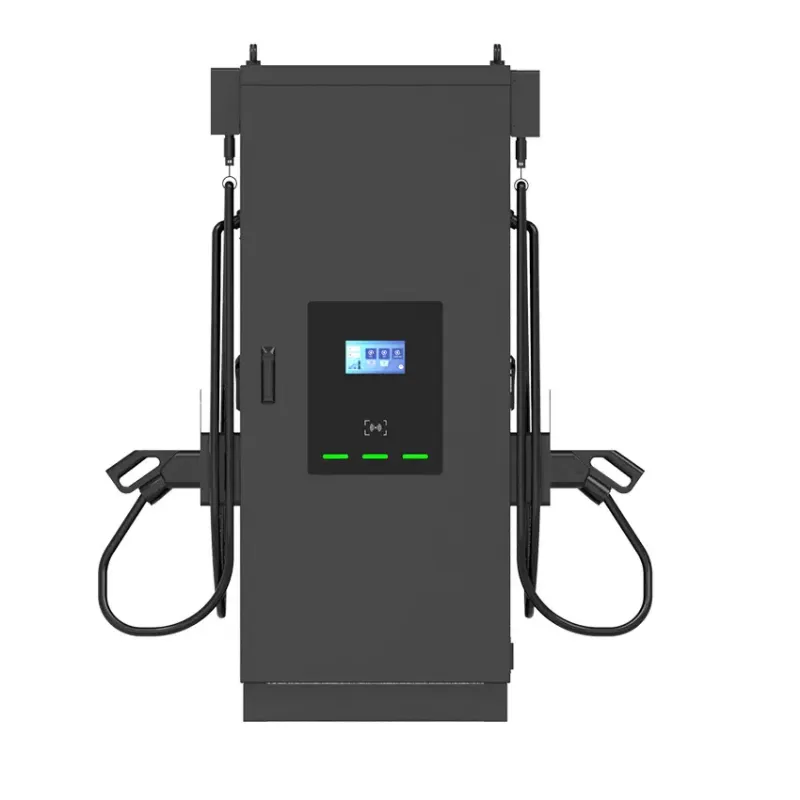
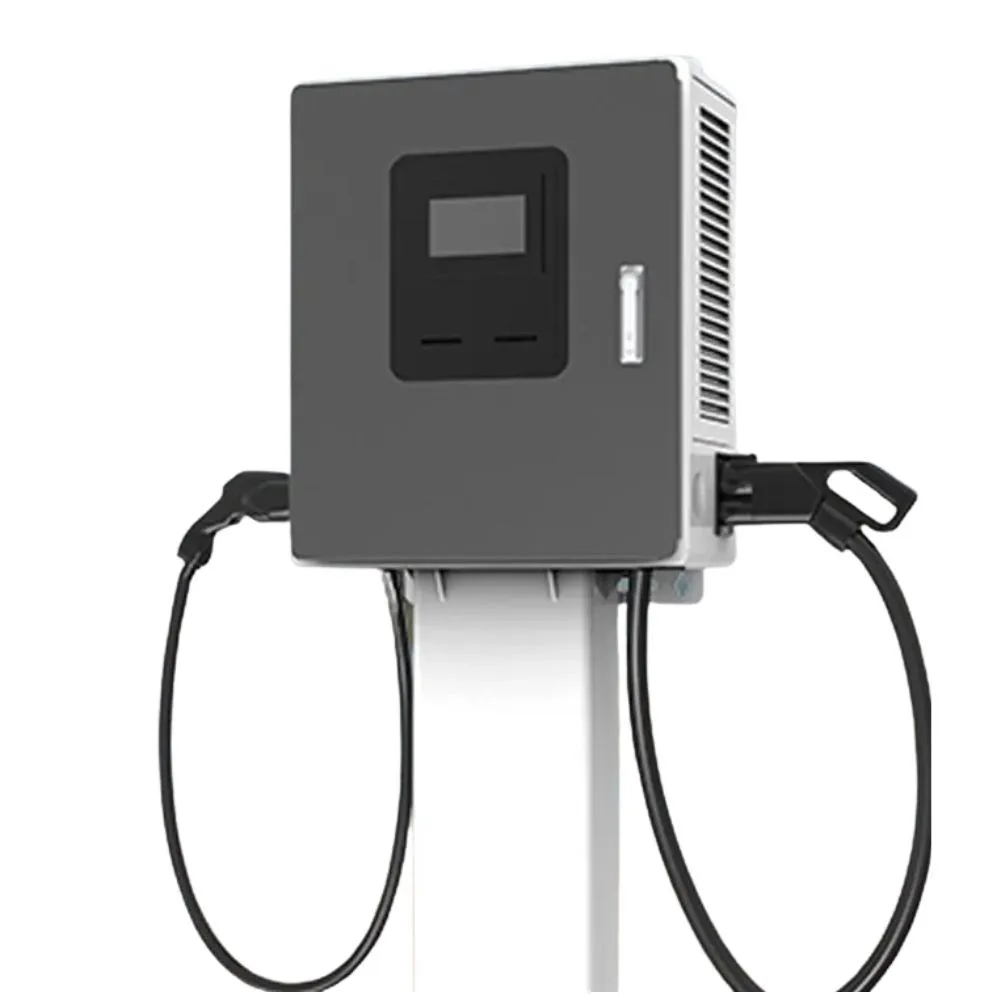
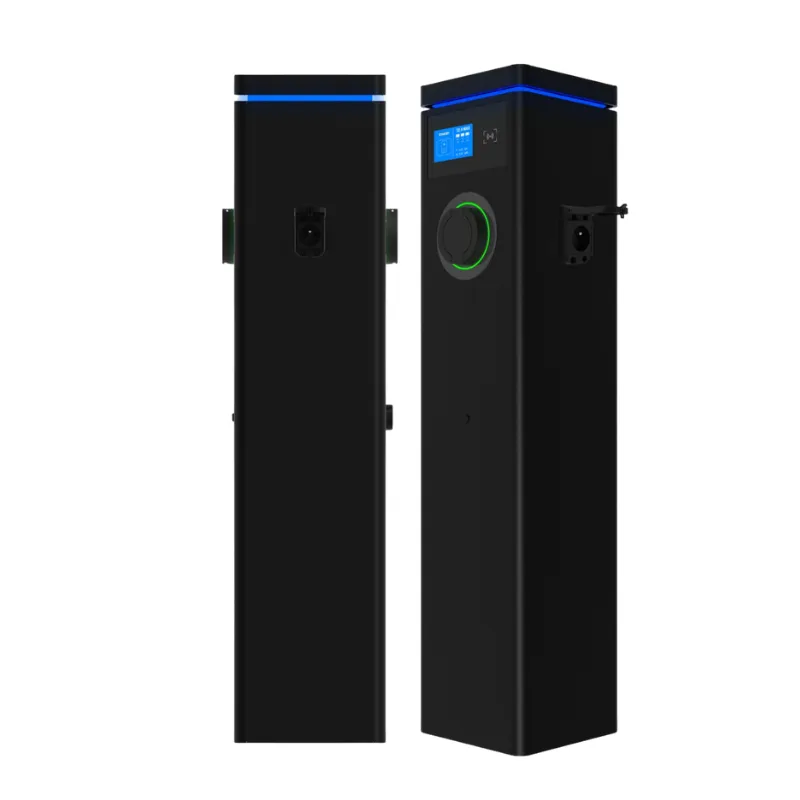
For a corridor or town-centre rapid site, the UC series in the European 400 V build with CCS2 is the main fit; smaller supplies suit the CC series or the HC series. A UC cabinet has two guns that share power; each CCS gun is limited to 200 A, about 200 kW at 1,000 V, so one car cannot draw the full 300 or 360 kW rating. Hotels and car parks that only need destination charging can use the CPO series (2 x 3.7-22 kW AC). We can provide test reports and technical documents for the DNO and your installer; whether a given model meets UK product regulations should be confirmed before purchase. Standards background: EV charging standards.
Grid capacity calculator
- Spare power for charging
- —
- Input current per charger (400 V)
- —
- Chargers at full power
- —
Spare power = kVA × 0.95 power factor × (1 − margin) − existing peak load. Input current ≈ charger kW ÷ (√3 × 400 V), with power factor and 95 % efficiency added for DC chargers. With dynamic load management more chargers can share the same capacity at reduced power. Always confirm with your electrical engineer and the grid operator.
Frequently asked questions
- Who connects a charger to the grid in Northern Ireland?
- NIE Networks, the distribution network operator. It says a charge point can more than double the demand of a typical home, asks to be notified of every charger so it can check local capacity, and uses that to plan investment. Its connection charging rules change for applications received after 1 July 2026; we did not find the details, so ask for a written quote.
- Is Northern Ireland under-served for rapid charging?
- On the numbers, yes. Zapmap counted 368 rapid or ultra-rapid chargers there at 30 September 2026, second-lowest among UK regions (the North East has 1,011), and Agenda NI reported 19 public chargers per 100,000 residents in April 2024. These are different measures from different dates, so use them as direction, not as a ranking.
- What public programmes exist?
- A 2021 Levelling Up Fund award of GBP 3.27 million went to ESB to double rapid chargers and build five 200 kW hubs; the Department for Infrastructure (task-force set up 2022) prioritises rapid DC for long-distance, light commercial and cross-border trips. We could not confirm what grants for private operators are open now; check the Department for Infrastructure.
- Which connector and protocol should I buy?
- CCS2 for DC and Type 2 for AC, as in the rest of the UK. Our chargers support OCPP 1.6J and 2.0.1. UK-specific product rules (UKCA, smart charge point and public charge point regulations) should be checked with your installer; we do not claim any model already holds a UK approval.
References
- [1]EV charging statistics (regional rapid charger counts, 30 September 2026). Zapmap.
- [2]Plugging into progress: improving EV charging infrastructure in Northern Ireland. Agenda NI, April 2024.
- [3]Installation of EV charge points. NIE Networks, 2022.
- [4]When does this apply from? (connection charging). NIE Networks.
- [5]Ionity opens Northern Ireland's biggest ultra-rapid charging hub. EV Powered, 14 March 2024.
- [6]Huge upgrade agreed for NI's electric car charging points. Downtown Radio, 17 November 2021.