City guide
Los Angeles Fast Charging Sites: LADWP vs SCE, Permits and High Real Estate Costs
EV charging station business Los Angeles guide: LADWP EVA1-3 rates with a $2.59/kW demand charge, SCE TOU-EV-8 rules, 480 V service planning and land costs.
- Prepared by
- EVCSTAR Engineering Team
- Published
- Reading time
- 4 min
- Sources
- 6 references
At a glance
- LADWP EVA2 monthly demand charge
- $3.91 per kW
- SCE TOU-EV-8 range (Aug 2026)
- 20-500 kW
- LA County industrial vacancy, Q2 2026
- 6.5%
- LADOT curbside ports planned (Nov 2025)
- 90 in 12 months
Key takeaways
- 1Who sells you power depends on the parcel: inside the City of Los Angeles it is LADWP, which has dedicated EVA1, EVA2 and EVA3 commercial charging rates; across the city line it may be Southern California Edison (SCE), which uses TOU-EV-7, -8 and -9. Confirm the utility before you sign a lease.
- 2LADWP's published EV base rates (calculated from 2021 pass-through factors and fixed for the agreement term) carry a monthly demand charge of $2.21 to $3.91 per kW, plus an annual charge equal to the General Service IRCA per kW.
- 3SCE's fact sheet (August 2026) says TOU-EV-8 covers separately metered charging demand above 20 kW up to 500 kW and that its demand charges are not applicable until the CPUC authorises them, so the energy rate does the work for now.
- 4Any 480 V (Level III) charger in LADWP territory goes through a Service Planning Engineer, with a Commercial EV Charger Customer Submittal Package and request form; start that before the building permit.
On this page
Short answer: an EV charging station business in Los Angeles is decided less by the city than by the meter: on LADWP territory you apply for service through a Service Planning Engineer and can pick purpose-built EV rates, on SCE territory you take a separately metered TOU-EV schedule, and in both cases the land is often the bigger line item than the power.
Two utilities, two sets of forms
Inside City of Los Angeles limits you deal with LADWP; across the border the answer may be SCE or another municipal utility. LADWP’s charger page says commercial, public and multi-family chargers require plans, that a Service Planning Engineer handles all 480 V (Level III) chargers, and that applicants submit a Commercial EV Charger Customer Submittal Package plus a Commercial EV Charger Request Form. SCE’s TOU-EV rates apply to businesses that separately meter their charging. We did not find a public boundary map in the pages we read, so ask both for a written service confirmation for the exact parcel.
| LADWP | SCE | |
|---|---|---|
| EV rate family | EVA1, EVA2, EVA3 (a = standard, b = with critical peak pricing) | TOU-EV-7, -8, -9 |
| Selected by | Agreement; base rates fixed for its term | Charging demand: up to 20 kW, 20-500 kW, above 500 kW |
| Fast charger entry point | Service Planning Engineer | Separately metered EV account |
What LADWP’s EV rates charge
LADWP prices EV charging with a modest per-kW charge and a steep time-of-use energy curve. For the standard option the base-rate page lists a customer charge of $15.82 (EVA1a), $102.92 (EVA2a) and $140.66 (EVA3a) per month; a monthly demand charge of $2.59, $3.91 and $2.21 per kW; and an annual demand charge of $2.39 per kW (the page states the annual charge is not fixed and equals the General Service IRCA per kW). Energy on EVA2a is $0.23286 per kWh at peak, $0.14358 mid-peak and $0.10987 off-peak. The critical-peak version (EVA2b) lowers peak energy to $0.18486 but adds $0.96256 per kWh in critical-peak hours.
Two cautions. These base rates were calculated from adjustment factors in effect July to September 2021 and stay fixed for the agreement term, so current pass-through adjustments will change the bill; and we did not read how LADWP assigns a site to EVA1, EVA2 or EVA3. Use the numbers as a starting point in the payback calculator and ask LADWP for a quote. The principle is covered in our demand charges guide.
SCE: energy-only, for now
SCE’s TOU-EV-8 currently bills no demand charge, and that is the central assumption of any model in its territory. The August 2026 fact sheet says demand charges for TOU-EV-8 and TOU-EV-9 are not applicable until determined and authorised by the Commission. SCE’s joint rate comparison, current as of 1 June 2026, lists TOU-EV-8 at $0.09599 per kWh generation and $0.20167 per kWh SCE delivery; community choice suppliers in the area have their own generation rates. Delivery alone is about double the generation charge.
The honest planning move is to model two cases, one without a demand charge and one with a phase-in, because the Commission has not yet set the future charge. A site above 500 kW leaves TOU-EV-8 for TOU-EV-9; use the grid capacity calculator to see which band your design lands in.
Permits and the cost of the site
A DC fast charger in Los Angeles needs engineer-stamped electrical plans, and the lot is a negotiation in a softening market. According to a search summary of the LADBS EV permitting checklist (we could not open the PDF), plans and calculations are signed and stamped by a California registered electrical engineer and submitted through ePlanLA. We found no LADBS fee or turnaround figures, so ask LADBS directly whether an expedited commercial EV review applies, and run the utility application in parallel.
On land: the Matthews Q2 2026 report using CoStar data puts Los Angeles County industrial vacancy at 6.5%, with asking rents down 4.5% in a year and more than 20% below their peak. That is a negotiating point, but a retail pad or corner parcel is not priced like a warehouse and we have no figure for either. Get broker quotes for the real parcel type and a lease term that covers the wait for utility energisation.
Where demand comes from
The city is putting public money into curbside Level 2, which leaves DC fast charging to private sites. In November 2025 LADOT picked it’s electric to install 90 curbside ports over 12 months, starting with 15 in Koreatown; they are 240 V Level 2 units with detachable cables. That helps residents without a garage but does not serve rideshare drivers or fleets who need a quick charge, which is where DC sites in dense areas compete. We did not read a citywide DC port count, so map competing sites around your parcel before you commit.
Specifying equipment for an LA parcel
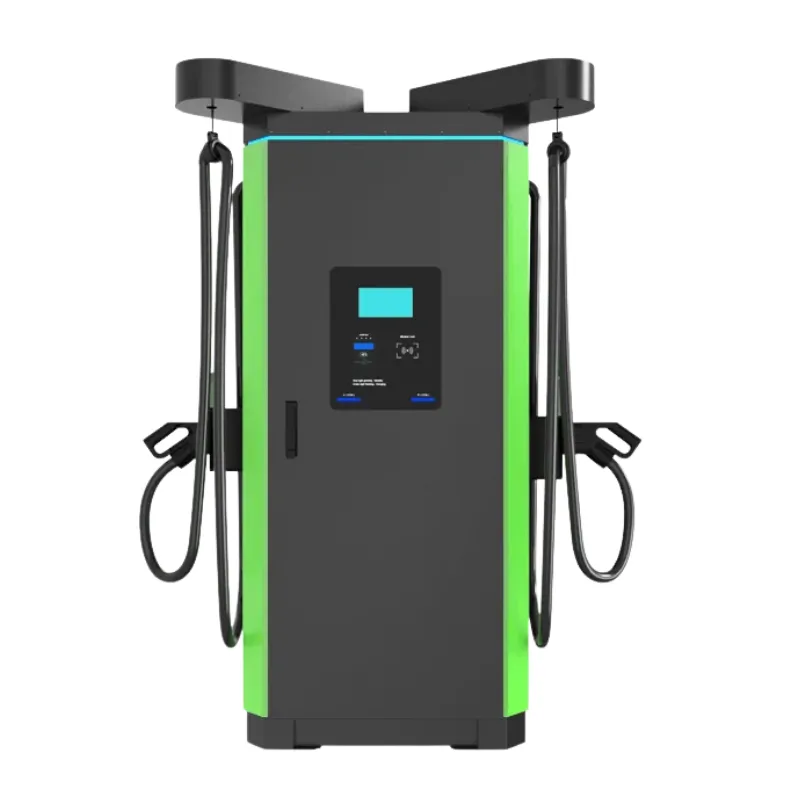
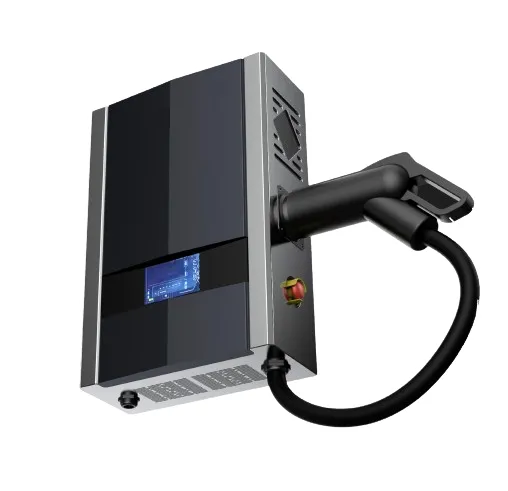
Choose the unit by the service the utility will offer, not by the nameplate. Where the service is small, the SC series (15-30 kW, North American build) can add DC charging; for a dedicated service the UC series (60-360 kW, 480 V input, CCS1 or NACS) fits. Its 360 kW cabinet is a two-gun unit, each CCS gun limited to 200 A, so one car cannot draw the full 360 kW. Both support OCPP 1.6J and 2.0.1 and operate to +55 °C, which suits sun-baked parking lots.
We cannot say that a model holds a UL, ETL or California certification; the equipment must meet what LADBS and the utility require, and we can supply technical documents and test reports. For other US hot-climate cities compare Phoenix and Texas. Send the utility, service voltage and capacity, number of bays and connector standards through the contact page, and we will reply with a configuration and quotation breakdown.
Payback calculator
Example values are filled in — replace them with your own quotation, tariff and traffic figures.
- Energy sold per month
- —
- Net margin per month
- —
- Simple payback
- —
Simple payback = total investment ÷ (energy sold × (price − energy cost) − fixed costs), using 30 days per month. Taxes, financing, subsidies and utilisation growth are not included.
Frequently asked questions
- How do I know whether LADWP or SCE serves my site?
- Ask both for a service confirmation by address. LADWP serves the City of Los Angeles; surrounding cities can be SCE or have their own municipal utility. We did not find a public boundary map in the sources we read, so treat the utility as the first thing to confirm, because the rate schedules and application forms differ.
- Does LADWP still offer the EVA rates to new customers?
- The LADWP page we read lists EVA1a-3a and EVA1b-3b base rates, calculated from 2021 pass-through factors and fixed for the term of the agreement. Which schedule a new site gets, and whether the same terms are open today, has to be confirmed with LADWP, as does the current annual demand charge.
- What is the demand charge on SCE TOU-EV-8?
- SCE's August 2026 fact sheet says demand charges for TOU-EV-8 and TOU-EV-9 are currently not applicable until determined and authorised by the Commission. That can change, so model your site both with and without a demand charge in the payback calculator.
- Which EVCSTAR chargers are available for Los Angeles?
- For US sites the UC series (60-360 kW, 480 V, CCS1 or NACS) and the SC series (15-30 kW) have North American builds. Send your utility, service size, number of bays and connector choice through the contact page and we will reply with a configuration and quotation breakdown.
References
- [1]Electric Vehicle Commercial Charging Service - Base Rates. Los Angeles Department of Water and Power.
- [2]Charger Installation. Los Angeles Department of Water and Power.
- [3]TOU-EV-7, TOU-EV-8, TOU-EV-9 Rate Fact Sheet (August 2026). Southern California Edison.
- [4]SCE and SBCE joint rate comparisons (rates current 1 June 2026). Southern California Edison.
- [5]LA selects it's electric to deploy 90 new public chargers (14 Nov 2025). EV Infrastructure News.
- [6]Los Angeles County industrial market report, Q2 2026. Matthews (CoStar data).