State guide
North Carolina Fast Charging: Duke Energy Programs and I-95/I-40 Sites
DC fast charging North Carolina business guide: $109M NEVI funds, 16 stations in round two, the 2019 resale law, and what to confirm with Duke Energy.
- Prepared by
- EVCSTAR Engineering Team
- Published
- Reading time
- 4 min
- Sources
- 3 references
At a glance
- NEVI funding to NC
- $109 million
- First round (Sept 2024)
- $5.92M, 9 sites
- Second round (Mar 2026)
- 16 stations
- EV charging resale law
- Enacted 17 Jul 2019
Key takeaways
- 1North Carolina received $109 million in NEVI funding; the first round gave $5.92 million to nine four-port sites (reported September 2024), and the March 2026 second round covers 16 stations on the alternative fuel corridors, with proposals closing on 11 May.
- 2NCDOT names Interstate 40, I-77 and US 17 as the alternative fuel corridors; the sources we read do not name I-95 as one, so do not assume NEVI money for a site there.
- 3Since 2019 (G.S. 62-3.23, with conditions that apply) a person who resells electricity to the public through EV charging equipment is not a public utility, which lets operators sell by the kilowatt-hour in a state that otherwise restricts electricity resale.
- 4All NEVI-funded stations will be privately owned and operated, so a private operator can both win public funds and compete with them; the state expects about three more years to finish the corridors.
On this page
Short answer: a DC fast charging business in North Carolina can lean on a state that has $109 million of NEVI money, a 2019 law that lets operators resell electricity, and corridors still being built, but you must confirm the utility’s own commercial charging terms because we could not verify Duke Energy’s current programs.
Where the public money is going
NEVI dollars are paying private operators to build four-port sites on named corridors. NCDOT identified corridors that needed chargers, asked businesses to propose installing and operating them with government help, and awarded the first round of $5.92 million for nine sites on I-40, I-77, I-485 and US 17, 64, 70 and 74 (reported September 2024). Examples included Pilot travel centres in Candor and Warsaw, a Leland shopping centre and Northlake Mall near Charlotte, the only urban site. Each got four DC fast charging ports. In March 2026 NCDOT opened a second round for 16 stations on the alternative fuel corridors, which it lists as Interstate 40, I-77 and US 17; the request closed at midnight on 11 May. Six firms were already under contract from round one.
| Item | Detail | Source date |
|---|---|---|
| Federal NEVI allocation | $109 million | 2024, 2026 |
| Round one | $5.92M, nine sites, four ports each | Sept 2024 |
| Round two | 16 stations | Mar 2026 |
| Ownership | Private, privately operated | 2026 |
| Remaining corridor build time | About three years | Mar 2026 |
Reading it as an operator: NEVI reimburses project costs, including procurement, installation and operation, so winning an award shapes the site design. The sources we read do not state the match share or technical specification, so get the RFP documents from NCDOT before you design.
A market that lets you sell energy
North Carolina historically restricted the retail resale of electricity, and EV charging has been carved out. The Department of Energy lists North Carolina General Statute 62-3.23, enacted 17 July 2019: a person who uses EV supply equipment to resell electricity to the public for fuelling is not a public utility, with conditions the summary does not spell out. That is why many networks can price per kWh rather than per minute. Because the conditions matter (for example how you buy power in the franchised territory) and we did not read the statute, have counsel review it alongside your service agreement.
The corridors, and why I-95 is a question mark
Corridor funding follows the state’s alternative fuel corridor designation, not simply the busiest roads. The NCDOT release names I-40, I-77 and US 17; the Charlotte Observer’s first-round list adds sites near I-485 and on US 64, 70 and 74. Neither source names I-95 as a funded corridor, even though it is a major north-south truck and holiday route, so a private I-95 site may have no grant support. Check the NCDOT NEVI GIS map of proposed locations, linked from its release, before you buy or lease land near an interchange; a funded neighbour changes your utilisation.
Later phases target communities and rural areas with Level 2 and DC fast chargers, which suggests private opportunities in towns not on the corridors. NCDOT’s stated aim is a charger at least every 50 miles on major highways.
The utility conversation
This is the part we could not verify, so treat it as a checklist. Searches for Duke Energy’s commercial EV fast-charger rate and make-ready programmes returned a 2019 proposal, a 2023 home-charging subscription pilot and third-party summaries, none of which we could use as a source. Ask the utility serving the parcel: which commercial rate fits a fast-charging meter; whether demand charges are discounted or phased; what interconnection study applies above a given kW; and whether any programme or rebate covers make-ready costs. Run the answers through the payback calculator and the grid capacity calculator. Our Georgia and Florida guides show how neighbouring states handle the same questions.
Equipment for North Carolina sites
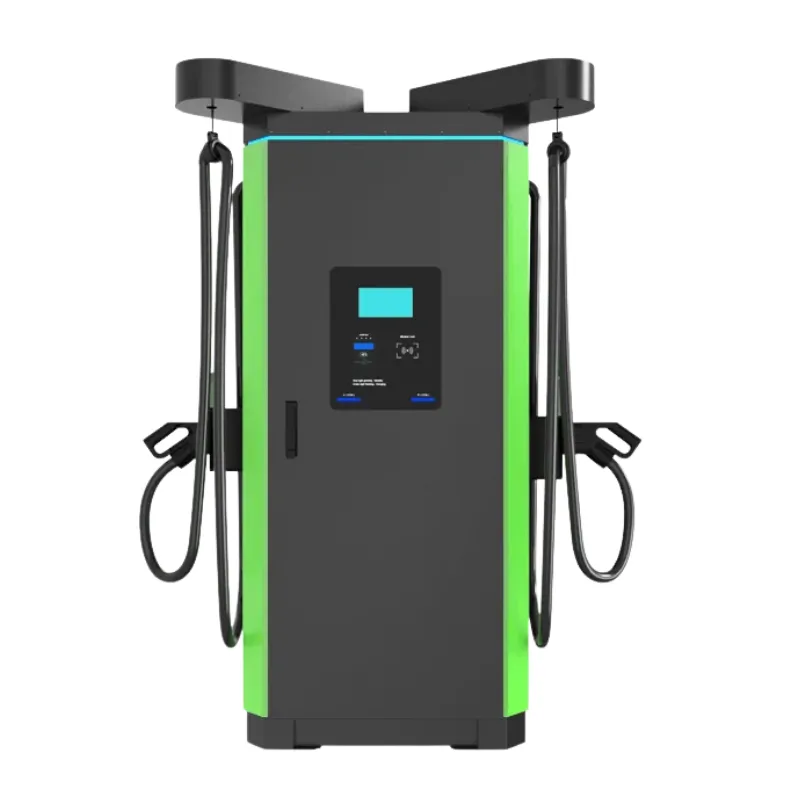
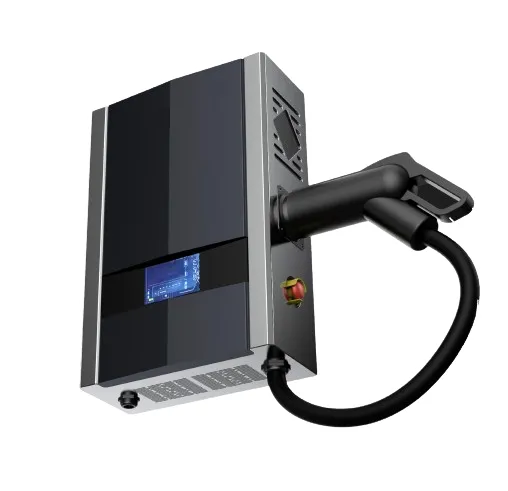
Build for the four-port highway pattern with the right gun power. The UC series (60-360 kW, 480 V input, CCS1 or NACS) fits corridor and travel-centre sites; the 360 kW cabinet is a two-gun unit with each CCS gun limited to 200 A (about 200 kW at 1,000 V), so one vehicle cannot take the full 360 kW. For small connections the SC series (15-30 kW) is the compact option. Both support OCPP 1.6J and 2.0.1 and run to +55 °C.
NEVI and NCDOT set their own technical conditions and we did not read them, so we cannot say a model meets them or holds a UL or ETL listing; we can supply technical documents and test reports for your application. Send the utility, available service, number of ports and connector types through the contact page, and we will reply with a configuration and quotation breakdown.
Payback calculator
Example values are filled in — replace them with your own quotation, tariff and traffic figures.
- Energy sold per month
- —
- Net margin per month
- —
- Simple payback
- —
Simple payback = total investment ÷ (energy sold × (price − energy cost) − fixed costs), using 30 days per month. Taxes, financing, subsidies and utilisation growth are not included.
Frequently asked questions
- Can I sell charging by the kWh in North Carolina?
- The Department of Energy summarises a 2019 law (G.S. 62-3.23) under which a person who resells electricity to the public through EV supply equipment is not a public utility, subject to conditions the summary does not list. Read the statute and have counsel confirm how it applies to your arrangement with the utility.
- Is NEVI money still open?
- A second round opened in March 2026 for 16 stations, with proposals closing at midnight on 11 May. That has passed, so check NCDOT for later solicitations. The agency expects about three more years of build-out and a later phase for communities and rural areas with Level 2 and DC fast chargers.
- Which utility will serve my site?
- We did not read Duke Energy's current programs or tariffs for commercial charging, and the sources we found were either old proposals or residential pilots. Ask the utility serving the parcel for its commercial EV rate options and any make-ready or rebate programme before you set the site budget. Co-operatives and municipal utilities also serve parts of the state.
- Which EVCSTAR chargers suit North Carolina?
- For US sites the UC series (60-360 kW, 480 V, CCS1 or NACS) and the SC series (15-30 kW) have North American builds. Send your utility, service size, bays and connector choice through the contact page and we will reply with a configuration and quotation breakdown.
References
- [1]Applications open for second wave of EV charging stations (27 March 2026). North Carolina Department of Transportation.
- [2]North Carolina helping businesses install EV chargers (12 September 2024). GovTech / The Charlotte Observer.
- [3]North Carolina: Public Utility Definition for EV Charging Resale. U.S. Department of Energy, Alternative Fuels Data Center.