Market guide
EV Charging in Serbia: Standards, Grid Supply and Highway Demand
EV charging station Serbia guide: 36 motorway chargers run by Putevi Srbije, a draft AFIR-style law, about 400 public chargers and 3.95% EV share of new cars.
- Prepared by
- EVCSTAR Engineering Team
- Published
- Reading time
- 4 min
- Sources
- 5 references
At a glance
- Motorway chargers (Putevi Srbije)
- 36 (31 operating)
- Public chargers on the map, Sep 2026
- 398 (246 confirmed)
- BEV share of new cars, 9M 2026
- 3.95%
- Registered EVs, 2025 report
- ~6,000
Key takeaways
- 1Serbia is writing EU charging rules into national law: a draft Alternative Fuels Infrastructure Act, opened for public discussion in June 2026, follows the EU AFIR and TEN-T logic, with technical requirements to follow in secondary legislation within a year of adoption.
- 2The state road company Putevi Srbije has 36 chargers on the motorway network (31 operating, 5 being connected, 3 planned), currently free to use, with fee regulations still being prepared; private networks add a few hundred public points.
- 3Fully electric cars were 3.95% of new registrations in the first nine months of 2026, a fourfold rise, from a small base: about 6,000 registered EVs were reported in 2025.
- 4Charge&GO publishes per-minute DC prices from 58 to 127 RSD, which sets a ceiling for what a new private fast-charging site can charge.
On this page
Short answer: an EV charging station in Serbia is entering a market where the rules are being rewritten to match the EU’s, the state motorway network still has only a few dozen free chargers, and private operators set prices from about 58 to 127 RSD a minute for DC, so the opening is on the corridors and in the cities where free state charging does not reach.
A law modelled on the EU
The rulebook is in draft, and its direction is the EU’s. In June 2026 Serbia opened a public discussion of an Alternative Fuels Infrastructure Act aligned with the EU’s Alternative Fuels Infrastructure Regulation (AFIR) and the Trans-European Transport Network (TEN-T). A Belgrade law firm’s summary says the draft defines electric and battery-electric vehicles for the first time, separates publicly accessible from private charging and by power category, and gives the transport ministry one year after adoption to issue technical requirements.
| Draft element | What it means for an operator |
|---|---|
| Roles | owners, operators and mobility service providers are defined separately |
| Pricing | per kWh, per minute, per session or a mix; transparent, comparable, non-discriminatory |
| Data | static and dynamic data on stations to be shared, with standardized exchange |
| Local projects | municipalities adopt guidelines for municipal roads, garages and car parks |
The firm notes the draft is unclear on how private companies join public projects. We did not find whether the draft has passed, so treat every item as provisional.
The state network: small, free and changing
Putevi Srbije, the road company, reports 36 chargers on the motorway network. 31 are operating, 5 are being connected and 3 are planned for future sections. Charging is free for users of its Orion eMobility app, and rules on fees are in preparation. The page says the chargers operate from -30 to +50 °C. A private tracker (6 October 2026) shows 27 of the 36 working, so availability needs checking. The earlier plan, reported in 2024, was 80 chargers on 16 motorway rest areas by May 2025; the 2026 count is lower than that.
Free state charging limits what a private neighbour can charge nearby, but it also moves drivers into the habit. Fees are the thing to watch: when the regulation arrives, the free chargers will compete on price rather than set a zero.
The private market and what it charges
A map of Serbian public chargers dated 23 September 2026 lists 398 points, 246 of them confirmed. By network: Charge&GO 86, Orion eMobility 53, Putevi Srbije 23, Tesla 11. Charge&GO prices per minute by charger power: 16.67 RSD/min for 22 kW AC, 58.33 for 45-60 kW DC, 98.33 for 90-100 kW, 114.17 for 140-180 kW and 126.67 for 240 kW, which its receipts translate to 43-79 RSD per kWh. In January 2024 Charge&GO had 68 chargers, among them a 120 kW unit in Belgrade, so the network has grown within a short time.
Demand: a small fleet growing quickly
Roughly 6,000 EVs were registered in Serbia in 2025, by one industry estimate, and electric cars took 3.95% of new registrations in the first nine months of 2026, four times the earlier share. Hybrids were 44.52% of passenger-car registrations. Subsidies for buying EVs have run annually, according to the law firm, and we found no official total for the registered fleet, so the 6,000 is an estimate. Use traffic counts, tourist flows and your own site’s neighbours.
What the grid will take
Grid connection is the question we could not answer from published sources. We did not find the distribution operator’s charging-station connection procedure, voltage conditions or tariff. For a fast-charging site, size the supply with the grid capacity calculator and ask the local operator for conditions before buying land. The payback calculator can test the Charge&GO price range against your energy cost.
Choosing a system for Serbian sites
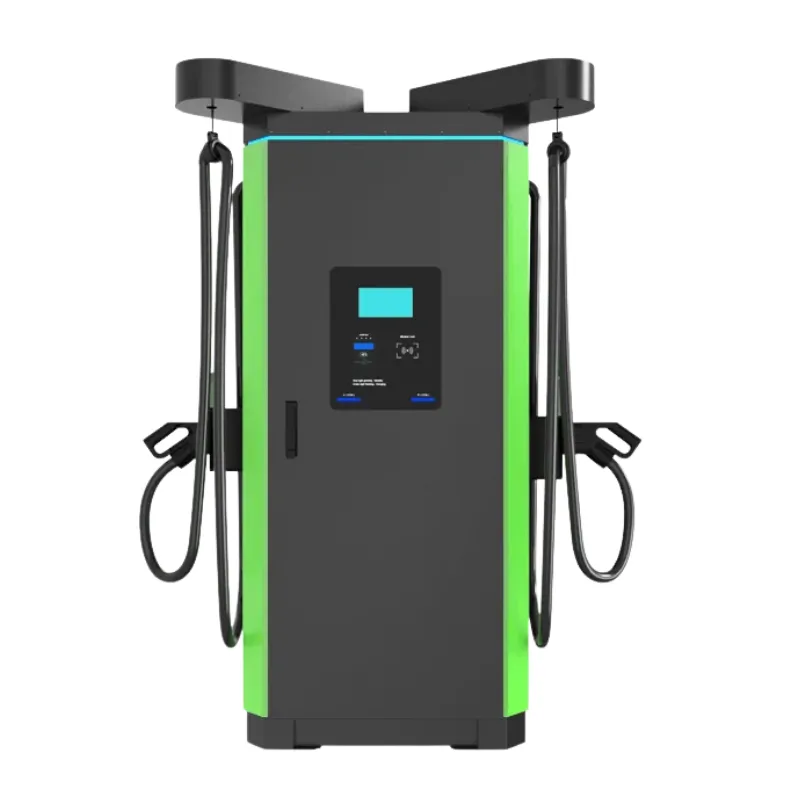
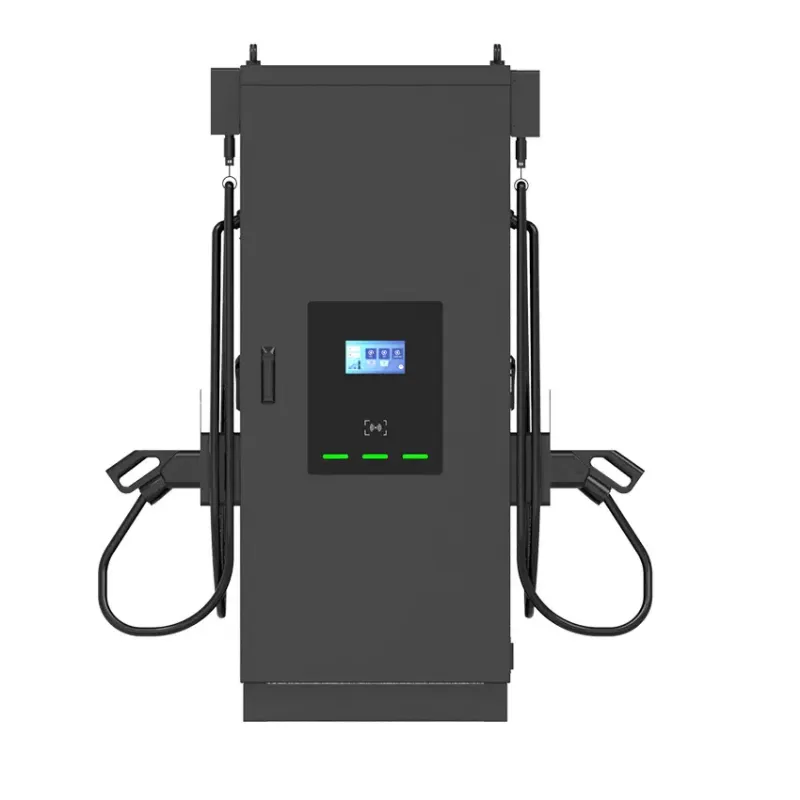
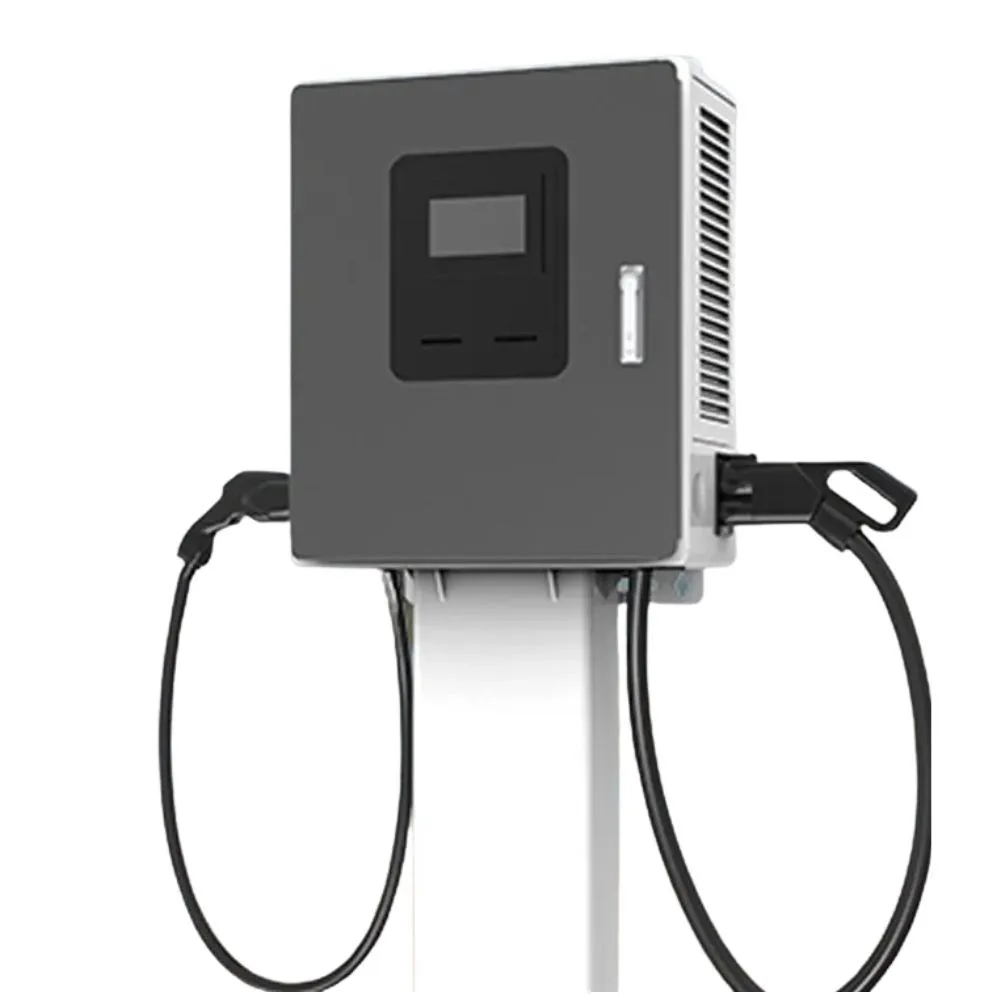
For Serbia the European 400 V builds apply: the UC series (60-300 kW) for corridor sites, the CC series (120-180 kW) for retail car parks and the HC series (20-60 kW) for smaller supplies. They use CCS2, support OCPP 1.6J and 2.0.1, and work up to +55 °C, five degrees above the figure Putevi Srbije quotes for its own chargers. UC has two guns, each limited to 200 A, so one vehicle does not draw the cabinet’s whole rating.
We cannot state that a model satisfies a Serbian rule that has not yet been issued; we can supply technical documents and test reports for your engineers. Send the supply, number of guns, connector standard and site plan on the contact page, and we will reply with a configuration proposal and quotation breakdown. Neighbouring markets are covered in our North Macedonia and Romania guides.
Payback calculator
Example values are filled in — replace them with your own quotation, tariff and traffic figures.
- Energy sold per month
- —
- Net margin per month
- —
- Simple payback
- —
Simple payback = total investment ÷ (energy sold × (price − energy cost) − fixed costs), using 30 days per month. Taxes, financing, subsidies and utilisation growth are not included.
Frequently asked questions
- Which standards apply to a charging station in Serbia?
- Detailed technical requirements are not yet fixed: the June 2026 draft Alternative Fuels Infrastructure Act leaves them to secondary legislation by the Ministry of Construction, Transport and Infrastructure within a year of the act being adopted. Whether the draft has become law is not in the sources we read, so check the Ministry before ordering, and design to the EU connector and communication standards that the draft is modelled on.
- Who connects a charger to the grid in Serbia?
- The local distribution operator, but we could not find the published connection procedure or tariff for charging stations, so we do not state costs or lead times. Ask the operator for the connection conditions for your address and your intended capacity, ideally before leasing land.
- Can I charge by the kWh in Serbia?
- Operators do: Charge&GO's receipts work out to 43 to 79 RSD per kWh, though it charges per minute by power band. The draft act allows per-kWh, per-minute or per-session prices as long as they are transparent and comparable. Check your own tax and metering rules with an advisor.
- How much does a fast-charging site cost?
- It depends on the configuration: power, cable and connector combination, options and site conditions. Send us the supply, number of guns, connector standard and available capacity through the contact page and we will reply with a configuration proposal and quotation breakdown.
References
- [1]Electric vehicle chargers on the motorway network. Putevi Srbije.
- [2]Map of EV charging stations in Serbia, with prices (23 September 2026). Blokvolt / Evolako.
- [3]Serbia releases draft Alternative Fuels Infrastructure Act (29 June 2026). BDK Advokati.
- [4]More new cars bought in 2026. N1.
- [5]Charge&GO with the new app, it's easier to find a charger (January 2024). Energy Portal of Serbia.