Market guide
EV Fast Charging in Romania: AFIR, Grid Connection and Site Economics
EV charging stations Romania guide: 3,536 DC points in 2025, DC share of 42%, Rabla Plus suspended in June 2025, A1 motorway hub with 400 kW truck points.
- Prepared by
- EVCSTAR Engineering Team
- Published
- Reading time
- 3 min
- Sources
- 5 references
At a glance
- DC points (2025, EAFO)
- 3,536
- DC share of public points
- 42%
- New BEV cars (2025)
- 8,833
- Rabla Plus status
- Suspended Jun 2025
Key takeaways
- 1Romania's DC base doubled in a year: EAFO counted 1,906 DC and 2,660 AC points at the end of 2024 and 3,536 DC and 3,576 AC in 2025, so DC is about half the public network, far above the European average Roland Berger quotes (42% against 17%).
- 2The car market is not the growth driver: new battery-electric cars fell to 8,833 in 2025 (about 5.7% share) while plug-in hybrids rose to 10,079, and the Rabla Plus voucher was halved in 2024 and suspended in June 2025.
- 3Government plans are big but slow: a 22,400-point target for 2026 was about 20% complete at the end of 2024, and a PNRR milestone set 30,000 stations by 2026 from a baseline of about 2,000.
- 4The first motorway truck-ready hub opened on the A1 in May 2025 with 34 fast points, half at 400 kW, part-funded by the EU Connecting Europe Facility; a private operator should look at what the A7 and other corridors still lack.
On this page
Short answer: EV charging stations in Romania are already DC-heavy, so a new operator is not entering an empty market; the room is on corridors and cities where the 2025 hubs do not reach, with a car fleet that is growing through plug-in hybrids more than pure battery cars and with subsidies uncertain.
A network that skews to DC
Almost half the points are DC, and DC doubled in a year. EAFO’s counts: 2,660 AC and 1,906 DC at the end of 2024, 3,576 AC and 3,536 DC in 2025 (EAFO, 2026). Roland Berger gives just over 4,500 public points, up 33%, and says 42% are DC against 17% for Europe, with fast charging accounting for 26% of kilometres driven by public-charging users. Free charging is being phased out for paid models, and the same study found about 60% of respondents think public charging is insufficient and only about 40% charge at home.
| Measure | Figure | Source and year |
|---|---|---|
| DC points | 1,906 to 3,536 (2024 to 2025) | EAFO |
| AC points | 2,660 to 3,576 | EAFO |
| DC share of public points | 42% (Europe 17%) | Roland Berger, 2025 |
| Government target for 2026 | 22,400 points, about 20% done at end-2024 | Roland Berger, 2025 |
Cars: plug-in hybrids lead, BEVs slipped
Do not size demand from European headlines. New passenger cars rose 4.7% to 155,855 in 2025, but battery-electric registrations fell from 9,712 to 8,833 (about 5.7% share) while plug-in hybrids rose from 6,338 to 10,079 (about 6.5%). Dacia led BEV brands with 1,596, then Hyundai, Ford, Tesla and Renault, and the Dacia Spring was the best-selling BEV (EAFO, 2026). Plug-in hybrids charge slowly on AC, which is another reason sites near homes and offices need modest DC speeds. Electric vans rose 18% to 651 units.
The Rabla Plus voucher was cut from about EUR 10,000 to about EUR 5,100 in 2024 and suspended in June 2025 on fiscal grounds, with a relaunch discussed at about EUR 3,700 (Roland Berger, 2025); we did not find its current status.
Public money: targets large, calls patchy
Plans exist at national scale, but private operators carried the build. A Ministry of Transport official said the PNRR milestone asks for 30,000 stations by 2026 from a baseline of about 2,000, with roughly 2,800 to be financed by the ministry and more than 150 points needed on the A7 between Ploiești and Pașcani (Energynomics, October 2023). The Connecting Europe Facility already paid for stations on national roads and highways. The AFM programme for local authorities in 2021-2022 offered 100% of eligible costs up to 190,000 lei per station but was undersubscribed: 66 applications asking for about 51 million lei, roughly 10% of its 500 million lei budget (Economedia). Treat all of this as history until you check the open calls.
What is already on the motorways
The A1 hub shows the new standard, and trucks are part of it. A hub opened on the A1 in May 2025 with 34 fast points, half of them 400 kW for electric trucks, partly funded by the EU Connecting Europe Facility, and part of a plan for 328 high-speed points in 2025 (Roland Berger, 2025). The EU’s AFIR regulation sets minimum provision on TEN-T roads, and we have not read its text for this guide; for any corridor site, check Article 3 of Regulation (EU) 2023/1804 for pool power, spacing and payment rules, and confirm connection steps with the national energy regulator and the local network operator. Their fees and lead times were not in the sources we read.
How EVCSTAR equipment fits
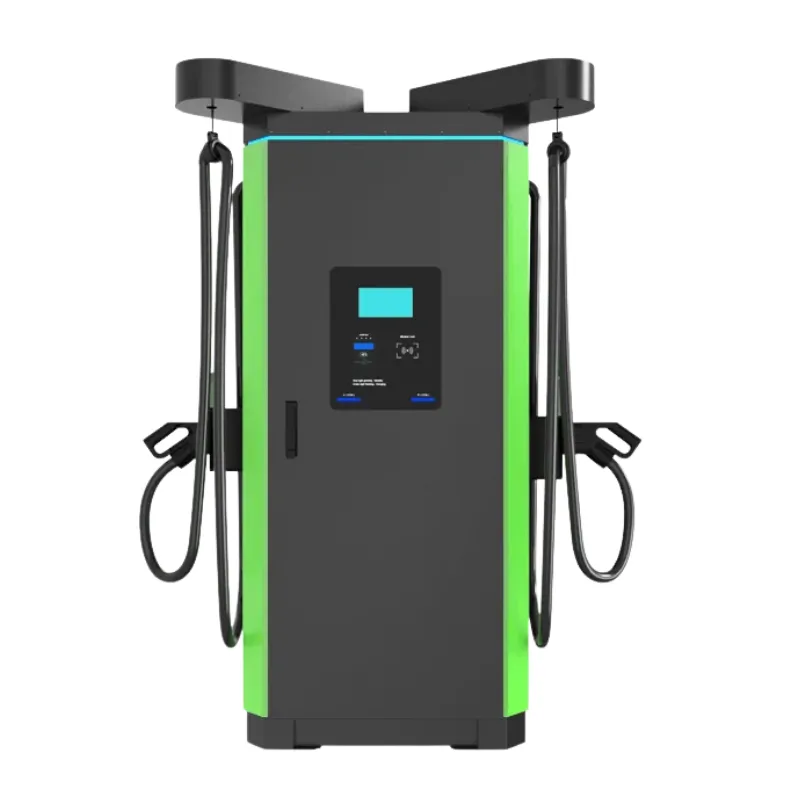
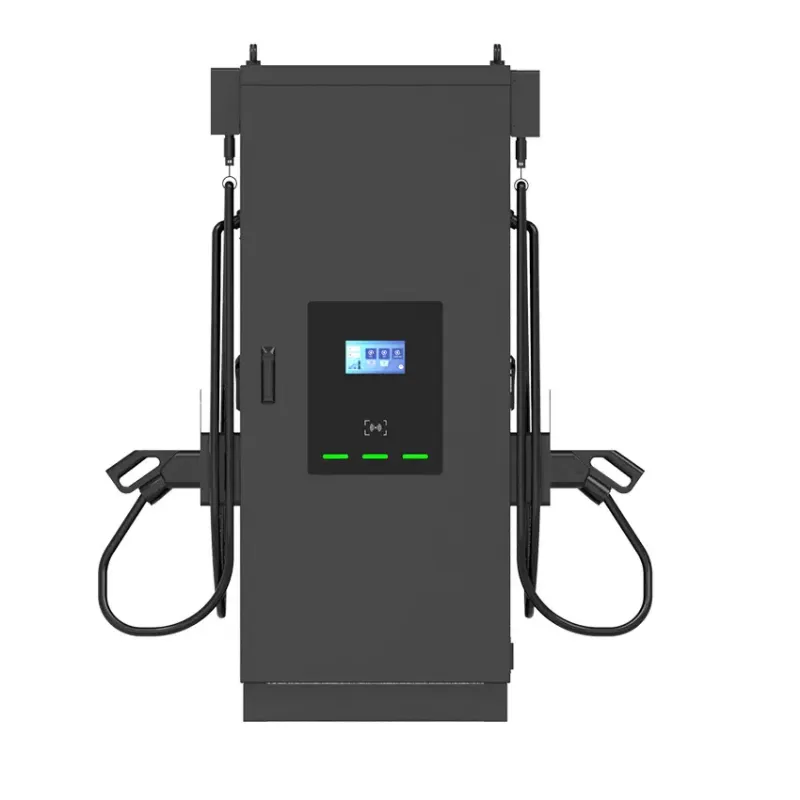
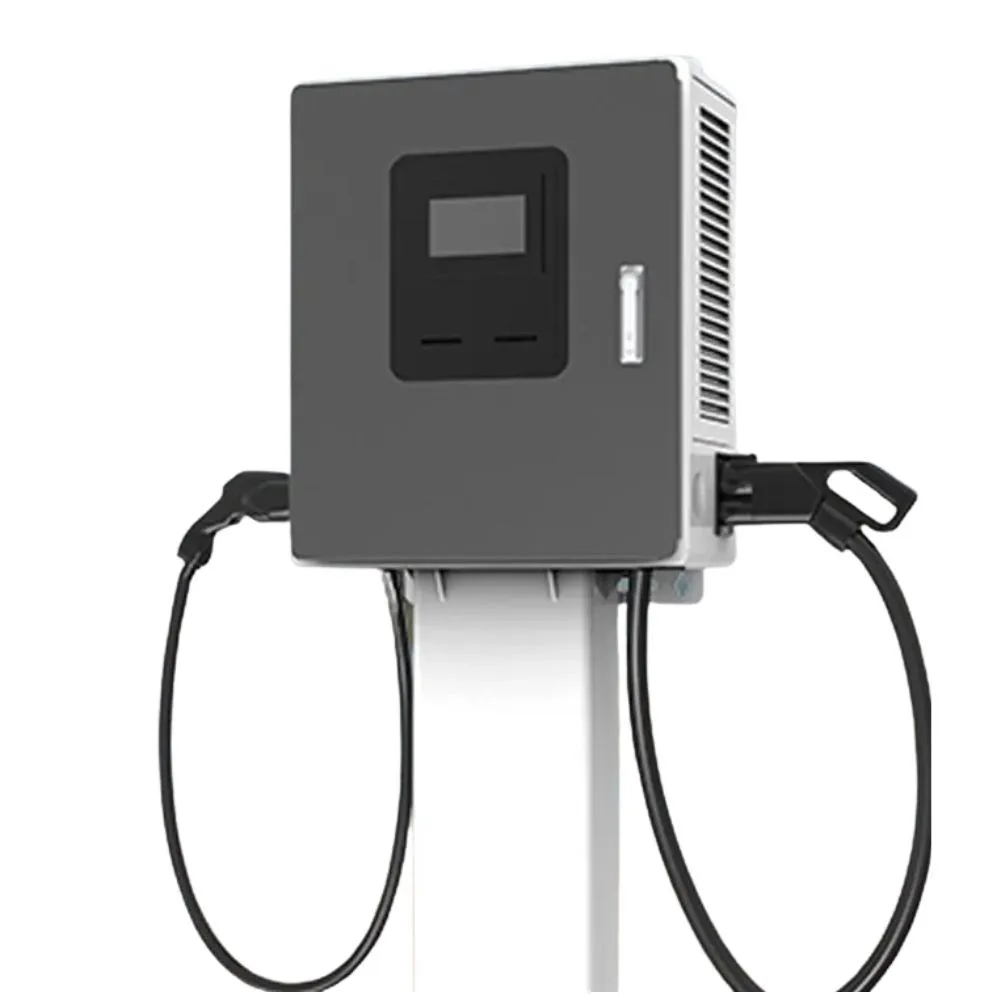
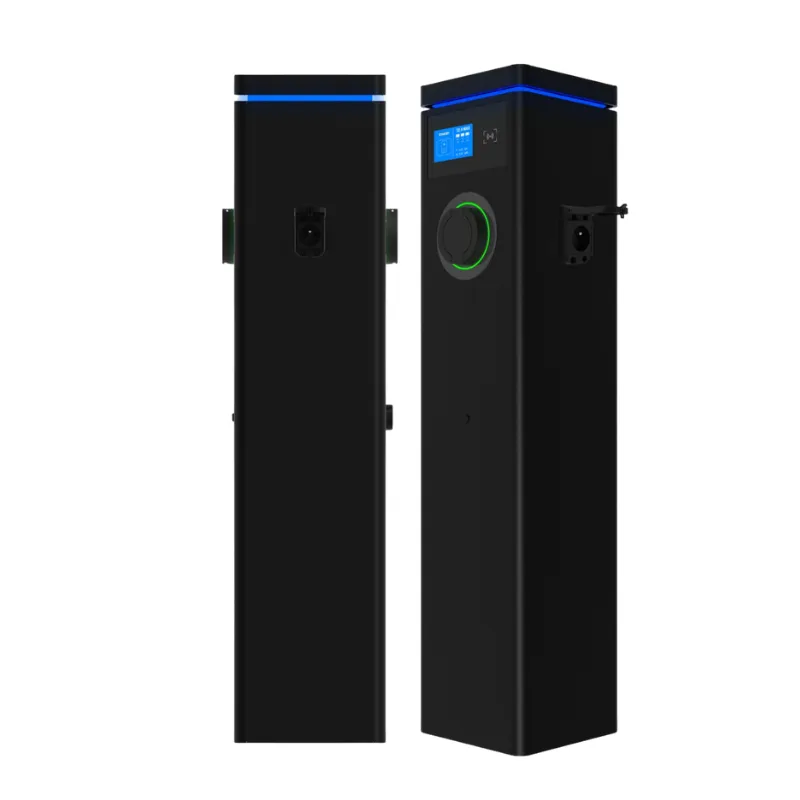
The UC series in the 400 V European build with CCS2 suits corridor and truck-stop car-park sites; the CC series and HC series suit towns and retail. A UC cabinet has two guns sharing power; each CCS gun is limited to 200 A, about 200 kW at 1,000 V, so one car cannot take the 300 kW cabinet total. It does not serve the 400 kW truck points seen on the A1. For hotels and workplaces with many plug-in hybrids, the CPO series gives 2 x 3.7-22 kW AC. EU sales need CE marking and a MID-certified meter; see EV charging standards. We can provide test reports and technical documents to support your CE file and grid application, and we do not claim any model holds a specific approval. Size the supply with the grid capacity calculator and test returns with the payback calculator.
Payback calculator
Example values are filled in — replace them with your own quotation, tariff and traffic figures.
- Energy sold per month
- —
- Net margin per month
- —
- Simple payback
- —
Simple payback = total investment ÷ (energy sold × (price − energy cost) − fixed costs), using 30 days per month. Taxes, financing, subsidies and utilisation growth are not included.
Frequently asked questions
- How many public chargers does Romania have?
- EAFO figures: 2,660 AC and 1,906 DC points at the end of 2024, and 3,576 AC and 3,536 DC in 2025. Roland Berger reports just over 4,500 public points, up 33%, from a different counting basis, and says 42% are DC. Use the range as a sense of scale and check the live EAFO page before you rely on a number.
- Is there a subsidy for fast chargers now?
- We could not confirm an open call. The Environment Fund Authority (AFM) ran a 500 million lei programme for local authorities in 2021-2022 that funded 100% of costs up to 190,000 lei per station but drew only 66 applications by the article date; it is closed. Check AFM and the PNRR portal for current calls.
- What does the EU AFIR regulation require on Romanian roads?
- AFIR is the EU regulation on alternative fuels infrastructure and sets minimum charging provision along TEN-T roads. We could not open the regulation text, so we are not quoting its power and spacing figures. Read Article 3 of Regulation (EU) 2023/1804 or ask the national authority before sizing a corridor site.
- Which connector does Romania use?
- As an EU market, DC charging uses CCS2 and AC uses Type 2. Our European builds provide CCS2 with OCPP 1.6J and 2.0.1. CE marking and a MID-certified meter are normally needed for kWh billing in the EU; see our standards page.
References
- [1]Romania: BEVs' continued struggle while PHEVs grew in 2025. European Alternative Fuels Observatory (European Commission).
- [2]EV Charging Index 2025: Expert insight from Romania. Roland Berger, 2025.
- [3]Romania - road transport. European Alternative Fuels Observatory, updated 16 October 2026.
- [4]Primariile nu sunt prea interesate sa instaleze statii de reincarcare (AFM program, 2021-2022). Economedia.
- [5]Romania's PNRR milestone of 30,000 charging stations (Ministry of Transport remarks). Energynomics, 13 October 2023.