Market guide
EV Charging in Kenya: Grid, Tariffs and Where Fast Chargers Pay Off
EV charging station Kenya guide: the KES 16 per kWh e-mobility tariff (KES 8 off-peak), EPRA licensing, the 25 km highway guideline and Nairobi demand.
- Prepared by
- EVCSTAR Engineering Team
- Published
- Reading time
- 4 min
- Sources
- 3 references
At a glance
- E-mobility tariff (peak / off-peak)
- KES 16 / KES 8 per kWh
- Monthly e-mobility sales, Apr 2026
- ~1.5 million kWh
- Public charging points, Jun 2025
- ~300
- Highway station spacing (2023)
- every 25 km
Key takeaways
- 1Kenya has a dedicated e-mobility electricity tariff: KES 16 per kWh, KES 8 off-peak, for customers supplied at 240 or 415 V, in force since 1 April 2023; a gazette notice of 18 September 2026 relaxed the old 15,000 kWh monthly limit.
- 2A public charging station needs an EPRA electricity retail supply licence, a transformer or supply line of its own, KEBS or other accredited type approval for the chargers, and a completion certificate before it operates (Guidelines 2023).
- 3The guidelines call for stations every 25 km on both sides of highways and a fast station every 100 km for buses and trucks, which makes the Nairobi-Mombasa and other long corridors an obvious siting question.
- 4Demand is real but young: Kenya Power sold about 1.5 million kWh a month to e-mobility customers in April 2026, up from 13,500 kWh in July 2023, and Nairobi produced 71% of cumulative revenue.
On this page
Short answer: an EV charging station in Kenya is a licensed electricity-retail business that buys power on a dedicated e-mobility tariff of KES 16 per kWh (KES 8 off-peak), and fast chargers make sense first where vehicles already concentrate, Nairobi and the trunk corridors, because that is where the load, and the revenue, already are.
A tariff written for charging
Kenya’s e-mobility tariff is among the clearest signals to an investor, because the price is published and the category is named. The Energy and Petroleum Regulatory Authority (EPRA) created the e-mobility category (Method EM) in the Schedule of Tariffs gazetted on 24 March 2023, in force from 1 April 2023, for customers supplied and metered at 240 or 415 V. The energy charge is KES 16 per kWh, and KES 8 off-peak, which is 10 pm to 6 am on weekdays, midnight to 8 am and 2 pm to midnight on Saturdays and public holidays, and all of Sunday. A small business above 100 units pays KES 19. On top of the energy charge come fuel-cost, exchange-rate and inflation adjustments, levies and VAT, so the bill is higher than those numbers.
Originally the tariff stopped at 15,000 kWh a month. A gazette notice dated 18 September 2026 (Notice 15188), backdated to 1 July 2025, changed that. Reports disagree on how: one says operators now stay on the tariff whatever they use; another says EPRA replaced the ceiling with a consumption threshold set from each customer’s own six-month average. For a depot or a busy corridor station this difference matters, so ask Kenya Power for the written rule that applies to your meter.
What it takes to open a public station
The 2023 Guidelines turn a charger into a regulated installation. Summarised from a Nairobi law firm’s alert, they took effect on 1 September 2023.
| Requirement | Detail |
|---|---|
| Licence | apply for an EPRA electricity retail supply licence before installing; one per station |
| Supply | an exclusive transformer or supply line, with safety equipment required by the Kenya Grid Code |
| Equipment | chargers type-approved or tested by KEBS or another accredited agency |
| Site | space for entry and exit, fire protection equipment |
| Commissioning | inspection, testing and a completion certificate from a licensed electrical contractor or inspector |
| Private charging | KEBS approval, a completion certificate and separate metering |
The exclusive transformer is the cost line investors most often miss. Our grid capacity calculator shows what supply a given number of guns implies before you ask Kenya Power for a quote.
How fast demand is growing
E-mobility electricity sales in Kenya rose from 13,500 kWh in July 2023 to about 1.5 million kWh in April 2026, and Kenya Power had 331 customers on the tariff. Nairobi accounted for 71% of cumulative revenue (KES 382 million over 34 months). EPRA data show e-mobility consumption up 152% year on year in July to December 2025 (from 1.81 to 4.57 GWh), still about 0.08% of national consumption. The vehicles are mostly motorcycles, buses and fleet vehicles in cities: one report counts 24,754 registered EVs in 2025; the Electric Mobility Association of Kenya, citing EPRA data, gave 6,442 registered EVs and about 300 charging points in June 2025. The counts differ by source and by what counts as a vehicle.
For a heavy-vehicle depot the arithmetic is simple: one tariff article notes that ten buses with 210 kWh batteries charging fully each night use about 2,100 kWh a night.
Corridors and sites
The guidelines ask for a charging station every 25 km on both sides of highways and roads, and at least one fast station every 100 km for buses and trucks, placed with the other stations. Inside cities, heavy-duty charging is to be at bus stops. Kenya Power’s own rollout (45 stations across six counties, plus Voi, Sabaki and other corridor towns) suggests where the early public sites are. We found no source for the corridor traffic data or for a published list of licensed stations, so choose sites with your own counts.
Equipment for the Kenyan market
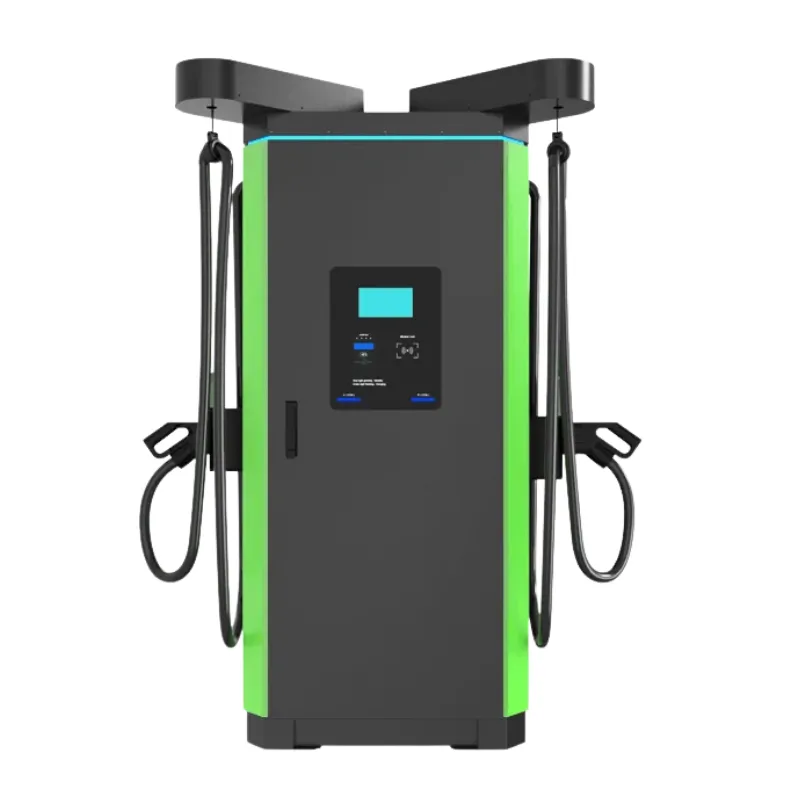
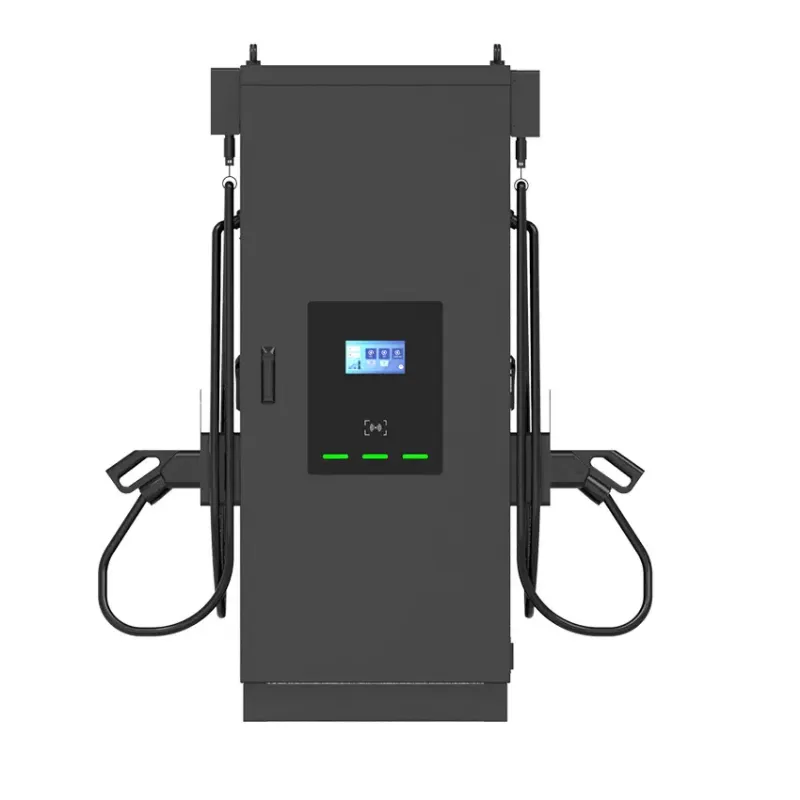
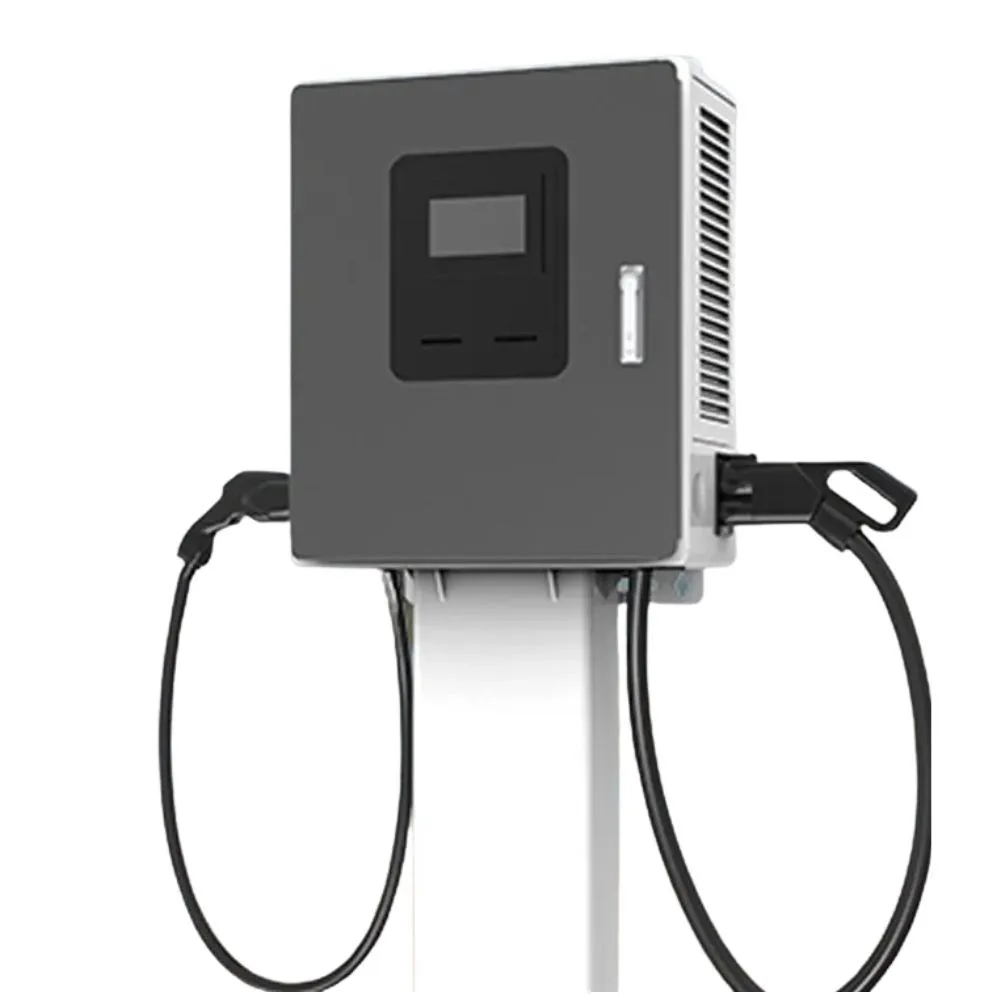
For depots and corridor stops the UC series (60-300 kW in the 400 V build), CC series (120-180 kW) and HC series (20-60 kW) take a three-phase 400 V supply, which sits within the 415 V connection range of the tariff. Each UC has two guns with dynamic power sharing, and it runs up to +55 °C, which suits Kenya’s hot regions; HC suits a smaller transformer or a depot where vehicles stay for an hour or more. OCPP 1.6J and 2.0.1 are supported. Connector and charging-standard mix for Kenya’s vehicles is not covered in what we read; confirm it with KEBS and your customers’ fleets.
We can supply technical documents and test reports to help with KEBS approval, but we do not claim any Kenyan approval for our models. To size a project, send the supply voltage, transformer capacity, vehicle types and number of guns on the contact page, and we will reply with a configuration proposal and quotation breakdown. For comparison with neighbours, read our Tanzania and Uganda guides.
Grid capacity calculator
- Spare power for charging
- —
- Input current per charger (400 V)
- —
- Chargers at full power
- —
Spare power = kVA × 0.95 power factor × (1 − margin) − existing peak load. Input current ≈ charger kW ÷ (√3 × 400 V), with power factor and 95 % efficiency added for DC chargers. With dynamic load management more chargers can share the same capacity at reduced power. Always confirm with your electrical engineer and the grid operator.
Frequently asked questions
- What does electricity cost for a charging station in Kenya?
- On the e-mobility tariff the energy charge is KES 16 per kWh and KES 8 off-peak (10 pm to 6 am on weekdays, longer windows at weekends), against KES 19 for a small business using more than 100 units. Those are energy charges; fuel cost, exchange rate and inflation adjustments, levies and VAT are added to the bill. Ask Kenya Power for a worked bill for your meter.
- Is the 15,000 kWh monthly cap still in force?
- Gazette Notice 15188 of 18 September 2026 changed it, backdated to 1 July 2025. One report says operators now stay on the e-mobility tariff whatever they use; another describes a consumption threshold based on a rolling average, with units above it billed on the discounted time-of-use tariff. The two descriptions differ, so confirm the exact mechanism with Kenya Power before modelling a high-volume site.
- Do I need a licence to sell charging in Kenya?
- The 2023 guidelines, as summarised by a Nairobi law firm, require a public charging station to apply for an electricity retail supply licence from EPRA before installing, with a separate licence for each station. Get legal advice for your structure, as the summary is not a legal opinion.
- What is a charging station price for Kenya?
- It depends on the configuration: power, cable and connector combination, options and site conditions. Send us the supply voltage, number of guns, connector standard and the capacity your transformer allows through the contact page and we will reply with a configuration proposal and quotation breakdown.
References
- [1]EV charging stations in Kenya can now use unlimited power on the KES 16 e-mobility tariff (25 September 2026). tech-ish.
- [2]Kenya rewrites EV charging tariff amid surge in electric mobility (22 September 2026). Citizen Digital.
- [3]The Electric Vehicle Charging and Battery Swapping Infrastructure Guidelines 2023 (legal alert, October 2023). Oraro & Company Advocates.