Province guide
DC Fast Charging in Ontario: Hydro One, Rates and Programs
DC fast charging Ontario business guide: the OEB EV Charging rate cuts transmission charges to 17%, ULO runs 3.7 c/kWh from Nov 2026, ChargeON funds up to 75%.
- Prepared by
- EVCSTAR Engineering Team
- Published
- Reading time
- 4 min
- Sources
- 6 references
At a glance
- EVC rate share of transmission charge (2026)
- 17%
- EVC eligible peak demand
- 50–5,000 kW
- EV ChargeON cap per project (2025 round)
- $1 million
- Ultra-low overnight rate from 1 Nov 2026
- 3.7 c/kWh
Key takeaways
- 1Since 1 January 2026 the Ontario Energy Board has offered an optional EV Charging (EVC) rate: eligible DC fast stations pay 17% of the normal Retail Transmission Service Rate, provided the site peaks between 50 and 5,000 kW, at least 90% of that peak is EV charging, and the 12-month load factor is 20% or lower.
- 2Fleet-focused sites are excluded from the EVC rate, so a public fast-charging hub and a bus depot on the same street can face different bills.
- 3Residential-style plans do not set a station's price: Toronto Hydro's business page indicates that most general service customers above 50 kW pay the hourly wholesale price plus Global Adjustment, and bills include demand-based distribution and transmission charges.
- 4The provincial EV ChargeON round that closed on 15 December 2025 offered up to 75% of costs (Northern Ontario, municipalities under 170,000, Indigenous communities and businesses) or 50% (larger municipalities, businesses, not-for-profits), capped at $1 million per project; sites that are not open 24/365 get only 25%.
On this page
Short answer: DC fast charging in Ontario for a business is shaped less by the headline kilowatt-hour price than by two bill components that most guides skip: demand-based distribution and transmission charges, and the optional OEB EV Charging rate that cut the transmission part to 17% for qualifying public stations from 1 January 2026.
Which price plan actually applies to a station
The consumer plans in the headlines are not the station’s price. The Ontario Energy Board sets Regulated Price Plan prices each October. From 1 November 2026, time-of-use becomes 9.1 c/kWh off-peak, 14.6 c mid-peak and 18.9 c on-peak, and the ultra-low overnight plan becomes 3.7 c for 11 p.m. to 7 a.m. with a 37.7 c peak from 4 to 9 p.m. on weekdays (CP24, October 2026). Those figures are the right reference for a small site under 50 kW, such as a few AC posts.
A fast-charging cabinet is a different customer. Toronto Hydro’s business page splits general service into under 50 kW (charged per kWh), 50 to 999 kW and above (charged per kVA and per kW), and indicates that customers above 50 kW without a retailer contract usually pay the hourly wholesale price plus Global Adjustment. Distributor charges beyond the commodity are published per distributor, and we did not find a single provincial figure.
| Site size | Typical billing basis | What to check |
|---|---|---|
| Under 50 kW | Regulated Price Plan, per kWh | Which RPP option your account may choose |
| 50 to 999 kW | Wholesale price + Global Adjustment, plus per-kVA and per-kW charges | Retailer contract option, demand ratchets |
| 1,000 kW and above | Same, with a larger fixed customer charge | Transformer ownership, connection costs |
The EVC rate: where Ontario beats most provinces
Transmission charges for qualifying stations drop to 17% of the normal rate. Electric Autonomy (December 2025) describes eligibility as a commercial station with one or more DC fast chargers, 90% or more of peak demand used for EV charging, monthly peak between 50 and 5,000 kW and a 12-month average load factor of 20% or less. Home chargers and stations that mainly serve fleets are excluded, and the OEB plans to review the rate in 2031.
The load-factor ceiling points the design: it favours a public site that is lightly used while demand builds, and a site that becomes busy enough to pass 20% load factor loses the discount. For a corridor hub, the calculation is simple. Take the transmission lines of the Toronto Hydro table (for example $2.89 per max kW and $4.43 per peak kW network, 50 to 999 kW class, per 30 days) and apply 17% to the retail transmission component your own distributor lists. Use the demand charge guide for the arithmetic, and ask your distributor for its approved rate decision, since some decisions were issued after January.
Hydro One territory versus Toronto Hydro
The two utilities give you different problems, not different technology. Toronto Hydro serves a dense urban load; the published business rate schedule is easy to model, the constraint is capacity and street-level construction. Hydro One serves the rural and corridor territory where highway hubs are built. Its pricing page lists five plans (time-of-use, tiered, ultra-low overnight, retailer contract and spot market) and refers business customers to separate pages for the charge components, so request a connection quote early; we could not find a published schedule for extending service to a remote site.
Whichever territory you are in, size the connection using the grid capacity calculator. The first gate is usually the distributor’s capacity and transformer lead time, not the charger.
Money: ChargeON and what to assume
The last intake paid up to 75% in some cases, with conditions. EV ChargeON, run by the Ontario Vehicle Innovation Network for the Ministry of Transportation, took applications from 3 November to 15 December 2025 with $66 million available. The cap was $1 million per project. Rates were up to 75% for Northern Ontario, Indigenous communities and businesses, and municipalities under 170,000; up to 50% for larger municipalities, businesses, not-for-profits and broader public sector bodies; and 25% for sites not open 24 hours a day all year. Funded sites had 12 months to install and activate chargers.
Federal ZEVIP is covered on the Canada page. Build the base case without any grant, then add one only if a signed agreement exists. The payback calculator handles both.
Winter, from the charger’s point of view
Cold siting is an engineering question to settle before ordering. Our chargers are rated to an upper limit of +55 °C; the product pages do not state a low-temperature limit, so confirm the minimum operating temperature, cable heating and cabinet rating for your site with us before you place an order. Plan snow clearing around the bays, cable holders and display height, and check the distributor’s requirements for pad-mounted equipment in snow country.
Choosing equipment for an Ontario site
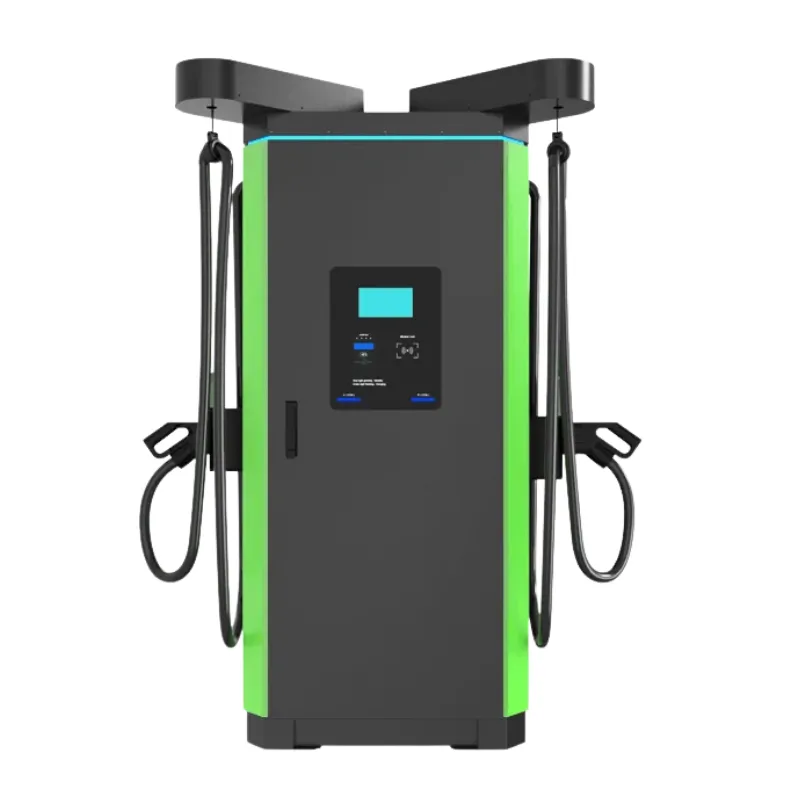
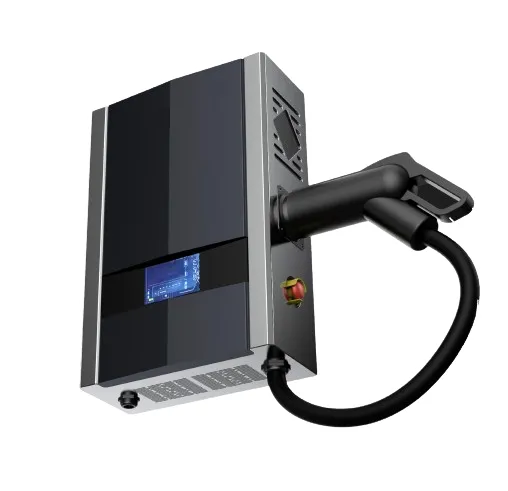
For Ontario, the North American build matters: 480 V input and CCS1 or NACS connectors, available only in our UC and SC series. The UC series is a two-gun floor cabinet for highway and urban hubs; in the North American build the 360 kW cabinet shares power between two CCS guns, each limited to 200 A, which is about 200 kW per gun at 1,000 V. A single car cannot draw the full 360 kW. The SC series suits smaller retail and workplace sites with limited supply.
Pricing depends on configuration: power level, connector and cable mix, payment options and site conditions. Send us your voltage, gun count, connector standard and available capacity from the distributor through the contact page, and we will return a configured quotation. We can supply test reports and technical files to support your certification and field-approval process; confirm requirements with the provincial electrical safety authority.
Payback calculator
Example values are filled in — replace them with your own quotation, tariff and traffic figures.
- Energy sold per month
- —
- Net margin per month
- —
- Simple payback
- —
Simple payback = total investment ÷ (energy sold × (price − energy cost) − fixed costs), using 30 days per month. Taxes, financing, subsidies and utilisation growth are not included.
Frequently asked questions
- Can a DC fast charging station use Ontario's ultra-low overnight rate?
- Not as a planning assumption. The ultra-low overnight plan (3.9 c/kWh now, 3.7 c/kWh from 1 November 2026, 11 p.m. to 7 a.m.) is one of the Regulated Price Plan options, and Toronto Hydro's page suggests that general service customers above 50 kW of demand are generally billed the wholesale price instead. Ask your distributor which supply option applies to your account before you model overnight charging.
- What is the OEB EV Charging rate and who qualifies?
- It is an optional rate in force from 1 January 2026 that charges 17% of the base Retail Transmission Service Rate. Reported criteria: at least one DC fast charger, 50 to 5,000 kW monthly peak, at least 90% of peak demand for EV charging, and a 12-month average load factor of 20% or less. Stations that mainly serve commercial fleets are excluded. Distributors started offering it as their 2026 rates were approved, so ask yours for the effective date.
- Is there provincial grant money for a new fast charging site?
- Ontario ran an EV ChargeON intake from 3 November to 15 December 2025 with $66 million, funding decisions expected by 1 April 2026. We found no announcement of a further round, so treat grants as unconfirmed and check with the Ontario Vehicle Innovation Network before relying on one.
- Which EVCSTAR charger fits an Ontario site?
- Ontario sites use the North American build, available only in our UC and SC series: 480 V input with CCS1 or NACS connectors. Price depends on configuration, so send us your site data through the contact page and we will return a configured quotation.
References
- [1]Ontario's electricity rates are falling this November: here's how much it will cost. CP24, 19 October 2026.
- [2]Business rates. Toronto Hydro.
- [3]Residential rates and charges (TOU and ULO periods). Toronto Hydro.
- [4]OEB to introduce new reduced rate for public EV charging in 2026. Electric Autonomy Canada, December 2025.
- [5]Ontario opens applications for EV ChargeON program for limited time. Electric Autonomy Canada, November 2025.
- [6]Electricity pricing and costs. Hydro One.