Market guide
EV Charging in South Africa: Load Shedding, Wiring Rules, Fast Charging
EV charging station South Africa: 341 days without load shedding by April 2026, SANS 10142-1 sockets, solar-battery sites at R2.49/kWh.
- Prepared by
- EVCSTAR Engineering Team
- Published
- Reading time
- 4 min
- Sources
- 5 references
At a glance
- Days without load shedding (22 Apr 2026)
- 341
- Feeders under load reduction, Sept 2026 target
- 573 of 971 removed
- Cape Town pilot battery / solar
- 2.25 MWh / 1 MWh
- Typical public DC price cited (2026)
- R7–R8/kWh
Key takeaways
- 1Load shedding has receded: Eskom reported 341 consecutive days without it on 22 April 2026 and projected none for winter 2026, but load reduction on local feeders continues, with 573 of 971 affected feeders due off the schedules by September 2026 and the rest by 2027.
- 2The public network is small and concentrated in cities: Wikipedia, citing Mail & Guardian (October 2025), estimates at least 400 stations (an unverified figure), with GridCars operating about 60% and several operators announcing hundreds more.
- 3A Cape Town pilot shows the new model: SAEV Charge's Richmond Park site has four 120 kW DC chargers, 1 MWh of rooftop solar and a 2.25 MWh battery, and prices at R3.49/kWh, falling to R2.49/kWh when the battery is above 90% (EWN, September 2026).
- 4Wiring rules for EV sockets sit in SANS 10142-1, which SABS announced would reference SANS 61851-1, 62196-2 and 62196-3; we could not confirm the current edition, so have your electrician check it for each site.
On this page
Short answer: an EV charging station in South Africa is mainly a grid-resilience and tariff question. Load shedding has eased (341 straight days without it by 22 April 2026), but local load reduction continues, so many new fast-charging sites are paired with solar and battery storage instead of relying on the feeder alone.
Where the grid stands in 2026
Eskom’s winter 2026 outlook projected no load shedding, with caveats at feeder level. On 22 April 2026 Eskom reported 341 consecutive days without load shedding. Unplanned capacity loss had fallen from 16.5 GW to about 9.1 GW as of 31 March 2026, and the Energy Availability Factor rose from 54.55% in FY2023 to about 65.35% in FY2026. Planned maintenance averaged 5.4 GW (South African Government News Agency, 2026).
Load reduction is the more practical risk for a site. Northern Cape and Western Cape were fully off the schedules; about 60% of the 971 affected feeders (573) were expected to be removed by September 2026, the rest progressively by 2027. We did not verify how much of that target was met, so ask which feeder your site is on.
What the public network looks like
Charging is concentrated in cities and still small. The Wikipedia entry on South African plug-in vehicles, which cites Mail & Guardian (October 2025), estimates at least 400 public stations, flags that figure as unverified, and says GridCars operates about 60%. Rubicon, Chargify and Black Tower Energy are named as other operators, and roaming through OCPI exists between GridCars and Rubicon. The same page reports that the government does no direct infrastructure spending on charging.
| Planned or announced | Detail (source date) |
|---|---|
| BYD with Eskom | 200 to 300 public stations by the end of 2026, powered by Eskom, locations not named (EWN, December 2025) |
| Black Tower Energy | 80+ stations planned for 2026 (Wikipedia, citing MyBroadband, June 2026) |
| SAEV Charge | 120 kW fast chargers, pilot in Cape Town (EWN, September 2026) |
We found no published list of chargers on the N1 or N3 corridors, so corridor spacing and demand need your own traffic and utility data.
Battery backup is already a business model
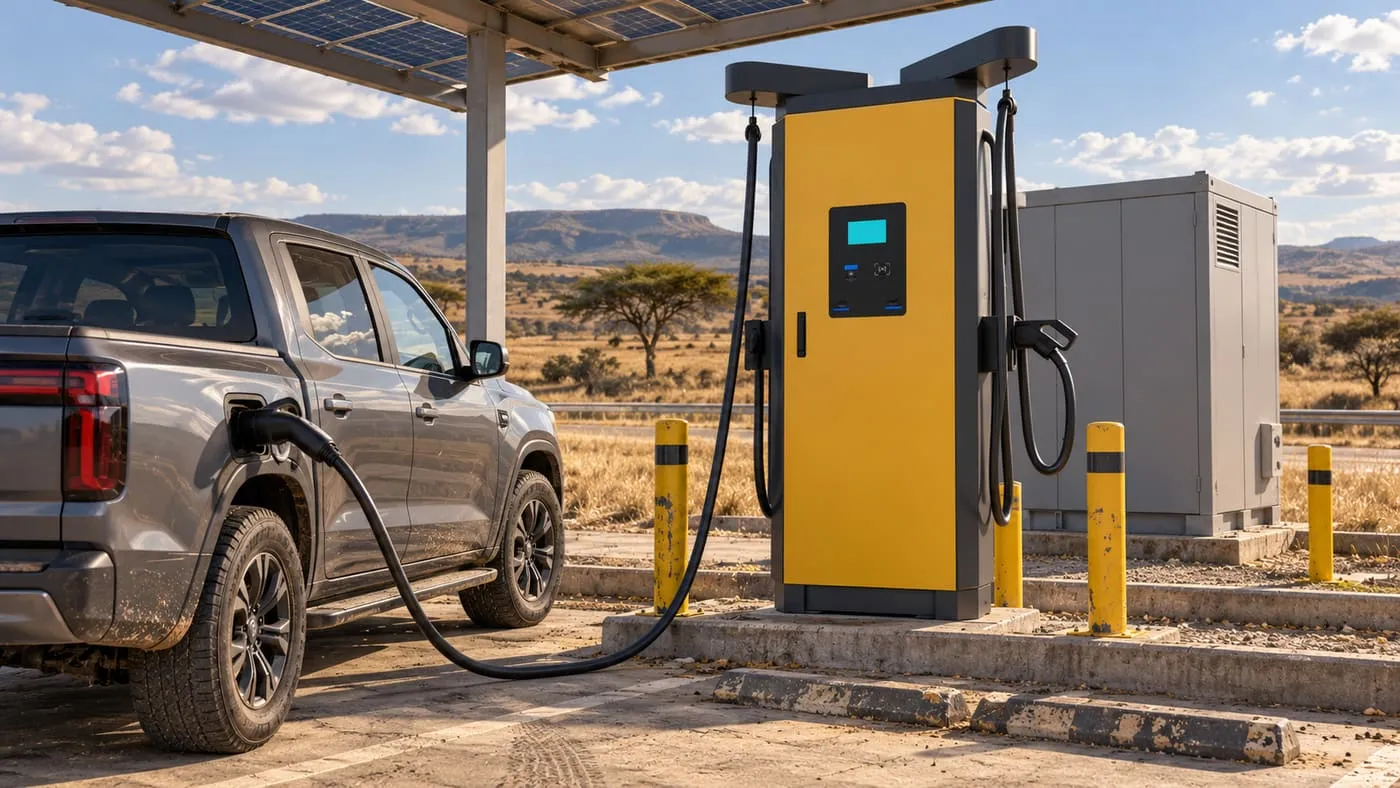
The Cape Town pilot prices energy by the state of the battery. SAEV Charge’s Richmond Park site has four 120 kW DC chargers, 1 MWh of rooftop solar and a 2.25 MWh battery from SolarMD. The standard price is R3.49/kWh and drops to R2.49/kWh when the on-site battery is above 90%. EWN’s reporting compares this with about R4.16/kWh for home charging and about R7 to R8/kWh for typical public DC charging. The article gives no grid cost inputs, so do not read it as the achievable margin.
For a site of your own, the planning question is how many kWh the battery must cover. Use the grid capacity calculator to find the peak, then ask your supplier what storage that implies.
Wiring rules and municipal supply
SANS 10142-1 governs the installation, and the supplier of the grid is usually the municipality. The 2015 Crown announcement describes the SABS revision adding socket-and-plug requirements for EVs referencing SANS 61851-1, SANS 62196-2, SANS 62196-3 and SANS 61851-23. We could not find a 2026 summary of the edition in force. The same page notes that regular outlets are limited to 16 A (about 3.7 kW) on the 230 V network, which is why dedicated chargers matter.
What we could not verify, and you should confirm before committing: municipal tariff categories for EV charging in your metro, connection fees, resale rules (NERSA guidelines), and Eskom or municipal approval timelines for a new three-phase supply.
Choosing equipment for South African conditions
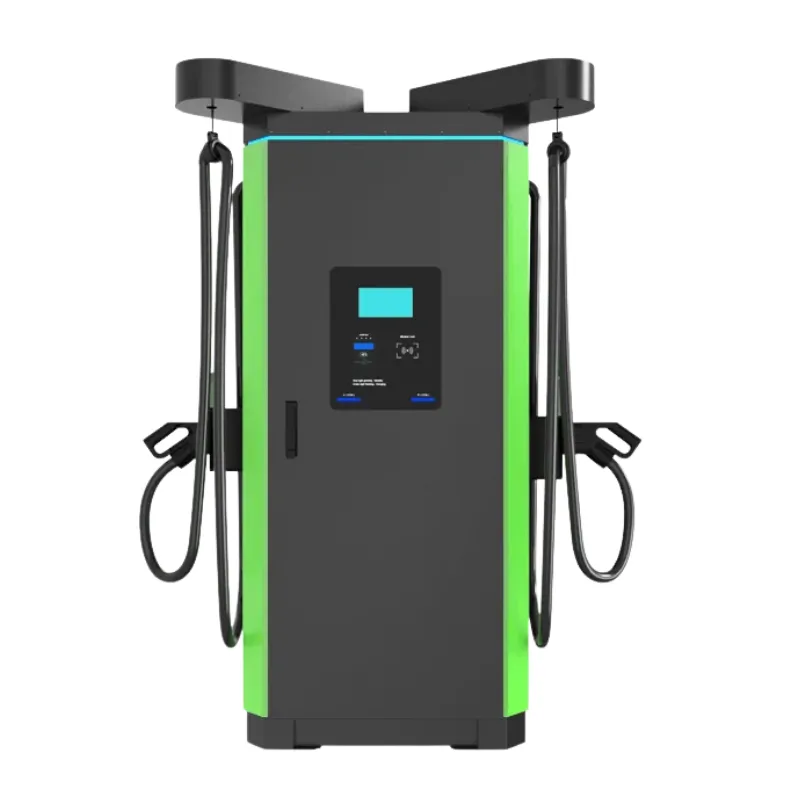
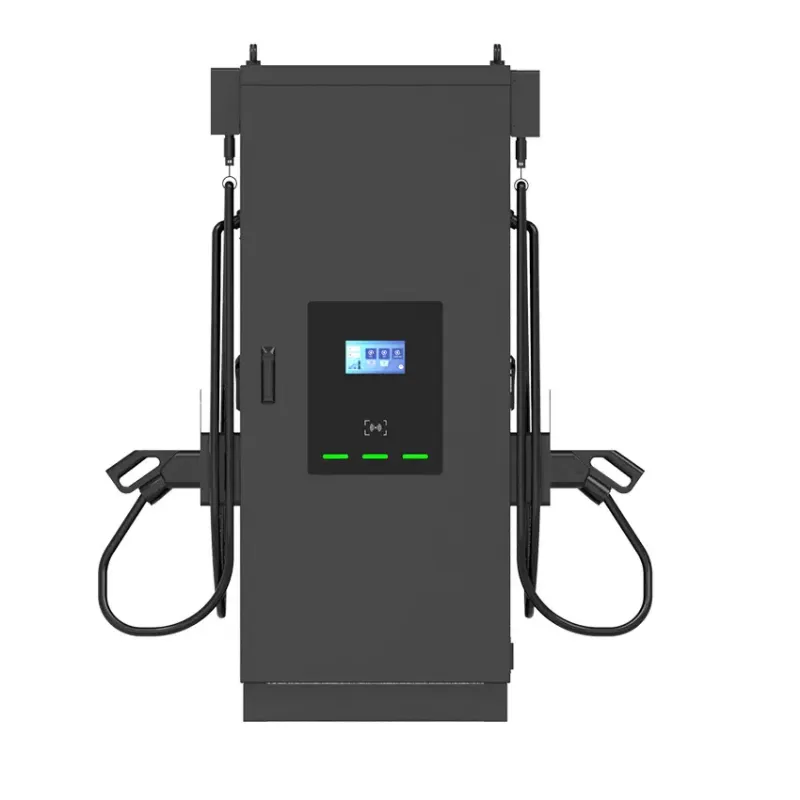
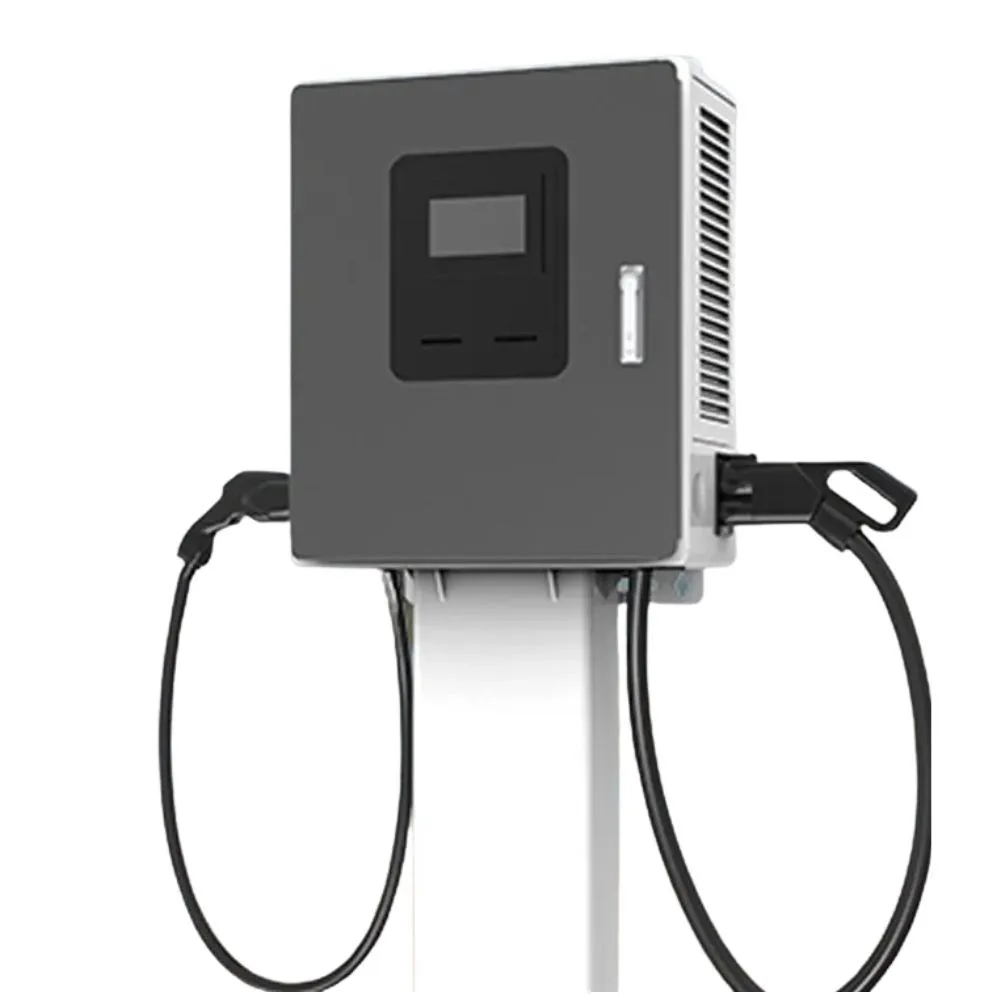
The strongest match is a DC site with dynamic power sharing, ready for solar and storage. The European build of the UC series takes 400 V three-phase and shares up to 300 kW between two guns; a 360 kW cabinet exists only in the North American build, where each gun is limited to 200 A and a single car cannot take the whole 360 kW. For sites with a modest connection, the CC series at 120 or 180 kW and the HC series at 20 to 60 kW fit retail and fleet bays. Our chargers operate up to +55 °C, which suits inland summer heat; confirm connector standard with us against the cars you expect, because the public connector mix is not documented in our sources.
Pricing is configured per project. Send us your supply voltage, the capacity the utility will give you, the number of guns and whether you plan solar or storage through the contact page, and we will return a configuration and quotation breakdown. We can provide test reports and technical files to support the local approval process.
Grid capacity calculator
- Spare power for charging
- —
- Input current per charger (400 V)
- —
- Chargers at full power
- —
Spare power = kVA × 0.95 power factor × (1 − margin) − existing peak load. Input current ≈ charger kW ÷ (√3 × 400 V), with power factor and 95 % efficiency added for DC chargers. With dynamic load management more chargers can share the same capacity at reduced power. Always confirm with your electrical engineer and the grid operator.
Frequently asked questions
- Is load shedding still a risk for a South African charging site?
- National load shedding has not returned since April 2025 according to Eskom's April 2026 briefing, but load reduction continues on some local feeders and unplanned outages still happen. Ask the municipality or Eskom which feeder your site is on, and price a battery or generator option as insurance rather than assuming the grid is always up.
- What wiring standard applies to an EV charging installation?
- SANS 10142-1 is the wiring code for low-voltage installations. In 2015 SABS announced that a revision would add rules for EV plug and socket systems, referring to SANS 61851-1, SANS 62196-2, SANS 62196-3 and SANS 61851-23. We did not find the current edition text, so confirm the edition in force and the certificate-of-compliance procedure with your registered electrician.
- Can I resell electricity through a charger?
- We could not verify the rules from a source we opened, so we do not state them. Resale of electricity is covered by NERSA guidance under the Electricity Regulation Act, and municipal supply conditions and tariffs differ from Eskom's. Confirm with NERSA and your municipality before you set a per-kWh price.
- What does a DC fast charger cost for a South African site?
- It depends on configuration: power rating, cable and connector set, payment options, whether you add solar or storage, and site conditions. Send us your supply voltage, number of guns and the capacity the utility will give you through the contact page, and we will return a configured quotation with a breakdown.
References
- [1]Load shedding free winter on the cards for SA. South African Government News Agency, April 2026.
- [2]EV charging in SA could cost as little as R2.49 per kWh under new pricing model. EWN, 23 September 2026.
- [3]Eskom and BYD join forces to boost SA's EV future with 200 new charging stations. EWN, 11 December 2025.
- [4]Plug-in electric vehicles in South Africa. Wikipedia (citing Mail & Guardian, MyBroadband, naamsa).
- [5]Important changes to SANS 10142-1. Crown Publications, 16 September 2015.