Business guide
Financing an EV Charging Station: Buy, Lease, Share Revenue or Use Grants
Financing an EV charging station: DC fast equipment is $38,000–$90,000 per connector. Compare owning, leasing, revenue share and the ended 30C credit.
- Prepared by
- EVCSTAR Engineering Team
- Published
- Reading time
- 4 min
- Sources
- 4 references
At a glance
- DC fast equipment, per connector (AFDC)
- $38,000–$90,000
- DC fast installation, per connector (AFDC)
- $20,000–$60,000
- 30C credit, with wage rules (to 30 Jun 2026)
- 30%, max $100,000/item
- 30C credit, without wage rules
- 6%, max $100,000/item
Key takeaways
- 1The U.S. Alternative Fuels Data Center puts public DC fast charging equipment at $38,000–$90,000 per connector and installation at $20,000–$60,000, with labour the largest installation cost, so financing has to cover a bill that is partly not the charger.
- 2The federal 30C credit (6% of cost, or 30% with prevailing wage and apprenticeship, capped at $100,000 per item) applies only to property placed in service through 30 June 2026; AFDC lists it as expired, so do not put it in a new model without a tax adviser.
- 3There are four routes: own it outright, finance the equipment, hand the site to a third party who owns and runs it, or a hybrid. The trade is the same each time: upfront capital and control against revenue kept.
- 4Whatever the route, electricity, demand charges and network fees keep running; hardware on OCPP 1.6 or higher lets you change network without replacing equipment, which protects a financed asset.
On this page
Short answer: financing an EV charging station means funding a bill that is roughly half equipment and half everything around it, then choosing between owning the asset and sharing the revenue, and in the United States the federal 30C credit that used to cut that bill covered only property placed in service by 30 June 2026.
What you are actually financing
The charger is one line of three. AFDC, the U.S. Department of Energy’s data centre, gives typical public costs per connector: Level 2 about $3,500 for equipment and about $2,500 for installation, and DC fast $38,000–$90,000 for equipment and $20,000–$60,000 for installation. Labour is the largest installation expense, and per-charger cost falls on larger sites. These are US figures; use them for proportions, not as a quote for any other country.
| Block | Typical content | Who prices it |
|---|---|---|
| Equipment | Charger, cables, display, payment | Supplier |
| Installation and connection | Labour, trenching, pads, any electrical service upgrade | Contractor and utility |
| Running costs | Electricity, demand charges, annual network fees | Utility, network provider |
Utilities can require service upgrades, which AFDC lists as a major cost driver, so ask for the connection cost before you set a loan amount. Our total build cost breakdown and operating cost page show how the blocks add up.
Four ways to structure ownership
Pick the structure by who should carry capital risk and who should keep the revenue. AFDC names two main models and says utility-based variants exist; a Los Angeles County webinar deck (2025) lists four: organisation-owned, charging-as-a-service, third-party-owned and hybrid, with loans, leases, PACE and grants among financing tools. The deck outlines the topics without giving numbers, so the table below is our reading of AFDC plus general terms.
| Model | Capital | Revenue | Responsibility |
|---|---|---|---|
| Owned by site host | Host pays all | Host keeps all (AFDC: “all revenue”) | Host pays maintenance and payment fees |
| Equipment finance or lease | Spread over a term | Host keeps sales; pays instalments | Terms set in contract; confirm who maintains |
| Third-party owned | Operator pays | Host may earn rent for the space (AFDC) | Operator installs and maintains |
| Hybrid | Split | Split by contract | Split by contract |
Charging-as-a-service replaces capital with recurring fees. We found no neutral public source with typical revenue-share percentages or lease rates, so treat any single vendor’s number as that vendor’s offer and not a norm.
Grants, credits and utility money
Subsidies change the answer, so check dates first. The federal 30C credit gave businesses 6% of cost, or 30% when prevailing wage and apprenticeship rules were met, capped at $100,000 per item, with each charging port counted as an item. It applied to property placed in service from 1 January 2023 through 30 June 2026 in eligible low-income or non-urban census tracts, and is recaptured if the property stops qualifying within three full years. AFDC marks it expired on 30 June 2026, and the pages we read describe nothing for later dates.
Other money to look for: state and local programmes, utility incentives (our Florida guide gives a utility make-ready credit as an example), and, in some countries, development-bank or climate funds. We did not read programme rules beyond those cited, so confirm eligibility, deadlines and whether funds pay up front or reimburse after you build.
How to model it before you borrow
Lenders and partners want utilisation, not nameplate. AFDC notes that operating costs include electricity, demand charges and annual network fees. Run the payback calculator at a low, a base and a high utilisation case, with financing payments as a separate line, and see whether the low case still covers debt service. If it does not, a revenue-share or hosted model may be safer than owning. AFDC also notes that hardware using OCPP 1.6 or higher lets a host switch networks without equipment upgrades, which helps avoid stranded assets: that matters when a lender holds the equipment as security.
Checklist for any financing quote:
- Total of payments, fees and the revenue given up over the full term
- Who pays electricity, maintenance and network fees
- Who keeps rebates and tax benefits
- What happens at the end: ownership transfer, return or renewal
- Whether the equipment can be moved or the network changed
How EVCSTAR equipment fits
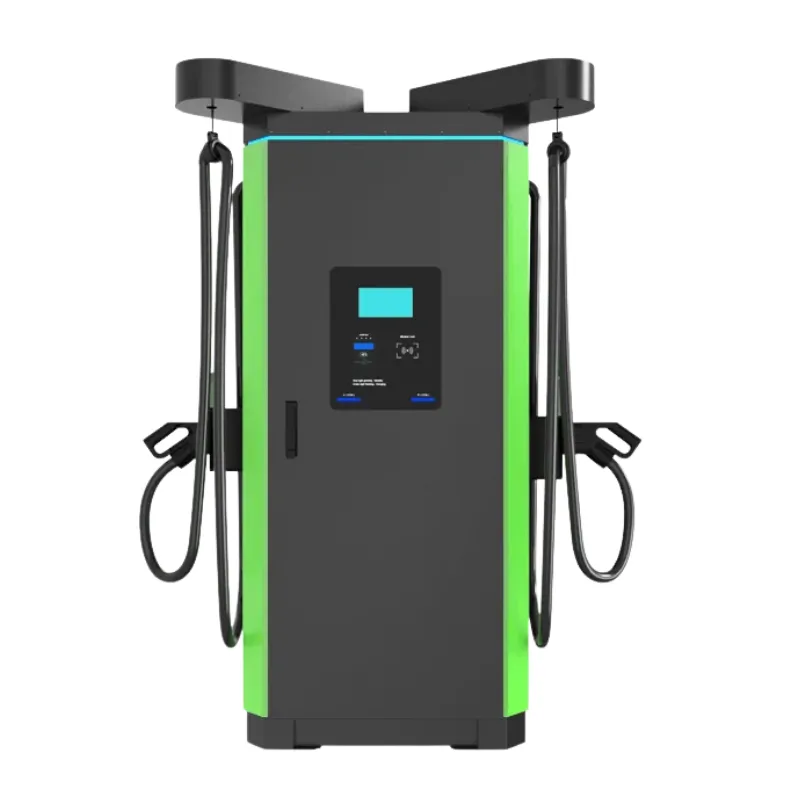
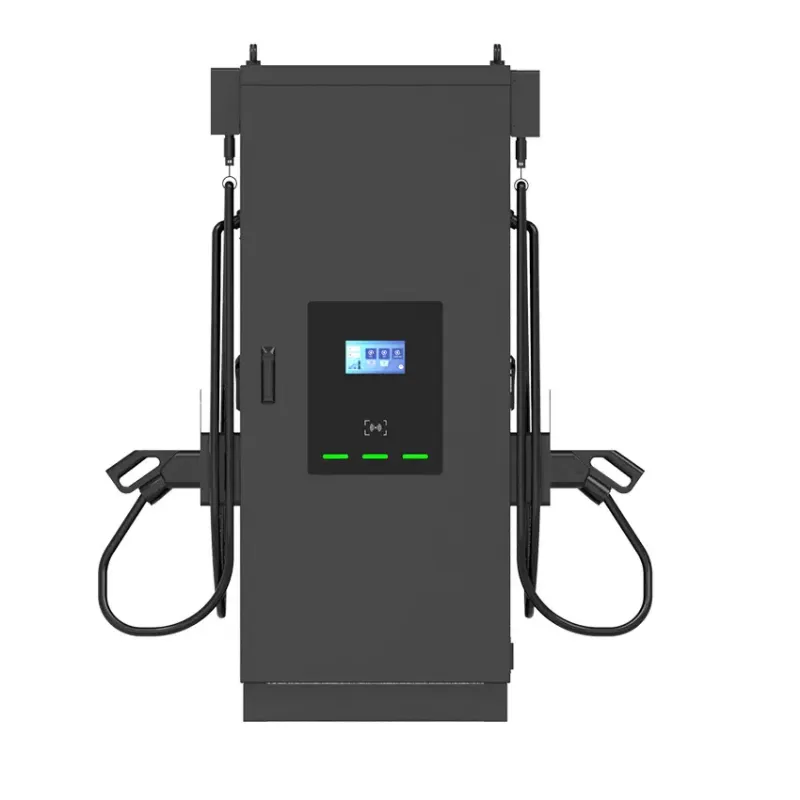
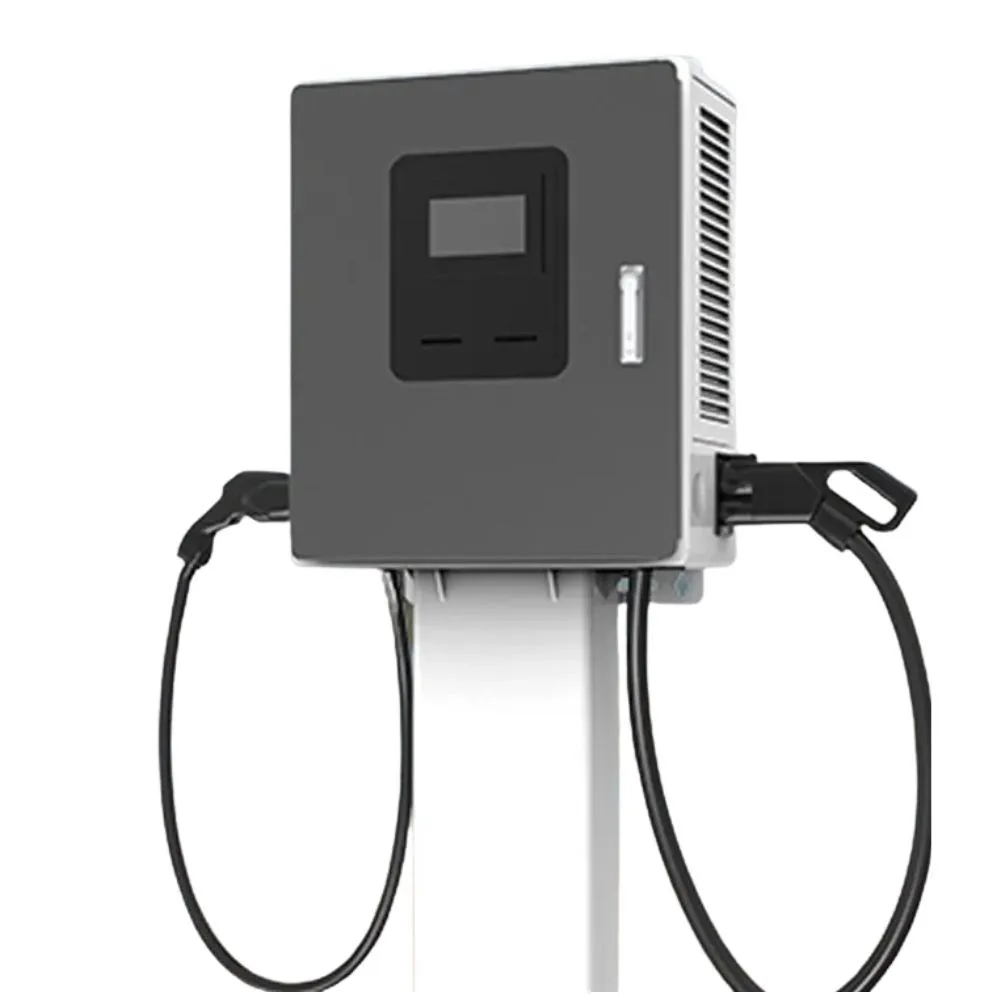
We supply the equipment block and technical documents for your lender or partner; we do not offer financing, and we return a configured quotation once you send your site data through the contact page. Choose by site: the UC series (60–360 kW, two-gun cabinets with dynamic power sharing) for corridors and hubs, the CC series where space is tight, and the HC series for small fleet yards. All support OCPP 1.6J and 2.0.1, which helps with network flexibility, and operate up to +55 °C. Send us the site details and we will prepare a written quotation and the datasheets your financier asks for; terms, delivery and warranty are confirmed per project. Our standard warranty is 12 months, see warranty.
Payback calculator
Example values are filled in — replace them with your own quotation, tariff and traffic figures.
- Energy sold per month
- —
- Net margin per month
- —
- Simple payback
- —
Simple payback = total investment ÷ (energy sold × (price − energy cost) − fixed costs), using 30 days per month. Taxes, financing, subsidies and utilisation growth are not included.
Frequently asked questions
- Can I still claim the federal 30C credit on a new charging station?
- Not on the information we read. IRS and AFDC pages cover property placed in service from 1 January 2023 through 30 June 2026, and AFDC marks the credit as expired on that date. The pages do not describe any credit for later property. If you placed equipment in service by that date, the property also had to be in an eligible low-income or non-urban census tract, and the credit is recaptured if it stops qualifying within three full years. Ask a tax adviser before relying on it.
- Is leasing the chargers cheaper than buying them?
- It lowers the upfront cash but is not automatically cheaper over the term. The comparison is the total of lease or loan payments, fees and the revenue you give up, against the cash you tie up in owning. We did not find a neutral public source with typical lease rates, so collect written quotes with the term, residual value, who pays maintenance and who keeps incentives, then compare them in the payback calculator.
- What does a revenue-share deal usually look like?
- It varies by operator and we found no neutral published norm. The AFDC describes the host-owned model as keeping all revenue while paying all costs, and the third-party model as reducing the host's responsibility, with the host earning from leasing the space. Ask any partner for the revenue split, who pays electricity, who keeps rebates, the term, and what happens to the equipment at the end.
- Which costs does financing usually miss?
- Electrical service upgrades, which AFDC lists as a major installation driver, network fees, demand charges and maintenance. Include them in the request to the lender or partner, and ask the utility for the connection cost before you fix the loan amount.
References
- [1]Infrastructure Development for Electric Vehicle Charging (ownership models, cost considerations). U.S. Department of Energy, Alternative Fuels Data Center.
- [2]Alternative Fuel Vehicle Refueling Property Credit (Section 30C). Internal Revenue Service.
- [3]Alternative Fuel Infrastructure Tax Credit (expired 30 June 2026). U.S. Department of Energy, Alternative Fuels Data Center.
- [4]Part 2: Business Models and Financing, EV Charging Webinar (June 2025). County of Los Angeles, Internal Services Department.