Market guide
EV Fast Charging in Greece: Permits, Grid and Tourism-Route Sites
EV charging stations Greece guide: Law 4710/2020 municipal plans, HEDNO connection, about 3,900 public stations (2026), island peak load and subsidies.
- Prepared by
- EVCSTAR Engineering Team
- Published
- Reading time
- 5 min
- Sources
- 5 references
At a glance
- Public charging stations (2026)
- about 3,900
- Total charging points (2026)
- 9,100+
- BEV share of new cars, Jan–Sep 2025
- 5.5%
- Aegean island stations (2026)
- about 400
Key takeaways
- 1Greece has about 3,900 publicly accessible charging stations and more than 9,100 charging points in total (Ministry of Infrastructure and Transport data reported April 2026), with gaps along long-distance routes and a shortage of fast chargers.
- 2Law 4710/2020 requires every municipality to prepare an EV charging plan, and the HEDNO connection process and available grid capacity are the live pain points: operators and HEDNO met in November 2025 to discuss connection, permitting and capacity transparency.
- 3Islands are a seasonal load: the Kythnos and Astypalea projects sized demand for August, the assumed peak month, and specified chargers for weather resilience, voltage-variation protection and sea exposure.
- 4Past subsidies (public chargers up to EUR 40,000 per station, per a January 2024 review) may have closed or changed; confirm what is open before you plan around them.
On this page
Short answer: EV charging stations in Greece are still thin on the ground (about 3,900 public stations, 9,100 charging points, April 2026), fast chargers are scarce, and the real bottleneck for a new fast-charging site is not the charger but the HEDNO connection, so start with the grid capacity question and then choose a location along the tourist and ferry routes.
A network that is behind the traffic
Coverage is concentrated around Athens and thins out on the roads that tourists and trucks actually use. To Vima, citing Ministry of Infrastructure and Transport data, counted about 3,900 publicly accessible stations and more than 9,100 charging points in April 2026. It reports regional counts of more than 1,000 stations in Attica, about 700 in Northern Greece, about 950 in Western Greece and the Peloponnese, about 400 in the Aegean islands and about 300 in Crete, and notes gaps in rural areas and along major transport routes. The article does not give a fast-charger count, only that fast options are in short supply.
| Indicator | Figure | Date |
|---|---|---|
| Public charging stations | about 3,900 | 2026 |
| Total charging points | more than 9,100 | 2026 |
| BEV share of new registrations | 5.5% | Jan–Sep 2025 |
| Estimated charging points | about 5,000 | End 2023 |
| Passenger and commercial vehicles over 20 years old | about half | 2025 |
The old fleet matters for planning: with about half of vehicles older than 20 years, the electric vehicles you will serve are mostly new-car buyers, rental fleets and taxis. About 30,000 taxis operate in Greece, and drivers told To Vima that a full charge taking three to four hours cuts working hours, which is a case for DC points near taxi ranks, airports and ports.
The rules: law, municipal plans and the grid operator
Law 4710/2020 sets the frame, and the practical gatekeeper is HEDNO. The 2020 law on the promotion of e-mobility introduced purchase subsidies and required all municipalities to draw up Electric Vehicle Charging Plans, so a municipality’s plan can decide whether and where public points are accepted. The Chambers guide says connection charges collected by HEDNO follow a regulator decision whose principles include the requested connection capacity and the distance from your property to the nearest operating grid facilities, and that charges can vary by location depending on the network in the area.
In November 2025 HELIEV (the charging operators’ association) met HEDNO for a second workshop. Topics were connection and permitting procedures for new charging points, and the need for more transparency about the available capacity of the distribution network, plus minimum service standards such as 24/7 user support and maintenance. The page records no commitment and no figures. The practical reading: ask HEDNO for a capacity answer for your exact feeder early, and do not assume a fast timeline. The Greek Analyst also reported in January 2024 that HEDNO said only 6% of charging points were officially registered and had threatened to cut power to unregistered ones, so register every point.
We could not open HEDNO’s own connection page or the ministerial licensing decision for public stations. Confirm the current application route, fees and any deemed-approval periods with HEDNO and the municipality before you set a programme.
Seasonal islands and tourist routes
An island site is sized for August, not for the annual average. ManagEnergy describes two island networks built under the Smart Island programmes: Kythnos with four double chargers and Astypalea with six, the latter claimed to be Europe’s highest chargers-per-citizen ratio. Support teams estimated demand for August as the assumed peak transport month, did on-site inspections with HEDNO to assess grid availability and risks such as flooding and sea exposure, and specified equipment for weather resilience and protection against voltage variation. Accompanying works such as signage and flooring raised the stations’ visibility, which the article links to higher EV rental demand.
For a commercial fast-charging site this suggests a short list of candidate locations: ferry-port approaches, airports serving islands with rental fleets, motorway service areas on the Athens to Thessaloniki and Athens to Patras corridors, and hotel resorts with long dwell times (AC is often enough there). Check the connection and any island-grid limits first, and treat the seasonal swing as a revenue risk: an island site may earn most of its energy sales in a few summer months.
Incentives: what existed and what to confirm
Greece has funded e-mobility heavily since 2020, but programme status changes. The Greek Analyst summarised almost EUR 240 million of e-mobility aid by early 2024: Kinoumai Ilektrika (EUR 46 million in its first round, EUR 65 million in its second round to 2024), Fortizo Pantou for charging (EUR 80 million), Green Taxi (EUR 40 million) and e-Astypalaia (EUR 9 million). It listed public charger subsidies of up to EUR 40,000 per station, 13% VAT instead of 24% on vehicle purchases and registration-tax relief of up to 100% for BEVs. We have no 2026 confirmation that any of these calls remain open; check with the Ministry before you plan around them.
Choosing equipment for Greek sites
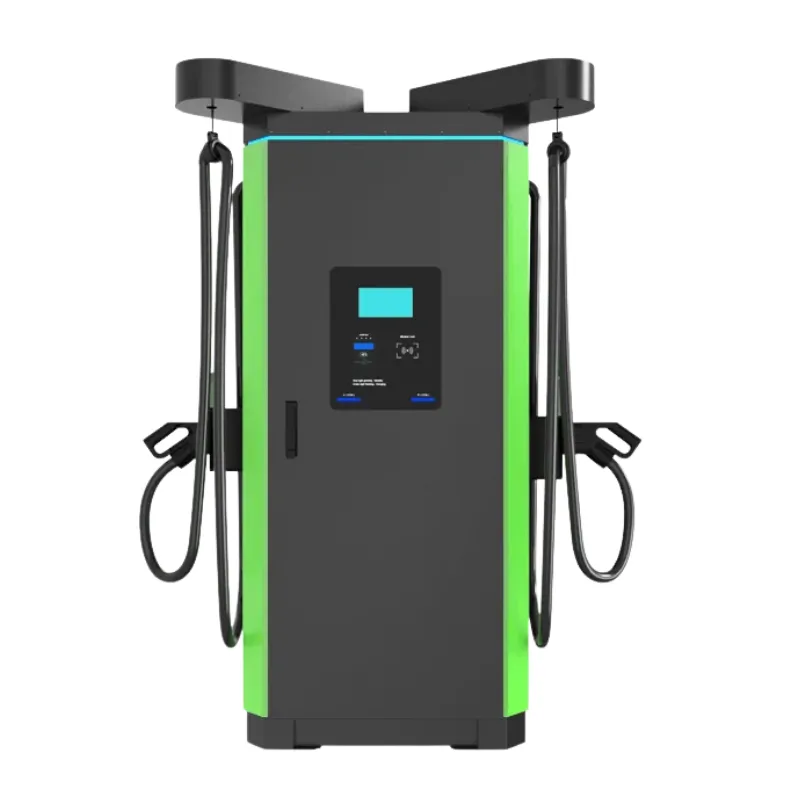
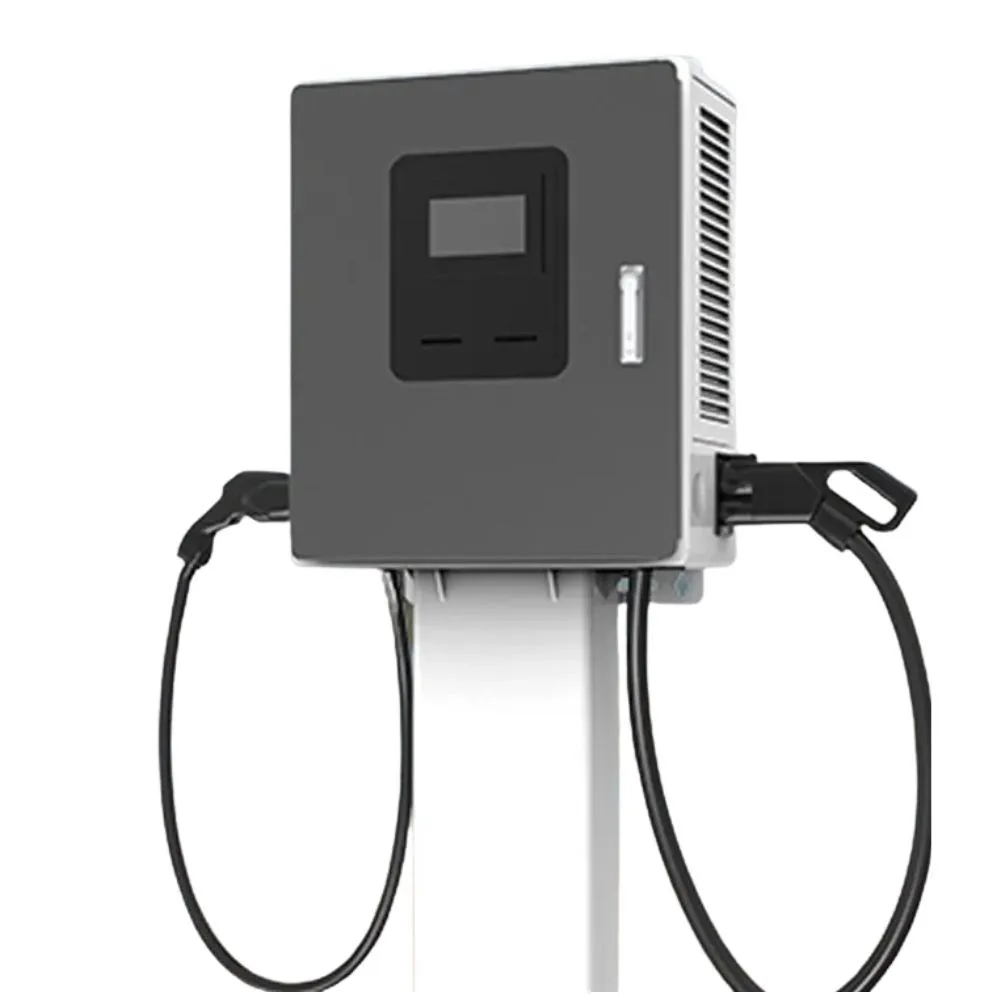
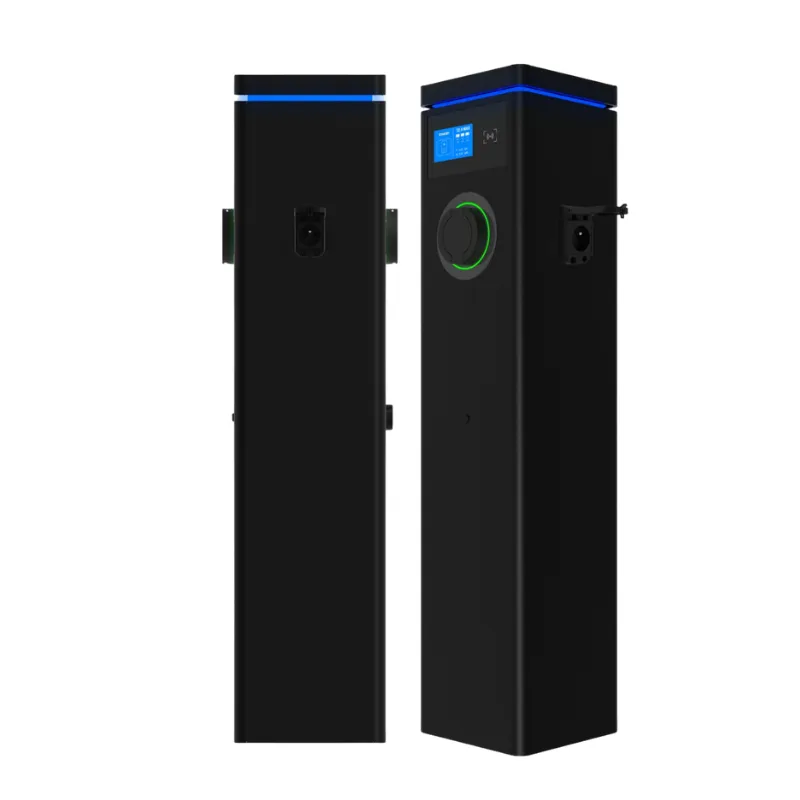
Match the series to dwell time and to the connection you can actually get. For hotels, marinas and parking, the CPO series (two guns, 3.7 to 22 kW) is a sensible AC point. For a first DC point on a modest connection, the HC series (20 to 60 kW) needs a smaller connection than a hub. For motorway and port-approach sites with strong demand, the UC series offers European CCS2 builds up to 300 kW; the larger North American cabinet is a two-gun unit with each CCS gun limited to 200 A, so one car never takes the full cabinet rating. All support OCPP 1.6J and 2.0.1 and operate up to +55 °C, which suits Greek summers and exposed coastal sites. For coastal sites, tell us the distance from the sea so we can advise on the enclosure.
We cannot say a model meets any Greek licensing or HEDNO technical requirement, but we can supply test reports and technical documents for your permit file. To get a configured proposal and quotation breakdown, send us the site voltage, available kVA, number of guns and connector standards through the contact page, and size the grid side with the grid capacity calculator.
Grid capacity calculator
- Spare power for charging
- —
- Input current per charger (400 V)
- —
- Chargers at full power
- —
Spare power = kVA × 0.95 power factor × (1 − margin) − existing peak load. Input current ≈ charger kW ÷ (√3 × 400 V), with power factor and 95 % efficiency added for DC chargers. With dynamic load management more chargers can share the same capacity at reduced power. Always confirm with your electrical engineer and the grid operator.
Frequently asked questions
- Who connects a public charging station to the grid in Greece?
- The distribution network operator, HEDNO (DEDDIE), receives the connection application and the connection charge. The Chambers guide we read says the charge is set under a regulator decision on principles that include the requested capacity and the distance to existing grid facilities. HEDNO offers a digital application route, but we could not open the step-by-step page, so confirm the forms, fees and timeline with HEDNO for your site.
- Are there subsidies for public EV chargers in Greece?
- A January 2024 review listed public charger subsidies of up to EUR 40,000 per station and a EUR 80 million "Fortizo Pantou" charging programme. We did not confirm whether these calls are open in 2026, so check with the Ministry of Infrastructure and Transport before you budget on grant money, and do not start works that would make you ineligible.
- Which charger size makes sense on a Greek island?
- The island projects we read (Kythnos with 4 double chargers, Astypalea with 6) used AC points sized for the August peak, and their support services checked grid availability with HEDNO on site. A DC point makes sense where the island grid can carry it and a ferry port or main road concentrates traffic. Send us your supply voltage and available kVA through the contact page and we will propose a configuration and quotation breakdown.
- How much does a fast-charging site cost in Greece?
- It depends on the configuration: power level, connector mix, cable length, options and the connection works HEDNO requires. Send us the site data (voltage, number of guns, connector standards, grid capacity) through the contact page and we return a configured proposal with a quotation breakdown. The payback and grid capacity calculators give planning ranges until then.
References
- [1]Greece lags in EV charging despite growing adoption (24 April 2026). To Vima.
- [2]Greece's electric car moment (31 January 2024). The Greek Analyst.
- [3]Promotion of electromobility through planning and installation of EV charging networks on Greek islands (8 May 2023). ManagEnergy, European Commission.
- [4]2nd HELIEV – HEDNO Workshop with Charging Infrastructure Operators (7 November 2025). HELIEV.
- [5]Power Generation, Transmission and Distribution 2025: Greece (connection charges). Chambers and Partners.