State guide
DC Fast Charging in New York for Business: Make-Ready, Demand Credits, City vs Upstate
DC fast charging New York business guide: the $1.24B make-ready program closed to new applications on 21 April 2026; demand-charge credits differ by utility.
- Prepared by
- EVCSTAR Engineering Team
- Published
- Reading time
- 3 min
- Sources
- 4 references
At a glance
- Make-ready budget (2023 order)
- $1.243 billion
- DC fast charging target
- 6,302 stations
- New applications closed
- 21 April 2026
- Demand-charge credit (2023)
- 50%
Key takeaways
- 1New York's ratepayer-funded make-ready program was raised to $1.24 billion in November 2023 with a fast-charging target of 6,302 stations, but the utilities stopped taking new applications on 21 April 2026, so a project that missed the deadline needs a different funding case.
- 2The Public Service Commission ordered a 50% demand-charge credit in January 2023: for all commercial charging at National Grid, Central Hudson, NYSEG and RG&E, but only for public DC fast charging at Con Edison and O&R. That is the main city-versus-upstate difference.
- 3Fast chargers committed after 16 November 2024 under the program had to use OCPP 2.0.1 hardware and ISO 15118 software, and equipment must be on the EPRI vetted product list; check these before choosing a charger.
- 4For New York sites only our UC and SC series have North American builds (480 V input, CCS1 or NACS), and the 360 kW UC is a two-gun cabinet limited to 200 A per gun.
On this page
Short answer: for DC fast charging in New York as a business, the money that used to cover the utility-side build is now mostly closed, because the $1.24 billion make-ready program stopped taking new applications on 21 April 2026, so the decision turns on the demand-charge credit, where Con Edison customers and upstate customers are treated differently.
A program built big, then closed
The Public Service Commission rebuilt the program in November 2023 and the utilities shut the door in April 2026. The 16 November 2023 order raised the ratepayer-funded budget from $701 million to $1.24 billion, set aside $372 million for disadvantaged communities and lifted the fast-charging target from 1,500 to 6,302 stations. The Joint Utilities’ page now states that new applications ceased at 11:59 pm ET on 21 April 2026, completed applications continue to be reviewed, and the rules on the page are preserved for the record. While open, the program offered up to 100% of the electric infrastructure costs for new non-residential charging stations. The participating utilities were Central Hudson, Con Edison (its version is called PowerReady), National Grid, NYSEG, O&R and RG&E.
City and upstate are billed differently
The same 50% credit was applied to different groups of customers. The Commission’s January 2023 order (case 22-E-0236) told the utilities to create alternatives to demand-based rates.
| Utility group | 50% demand-charge credit applies to | Other relief |
|---|---|---|
| Con Edison, O&R | public DC fast charging only | commercial managed-charging program in place of the credit |
| National Grid, Central Hudson, NYSEG, RG&E | all commercial charging | managed-charging proposals to follow |
| All | EV phase-in rate: starts as time-of-use and blends in a demand charge as utilization rises |
For a Manhattan or Brooklyn site that means a public fast charger qualifies, but a private depot would look at the managed-charging program instead. Upstate, a fleet depot and a public site would both be eligible for the credit. The release did not give the credit’s duration, and we did not read the tariffs, so model both a credit and a no-credit case. The demand charges guide shows how to do that.
The per-plug incentive has run its course
The DCFC Per-Plug Incentive Program paid an annual declining amount per plug but stopped taking applications on 20 March 2023. Plugs rated above 75 kW got the full incentive; 50 to 75 kW got 60% of it. The Joint Utilities’ July 2026 table shows Central Hudson as the only utility that still has enrolled customers (21 of 100 plugs), and Con Edison had 7 of 400. In practice, if you hear a vendor quote a New York per-plug incentive, ask which utility and which date.
Equipment rules that came with the money
Even a project funded by another source is easier if the charger meets the program’s technical rules. The Joint Utilities list them by commitment date:
| Commitment date (DC fast) | Requirement |
|---|---|
| On or after 16 Dec 2023 | ISO 15118-3 hardware, able to support ISO 15118-2 or -20 |
| On or after 16 Nov 2024 | ISO 15118-2 or -20 software and OCPP 2.0.1 or later hardware |
| From 1 Mar 2025 | equipment on the Joint Utilities and EPRI vetted product list |
New York law also required EVSE sold in the state to be ENERGY STAR certified from 26 June 2023. We did not read the product list itself, so we do not know which models are on it.
What this means for choosing equipment
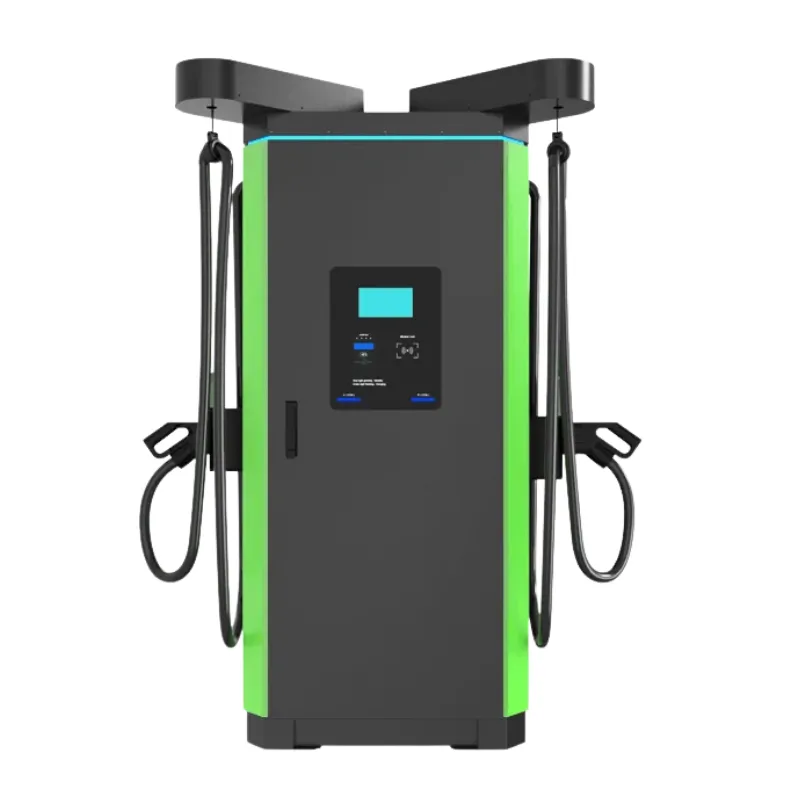
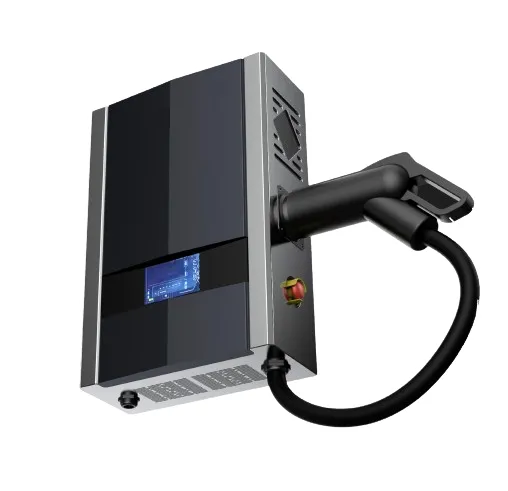
For New York only the UC series (60-360 kW) and the SC series (15-30 kW) have North American builds, 480 V with CCS1 or NACS. UC suits a public fast stop; it supports OCPP 2.0.1 and lists ISO 15118 among its protocols, and it operates up to +55 °C. The 360 kW cabinet has two guns of up to 200 A each, so one vehicle cannot use all 360 kW. SC suits a smaller connection.
We do not state that any model is on the EPRI list or holds a UL, ETL or ENERGY STAR listing; ask your utility what it needs and tell us, and we will send the technical documents and test reports we can supply. To start: send the utility, site voltage, number of guns, connector standard and available capacity on the contact page and we will reply with a configuration proposal and quotation breakdown. For a state with a different rate structure, compare the Massachusetts guide.
Grid capacity calculator
- Spare power for charging
- —
- Input current per charger (400 V)
- —
- Chargers at full power
- —
Spare power = kVA × 0.95 power factor × (1 − margin) − existing peak load. Input current ≈ charger kW ÷ (√3 × 400 V), with power factor and 95 % efficiency added for DC chargers. With dynamic load management more chargers can share the same capacity at reduced power. Always confirm with your electrical engineer and the grid operator.
Frequently asked questions
- Can I still apply for New York make-ready money for a fast charger?
- The Joint Utilities stopped accepting new EV Make-Ready applications at 11:59 pm ET on 21 April 2026 and continue to review applications completed before each utility's deadline. If you applied in time, ask your utility for the status; if not, ask whether any successor program or utility service study exists, because the program page is now archival.
- Is there a demand-charge break for a fast charger in New York City?
- The January 2023 order gave Con Edison and O&R a 50% demand-charge credit for public DC fast charging only, plus a commercial managed-charging program as an alternative. Upstate utilities got the credit for all commercial charging. Whether the credit is still available and for how long is not in the pages we read, so ask Con Edison for the current tariff.
- Does the per-plug incentive still pay anything?
- Not for new projects: the Joint Utilities stopped accepting DCFC Per-Plug Incentive applications on 20 March 2023, and their July 2026 table shows only Central Hudson still has enrolled customers. Con Edison had 7 of 400 plugs enrolled before its program ended.
- What would a New York fast-charging station cost?
- It depends on the configuration: power, connector combination, options and site conditions such as grid capacity. Send the site voltage, utility, number of guns and connector standard on the contact page and we will reply with a configuration proposal and quotation breakdown; use the grid capacity calculator for first sizing.
References
- [1]EV Make-Ready Program. Joint Utilities of New York.
- [2]DCFC Per-Plug Incentive Program. Joint Utilities of New York.
- [3]PSC approves beneficial utility rates for electric vehicle charging stations (19 January 2023). New York State Department of Public Service.
- [4]Governor Hochul advances nation-leading electric vehicle infrastructure buildout program (16 November 2023). New York State Department of Public Service.