State guide
DC Fast Charging in Massachusetts for Business: Eversource, National Grid and Demand Costs
DC fast charging Massachusetts business guide: Eversource and National Grid make-ready budgets ($188M, $206M) and demand-charge alternative rates to 2033.
- Prepared by
- EVCSTAR Engineering Team
- Published
- Reading time
- 4 min
- Sources
- 4 references
At a glance
- Eversource Phase II budget
- ~$188M (DPU, 2022)
- National Grid Phase III budget
- ~$206M (DPU, 2022)
- Public DCFC capacity targeted
- 27 MW + 32 MW (2023-26)
- Demand-charge alternative rates
- 2023 to 2033
Key takeaways
- 1In Massachusetts the two big utilities, Eversource and National Grid, run state-approved EV programs (about $188 million and $206 million, approved 30 December 2022) that pay for the utility-side connection of public fast chargers, and 2026 is the final year of the current Eversource program.
- 2The Department of Public Utilities approved optional demand-charge alternative rates for 2023 through 2033 (Eversource EV-1 and EV-2, National Grid G-2 and G-3 revisions), open to separately metered charging sites.
- 3One summary of the discount schedule has year one at a 100% demand-charge discount, then 100%, 75%, 50% or 0% depending on load factor (5%, 10%, 15% breakpoints), so a busy site gives up the discount as it succeeds.
- 4For Massachusetts sites only our UC and SC series have North American builds (480 V input, CCS1 or NACS); the 360 kW UC is a two-gun cabinet, so one car cannot draw 360 kW.
On this page
Short answer: a business that wants DC fast charging in Massachusetts should plan around two utility programs, a make-ready budget that pays for the service connection (Eversource about $188 million, National Grid about $206 million) and an optional demand-charge alternative rate that runs to 2033, while checking carefully that the rebate level it assumes has not been cut.
What the regulator actually approved
On 30 December 2022 the Department of Public Utilities (DPU) approved one program per utility, and each has a fast-charging target. Eversource received a four-year Phase II program of about $188 million, National Grid a four-year Phase III program of about $206 million and Unitil a small five-year program of about $998,000. The programs pay for make-ready work and rebates; make-ready means the primary lateral feed, transformer and pad, meter, service panel and the conduit and conductors that connect them. The DPU describes the capacity each should support from 2023 to 2026.
| Utility | Program (approved 2022) | Budget | Public DC fast charging supported |
|---|---|---|---|
| Eversource | Phase II, 4 years | ~$188M | up to 27 MW |
| National Grid | Phase III, 4 years | ~$206M | up to 32 MW |
| Unitil | Phase I, 5 years | ~$998,000 | 1 public site |
For scale, the earlier phases built very little fast charging: Eversource’s Phase I installed 4 DC fast ports, and National Grid’s Phase I produced 13 DC fast sites.
Reading the rebate page without assuming it is current
Eversource’s own business page says 2026 is the final year of the current program, with funding available through 2026 and subject to demand. It advertises rebates up to 100% of charger purchase cost for up to 10 ports in state-identified environmental-justice communities, and up to 50% elsewhere for some chargers, with the installer applying through the PowerClerk portal. We saw reports of an October 2025 DPU order that cut rebates for public DC fast chargers; we could not open that order, so treat the 100% figure as a ceiling to be confirmed, not a planning number. The question to put to the utility is simple: what percentage applies to a public DC fast project whose commitment letter is dated now?
Choosing a rate that fits your utilization
The DPU created optional rates so a new fast-charging site is not billed like a factory in its first years. They run for ten years, 2023 through 2033, for separately metered charging sites.
| Utility | Rate | Who qualifies (DPU) | Components |
|---|---|---|---|
| Eversource | EV-1 | billing demand up to 200 kW for 12 months | customer charge, kWh rate |
| Eversource | EV-2 | billing demand above 200 kW | customer charge, kWh rate, demand charge |
| National Grid | G-2 | up to 200 kW and above 10,000 kWh/month | customer charge, kWh rate, demand charge |
| National Grid | G-3 | above 200 kW | customer charge, kWh rate, demand charge |
A Massachusetts consumer-advocacy summary of the discount reads: 100% off the demand charge in the first enrollment year, then 100% if the prior twelve months’ load factor is 5% or lower, 75% above 5% up to 10%, 50% above 10% up to 15%, and nothing above 15%. It adds that per-kWh delivery charges rise in exchange. The consequence for a business plan is uncomfortable but useful: the discount shrinks as your charger utilization grows, so model both a slow ramp and a strong one. Our demand charges guide explains the mechanics, and the payback calculator lets you test the two cases. The summary was a secondary source; read the tariff sheets before signing.
The customer side: MOR-EV
Demand for your chargers is helped by a vehicle rebate you do not control. MOR-EV pays $3,500 to $6,000 toward an eligible electric vehicle for Massachusetts residents, businesses and non-profits. It does not fund your charger, but it matters for fleet and mixed-use sites where a driver or tenant is deciding whether to buy.
Which cabinet fits a Massachusetts site
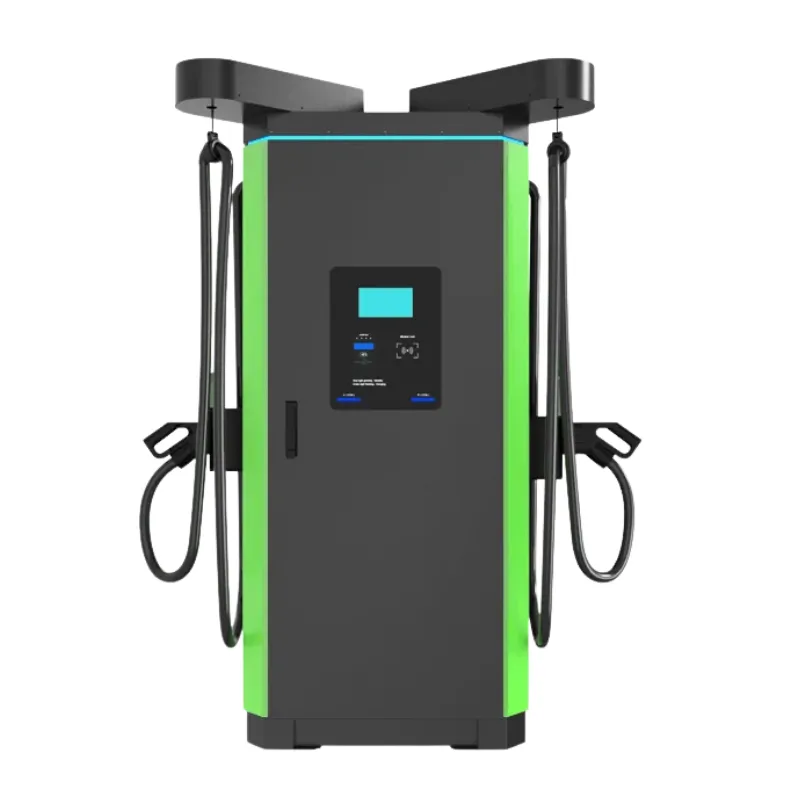
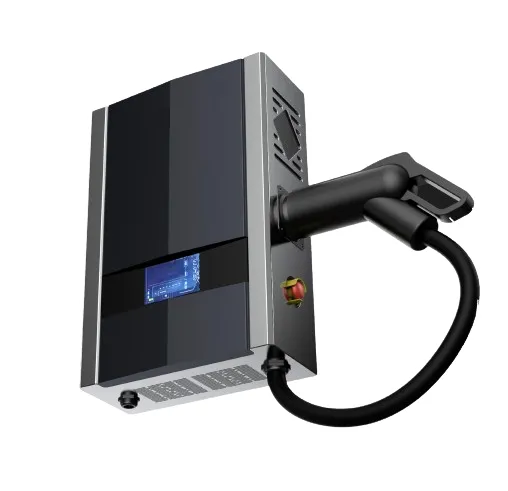
For a Massachusetts site only the UC series (60-360 kW) and the SC series (15-30 kW) have North American builds, with 480 V input and CCS1 or NACS connectors. UC suits a corridor or retail fast-charging stop; the 360 kW cabinet has two guns of up to 200 A each, so a single vehicle cannot use the full 360 kW. SC suits a small service connection such as a fleet yard. Both support OCPP 1.6J and 2.0.1 and work up to +55 °C.
We cannot say any model carries a UL or ETL listing or meets a utility’s equipment list; ask the utility and your inspector what they require, and tell us what they ask for so we can send the technical documents and test reports we can supply. The simplest next step: send the site voltage, utility, number of guns, connector standard and available capacity on the contact page, and we will reply with a configuration proposal and quotation breakdown. For the standards in outline see our standards guide; for a neighbouring market with a different make-ready design, read the New York guide.
Payback calculator
Example values are filled in — replace them with your own quotation, tariff and traffic figures.
- Energy sold per month
- —
- Net margin per month
- —
- Simple payback
- —
Simple payback = total investment ÷ (energy sold × (price − energy cost) − fixed costs), using 30 days per month. Taxes, financing, subsidies and utilisation growth are not included.
Frequently asked questions
- Which utility connects my fast-charging site in Massachusetts?
- The one whose territory the site is in: Eversource, National Grid or Unitil. The DPU approved EV programs for all three in December 2022, and Unitil's covers one public DC fast charging site, so the real choice is made by the address. Ask the utility for a service study before you commit to a lease.
- Do I still pay a demand charge if I join the alternative rate?
- It depends on the rate and the year. The DPU lists Eversource EV-2 and National Grid G-3 (sites above 200 kW of billing demand) as including a demand charge, with a discount that one summary ties to your load factor; below 200 kW Eversource EV-1 has no demand charge at all. Check the live tariff sheet and model it in the payback calculator.
- Can I count on Eversource rebates for a new public fast charger?
- Not without checking. Eversource says 2026 is the final year of the current program and its page advertises rebates up to 100% for up to 10 ports in environmental-justice communities. We saw reports that DPU orders in October 2025 cut public DC fast charging rebates but could not open those orders, so confirm the current percentage with the utility before it goes in a budget.
- How much does a fast-charging station cost to equip?
- It depends on the configuration: power, cable and connector combination, options and site conditions. Send us the voltage, number of guns, connector standard and available grid capacity through the contact page and we will reply with a configuration proposal and a quotation breakdown; for early planning use the payback calculator.
References
- [1]DPU's electric vehicle charging resources. Massachusetts Department of Public Utilities.
- [2]Demand charge alternatives for EV charging in Massachusetts. Green Energy Consumers Alliance.
- [3]Business EV Charging Rebates (Massachusetts). Eversource.
- [4]MOR-EV: Massachusetts Offers Rebates for Electric Vehicles. Center for Sustainable Energy.