Market guide
EV Charging in Uganda: ERA Rules, Grid and Fleet Demand
EV charging Uganda guide: ERA-approved commercial tariff of Shs562.1/kWh for Oct-Dec 2026, battery-swap-led two-wheeler demand and where DC fast charging fits.
- Prepared by
- EVCSTAR Engineering Team
- Published
- Reading time
- 3 min
- Sources
- 4 references
At a glance
- Commercial average tariff, Oct–Dec 2026
- Shs562.1/kWh
- Commercial off-peak / peak
- Shs429.7 / Shs666.5
- Medium industrial average
- Shs363.8/kWh
- Planned phase-out of petrol motorcycles in Kampala CBD
- By 2030 (master plan)
Key takeaways
- 1For October to December 2026 the Electricity Regulatory Authority (ERA) kept tariffs unchanged: commercial customers pay an average Shs562.1/kWh (peak Shs666.5, off-peak Shs429.7), medium industrial Shs363.8, with maximum demand charges still applying (Daily Monitor, October 2026).
- 2Uganda's e-mobility is two-wheeler and swap-led: Zembo, Spiro, Gogo and Kiira Motors are expanding, a campaign in August 2026 asked for special tariffs for battery-charging facilities, and Kampala's taxi unions talk of electric taxis by the end of 2026, dependent on swapping stations.
- 3No EV charging tariff category and no published charger-licensing rule turned up in the sources we could open, so assume a station is billed as a commercial customer and confirm its category with UEDCL and ERA.
- 4DC fast charging fits where cars, minibus-taxis or delivery vans return daily to one point; a motorbike network is usually better served by swap cabinets or low-power AC.
On this page
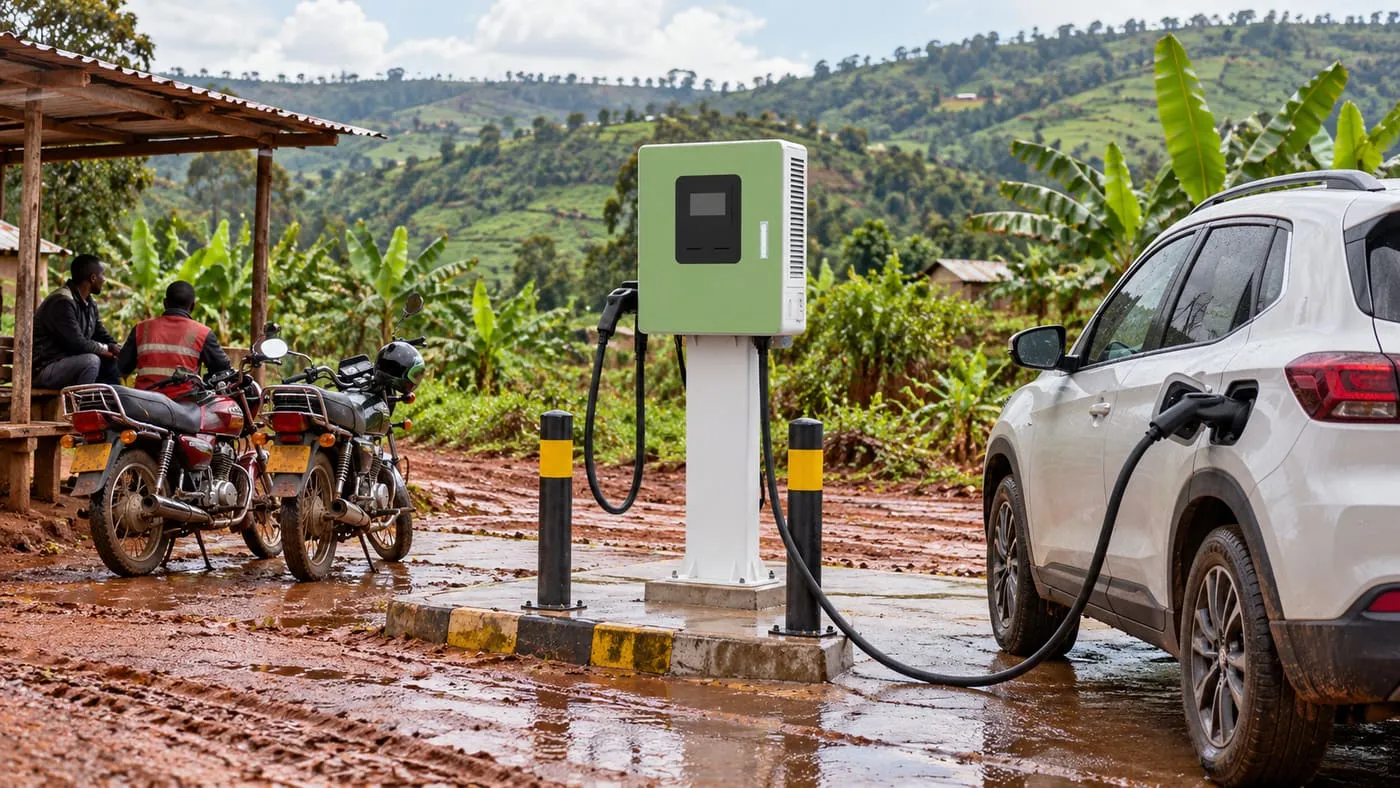
Short answer: EV charging in Uganda today is a commercial-tariff, two-wheeler-first market, with electric cars and taxis only beginning to appear. ERA-approved commercial power costs Shs562.1/kWh on average for October to December 2026, so the near-term case for a charging business is depot-style fleets, not roadside fast charging.
What power costs and who sets it
The regulator approves the tariff each quarter. Daily Monitor (5 October 2026) reports ERA-approved UEDCL tariffs for October to December 2026, unchanged from the previous quarter.
| Customer category | Average (Shs/kWh) | Peak / off-peak |
|---|---|---|
| Commercial | 562.1 | 666.5 / 429.7 |
| Medium industrial | 363.8 | 436.7 / 284.3 |
| Large industrial | 308.1 (block 1), 290.6 (block 2) | not given |
| Extra-large, 1,500 kVA and above | 207.7 | 233.2 / 188.7 |
Maximum demand charges continue to apply, but we could not read their amounts. Notice how large the gap between commercial and industrial rates is: an August 2026 campaign asked the government for special tariffs for battery-charging facilities, saying they currently pay high rates (Daily Monitor, August 2026). Until that changes, assume a commercial rate and test the idea with the payback calculator.
Where the demand is
Two-wheelers lead, taxis are next. The same August report names Spiro Uganda, Gogo, Zembo and Kiira Motors as expanding operations and charging infrastructure, and quotes a master plan to phase petrol motorcycles out of Kampala’s Central Business District by 2030. Zembo shows the model: its 2021 funding (US$3.4 million) was to add about 2,000 motorcycles and over 60 charging and swapping stations in Kampala, each bike with about 60 km of range (TechCrunch, 2021). That is a 2021 plan, not a current count.
Pulse Uganda (13 August 2026) reports the Union Transport Alliance saying Kampala could see its first electric taxis before the end of 2026. The rollout depends on battery-swapping stations and a supporting energy network, and success also depends on financing and how the vehicles stand up to local roads. No source we opened gave vehicle or station counts.
What a charging business should plan for
Start from a fleet that returns to a fixed point. A swap model suits motorbikes; DC charging suits vehicles that need 20 to 80 kW at a depot. Questions to settle with UEDCL before ordering:
- connection voltage and capacity at your site, and the lead time for a transformer
- the tariff category for a charger and how maximum demand is measured
- reliability: ask for feeder outage history for the site, since we found no published figure
- import duty and standards approval for chargers (not checked)
The fleet depot business case page sets out a worked example you can adapt, and Uganda’s neighbours are covered in Tanzania and Nigeria.
A starting configuration for Uganda
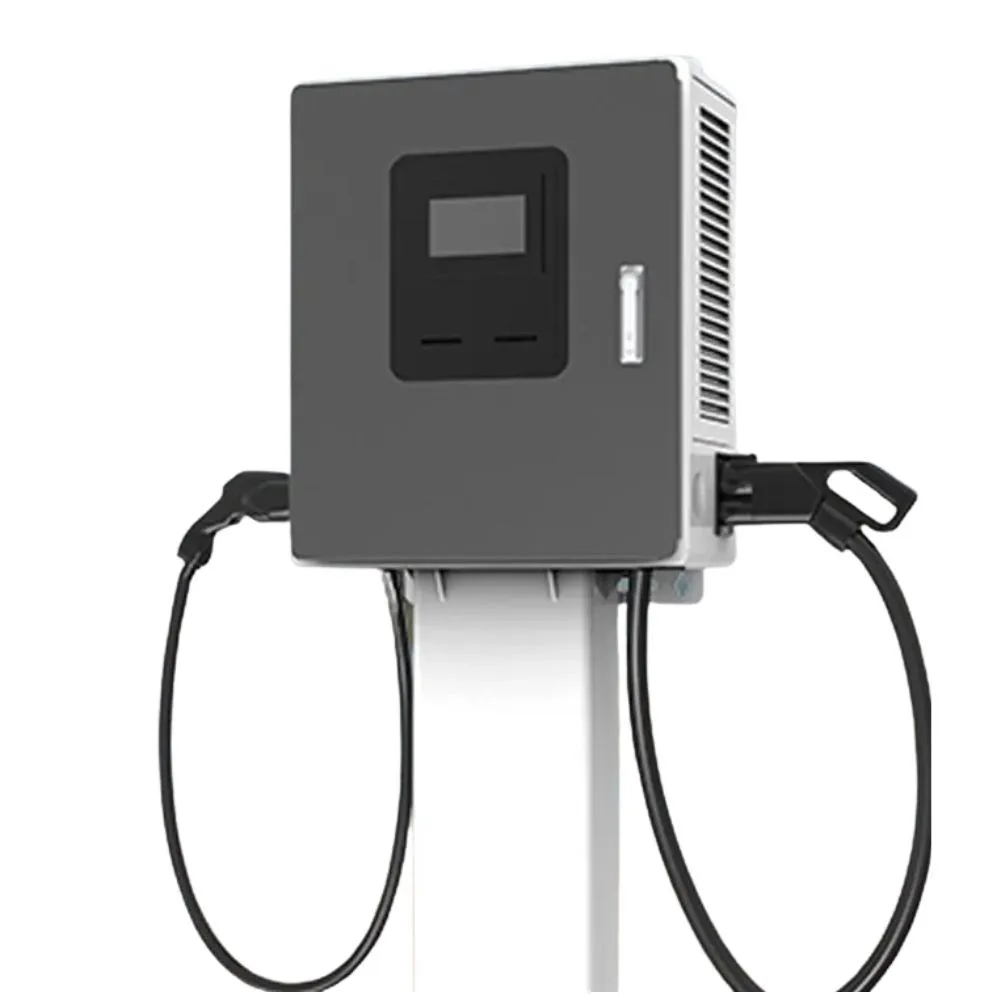
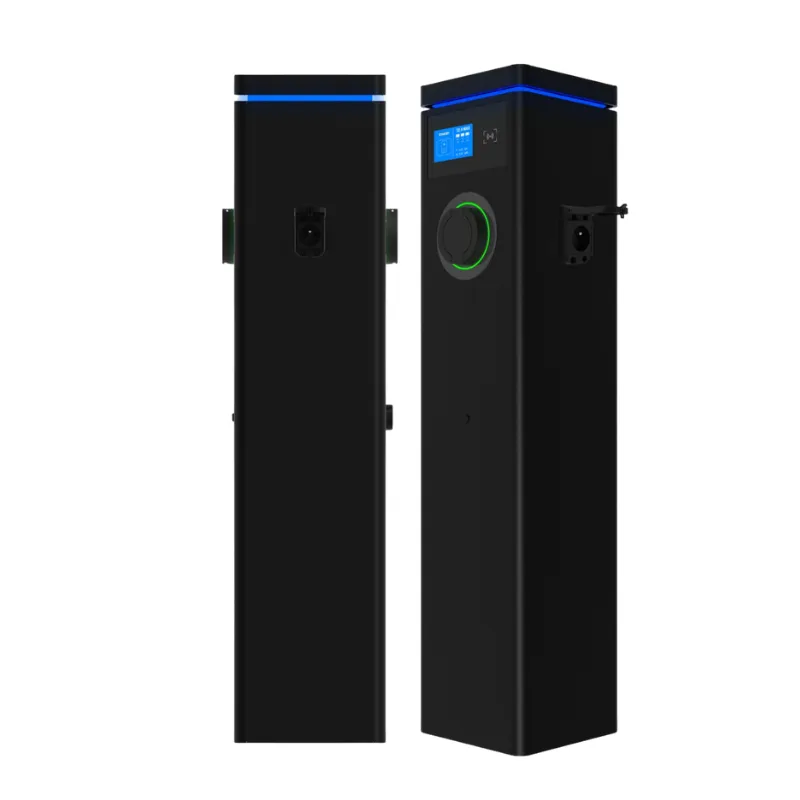
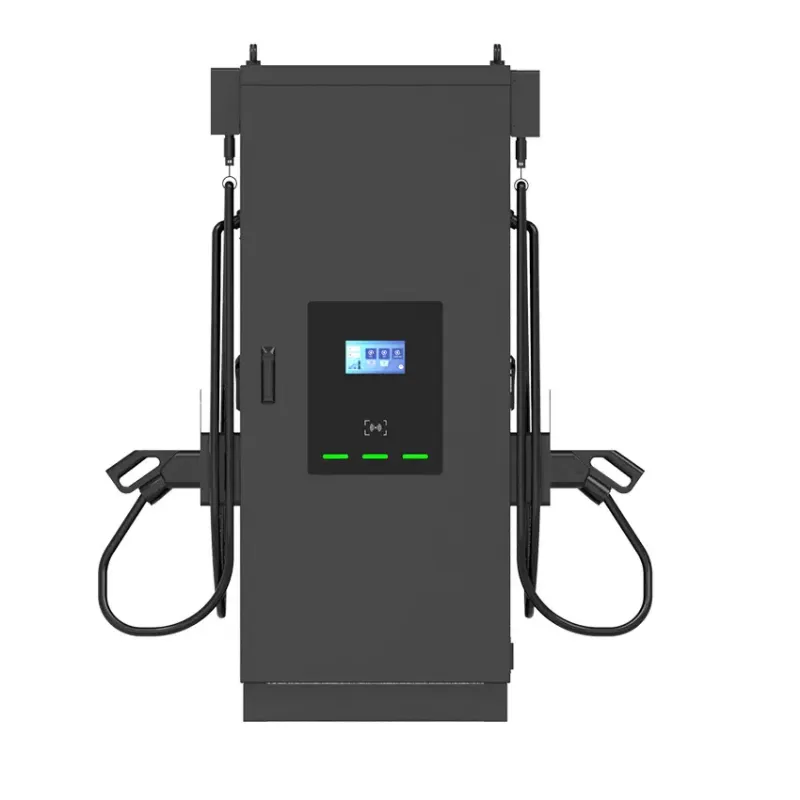
Small and modular wins while the market is young. For depots with minibuses or delivery vans, a 20 to 60 kW HC series wall or pedestal DC unit is the practical first purchase, and the CC series at 120 or 180 kW suits a shared hub once you know utilisation. For parking and workplace sites, the CPO series gives two AC outlets in a cabinet. Our chargers operate up to +55 °C.
The price depends on configuration: power level, connector and cable set, payment method and site conditions. Send us your supply voltage, available capacity, number of guns and the vehicles you plan to charge through the contact page, and we will return a configured quotation. We can supply test reports and technical documents to support any local approval; confirm what your authority requires.
Payback calculator
Example values are filled in — replace them with your own quotation, tariff and traffic figures.
- Energy sold per month
- —
- Net margin per month
- —
- Simple payback
- —
Simple payback = total investment ÷ (energy sold × (price − energy cost) − fixed costs), using 30 days per month. Taxes, financing, subsidies and utilisation growth are not included.
Frequently asked questions
- What do I pay for electricity at a charging station in Uganda?
- UEDCL's tariffs for October to December 2026, approved by ERA, give commercial customers an average of Shs562.1/kWh and medium industrial customers Shs363.8/kWh, plus maximum demand charges whose amounts we could not read. No EV-specific category was found, so ask UEDCL which category your connection would be billed under.
- Is there a licence or rulebook for EV charging stations?
- We did not find a published ERA rule for charging stations in the sources we could open. Ask ERA whether charging counts as electricity sale to the public, and ask the national standards body which charger standards it expects at import.
- Should I install DC fast chargers or battery-swap cabinets?
- Match the vehicle. Electric motorcycles in Kampala charge mainly through swapping and small solar-powered stations; Zembo's 2021 funding, for example, was for more than 60 charging and swapping stations. DC chargers fit cars, minibus-taxis and delivery vans that return to one depot, where the payback calculator can test utilisation.
- How do I get a quotation for chargers for Uganda?
- Price depends on the configuration: power rating, connector and cable set, payment method and site conditions. Send us your supply voltage, number of guns and expected daily vehicles through the contact page and we will return a configured quotation.
References
- [1]UEDCL sets new power tariffs for final quarter. Daily Monitor, 5 October 2026.
- [2]Govt asked to promote electric mobility as fuel costs, pollution rise. Daily Monitor, 15 August 2026.
- [3]Kampala eyes electric taxis before end of 2026. Pulse Uganda, 13 August 2026.
- [4]Zembo nabs $3.4 million from Toyota, DOB Equity and InfraCo Africa. TechCrunch, 12 November 2021.