Market guide
EV Charging in Tanzania: TANESCO Supply and Corridor Sites
EV charging Tanzania guide: EWURA station guidelines (50 km spacing, 6-month reporting), TANESCO and UNDP rollout, 10,000+ electric 2/3-wheelers, site sizes.
- Prepared by
- EVCSTAR Engineering Team
- Published
- Reading time
- 4 min
- Sources
- 3 references
At a glance
- Electric 2/3-wheelers (AfEMA 2025)
- 10,000+
- EWURA highway spacing
- Every 50 km
- Heavy-vehicle fast charging
- 1 per 100 km
- Operator reporting to EWURA
- Every 6 months
Key takeaways
- 1Tanzania now has written rules: EWURA operational guidelines for EV charging stations and battery swapping suggest stations every 50 km on major highways and at least one fast-charging station every 100 km for heavy vehicles on long-distance routes.
- 2The vehicle base is mostly two- and three-wheelers: the AfEMA 2025 data portal counts more than 10,000 of them, the most in East Africa, so a business case built only on cars is early.
- 3TANESCO, with UNDP, launched a public charging rollout at Dodoma on 11 June 2026.
- 4Operators must report to EWURA every six months on locations, charger types, capacity, hours and customer prices, and connect through the local distribution company, which may require a dedicated transformer.
On this page
Short answer: EV charging in Tanzania has moved from an unregulated niche to a rules-based market in 2026: EWURA’s station guidelines, a TANESCO/UNDP rollout in Dodoma, Dar es Salaam, Mwanza and other cities, and a government target that 20% of motor vehicles entering the country will be electric. The vehicles on the road today are mostly two- and three-wheelers, so DC sites for cars and trucks are a bet on the corridor build-out, not on today’s traffic.
What EWURA’s guidelines require
The regulator has defined how a station should be sized, connected and reported. According to The Citizen (July 2026) and the Daily News (August 2026), EWURA’s guidelines for EV charging stations and battery swapping set out:
| Topic | Requirement as reported |
|---|---|
| Highway spacing | Stations about every 50 km; at least one fast charger every 100 km for heavy vehicles |
| Small station (2 chargers) | About 40–60 m² |
| Medium (4–6 chargers) | About 100–200 m² |
| Large DC fast site | About 300–600 m² |
| Grid connection | Apply via local distribution company; special transformer may be needed |
| Safety | Fire extinguishers, regular cable inspection, no extension cords, automatic shut-off at unsafe temperature |
| Reporting | Locations, charger types, capacity, hours and customer prices every six months |
| Data and interoperability | Measure and store energy, port status, prices; common identification method; secure network communication |
Existing petrol stations may add charging equipment under safety conditions, which makes fuel stations on the highways the obvious host. Solar and battery storage are allowed if they meet national standards.
Who is already building
The state utility is a competitor and a landlord. TANESCO and UNDP launched a charging-station initiative at Dodoma on 11 June 2026 with Energy Minister Deogratius Ndejembi, and the article lists Dar es Salaam, Morogoro and Mwanza as places where infrastructure is expanding, with a nationwide rollout planned (AllAfrica / Daily News). We did not confirm a station count, power levels or prices; ask TANESCO.
Who will actually use the chargers
Two- and three-wheelers lead; cars follow. AfEMA’s 2025 portal counts more than 10,000 electric two- and three-wheelers in Tanzania, the most of any East African country, and at least 10 companies have entered e-mobility in recent years. Passenger-car numbers were not in the sources we opened. The minister’s cost example is useful for pricing: Dar es Salaam to Dodoma costs about Sh250,000–300,000 in fuel for a car versus about Sh27,000–28,000 in electricity for an EV (The Citizen, 2026). That gap is your pricing room. Taxis, delivery fleets and ride-hailing on the Dar–Morogoro–Dodoma axis are the likely first four-wheel customers.
Where to put a first site
Match the first site to the spacing rules and to a host that already has power.
- Dar es Salaam–Morogoro–Dodoma corridor fuel stations, hosting DC 60–120 kW; the 50 km guidance gives a spacing target and Dodoma has TANESCO’s flagship site to compare with.
- Mwanza and other regional cities as secondary markets with hotels and malls for AC and one DC unit.
- Freight stops if you can serve heavy vehicles: the guideline asks for at least one fast charger per 100 km on long-distance routes, but check power levels, since heavy-vehicle charging power was not specified in the sources we read.
- Fleet depots (taxi, delivery, bus), where a fixed schedule makes sizing predictable.
Grid, tariff and what to confirm
The binding constraint is connection capacity at the site, and the tariff is unknown. The guidelines say connection is through the local distribution company and can require a dedicated transformer. We found no published connection fee, charging tariff, or reliability record, so ask TANESCO for a quote on the connection and the tariff class for a charging site, and ask EWURA whether a licence is required for resale of electricity. Electrical supply in Tanzania is a 50 Hz system (confirm the voltage and phase at the site). Use the grid capacity calculator to size the request and the payback calculator once you have a local price.
How EVCSTAR equipment fits
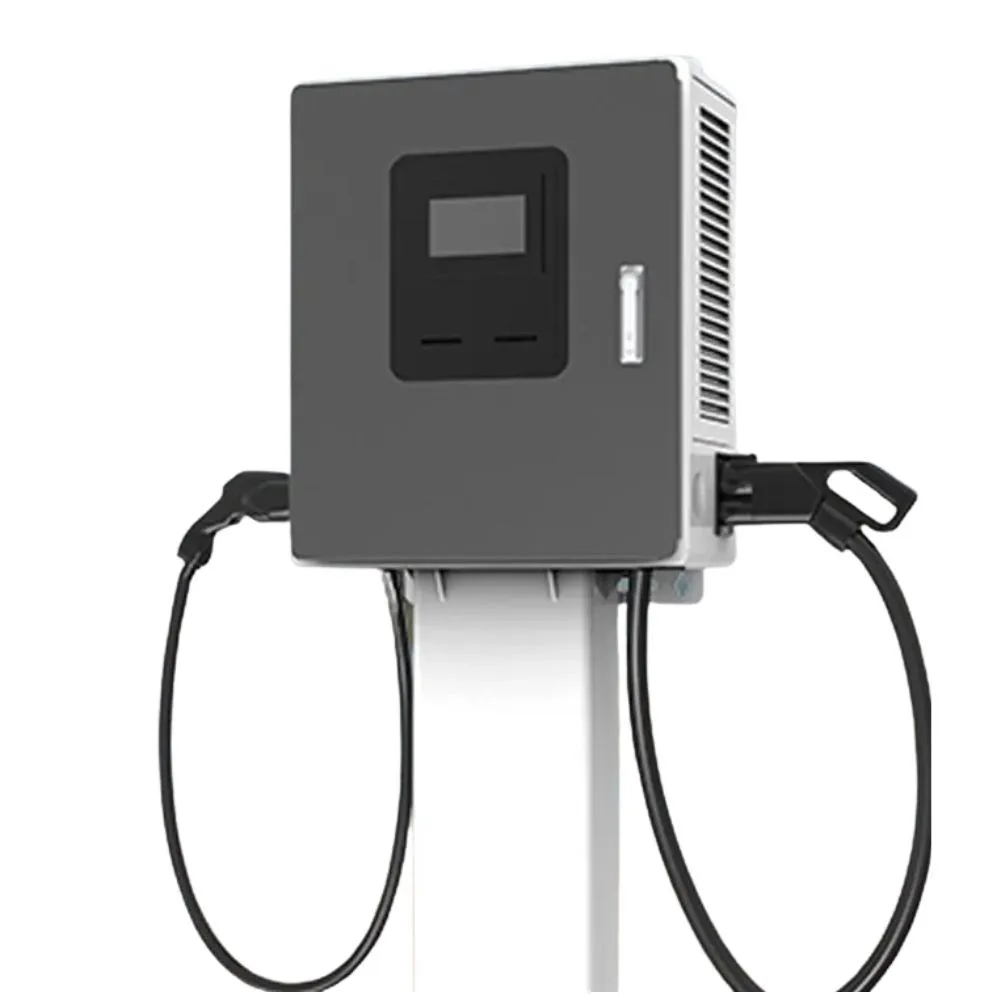
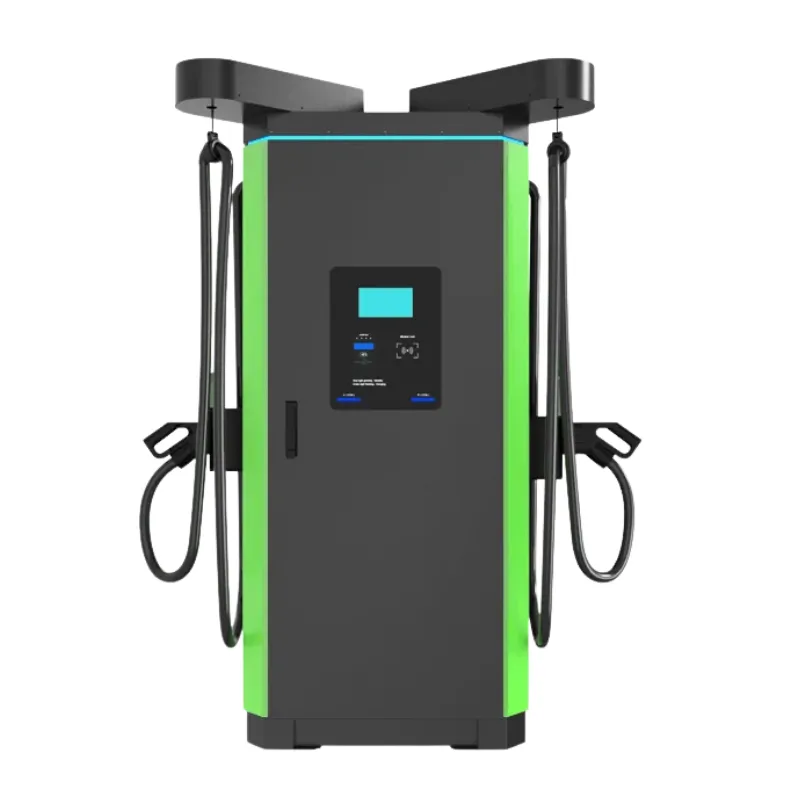
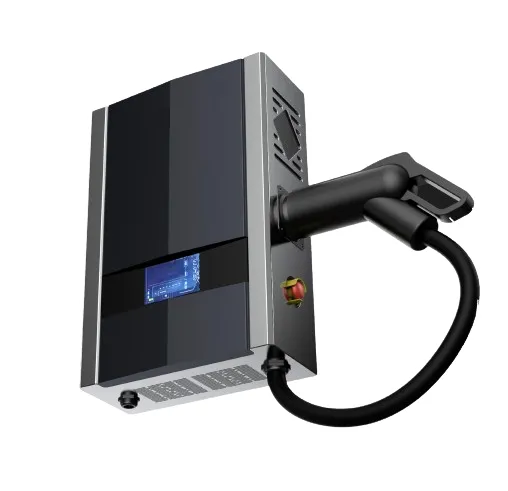
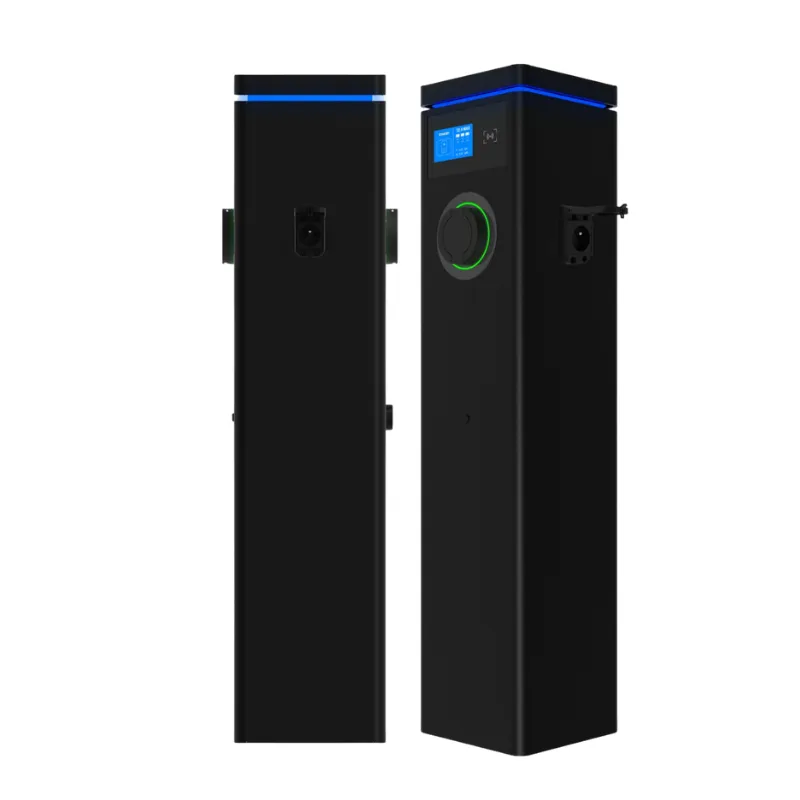
For a small station, start with two SC series (15–30 kW) or HC series (20–60 kW) units; for a corridor site that must take trucks and cars, use the UC series (60–360 kW). For hotels and depots, CPO gives 2 x 3.7–22 kW AC. Our chargers operate up to +55 °C, which suits Tanzanian conditions, and support OCPP 1.6J and 2.0.1, helping with the guidelines’ remote monitoring and reporting duties. We do not state that a model holds a Tanzanian approval; we can provide test reports and technical files to support your import and EWURA process. See standards.
Grid capacity calculator
- Spare power for charging
- —
- Input current per charger (400 V)
- —
- Chargers at full power
- —
Spare power = kVA × 0.95 power factor × (1 − margin) − existing peak load. Input current ≈ charger kW ÷ (√3 × 400 V), with power factor and 95 % efficiency added for DC chargers. With dynamic load management more chargers can share the same capacity at reduced power. Always confirm with your electrical engineer and the grid operator.
Frequently asked questions
- What rules apply to building an EV charging station in Tanzania?
- EWURA has issued operational guidelines for EV charging stations and battery swapping. Reported requirements include a power connection applied for through the local distribution company, site and building permits, fire extinguishers, regular cable inspection, no extension cords, automatic shut-off and, for networks, measurement and reporting of energy, port status and prices. Get the current guideline text from EWURA, as press summaries differ in detail.
- How big a site do I need?
- The guidelines describe about 40–60 m² for a two-charger station, about 100–200 m² for four to six chargers and about 300–600 m² for a large DC fast-charging facility, with water, lighting, toilets, cameras, guards and safe entry and exit.
- Who sets the price per kWh?
- We did not find a published charging tariff or an EWURA price cap for charging. Operators report current customer prices to EWURA every six months. Ask EWURA and TANESCO how electricity for a charging site is metered and billed.
- Is the grid reliable enough for fast charging?
- We have no verified outage statistics for Tanzania. The guidelines allow solar and battery storage if they meet national safety and grid-connection conditions, and say operators may need special transformers where demand is high. Ask TANESCO for the supply availability at your specific site and plan backup where it matters.
References
- [1]Tanzania unleashes EV market potential with clear new standards. The Citizen, 22 July 2026.
- [2]E-mobility framework set to boost EV adoption in Tanzania. Daily News (Tanzania), 26 August 2026.
- [3]Tanzania launches EV charging stations as clean energy drive gains momentum. AllAfrica / Daily News, 12 June 2026.