Installer guide
How to Price an EV Charger Installation Quote
EV charger installation quote template: line items, markup versus margin (20% markup is 16.7% margin), exclusions to write down and a quote skeleton.
- Prepared by
- EVCSTAR Engineering Team
- Published
- Reading time
- 4 min
- Sources
- 3 references
At a glance
- 20% markup equals margin of
- 16.7%
- "10-and-10" overhead and profit rule
- 10% + 10%
- Specialty electrical gross margin (Hubstaff via Drawer AI)
- 26-34%
- Home hardware range, 2026 (Qmerit)
- $299 to $2,000+
Key takeaways
- 1A quote that survives the job separates hardware, electrical materials, labour, permits and inspection, panel or supply work, and civil work, and states in writing which of them are excluded.
- 2Markup and margin are not the same number: a 20% markup on cost is a 16.7% margin on price, and a 25% markup is 20%; if overhead is 10% of revenue, a 10% markup leaves you at a loss.
- 3Contractor benchmarks quoted by Drawer AI put specialty electrical gross margins at 26-34% and net margins in the mid single digits for the US, so the quote has to carry overhead as well as profit.
- 4The biggest disputes come from vague lines such as "electrical upgrade if needed"; a quote should name the panel or supply decision, the circuit route, who patches surfaces and who pulls the permit.
On this page
Short answer: to price an EV charger installation quote, list the job as separate lines (hardware, materials, labour, permit and inspection, supply or panel work, civil work), add overhead and profit as a margin on price rather than a markup you assume equals profit, and write the exclusions and the supply decision into the quote before the customer signs.
The line items every quote needs
One block per cost type makes the quote comparable and keeps disputes short. Qmerit’s 2026 breakdown of a home installation lists the same blocks: the charging unit, wiring components (circuit, breaker, protective devices, disconnect), labour, permit and inspection, panel capacity work, mounting location and additional construction such as trenching or drywall. It quotes home hardware from $299 to over $2,000 and a panel upgrade at $1,300 to $3,000, with whole home jobs from $749 to over $3,000; those are US home figures and not a basis for commercial work.
| Block | What it covers | Often forgotten |
|---|---|---|
| Hardware | charger model, connector, tether or socket, accessories | RFID cards, pedestal or bollard, commissioning licence |
| Electrical materials | cable, conduit, breaker, RCD, isolator, enclosure | cable derating for long runs, surge protection |
| Labour | survey, install, test, commission, handover | second visit for network sign-off |
| Permit and inspection | application, fees, certificate | who books the inspector, rework time |
| Supply or panel | panel space, service upgrade or load management | utility application, outage coordination |
| Civil | trenching, core drilling, reinstatement, markings | surface patching, drainage, signage |
Markup versus margin
The most common pricing mistake is treating a markup on cost as profit on price. Drawer AI gives the formulas: markup is (price minus cost) divided by cost, margin is (price minus cost) divided by price. On $100,000 of direct cost, a 20% markup bids at $120,000 and leaves a 16.7% margin; a 25% markup gives 20%; a 40% markup gives 28.6%. It also cites the “10-and-10” rule of thumb, 10% overhead and 10% profit, and quotes Hubstaff for gross margins of 26% to 34% among specialty electrical subcontractors and several surveys for net margins of roughly 5% to 12%.
The consequence is practical. If your overhead (office, vehicles, insurance, non-billable time) is 15% of revenue and you add a 10% markup, the job loses money before you count profit. Work out your overhead rate from last year’s accounts, choose a target margin, then divide: price equals cost divided by one minus the margin you need on top of overhead. The installation cost per bay page shows how site size shifts the cost side of this equation.
Exclusions that protect you
An exclusion is a sentence that stops a free upgrade. Contractor Quote Guide (October 2026) tells customers to require three things in writing: that the chosen charging level matches the driving need, that the panel can carry the load or a load-management plan exists, and that the quote includes permit, inspection, circuit route, compatibility and wall repair. Turn those into your own protections: state the panel decision, name the circuit route and any trenching length included, and say who patches finished surfaces. Add what you cannot control: the utility’s fees and timing, a failed inspection caused by existing wiring, and incentive paperwork, which the same guide says should be treated as a documentation item, not as a guaranteed discount.
A quote skeleton you can copy
Use the same order for every job so a customer can compare line against line.
| Section | Content to fill in |
|---|---|
| Scope | site address, charger count, location, mounting, supply type |
| Basis | assumed supply capacity and the load calculation reference |
| Hardware | model, connector, supply-and-install or install-only |
| Included work | circuit length and method, protection, isolator, labelling, testing, commissioning |
| Permit | who applies, who attends inspection |
| Alternates | panel upgrade, load management, extra trenching priced separately |
| Exclusions | utility fees, hidden defects, structural or finish repairs, software fees |
| Payment and validity | deposit, milestones, price validity period |
| Warranty | workmanship term and manufacturer warranty, kept separate |
Pricing with EVCSTAR hardware in the quote
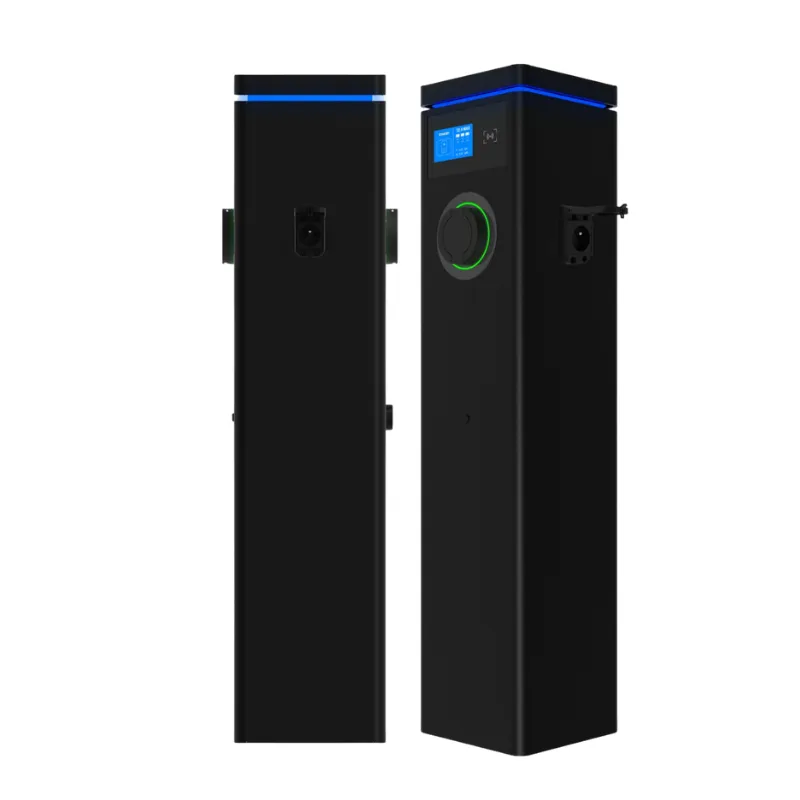
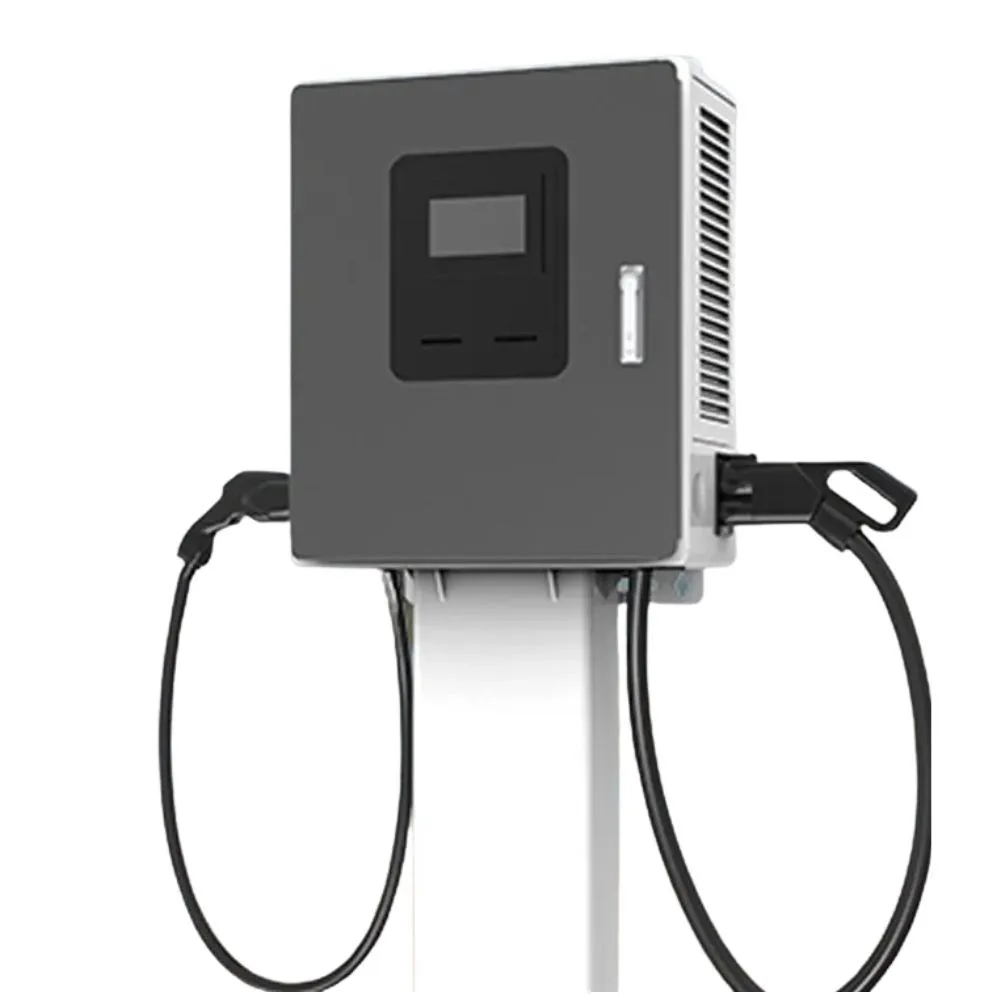
If you supply the charger, price it as its own line so the customer sees hardware and installation separately. For homes and small commercial sites the FE series and CPO series cover 3.7 to 22 kW AC; for sites that need DC from a limited supply, the HC series draws as little as 31 A per phase at 20 kW according to its spec sheet. Hardware price depends on the configuration, connector, power level and options, so we do not quote a number here. Send the site voltage, number of points, connector standard and available capacity through the contact page and we will reply with a configuration proposal and quotation breakdown that you can drop into the hardware line.
Before you submit, test the customer’s numbers: the payback calculator shows whether a commercial customer’s revenue assumptions support your price, and the grid capacity calculator shows whether the supply decision in your quote holds. For the regulatory side of the job, see our UK and Australian installer guides and the US NEC 625 guide.
Payback calculator
Example values are filled in — replace them with your own quotation, tariff and traffic figures.
- Energy sold per month
- —
- Net margin per month
- —
- Simple payback
- —
Simple payback = total investment ÷ (energy sold × (price − energy cost) − fixed costs), using 30 days per month. Taxes, financing, subsidies and utilisation growth are not included.
Grid capacity calculator
- Spare power for charging
- —
- Input current per charger (400 V)
- —
- Chargers at full power
- —
Spare power = kVA × 0.95 power factor × (1 − margin) − existing peak load. Input current ≈ charger kW ÷ (√3 × 400 V), with power factor and 95 % efficiency added for DC chargers. With dynamic load management more chargers can share the same capacity at reduced power. Always confirm with your electrical engineer and the grid operator.
Frequently asked questions
- What markup should I put on materials and labour?
- There is no single number in the sources we read, and contractor surveys vary by trade and region, so work backwards from your own overhead rate and target margin instead. A markup is a percentage of cost, a margin a percentage of price, and the two are easy to confuse.
- Should the charger be part of my quote?
- Decide and write it down. Contractor Quote Guide notes that many contractors do not supply the unit by default, so state whether the quote is supply-and-install or install-only, the model, the connector and whether it is hardwired or plug-in. Supplying hardware adds margin but also warranty and returns responsibility.
- How do I handle a panel or supply upgrade I cannot see yet?
- Do not write "upgrade if needed". Choose one named path: panel upgrade, service upgrade, lower-amperage charger, load management or a different location, with a load calculation or written basis. If you cannot decide before the site visit, quote the survey separately or price the options as alternates.
- What belongs in the exclusions list?
- Anything that is known to vary and is outside your control: utility connection fees and waiting time, work in a panel that fails inspection, trenching through hard surfaces beyond a stated length, structural or finish repairs, permits you do not pull, incentive paperwork, and later network or software fees.