Installer guide
EV Charger Installation Rules in Australia: AS/NZS 3000 and Network Approval
EV charger installation rules Australia: AS/NZS 3000 wiring, licensed work, compliance certificate, and when the network operator must be told or approve.
- Prepared by
- EVCSTAR Engineering Team
- Published
- Reading time
- 4 min
- Sources
- 4 references
At a glance
- Wiring standard
- AS/NZS 3000:2018
- Reported notification trigger, 1-phase
- > 20 A
- Reported notification trigger, 3-phase
- > 40 A
- Queensland 20 A limit removed
- 1 Oct 2026 (vendor report)
Key takeaways
- 1Installing an EV charger in Australia is licensed electrical work: it is wired to AS/NZS 3000, finished with a state-issued certificate of compliance, and the network operator (DNSP) is told about it before or at energisation.
- 2Industry sources report a notification trigger of more than 20 A single-phase or more than 40 A three-phase in NSW, Victoria, Queensland and South Australia, which catches the usual 32 A, 7.4 kW home charger; three-phase and large loads can need pre-approval instead.
- 3Queensland changed its rule: a charger vendor reports that from 1 October 2026 the 20 A single-phase limit under the Queensland Electrical Connection Manual no longer applies, so older advice about 4.6 kW nameplate limits is out of date.
- 4The rules are set by each state regulator and each DNSP, not nationally; the numbers here come from industry sources and should be checked against the operator's current connection manual for the project.
On this page
Short answer: the EV charger installation rules in Australia are a licensed installation to AS/NZS 3000, a state-issued certificate of compliance, and a notification to the network operator that becomes a pre-approval on larger or three-phase jobs; the thresholds and forms are set state by state and network by network.
Who is allowed to do the work
Hard-wiring a charger is licensed electrical work, and the licence and paperwork come from the state, not the federal government. The installer sources we read describe it as work only a licensed electrician may do, and a Queensland source ties that to the Electrical Safety Act 2002. At the end of the job the electrician issues a certificate of compliance for the electrical work; in NSW it is called the Certificate of Compliance for Electrical Work, and other states use their own names and forms. New Zealand, which shares AS/NZS 3000, has its own certificate-of-compliance system run by the Electrical Workers Registration Board; that is a separate regime and this page does not cover it.
What AS/NZS 3000 and the product standards cover
AS/NZS 3000:2018 is the wiring rule for the installation, and the charger itself is regulated as electrical equipment. C-PRAV, a compliance consultancy, lists the standards in play: AS/NZS 3000 for the installation, AS/NZS 3008 for cable selection, and AS IEC 62196 for plugs, socket-outlets and vehicle connectors. Installer blogs agree that each charger gets a dedicated circuit with residual current protection and a cable sized to the charger’s load. One source says the explicit EV clause in AS/NZS 3000 Amendment 1 applies to New Zealand only; we could not confirm this from the standard, so treat the EV-specific clause numbers as unverified and quote the edition and amendment you hold.
For the equipment, C-PRAV says chargers need certification from an accredited laboratory, a supplier declaration of conformity kept on record, and the Regulatory Compliance Mark label. The installer’s practical check is the RCM label and the supplier’s declaration before the unit goes on a customer’s wall.
Network notification and approval
The network operator wants to know about chargers, and for large loads it wants to approve them first. Energy Matters (September 2026) reports that chargers drawing more than 20 A on a single phase, or more than 40 A on three phases, require notification to the DNSP in NSW, Victoria, Queensland and South Australia. A typical single-phase 7.4 kW home charger runs on a 32 A circuit, so it is above the line. The same source says single-phase notification is usually a routine step the electrician lodges, while three-phase, higher-capacity or near-capacity sites can need real pre-approval and a load assessment before switch-on. It also says chargers above the threshold must support demand response through AS 4755 or an OCPP-capable charger.
| Job | Likely route (industry sources) | Ask the DNSP |
|---|---|---|
| Single-phase 32 A home charger | notification lodged by electrician | current threshold, demand-response need |
| Three-phase AC, 11 to 22 kW | notification, possibly pre-approval | allowed phase balance, switching |
| Multi-bay commercial AC | connection enquiry, capacity assessment | spare capacity, metering |
| DC fast charging | formal connection application | transformer, protection, studies |
Queensland is moving, so date your advice
Queensland has been the strictest state for single-phase, and it just changed. The Queensland Electrical Connection Manual version 4 required chargers above 20 A nameplate to have active device management; vendors responded with 20 A (4.6 kW) nameplate settings, basic device management or load-control tariffs, and Energex’s guidance allowed a dedicated three-phase charger up to 22 kW if all three phases are connected and switched together. Evnex states on its page that from 1 October 2026 the 20 A limit no longer applies and 32 A (7.4 kW) single-phase chargers can be installed without a network control device, and says the rest of its page describes the previous rules. We could not open the Energex document itself, so check the current manual before you quote.
What to hand over and keep
The job is not finished until the paperwork matches the nameplate.
| Item | Purpose |
|---|---|
| Certificate of compliance | state record of licensed work |
| Test results | evidence of RCD and earth testing |
| DNSP notification or approval reference | proof the network was told |
| Charger settings sheet (current limit, load management, demand response) | matches what the DNSP was told |
| Supplier declaration of conformity and RCM label copy | product compliance file |
Choosing EVCSTAR equipment for Australian supplies
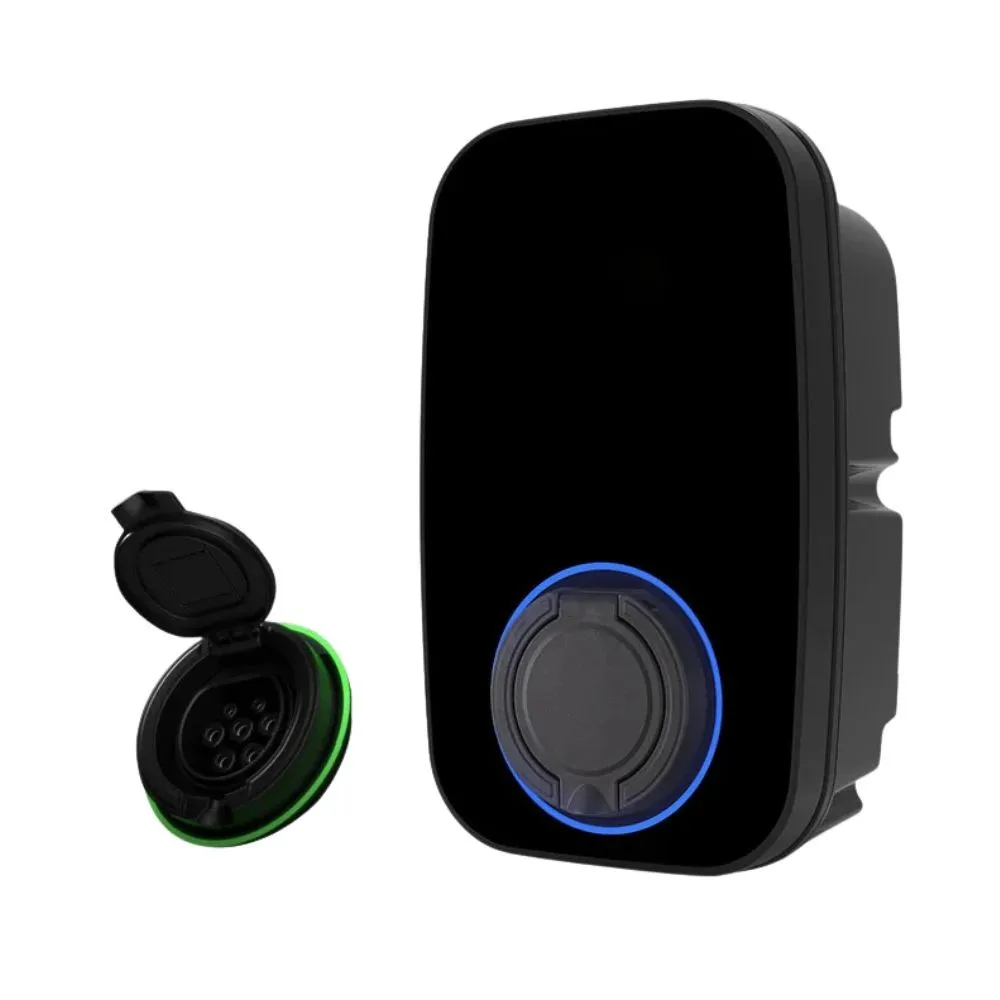
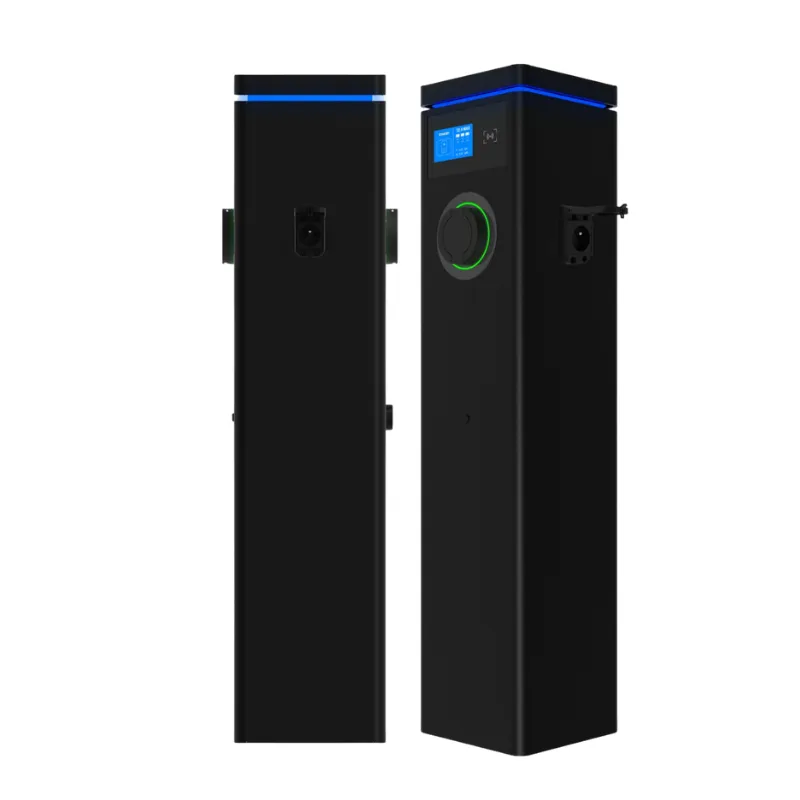
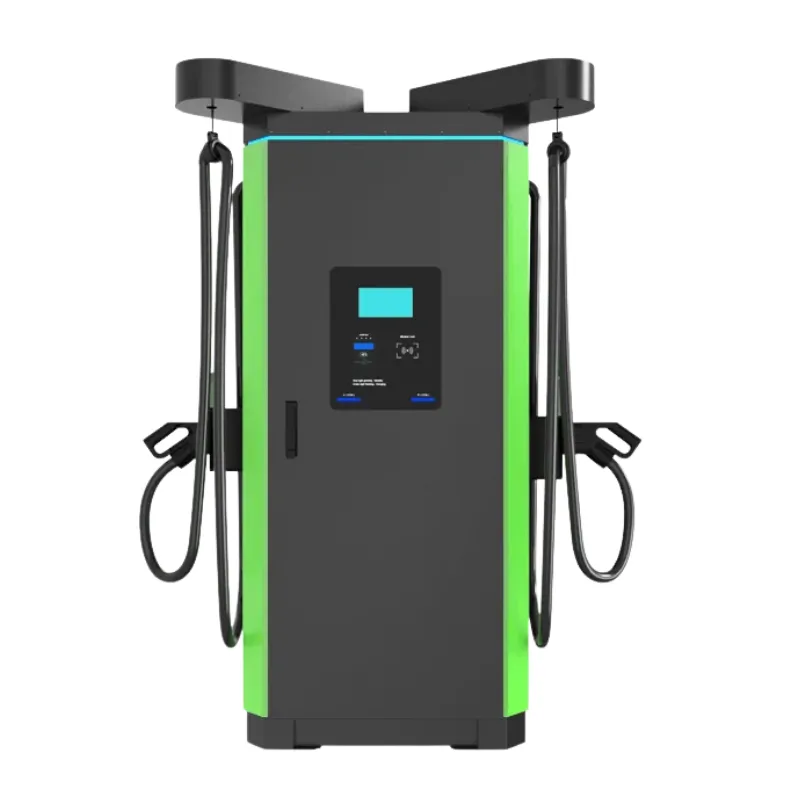
Australian supply is 230/400 V at 50 Hz, which matches the AC input range of the FE series and CPO series, 220-240 V single-phase or 380-415 V three-phase. Both list OCPP 1.6J / 2.0.1 options and load management, which helps where a network asks for controllable chargers; the CPO unit serves two bays from one cabinet. For public DC sites, the European build of the UC series takes 400 V three-phase input. We do not claim an Australian RCM listing or AS 4755 compliance for any model here; whether a product is accepted is decided by the regulator and the network, and we can supply technical documents and test reports to support your application.
Send the state, the DNSP, the supply type, the number of points and the site’s available capacity through the contact page, and we will reply with a configuration proposal and quotation breakdown. For state context see Sydney and Victoria; for the commercial side of the job see how to price an installation quote.
Grid capacity calculator
- Spare power for charging
- —
- Input current per charger (400 V)
- —
- Chargers at full power
- —
Spare power = kVA × 0.95 power factor × (1 − margin) − existing peak load. Input current ≈ charger kW ÷ (√3 × 400 V), with power factor and 95 % efficiency added for DC chargers. With dynamic load management more chargers can share the same capacity at reduced power. Always confirm with your electrical engineer and the grid operator.
Frequently asked questions
- Can anyone wire an EV charger in Australia?
- No. The sources we read describe hard-wiring a charger as licensed electrical work, with a Queensland source citing its Electrical Safety Act 2002. The licensed electrician issues the certificate of compliance, whose name and form differ by state. Check your state regulator before quoting.
- When does the network operator have to be told?
- Industry sources report notification above 20 A on a single phase or 40 A on three phases in NSW, Victoria, Queensland and South Australia, normally lodged by the electrician. Larger or three-phase jobs, or sites near supply capacity, can need approval before the charger is energised. Confirm the threshold with the local DNSP.
- What does demand response mean for an AC charger?
- One source says chargers above the notification threshold must support demand response, either through the AS 4755 standard or an OCPP-capable charger that can receive network signals. Whether your operator requires it varies, so ask for its current requirement and check the charger's documentation.
- Does a DC fast charger follow the same rules?
- The notification and approval route applies in principle, but a 60 kW or larger unit is a commercial connection, usually with a network connection application, capacity assessment and its own design, not a routine electrician notification. Use the grid capacity calculator to size the supply first, then take the load to the DNSP.
References
- [1]Do You Need to Tell Your Network Before Installing a Home EV Charger? (21 September 2026). Energy Matters.
- [2]Queensland EV Charger Installation Requirements. Evnex.
- [3]EV Chargers Compliance in Australia and New Zealand (29 July 2024). C-PRAV Labs & Certifications.
- [4]Certification of Prescribed Electrical Work (PEW). Electrical Workers Registration Board (New Zealand).