Cost guide
Total Cost to Build a DC Fast Charging Station, Line by Line
Cost to build a DC fast charging station line by line: US state plan and Caltrans corridor benchmarks, UK grid data and a 4 × 150 kW budget walk.
- Prepared by
- EVCSTAR Engineering Team
- Published
- Reading time
- 4 min
- Sources
- 8 references
At a glance
- 150 kW hardware (utility program, May 2025)
- About US$75,000–100,000+ each
- 4-port NEVI site estimate (MassDOT, 2024)
- US$900,000
- Caltrans corridor sites (UC Davis, 2023)
- US$122,000–440,000 per charger
- Maui NEVI site, 4 × 150 kW (HDOT, 2024)
- US$3 million
Key takeaways
- 1Published benchmarks for the same job disagree by a factor of three or more: US$900,000 estimated for a four-port 150 kW NEVI site in Massachusetts (2024), US$3 million actual for four 150 kW chargers on Maui (2024), and US$122,000–440,000 per charger on Caltrans corridor sites (UC Davis, 2023).
- 2Hardware is the smaller part of a typical bill: a utility program document puts 150 kW hardware at about US$75,000–100,000+ per charger (May 2025), so four of them are roughly US$300,000–400,000 of a US$900,000 site estimate.
- 3Scale lowers cost per port: the same Massachusetts plan carries US$900,000 for four ports (US$225,000 each) and US$1.3 million for eight (US$162,500 each).
- 4The grid connection is the line that swings widest. Cenex (UK, 2024) shows a connection under 70 kVA at £1,000–3,000 and one above 1,000 kVA at £60,000 to £2 million.
On this page
Short answer: the cost to build a DC fast charging station is a stack of seven or eight lines, and the published totals range from about US$120,000 to US$750,000 per port depending on site and scale. The charger is the best-documented line and usually not the largest. The sums below show how the pieces fit, with the sources that exist and the gaps that only a quotation can fill.
Five public benchmarks that do not agree
Different studies measure different things, so read the column that says what is counted.
| Benchmark | Figure | What it covers |
|---|---|---|
| Utility program document, May 2025 | 150 kW: about US$75,000–100,000+; 350 kW: about US$120,000–150,000+ | Charger hardware only |
| US DOE (citing NLR/INL) | US$20,000–60,000 per DC fast connector | Installation, by power and chargers per site |
| MassDOT NEVI plan, August 2024 | US$900,000 for four ports; US$1.3 million for eight | Estimated cost per site (the plan table does not break it down) |
| Hawaii DOT, Kahului, Maui, 2024 | US$3 million for four 150 kW chargers | Project cost, US$2.4 million federal plus US$0.6 million state funds |
| UC Davis / Caltrans, 2023 | US$122,000–440,000 per charger, 54 chargers at 36 sites | Full project cost on remote corridors |
The Caltrans team attributes the high end to energy supply in remote places, the lack of shared utility infrastructure, and labor and material mobilization. Earlier studies had put the range at US$20,000–150,000 per charger.
A 4 × 150 kW walk from hardware to total
Hardware plus installation covers perhaps half of the Massachusetts estimate; the rest is grid, civil works and soft costs. Treat the arithmetic as a reconciliation, not a quotation.
| Line | Amount | Basis |
|---|---|---|
| Four 150 kW chargers | US$300,000–400,000+ | 4 × the May 2025 program range |
| Installation | US$80,000–240,000 | 4 × DOE US$20,000–60,000 per connector |
| Everything else | US$260,000–520,000 | What remains of US$900,000: utility work, civil, canopy, permits, design |
| Site estimate | US$900,000 | MassDOT 2024 |
That residual is why the grid line deserves its own treatment. Note too that the program range is a floor (it is written with a “+”), and that DOE says installation labor is the largest installation expense and that per-charger cost falls significantly for larger installations.
The grid line: a UK view of how it scales
Connection cost follows the capacity band, and the top band also takes the longest. Cenex, in its 2024 guidance for UK operators, gives:
| Band | Typical use | Time | Cost |
|---|---|---|---|
| Up to 70 kVA | One rapid charger | 8–12 weeks | £1,000–3,000 |
| 200–1,000 kVA | 4–20 rapid chargers | 8–12 weeks | £4,500–75,000 |
| Above 1,000 kVA | 20+ rapid or 6+ ultra-rapid | 6 months or more | £60,000–2 million |
Cenex gives no figures between 70 and 200 kVA. The US pattern differs in who pays, so the transformer cost guide covers ownership and lead times.
Scale and site type: why a bigger site costs less per port
Fixed work is shared across more ports. Massachusetts planned US$225,000 per port for a four-port site and US$162,500 for eight, a 28% drop. The opposite also holds: Caltrans sites on remote corridors reached the top of the range because each one carried its own supply problem. A site next to a strong feeder, with a flat car park and a host who already owns the land, sits at the bottom of every range.
Lines that are easy to leave out
Four recurring or one-off lines do not appear in most capital benchmarks.
- Maintenance: the DOE advises estimating up to US$400 per charger a year.
- Extended warranty: the California Energy Commission, quoted by DOE, says DC fast charger plans can exceed US$800 per charger a year.
- Network and payment fees: no independent public figure found; take them from your platform quotation.
- Contingency: our own planning practice, not a sourced number. Hold a reserve, because the Maui outturn was more than three times the Massachusetts estimate.
Running costs are worked through in the operating cost guide.
How this relates to EVCSTAR equipment
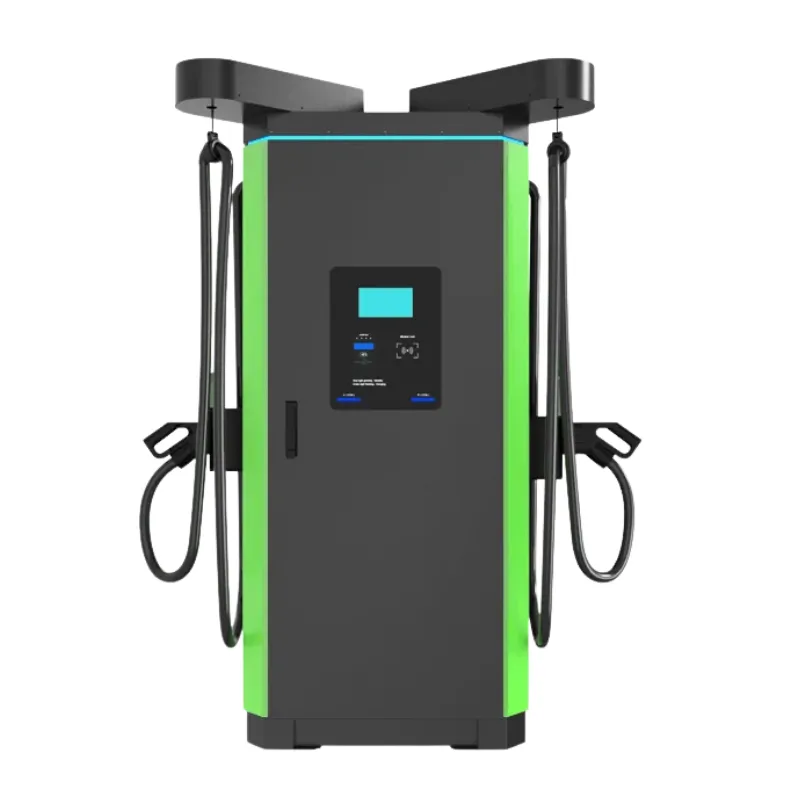
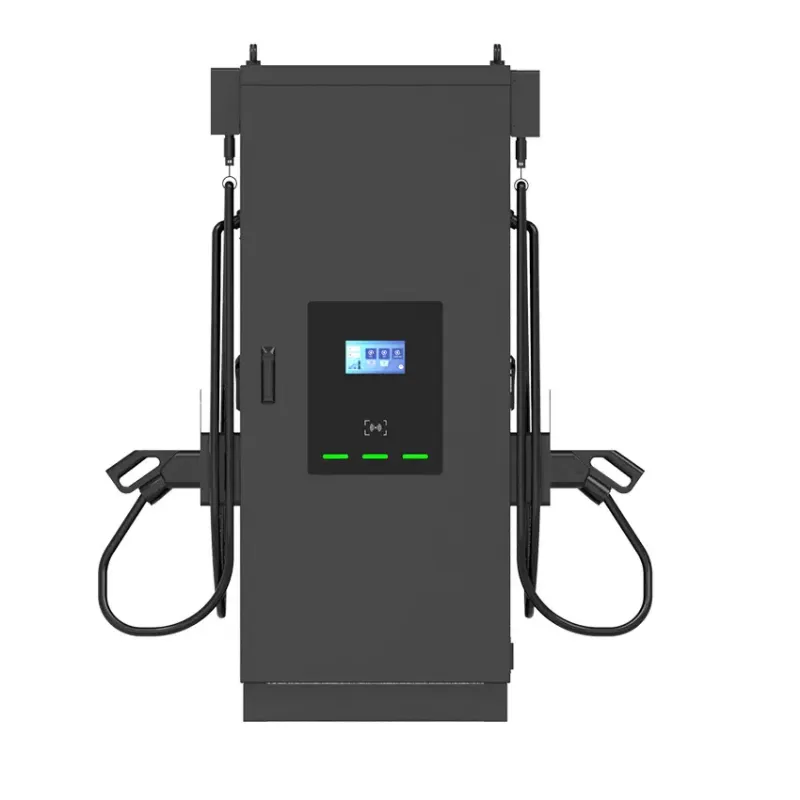
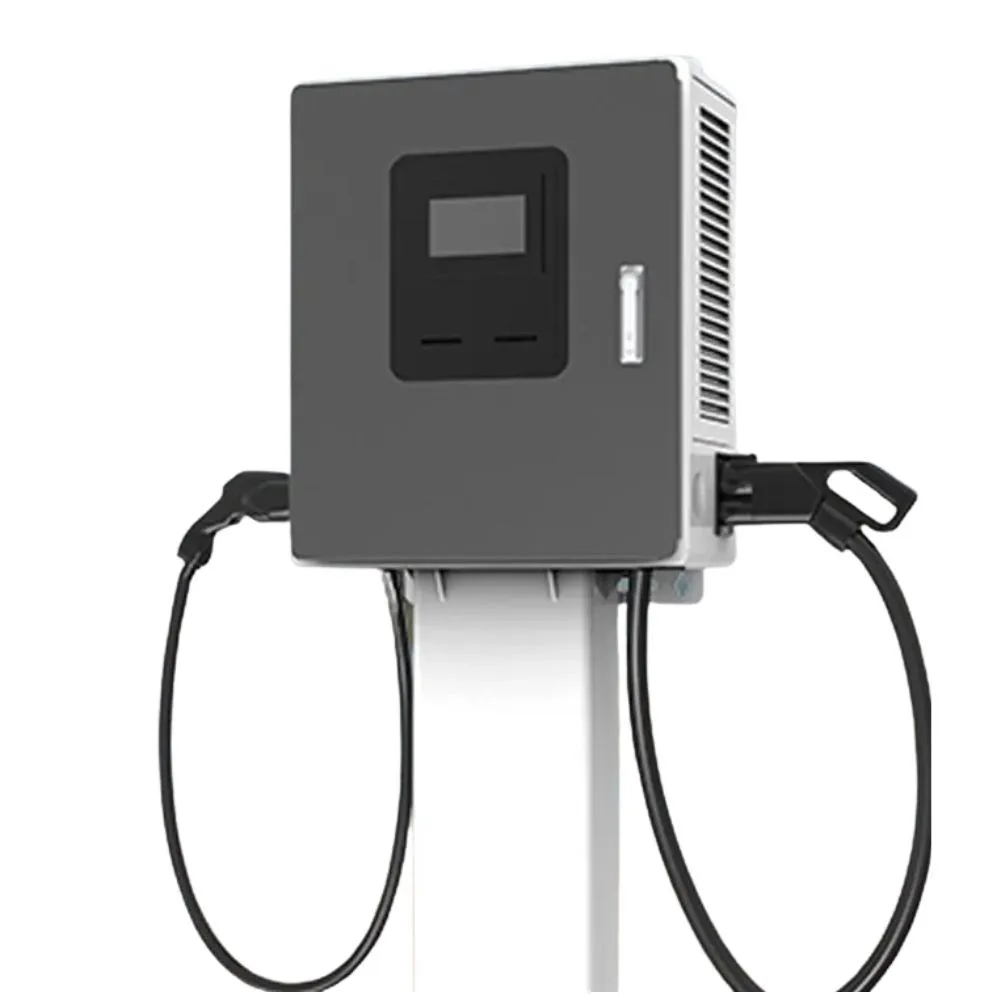
We cover the hardware line and the data your engineer needs for the others. Equipment price depends on your configuration; send your site data (voltage, number of bays, connector standard, grid capacity) through the contact page and we will return a configured quotation. The UC Series (60–300 kW European build, up to 360 kW North American build) suits multi-port highway sites, the CC Series suits tighter urban plots, and the HC Series lets a small supply carry DC charging. Each product page lists input current per phase, which is what the utility application needs. Send your target power, port count and voltage through the contact page and ask for a quotation; then test the result in the payback calculator.
Payback calculator
Example values are filled in — replace them with your own quotation, tariff and traffic figures.
- Energy sold per month
- —
- Net margin per month
- —
- Simple payback
- —
Simple payback = total investment ÷ (energy sold × (price − energy cost) − fixed costs), using 30 days per month. Taxes, financing, subsidies and utilisation growth are not included.
Frequently asked questions
- How much does it cost to build a DC fast charging station?
- There is no single figure. Massachusetts planned US$900,000 for a four-port, 150 kW site (2024), Hawaii reported US$3 million for four 150 kW chargers on Maui (2024), and a UC Davis study of 54 Caltrans corridor chargers found US$122,000–440,000 per charger (2023). Site conditions and the utility connection explain most of the spread.
- What share of the budget is the charger itself?
- Less than half in the examples we could document. Using a utility program range of about US$75,000–100,000+ per 150 kW unit (May 2025), four chargers are roughly US$300,000–400,000, against the US$900,000 Massachusetts site estimate. We could not confirm what that estimate includes, so treat the share as indicative.
- Why does the grid connection change the budget so much?
- Because it depends on distance to existing infrastructure and the capacity requested. Cenex shows UK connection costs from £1,000–3,000 under 70 kVA to £60,000–2 million above 1,000 kVA, with 6 months or more for the largest. Ask the utility for a written cost and schedule before fixing a budget.
- Does EVCSTAR give a price for a complete station?
- No. The equipment price depends on your configuration, so send us your site data through the contact page. For the equipment line we supply electrical data and a configured quotation on request; civil works, utility fees and permits come from your contractor and utility.
References
- [1]Procurement and Installation for Electric Vehicle Charging Infrastructure. US DOE Alternative Fuels Data Center.
- [2]Smart EV Charging Program: Approved Chargers (May 2025). Tucson Electric Power program document (docs.tep.com).
- [3]The Costs and Challenges of Installing Corridor DC Fast Chargers in California. UC Davis Institute of Transportation Studies (Gamage, Tal and Jenn, 2023).
- [4]Evaluate Zero-Emission Vehicle Charging Stations at Caltrans Facilities, Research Results. California Department of Transportation (May 2024).
- [5]NEVI Section 8: EV Charging Infrastructure Deployment. MassDOT (August 2024 plan).
- [6]Rates set for EV charging station at Kahului Park & Ride. Hawaii Department of Transportation (2024).
- [7]Costs (BETT guidance). Cenex (© 2024).
- [8]Electricity Infrastructure Maintenance and Operation. US DOE Alternative Fuels Data Center.