Cost guide
60 kW DC Charger Cost for a Small Public or Fleet Site
60 kW DC charger cost: hardware near US$20,000–30,000+ (2025), a 64 kVA connection and the sessions per day needed to pay back, with assumptions.
- Prepared by
- EVCSTAR Engineering Team
- Published
- Reading time
- 4 min
- Sources
- 7 references
At a glance
- 50 kW-class hardware (utility program, May 2025)
- About US$20,000–30,000+
- HC60D input at 400 V
- 93 A per phase, about 64 kVA
- Demand charge share, 50 kW station (GPI, 2019)
- 24–39% of annual operating cost
- Host cost per kWh, 50 kW, high use (NASEO, 2021)
- About US$0.12
Key takeaways
- 1A utility program document puts 50 kW-class DC hardware at about US$20,000–30,000+ and Cenex (UK, 2024) puts a 50 kW rapid charger at £15,000–25,000; installation (US DOE: US$20,000–60,000 per connector) can match or exceed it.
- 2A 60 kW unit is a small grid request: the HC60D lists 93 A per phase at 400 V, about 64 kVA, which sits inside Cenex's up-to-70 kVA band (£1,000–3,000 and 8–12 weeks for one rapid charger).
- 3In our worked example (US$0.45 sold, US$0.15 bought, US$60,000 installed), the site covers its monthly bill at about 2.3 sessions a day and pays back in 7 years at 5 sessions a day, 2.4 years at 10.
- 4A second gun on a 60 kW unit adds a bay, not energy: the same 60 kW is shared, so the demand charge is unchanged and two cars each charge at about half speed.
On this page
Short answer: a 60 kW DC charger costs roughly US$20,000–30,000 or more in hardware (the 50 kW class in a 2025 utility program document), plus installation of a similar order, and it needs only about 64 kVA of supply. The 60 kW DC charger cost that matters in practice is the monthly one: with the demand charge at 60 kW, a site needs only a few sessions a day to cover running costs, and more than that to repay the build.
Hardware and installation: the two lines with ranges
The cabinet and the installation are of similar size at this power level.
| Line | Range | Source |
|---|---|---|
| 50 kW DC hardware | US$20,000–30,000+ | Tucson Electric Power program document, May 2025 |
| 50 kW rapid hardware, UK | £15,000–25,000 (about £20,000 typical) | Cenex, 2024 |
| DC fast installation, per connector | US$20,000–60,000 | US DOE AFDC, citing NLR/INL |
| Connection, up to 70 kVA, one rapid charger | £1,000–3,000, 8–12 weeks | Cenex, 2024 |
Both hardware sources describe 50 kW, not 60 kW, so read them as a floor. The HC60D draws about 64 kVA (1.732 × 400 V × 93 A), the North American UC60N about 65 kVA (78 A at 480 V), so both fit the Cenex small-connection band if the building has the spare capacity. Do the check with the grid capacity calculator.
A worked payback with stated assumptions
The answer depends on sessions per day more than on the cabinet price. The assumptions are ours:
- Installed cost US$60,000: hardware in the 50 kW range plus installation in the DOE range, a mid-case.
- Sold at US$0.45 per kWh. For reference, Hawaii DOT’s public rate on four 150 kW chargers was US$0.44 per kWh daytime and US$0.57 at night (March 2024).
- Bought at US$0.15 per kWh, so US$0.30 margin before fees.
- Demand charge US$10 per kW (the NASEO 2021 average) on a 60 kW peak: US$600. Maintenance US$400 a year (the DOE advice) is about US$33 a month. Fixed total: about US$633.
- Each session delivers 30 kWh; 30 days a month. Network and payment fees are not included.
| Sessions per day | kWh a month | Margin | After fixed costs | Simple payback |
|---|---|---|---|---|
| 2 | 1,800 | US$540 | -US$93 | Never |
| 3 | 2,700 | US$810 | US$177 | 28 years |
| 5 | 4,500 | US$1,350 | US$717 | 7.0 years |
| 8 | 7,200 | US$2,160 | US$1,527 | 3.3 years |
| 10 | 9,000 | US$2,700 | US$2,067 | 2.4 years |
The monthly bill is covered at about 2,110 kWh, or 2.3 sessions a day. Great Plains Institute reached a similar operating break-even for a single 50 kW unit (2 to 5 customers a day, 2019). Run your own prices in the payback calculator; the operating cost guide lists the lines left out here.
Why 60 kW keeps the demand charge small
The peak is the lever, and 60 kW pulls a small one. Great Plains Institute found demand charges were 24–39% of annual operating cost for a 50 kW station but 68–81% at 350 kW. NASEO modelled identical energy at three sizes: the host’s average cost per kWh in its high-use case was about US$0.12 at 50 kW, US$0.21 at 150 kW and US$0.35 at 300 kW (2021 tariffs). In its low-use case a 50 kW site averaged US$5.37 per kWh, which shows the other side: with few sessions the fixed bill dominates even at 50 kW.
Single gun or dual gun at 60 kW
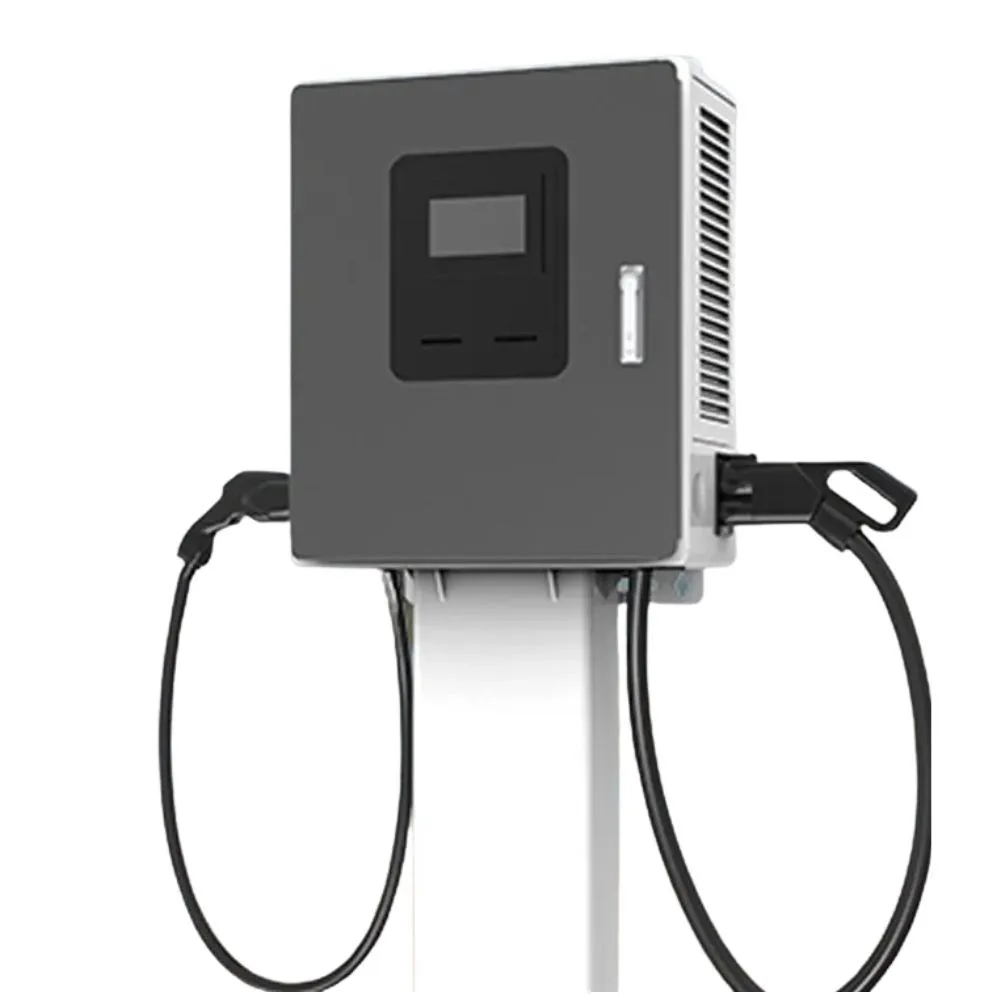
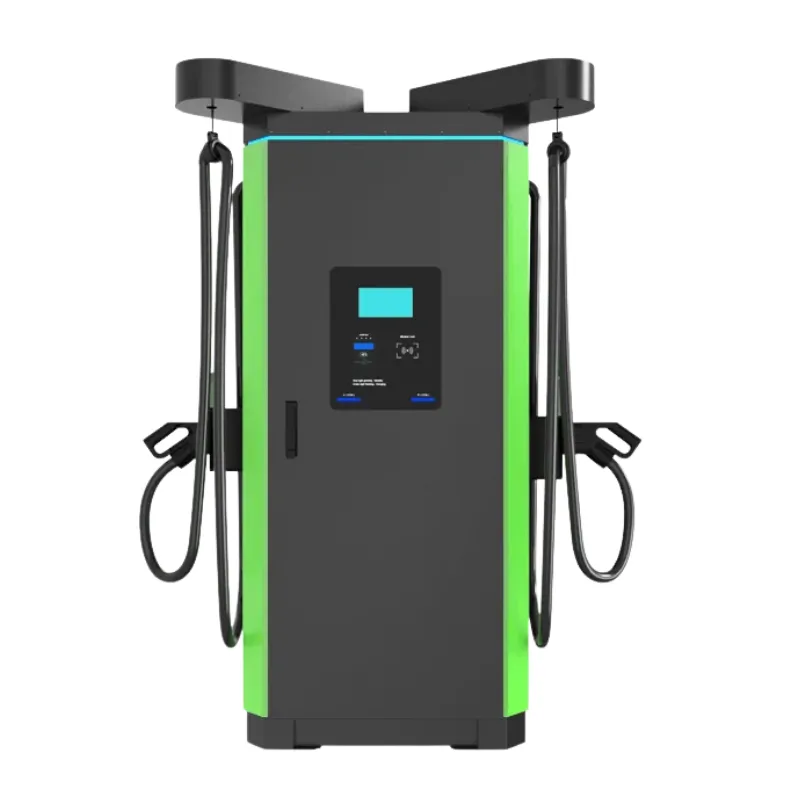
A second gun adds a place to park, not capacity. Take two cars needing 30 kWh each. At 60 kW one after the other, each takes about 30 minutes at best; sharing, both take about an hour. The energy sold and the demand charge are the same. The dual unit helps when drivers leave the car and a second can plug in without anyone moving the first. The HC Series lists 60 kW only as the dual-connector HC60D (CCS2 × 2); the HC40 is the single-connector option at lower power. Choose single when dwell is short and queues are the norm, dual when cars sit for hours.
How this relates to EVCSTAR equipment
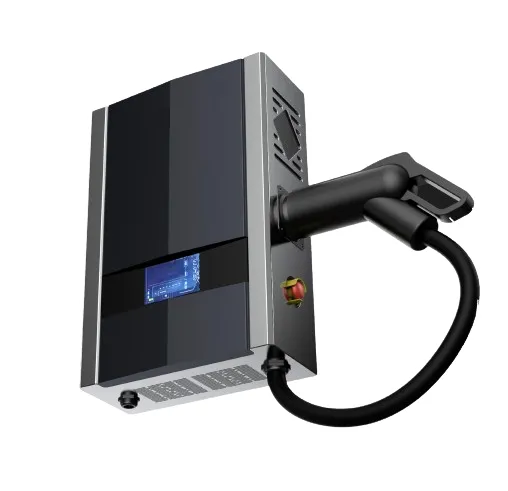
Pick by dwell time and supply. The HC Series mounts on a wall or pedestal from 20 to 60 kW, the SC Series is the smaller wall-mounted option, and the UC Series starts at 60 kW in a floor cabinet with room to add modules (European build) later. Price depends on power, cable and connector set, options and site conditions. Send your voltage, number of bays, connector standard and tariff through the contact page and we will return a configured quotation, then compare it with the sums above; for the full site, see the total cost breakdown.
Payback calculator
Example values are filled in — replace them with your own quotation, tariff and traffic figures.
- Energy sold per month
- —
- Net margin per month
- —
- Simple payback
- —
Simple payback = total investment ÷ (energy sold × (price − energy cost) − fixed costs), using 30 days per month. Taxes, financing, subsidies and utilisation growth are not included.
Frequently asked questions
- How much does a 60 kW DC charger cost?
- A utility program document lists about US$20,000–30,000+ for 50 kW-class DC hardware (May 2025) and Cenex lists £15,000–25,000 for a 50 kW rapid charger (2024). Installation is extra: the US DOE cites US$20,000–60,000 per DC fast connector. The price depends on your configuration, so send us your voltage, cable and options and we will return a configured quotation.
- Is a 60 kW charger enough for a public site?
- It is enough where cars stay 45 minutes or more, such as shops, depots and hotels. Great Plains Institute found a single 50 kW charger breaks even on operating costs at 2 to 5 customers a day (2019). For short highway stops, drivers expect 150 kW or more, and the economics change.
- Does a dual-gun 60 kW unit double my capacity?
- No. The unit still delivers 60 kW in total, so two cars charge at roughly half power each when both are plugged in. What you gain is a second bay and no waiting to swap the plug. Ask the supplier how power is shared between the guns.
- Which tariff costs least at 60 kW?
- The one with the lowest demand charge per kW or a demand-free EV rate. In NASEO's 2021 sample, five of the 11 cheapest low-use rate classes had no demand charge. Ask your utility which EV or time-of-use tariffs are open to a site of this size.
References
- [1]Smart EV Charging Program: Approved Chargers (May 2025). Tucson Electric Power program document (docs.tep.com).
- [2]Costs (BETT guidance). Cenex (© 2024).
- [3]Procurement and Installation for Electric Vehicle Charging Infrastructure. US DOE Alternative Fuels Data Center.
- [4]Electricity Infrastructure Maintenance and Operation. US DOE Alternative Fuels Data Center.
- [5]Demand charges and DC fast charging. Great Plains Institute (31 July 2019).
- [6]Demand Charges & Electric Vehicle Fast-Charging: An Intermountain West Assessment. NASEO, Western Interstate Energy Board and Utah Clean Cities (October 2021).
- [7]Rates set for EV charging station at Kahului Park & Ride. Hawaii Department of Transportation (March 2024).