Cost guide
Transformer Cost for an EV Charging Station: Sizing, Ownership and Lead Time
Transformer cost for an EV charging station depends on kVA, who owns it and lead time. Worked kVA sums for 180 kW DC chargers, plus 2024–2025 market data.
- Prepared by
- EVCSTAR Engineering Team
- Published
- Reading time
- 4 min
- Sources
- 5 references
At a glance
- 180 kW DC input at 400 V
- 279 A per phase, about 193 kVA
- Pad-mount lead time (US, 2024)
- About 75 weeks average
- 100 kVA 1-phase pad-mount (2019 → 2024)
- US$2,500 → over US$4,500
- Utility-owned example (PG&E, 2026)
- Service transformer owned by utility
Key takeaways
- 1A 180 kW DC charger draws 279 A per phase at 400 V, which is about 193 kVA before margin; two of them need about 386 kVA, so a 500 kVA transformer is the first size to check.
- 2Wood Mackenzie put average US pad-mount distribution transformer lead time at about 75 weeks in mid-2024, so the wait often costs more than the steel.
- 3Wood Mackenzie reported a 100 kVA single-phase pad-mount unit rising from about US$2,500 in 2019 to over US$4,500 in 2024; larger three-phase prices need a manufacturer or utility quote.
- 4In many utility territories the service transformer is utility-owned and your cost is the allowance shortfall, so the first step is a utility load application, not a tender.
On this page
Short answer: the transformer cost for an EV charging station is mostly a function of the kVA you ask for, who owns the unit, and how long you wait for it. For a pair of 180 kW DC chargers the sum is about 386 kVA before margin, so budget for a 500 kVA class transformer, then confirm price and delivery with the utility rather than a generic list price.
Work out the kVA first, from the spec sheet
Start from input current, not from the nameplate kW. A three-phase load in kVA is the square root of three times line voltage times current. The spec sheet for the CC and UC series gives input current per phase at 400 V:
| Charger | Input current per phase | kVA at 400 V | Input kW (output ÷ 95.2% efficiency) |
|---|---|---|---|
| CC120 | 186 A | about 129 kVA | about 126 kW |
| CC180 / UC180 | 279 A | about 193 kVA | about 189 kW |
| UC300 | 465 A | about 322 kVA | about 315 kW |
| 2 × CC180 | 2 × 279 A | about 386 kVA | about 378 kW |
The arithmetic for the CC180 row is 1.732 × 400 V × 279 A = 193,300 VA. The 95.2% figure is the full-load efficiency on the product page, so input power is slightly higher than the 180 kW output. Treat the result as a minimum; add margin for cable losses, auxiliary loads (lighting, cooling of the plinth cabinet, an ad screen) and future growth.
A worked example with stated assumptions
Check the spare capacity of what you already have. Take a site with an existing 630 kVA transformer and a measured peak load of 100 kW over the last twelve months. Assume a power factor of 0.95 and a 20% safety margin (both assumptions, not utility rules).
- Usable power: 630 kVA × 0.95 × (1 − 0.20) = 479 kW
- Spare after existing load: 479 − 100 = 379 kW
- Two CC180 chargers draw about 378 kW at full output, so they just fit, with no room for anything else.
If you add a third charger, or the existing load is higher, you need either a larger unit or a power cap. The grid capacity calculator runs the same sum with your numbers.
What the market data says about price and delivery
Prices rose sharply after 2019 and delivery times are the larger risk. Four findings, all US data and all dated:
| Item | Figure | Source and year |
|---|---|---|
| 100 kVA single-phase pad-mount price | US$2,500 (2019) → over US$4,500 (2024), about +80% | Wood Mackenzie, October 2024 |
| Pad-mount distribution lead time | About 75 weeks after order, average of the two preceding quarters | Wood Mackenzie, June 2024 |
| Overall transformer pricing | Up 70–75% or more since 2020 | Wood Mackenzie, June 2024 |
| Some distribution transformer classes | Up as much as 95% since 2019; three-phase pad-mount shortage expected to worsen, with EV charging named as one source of demand | Wood Mackenzie Q2 2025 survey, as reported by POWER |
Outside the US the numbers differ, and we did not find a comparable published price for three-phase 500–1,000 kVA units, so no figure is given here. Request manufacturer quotes that state losses class, voltage, cooling and delivery terms.
Who owns and pays for the transformer
In many territories the utility owns the service transformer and you pay the part of the cost that its allowance does not cover. PG&E in California is one documented example: its Electric Vehicle Power Ready program has the utility pay for and coordinate service extensions to separately metered EV charging, with the service line and transformer owned, operated and maintained by PG&E, while the customer installs conduit, panel and chargers on its side of the meter. A distribution line extension, if needed, remains a customer cost under PG&E Rule 15. Rules differ in every utility and country; the US DOE advises engaging the utility early to identify the electrical upgrades and their pricing.
Customer-owned transformers shift purchase, installation, testing and maintenance to you, which is common when the supply is at medium voltage. Ask the utility three questions: where is the point of connection, is the transformer utility-owned or customer-owned, and what is the connection schedule.
Ways to shrink the transformer
Cap the draw before you buy the capacity. A site that never runs two 180 kW cabinets at full output at the same moment can be sized below the nameplate sum. Dynamic power sharing between the two guns of one cabinet is built in; site-level caps and a battery buffer are options when the utility connection is the bottleneck. Remember that a lower contracted capacity also lowers demand charges, which are billed every month.
How this relates to EVCSTAR equipment
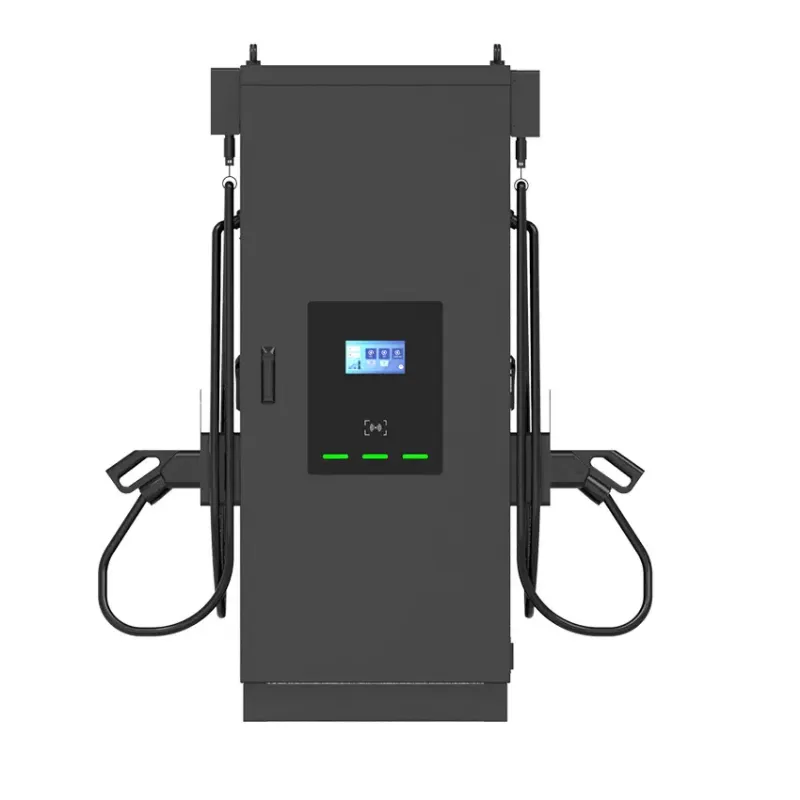
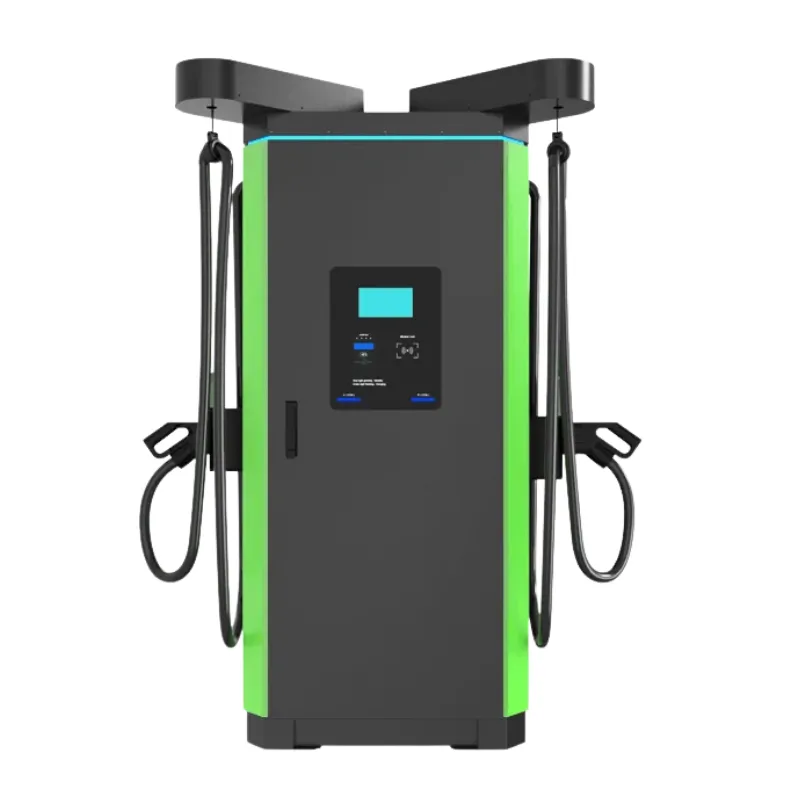
EVCSTAR does not sell transformers, but we can supply a configured quotation for the chargers. What we can supply is the electrical data you need for the utility application: input current per phase, efficiency and protection details for every CC, UC and CPO model. The CC Series installation notes already flag that 180 kW needs about 279 A per phase, so check transformer headroom before choosing it over 120 kW.
If the transformer limit is fixed, the practical choice is often CC120 or a UC build with fewer modules rather than a bigger transformer. Send the load-application figures from your utility through the contact page and we will suggest a configuration; for the revenue side, run the payback calculator.
Grid capacity calculator
- Spare power for charging
- —
- Input current per charger (400 V)
- —
- Chargers at full power
- —
Spare power = kVA × 0.95 power factor × (1 − margin) − existing peak load. Input current ≈ charger kW ÷ (√3 × 400 V), with power factor and 95 % efficiency added for DC chargers. With dynamic load management more chargers can share the same capacity at reduced power. Always confirm with your electrical engineer and the grid operator.
Frequently asked questions
- How much does a transformer for an EV charging station cost?
- There is no single number. Wood Mackenzie reported a 100 kVA single-phase pad-mount unit at over US$4,500 in 2024, up about 80% from 2019, but a three-phase unit of 500 kVA or more costs several times more and depends on voltage, losses class and country. Ask the utility whether it supplies the transformer, and ask a manufacturer for a quote if you must buy your own.
- Do I need a new transformer for one 180 kW charger?
- Not always. A 180 kW charger needs about 193 kVA at 400 V. If your existing transformer has that much spare capacity after your peak load and a safety margin, you may only need a new feeder and switchgear. Use the grid capacity calculator with your real peak demand from the last twelve months.
- Can load management avoid a bigger transformer?
- Often yes. Dual-gun DC cabinets share power between the two connectors, and site-level load management can cap total draw. A capped site charges slower at busy moments but avoids paying for peak capacity that is used a few hours a week.
- How long does a charging-station transformer take to arrive?
- Wood Mackenzie measured about 75 weeks on average for US pad-mount distribution transformers in 2024 and expected constraints to persist. Lead times differ by country and by whether the utility holds stock, so ask for the utility's own schedule before fixing an opening date.
References
- [1]4 years into a difficult transformers market in the US, is there a potential end in sight?. Wood Mackenzie (27 June 2024).
- [2]Making the connection: the electric T&D supply chain challenge. Wood Mackenzie (28 October 2024).
- [3]Transformers in 2026: shortage, scramble or self-inflicted crisis. POWER Magazine.
- [4]Electric Vehicle Power Ready program fact sheet. Pacific Gas and Electric (2026).
- [5]Procurement and Installation for Electric Vehicle Charging Infrastructure. US DOE Alternative Fuels Data Center.