Cost guide
180 kW Charger Cost: When the Bigger Cabinet Pays Back
180 kW EV charger cost is more than the cabinet: DOE ranges for DC fast hardware and installation, a kVA and demand-charge worked example, and CC vs UC.
- Prepared by
- EVCSTAR Engineering Team
- Published
- Reading time
- 4 min
- Sources
- 5 references
At a glance
- DC fast equipment (DOE, per connector)
- US$38,000–90,000
- DC fast installation (DOE, per connector)
- US$20,000–60,000
- Demand charge average (NASEO, 2021)
- About US$10 per kW
- 180 kW input at 400 V
- 279 A per phase, about 193 kVA
Key takeaways
- 1The US DOE cites US$38,000–90,000 per public DC fast connector for equipment and US$20,000–60,000 for installation (NLR/INL; year not stated on the page), so a 180 kW site is a six-figure project before any grid upgrade.
- 2A 180 kW charger draws 279 A per phase at 400 V, about 193 kVA; whether that fits your transformer often decides the budget more than the cabinet does.
- 3At about US$10 per kW of demand, a 180 kW peak costs about US$1,800 a month in demand charges alone (NASEO 2021 average), which is US$0.60 per kWh at 3,000 kWh and US$0.15 at 12,000 kWh.
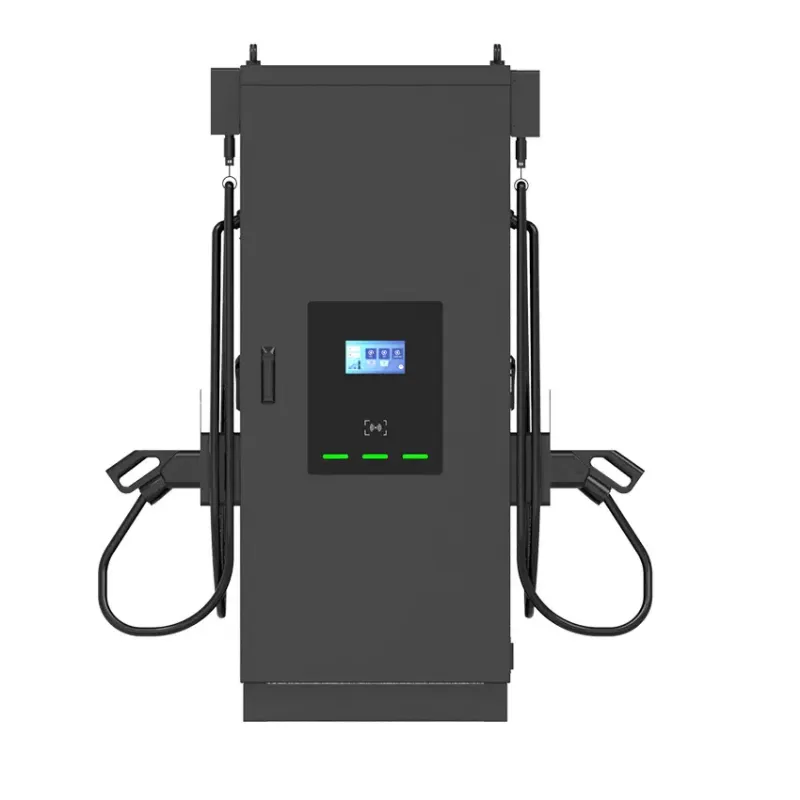
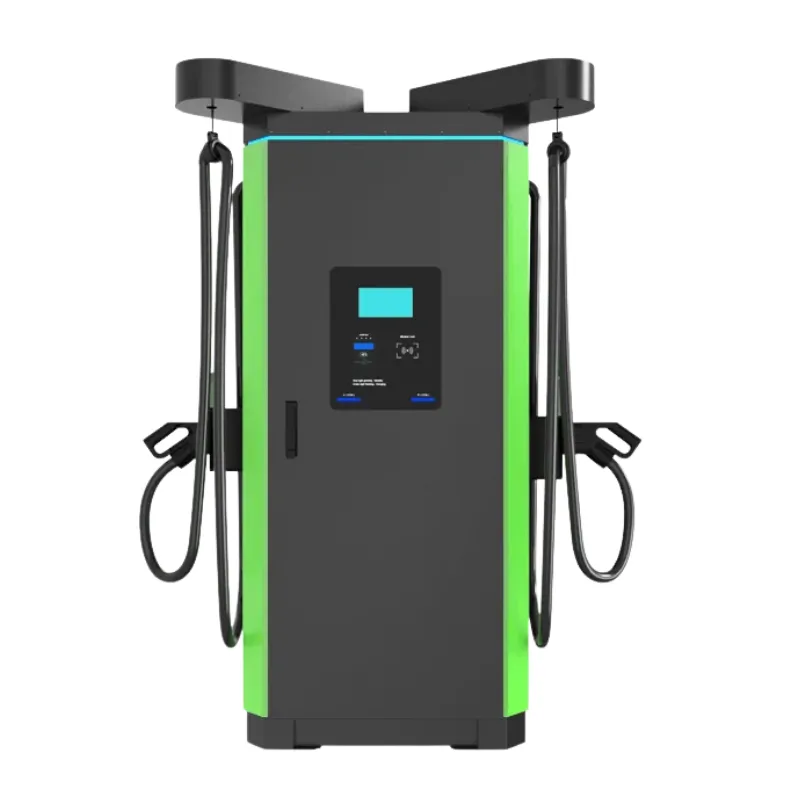
- 4The CC180 and UC180 share the same 279 A input; the choice between them is footprint (700 × 500 mm vs 850 × 840 mm) and site role, not electrical load.
On this page
Short answer: a 180 kW EV charger costs the cabinet, plus installation, plus whatever the grid connection needs, plus a monthly bill that is driven by the 180 kW peak. The cabinet price is the easiest number to get and the least useful on its own; the sums below show where the real exposure sits.
The budget has five lines, and only two have published ranges
Treat the project as a stack of lines, not a product price. Public sources cover equipment and installation. The others come from your utility and contractor.
| Line | Range or rule | Source |
|---|---|---|
| Charger equipment | US$38,000–90,000 per public DC fast connector, higher for more power | US DOE AFDC, citing NLR/INL (year not stated) |
| Installation (excluding utility work) | US$20,000–60,000 per DC fast connector, by power and number of chargers per site | US DOE AFDC, citing NLR/INL |
| Utility connection and transformer | Site-specific; see the utility quotation | Ask the utility |
| Civil works, canopy, signage | Site-specific | Contractor quotation |
| Permits and commissioning | Site-specific | Local authority |
Two cautions. The DOE ranges are per connector across a wide range of power levels, so a dual-gun 180 kW cabinet with shared power is not simply two of them; use them as an order-of-magnitude check on a contractor’s quote. And the DOE notes that labor is the largest expense of a typical installation and that per-charger cost falls significantly for larger installations.
Does 180 kW fit your supply? A kVA check
A 180 kW charger needs about 193 kVA of supply. From the spec sheet: 279 A per phase at 400 V, so 1.732 × 400 × 279 = 193,300 VA. Compare that with the 186 A (129 kVA) of a 120 kW unit. If your transformer cannot carry the extra 64 kVA, the cheaper answer may be 120 kW, or 180 kW with a software cap. The grid capacity calculator shows the spare capacity after your existing load.
What the 180 kW peak costs every month
Demand charges scale with the highest 15-minute peak, not with how much you sell. NASEO’s 2021 study of eight Intermountain West states found demand charges averaged 73.7% of sample commercial bills and about US$10 per kW. Applying that average (an illustration, since your tariff will differ):
| Energy sold per month | Demand charge at 180 kW × US$10 | Demand charge per kWh sold |
|---|---|---|
| 3,000 kWh | US$1,800 | US$0.60 |
| 6,000 kWh | US$1,800 | US$0.30 |
| 12,000 kWh | US$1,800 | US$0.15 |
For comparison, EIA’s US average commercial price was 14.47 cents per kWh in August 2026. The same Great Plains Institute study found demand charges were 68–81% of annual operating cost at 350 kW and that, above 150 kW, break-even was nearly impossible except where the utility has no demand charge (2019, Midwest corridor rates). That is why 180 kW suits sites with real throughput or a favourable tariff.
Fixed running costs that do not move with energy
Budget maintenance and warranty separately from electricity. The DOE advises owners to estimate up to US$400 per charger per year for maintenance, and cites the California Energy Commission’s guidance that DC fast charger extended warranties can exceed US$800 per charger per year. Network or software fees are not priced in that source; get the fee from your charge-point management platform. EVCSTAR chargers carry a 12-month warranty.
CC180 or UC180: when the bigger cabinet pays back
The decision is footprint and growth, not current draw. Both cabinets pull 279 A at 180 kW.
| CC180 | UC180 | |
|---|---|---|
| Footprint | 700 × 500 mm | 850 × 840 mm |
| Cable length | 5 m | 6 m |
| Best for | Retail, dealership, tight bays | Highway and fleet hubs |
| Growth | 120 or 180 kW | Modules from 60 kW up to 300 kW (EU build) |
The bigger UC cabinet pays back when you expect to add modules at the same connection later, because the civil work and cable run are done once. The CC wins where a bay is worth more than the spare capacity.
How this relates to EVCSTAR equipment
Price depends on your configuration, so tell us about the site. For a 180 kW site, send your voltage, number of bays, connector standard and grid capacity through the contact page and we will return a configured quotation. Meanwhile, put your own price, tariff and expected sessions into the payback calculator and see how many sessions per day it needs. Both CC and UC pages list the full electrical data.
Payback calculator
Example values are filled in — replace them with your own quotation, tariff and traffic figures.
- Energy sold per month
- —
- Net margin per month
- —
- Simple payback
- —
Simple payback = total investment ÷ (energy sold × (price − energy cost) − fixed costs), using 30 days per month. Taxes, financing, subsidies and utilisation growth are not included.
Frequently asked questions
- How much does a 180 kW EV charger cost?
- The cabinet is only one line. The US DOE cites US$38,000–90,000 per public DC fast connector for equipment and US$20,000–60,000 for installation, excluding any utility upgrade. The price depends on your configuration, so send us your voltage, cable length and options and we will return a configured quotation.
- Is 180 kW worth it compared with 120 kW?
- Only if enough of your vehicles can accept the extra power and stay long enough to use it. Going from 120 to 180 kW raises input from 186 A to 279 A per phase and increases demand charges per kW of peak. Use real session data or the charging time calculator for your vehicle mix before you decide.
- Do 180 kW chargers always trigger demand charges?
- On most commercial tariffs, yes, because the charger can draw its peak within a 15-minute window. Some utilities offer subscription, capped or phase-in rates for EV charging; the demand charges page of this series explains how operators manage them.
- Is the CC180 or UC180 the better 180 kW choice?
- Electrically they match at 279 A per phase. The CC Series is 700 × 500 mm with 5 m cables for tight car parks; the UC Series is 850 × 840 mm with 6 m cables and a path to higher power at the same site. Pick on space and growth plans.
References
- [1]Procurement and Installation for Electric Vehicle Charging Infrastructure. US DOE Alternative Fuels Data Center (citing NLR/INL).
- [2]Demand Charges & Electric Vehicle Fast-Charging: An Intermountain West Assessment. NASEO, Western Interstate Energy Board and Utah Clean Cities (October 2021).
- [3]Demand charges and DC fast charging. Great Plains Institute (2019).
- [4]Electric Power Monthly, Table 5.6.A. US Energy Information Administration (August 2026 data).
- [5]Electricity Infrastructure Maintenance and Operation. US DOE Alternative Fuels Data Center.