Cost guide
120 kW DC Fast Charger Price: What Drives the Quote
120kW DC fast charger price: why published figures range from US$23,000 to US$180,000, what a quote must itemise, and a 129 kVA supply check.
- Prepared by
- EVCSTAR Engineering Team
- Published
- Reading time
- 4 min
- Sources
- 4 references
At a glance
- DC fast equipment, per connector (US DOE)
- US$38,000–90,000
- DC fast unit cost, per charger (CALeVIP)
- Median US$23,000, mean US$29,135
- CC120 input at 400 V
- 186 A per phase, about 129 kVA
- DC fast installation, per connector (US DOE)
- US$20,000–60,000
Key takeaways
- 1Published DC fast charger figures mix units: the US DOE gives US$38,000–90,000 of equipment per connector, while California's CALeVIP rebate data gives a median of US$23,000 and a mean of US$29,135 per charger. Put side by side without the unit, a 120 kW cabinet looks anywhere from US$23,000 to US$180,000.
- 2A 120 kW unit with two guns shares one 120 kW output, so its price is not twice a single-gun price and its capacity is not 2 × 120 kW. Ask whether a list price is per cabinet, per gun or per kW.
- 3The CC120 draws 186 A per phase at 400 V, about 129 kVA. That is above the 70 kVA "small" connection band Cenex describes and below its 200 kVA "medium" band, so the connection is a separate request to your utility, not a line in the charger quote.
- 4In our worked example, a US$150,000 installed cost adds about US$0.13 per kWh sold at 8 sessions a day and about US$0.26 at 4 sessions a day, before electricity and fees.
On this page
Short answer: there is no single 120kW DC fast charger price, because published figures count different things: a charger, a connector, hardware only, or hardware plus installation. The honest way to read a price is to rebuild it line by line, and this page shows which lines a 120 kW quote should hold.
Three numbers that do not compare
The spread between published figures is mostly a spread in definitions. The three public sources we could open measure different units:
| Source | Figure | Unit and scope |
|---|---|---|
| US DOE Alternative Fuels Data Center | US$38,000–90,000 equipment; US$20,000–60,000 installation | Per DC fast connector; power class not stated on the page |
| CALeVIP (California rebate programme) | Median US$23,000, mean US$29,135; range US$18,000–72,500 | Unit cost per charger for rebate recipients; year and power not stated |
| Cenex (UK, 2024) | £15,000–25,000 for 50 kW DC | Hardware per chargepoint; no figure for 100–150 kW |
Take the extremes for a two-connector 120 kW cabinet: the CALeVIP median is US$23,000, and the DOE upper end counted per connector is 2 × US$90,000 = US$180,000. That is a factor of nearly eight, from sources that are each accurate about their own question. Neither page states the power of the units behind its numbers, so treat both as outer brackets, not as a 120 kW price.
Rebuilding a 120 kW quote line by line
A usable quote splits into six lines, and only the first two are the cabinet.
| Line | What to ask | Who normally supplies it |
|---|---|---|
| Cabinet and power modules | Output power, how it is split between guns, efficiency | Charger supplier |
| Cables, connectors, screen, payment | Cable length, CCS2 or CCS2 + CHAdeMO, card reader, display | Charger supplier |
| Delivery terms | EXW, FOB or DAP; who pays freight, insurance and duties | Agreed in the order |
| Installation | Foundations, trenching, cabling, commissioning, permits | Local installer |
| Grid connection | Utility application, upgrade and fees | Utility |
| Back-end and warranty | OCPP platform, fees, term, spare parts | Supplier and platform provider |
The US DOE page lists charger number and type, location, trenching, wiring and electrical upgrades, labour and permitting as installation cost drivers. It says labour is typically the largest part, and does not itemise the DC fast range. Cenex prices cabling at £40–50 per metre and trenching at up to £120 per metre in turf and £200 in pavement (2024), which is why the distance from the cabinet to the connection point can move a budget more than the cabinet itself.
What 120 kW means for the supply
The supply request is bigger than the charger price suggests. The CC120 lists 186 A per phase at 400 V: 1.732 × 400 V × 186 A is about 129 kVA, and the UC120 shares the same input. Cenex describes a small connection as up to 70 kVA, at £1,000–3,000 and 8–12 weeks for one rapid charger, and a medium one as 200–1,000 kVA at £4,500–75,000. A 129 kVA load sits between the two bands, so do not assume the small-site figure. Use the grid capacity calculator with your other loads, then ask your utility what a connection of that size costs and how long it takes.
Gun count, power sharing and the price per kWh sold
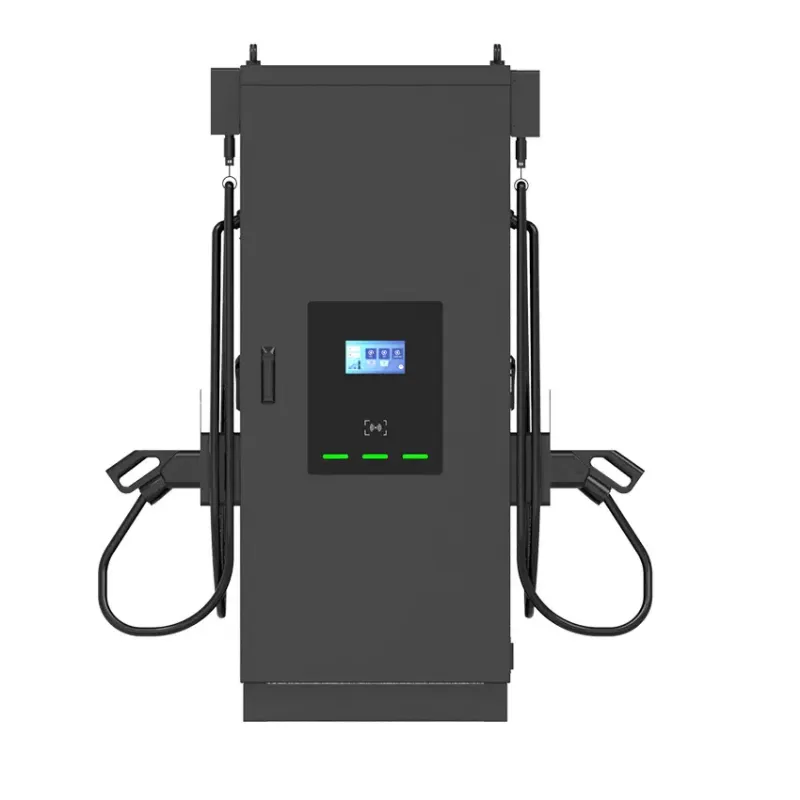
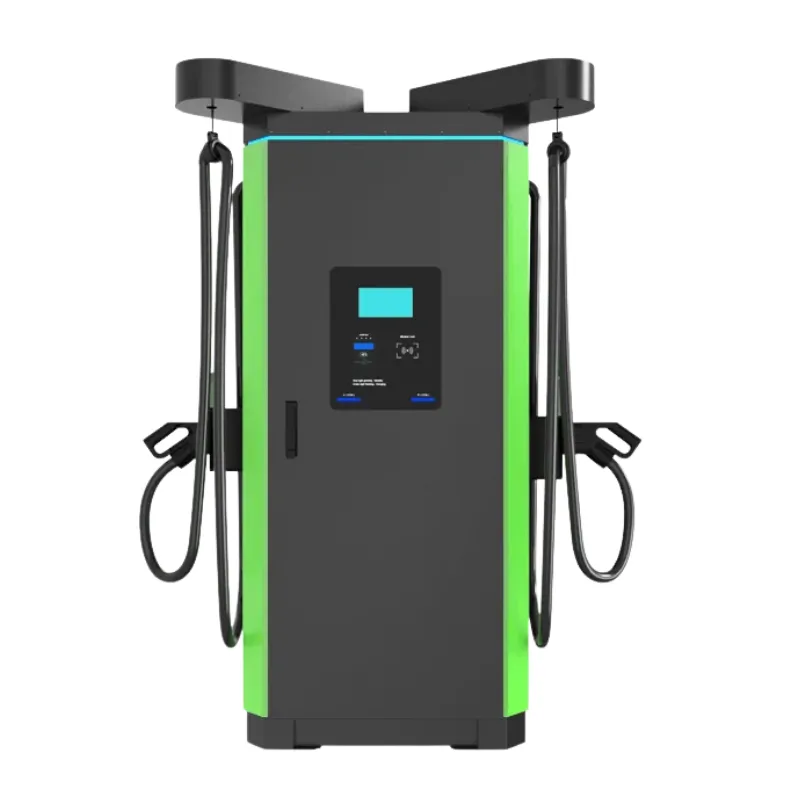
A second gun adds a parking bay, not output. Both the CC120 and the UC120 are dual-gun cabinets with dynamic power sharing, so one car can take the full 120 kW (within its own limit) or two cars share it. A quote that lists 2 guns beside “120 kW” does not mean 240 kW. If a competing list prices “per gun”, halve the comparison unit before you compare.
Capital also lands on every kWh sold. Our assumptions: US$150,000 installed in total (hardware, installation and connection together, a mid-case inside the ranges above), straight-line over 10 years, 40 kWh per session, 365 days a year.
| Sessions per day | kWh sold per year | Capital per kWh sold |
|---|---|---|
| 4 | 58,400 | about US$0.26 |
| 8 | 116,800 | about US$0.13 |
| 12 | 175,200 | about US$0.09 |
That is before electricity, demand charges, maintenance and fees; the operating cost guide covers those, and you can test your own prices in the payback calculator. The smaller 60 kW and larger 180 kW pages show how the same sums behave at the other sizes.
Choosing the 120 kW cabinet and what to send us
The CC Series is the compact route, the UC Series the one you can grow. The CC Series puts 120 or 180 kW into a 700 × 500 mm cabinet for car parks and forecourts where space is tight. The UC Series uses a larger cabinet with the same dual-gun approach and a wider range. Where dwell time is long and the supply is small, the HC Series at up to 60 kW may be the better fit. Price depends on configuration, so send us your site voltage, number of bays, connector standard (CCS2, CHAdeMO), preferred delivery terms and available kVA through the contact page, and we will return a configuration and an itemised quotation you can compare line by line with the table above.
Payback calculator
Example values are filled in — replace them with your own quotation, tariff and traffic figures.
- Energy sold per month
- —
- Net margin per month
- —
- Simple payback
- —
Simple payback = total investment ÷ (energy sold × (price − energy cost) − fixed costs), using 30 days per month. Taxes, financing, subsidies and utilisation growth are not included.
Frequently asked questions
- What is a realistic 120kW DC fast charger price?
- No single figure is honest, because published ranges use different units. The US DOE lists US$38,000–90,000 of equipment per connector; CALeVIP rebate data lists a median of US$23,000 per charger. The price of your unit depends on the configuration: gun count, cable length and connector set, payment and display options, and delivery terms. Send us your voltage, number of bays and connector standard through the contact page and we will return a configured quotation with the lines itemised.
- Is the price per gun or per cabinet?
- Both conventions are used, which is why published lists disagree. A dual-gun 120 kW cabinet has one 120 kW output shared between two cars. Ask for the price per cabinet, the number of guns, and the power each gun delivers when both are in use.
- Does the charger quote include installation?
- Usually not. The US DOE gives installation separately, at US$20,000–60,000 per DC fast connector, and says labour is typically the largest part. The grid connection is a third item, requested from the utility. A good quote states plainly which of the three it covers.
- Do I need a new transformer for 120 kW?
- Not always, but plan for about 129 kVA of supply for the charger alone at 400 V. Check the spare capacity on your existing transformer and add other site loads before you decide; the grid capacity calculator on this site does the sum.
References
- [1]Procurement and Installation for Electric Vehicle Charging Infrastructure. US DOE Alternative Fuels Data Center.
- [2]Electric Vehicle Charging 101 (CALeVIP cost data). CALeVIP.
- [3]Costs (BETT guidance). Cenex (© 2024).
- [4]Electricity Infrastructure Maintenance and Operation. US DOE Alternative Fuels Data Center.