Business guide
How to Price EV Charging Per kWh and Per Minute
EV charging pricing per kWh from your costs: a worked example, per kWh vs per minute, idle fees, and 2024-2026 price points from the UK, Germany, Hawaii.
- Prepared by
- EVCSTAR Engineering Team
- Published
- Reading time
- 5 min
- Sources
- 4 references
At a glance
- UK rapid/ultra-rapid, pay-as-you-go average (Sep 2026)
- 79p/kWh
- UK slow/standard, pay-as-you-go average (Sep 2026)
- 54p/kWh
- Fastned Germany, ad-hoc price from 1 Apr 2026
- 69 ct/kWh
- Hawaii DOT Kahului site, off-peak / peak (Mar 2024)
- $0.44 / $0.57/kWh
Key takeaways
- 1Set EV charging pricing per kWh by adding up what each delivered kWh costs you (energy, losses, demand charges, network and payment fees) and then adding a margin; our worked example lands near $0.51/kWh on stated assumptions, which you should replace with your own tariff.
- 2Charge per kWh as the main price. In the United States, federally funded chargers must price on electricity in $/kWh and show the price before the session starts (23 CFR 680.116, as read in 2026); per-minute billing makes drivers pay for a slow car or a slow charger.
- 3Market price points differ widely: UK rapid and ultra-rapid pay-as-you-go averaged 79p/kWh in September 2026, Fastned's German ad-hoc price was 69 ct/kWh from 1 April 2026, and a Hawaii state park-and-ride set 44-57 cents/kWh in 2024 to pass through cost only.
- 4Use time-based fees only to free the bay (idle or overstay fees), with a grace period, and test any amount against local consumer rules before you publish it.
On this page
Short answer: EV charging pricing per kWh starts from your own cost per delivered kWh (energy, losses, demand charges, fees), adds a margin that repays the equipment, and then gets checked against what drivers around you actually pay.
Start with cost per delivered kWh
The price floor is everything you pay for each kWh that reaches a battery, not just the utility rate. Four components matter, and the one most newcomers miss is demand charges, which can be larger than the energy charge at low utilisation (see demand charges for EV charging).
| Cost block | How to spread it per kWh | Where to get the number |
|---|---|---|
| Energy | Utility rate divided by charger efficiency | Your tariff; efficiency from the datasheet |
| Demand and fixed charges | Monthly bill divided by kWh sold that month | Utility tariff plus expected utilisation |
| Network, maintenance, warranty reserve | Annual cost divided by annual kWh | Software quote, service contract |
| Payment fees | Percentage of the price | Payment provider |
| Margin to repay equipment | Capex divided by lifetime kWh, plus return | The payback calculator |
A worked example of cost-plus pricing
On the assumptions below the break-even-plus-margin price is about $0.51 per kWh. Every input is an assumption for illustration, not a quote or a market average; replace them with your tariff and sales forecast.
| Input (assumed) | Value | Per delivered kWh |
|---|---|---|
| Energy rate | $0.20/kWh, 95% efficiency | $0.211 |
| Demand charges | $4,500 a month, 30,000 kWh sold a month | $0.150 |
| Network, maintenance, reserve | $0.03/kWh | $0.030 |
| Margin toward equipment cost | Chosen target | $0.100 |
| Subtotal before payment fees | $0.491 | |
| Price after 3% payment fee | $0.491 divided by 0.97 | $0.506 |
Two things move this number most: monthly kWh sold (double it and the demand cost per kWh halves) and the margin you need. Run the same case at low, base and high utilisation in the payback calculator; if the low case needs a price drivers will not pay, the site or the power level is wrong, not the tariff.
Per kWh, per minute, per session
Bill the energy per kWh, and use time only to clear the bay. Under 23 CFR 680.116, US federally funded chargers must price on the electricity delivered in $/kWh, show the price before the transaction, use the real-time price, and keep it fixed for the session; other fees must be displayed and explained. The rule text we read does not cover idle fees.
| Model | Good for | Weak point |
|---|---|---|
| Per kWh | Public DC and AC, comparable with fuel | Needs certified metering where your rules require it |
| Per minute | Old hardware without metering | Slow cars and low-power sessions cost the driver more per kWh |
| Per session | Short top-ups, simple apps | Hard to justify for mixed vehicle sizes |
| Time-of-use per kWh | Sites with tariff peaks | Must show the price at the start; do not change mid-session |
| Idle or overstay fee | Any site with queues | Needs a grace period and clear display |
Keep any idle fee simple: a grace period after the session ends, a per-minute rate above the cost of moving the car, shown before the session. We could not verify typical fee amounts from a primary source, so check what operators near you charge and what your consumer rules allow.
What drivers pay in other markets
Ad-hoc list prices sit well above electricity cost and well above member prices. The points below are list prices from the dates shown, in local currency, so do not compare them without allowing for tax and tariff differences.
| Market and source | Price | Date |
|---|---|---|
| UK, rapid and ultra-rapid (50 kW and above), pay-as-you-go average | 79p/kWh | September 2026 |
| UK, slow and standard (3-49 kW), pay-as-you-go average | 54p/kWh | September 2026 |
| Germany, Fastned ad-hoc price | 69 ct/kWh (was 73) | from 1 April 2026 |
| Germany, Fastned app user / Gold member | 62 ct / 48 ct | from 1 April 2026 |
| Hawaii DOT, Kahului Park & Ride | $0.44 (9 am-5 pm), $0.57 (5 pm-9 am) | March 2024 |
Zapmap says the actual average paid is likely lower than the pay-as-you-go average, because of promotions and memberships. Fastned reported that cutting its price followed lower German grid fees, which shows how a cost change flows straight into a list price. The Hawaii site is the clearest cost-plus example: the state described its network as revenue neutral, passing through electricity cost, excise tax and card or app fees, and reviewing rates quarterly. An owner who must repay capital needs a margin on top, as in the worked example above.
Pricing mistakes to avoid
Most pricing failures are copying a number instead of testing it against utilisation.
- Setting the price from a competitor’s list price without checking your own demand charges.
- Pricing for the average day and ignoring a quiet first year, when demand charges are spread over few kWh.
- Different prices on the screen, app and roaming platform; see payment options.
- Dynamic prices that change inside a session where the rules forbid it.
- Free parking policies that are not enforced, which turn bays into car parks; a grace-period idle fee is cheaper than lost sessions.
Check the running costs your price must cover in the operating cost breakdown.
From pricing to equipment: what to tell us
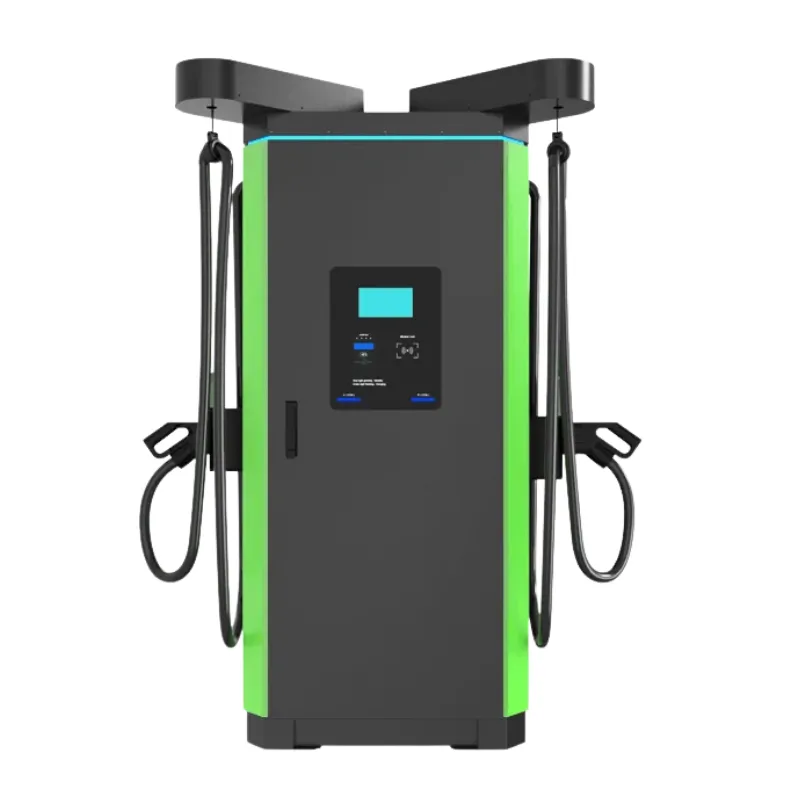
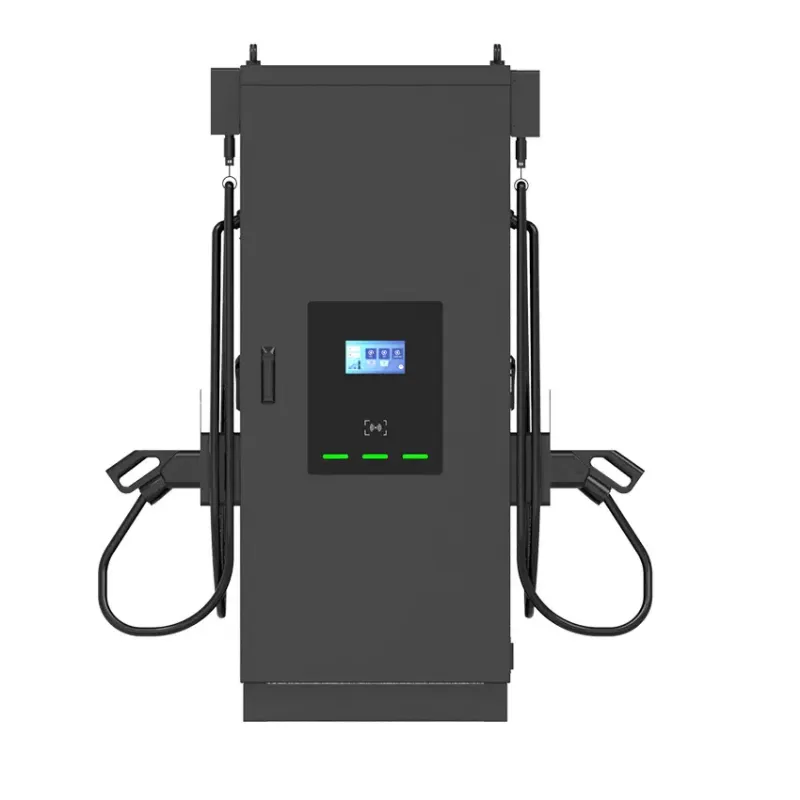
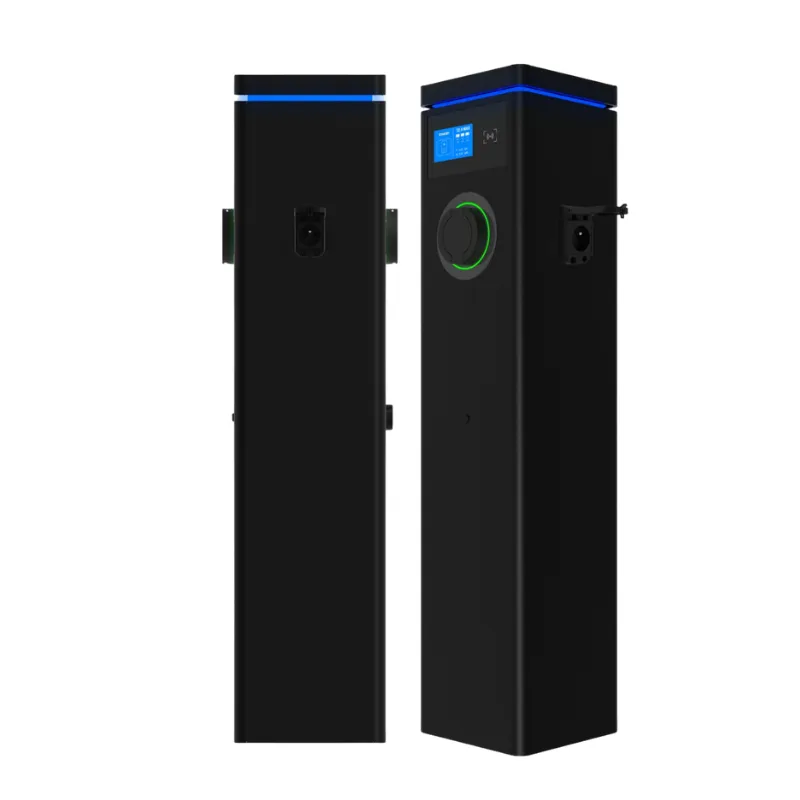
Price per kWh depends on hardware efficiency, metering and software, so send the details before you fix a tariff. Our DC cabinets (UC and CC) and the commercial AC CPO series report energy per session and support OCPP 1.6J and 2.0.1, so your management platform can apply per-kWh, time-of-use and idle-fee rules. Equipment prices depend on configuration: power, cable and connector set, payment options and site conditions. Send us your tariff, expected sessions per day, connector standard and grid capacity through the contact page and we will return a configuration and a quotation breakdown you can put into the calculator.
Payback calculator
Example values are filled in — replace them with your own quotation, tariff and traffic figures.
- Energy sold per month
- —
- Net margin per month
- —
- Simple payback
- —
Simple payback = total investment ÷ (energy sold × (price − energy cost) − fixed costs), using 30 days per month. Taxes, financing, subsidies and utilisation growth are not included.
Frequently asked questions
- Should I charge per kWh or per minute?
- Per kWh for the charging itself. It matches your largest cost, electricity, and drivers can compare it with a pump price. Per-minute billing charges a driver more when the car or the charger delivers less power, which is why US federal rules for NEVI-type stations require pricing based on $/kWh. Use per-minute only for idle or overstay fees, after the session has ended.
- How much should an idle fee be?
- We could not open an operator or regulator page with verified idle-fee amounts, so we give no figure. Set it high enough that staying plugged in after the session costs more than moving the car, add a grace period of several minutes, show it before the session starts, and check your local consumer rules. Make it apply only when other drivers are waiting if your software supports it.
- Should I match the price of the nearest competitor?
- Use it as a ceiling check, not as your cost basis. If your cost-plus price is far above the nearest comparable site, your costs or your site need review. If it is far below, you may be leaving margin on the table. The UK index and Fastned examples show that ad-hoc prices sit well above member and contract prices, so compare like with like.
- Can I change the price during a session?
- Not on US federally funded chargers: 23 CFR 680.116 says the price at the start of a session cannot change during it, and the price shown must be the real-time price. Time-of-use pricing is allowed as long as the price at the start holds. Check the rules where you operate before you build dynamic pricing.
References
- [1]23 CFR 680.116: Data submission and reliability (price display and $/kWh). Legal Information Institute, Cornell Law School (US federal regulation).
- [2]Charging Price Index (September 2026). Zapmap.
- [3]Fastned senkt Ad-hoc-Ladepreis in Deutschland auf 69 Cent/kWh (24 March 2026). electrive.net.
- [4]Rates set for EV charging station at Kahului Park & Ride. Hawaii Department of Transportation (March 2024).