Business guide
EV Charging Management Software (CSMS): What Operators Need
EV charging management software (CSMS): OCPP versions, OCPI roaming, billing and the 97% uptime maths, plus the questions to put to every vendor.
- Prepared by
- EVCSTAR Engineering Team
- Published
- Reading time
- 5 min
- Sources
- 3 references
At a glance
- US federal uptime benchmark (23 CFR 680.116)
- > 97% per port
- Outage allowed at 97% over a year
- 15,768 minutes
- Current OCPI version (EVRoaming Foundation)
- 2.3.0
- OCPP versions supported by EVCSTAR DC chargers
- 1.6J and 2.0.1
Key takeaways
- 1EV charging management software, also called a CSMS or back end, talks to chargers over OCPP and to other networks over OCPI; the first decides whether you can change vendors, the second whether other apps can find and pay for your chargers.
- 2OCPI is maintained by the EVRoaming Foundation; its current version is 2.3.0 and 2.2.1 is still listed as supporting the core functions (2.1.1 is no longer supported), and the US federal rule at 23 CFR 680.116 requires real-time port status and pricing to be reported with OCPI 2.2.1.
- 3The same US rule sets a benchmark for uptime: more than 97% per port per year, which leaves about 262.8 hours (15,768 minutes) of unexcused outage in a 525,600-minute year, so your software must log outage time minute by minute.
- 4Ask every vendor for exportable data and a written exit plan: a CSMS you cannot leave is a cost that grows with every charger you add.
On this page
Short answer: EV charging management software is the back end that authorises drivers, controls chargers, calculates prices and reports faults, and the five things to test before you buy are its OCPP support, its roaming interface, its billing and payment options, its uptime reporting and how you leave it.
What the software does, in one picture
A CSMS (charging station management system) sits between the charger and everything else: the driver, the payment provider, the power meter and the regulator. The definitions in the US rule at 23 CFR 680.104 help here. A charging network is a group of chargers connected by digital communications to manage payment, and OCPP is the open protocol governing communication between chargers and the networks that manage them. A separate protocol, OCPI, governs communication among multiple charging networks and apps. So the stack is: charger, OCPP, CSMS, OCPI, roaming partners and apps.
| Layer | Job | Question to ask |
|---|---|---|
| Charger firmware | Delivers power, reports status | Which OCPP versions and profiles does it support? |
| CSMS | Authorises, prices, monitors, bills | Can I export all my data and set my own tariffs? |
| Roaming (OCPI) | Lets other apps find and pay at your chargers | Which OCPI version, and what do you charge for it? |
| Payment | Cards, wallet, subscription, invoices | Who is the merchant of record and when do I get paid? |
| Reporting | Uptime, energy, revenue, faults | Is outage time recorded per port, by the minute? |
OCPP: the version decides your freedom
If the charger and the CSMS both speak a current OCPP version, you can change vendor without changing hardware. EVCSTAR DC chargers support OCPP 1.6J and 2.0.1, so ask a vendor to confirm which of the two it runs in production and which features it has actually tested with chargers like yours. Be careful with the words “supports OCPP”: a platform may accept connections but not offer remote firmware updates, smart charging or tariff changes for that version. Ask for a list of features per version and for a live demonstration with a charger of your own. For standards that surround the protocol, see our standards guide.
Roaming and OCPI
Roaming lets a driver who uses another provider pay at your charger, and OCPI is the language that makes it work. The EVRoaming Foundation maintains OCPI as a free, independent protocol connecting eMobility service providers with charge point operators, either bilaterally or through roaming hubs. Its core functions cover locations (static data and real-time status), tariffs, sessions and charge detail records. The foundation lists 2.3.0 as the current version, 2.2.1 as still supporting the core functionality, 2.1.1 as no longer supported and 3.0 as a draft targeted at mid-2027. In the United States, 23 CFR 680.116 requires real-time port status and pricing to be reported using OCPI 2.2.1 for projects covered by that rule. If your market is elsewhere, ask the vendor which OCPI version the national roaming hubs accept.
Billing and payments
The cleanest billing set-up is the one you can explain to a driver in one sentence. Check the tariff types the software supports (per kWh, per minute, idle fee, time-of-day, free first minutes), how it deals with tax, invoices and refunds, and how card, QR and app payments are settled to you. The detail of payment methods and local rules is in our payment options guide. Also ask what fee the vendor takes: a monthly fee per charger, a percentage of sales, a payment-processing fee, or all three. A percentage fee grows with your success; a flat fee does not.
Uptime reporting: the 97% benchmark
Uptime is a number you should be able to calculate from your own logs. The US rule requires each charging port to average annual uptime above 97%, calculated monthly over the previous twelve months as ((525,600 minus outage minutes) divided by 525,600) times 100. A port counts as up when it is online and available, or in use, and delivers power at the required minimum level. Outages from utility interruptions, vehicle faults, scheduled maintenance, vandalism, natural disasters and hours outside posted operation can be excluded if you can show the port would otherwise have worked.
A worked example, with assumptions: one port has 20 hours of outage in a year, 4 of them caused by a grid interruption. Unexcused outage is 16 hours, or 960 minutes. Uptime is (525,600 − 960) / 525,600 = 99.82%. At 97% the allowance would be 15,768 minutes, about 262.8 hours. A site with six ports needs a CSMS that records the cause of each outage so the excluded time can be proved. The rule applies to specific US programmes; elsewhere it is a good internal target. Your maintenance contract (see maintenance and warranty cost) should state a response time that protects it.
Questions to put to every vendor
Ask in writing, and keep the answers.
| Topic | Ask |
|---|---|
| Exit | Can I export sessions, drivers and tariffs in a standard format? What is the notice period? |
| Hosting | Where is data stored, who is liable for a breach, what is the backup plan? |
| Pricing | Fee per charger, per session, per payment; any set-up or integration fee |
| Support | Hours, language, response time for a charger that is down |
| Roadmap | Support for OCPP 2.0.1, Plug and Charge, OCPI versions, local tax rules |
| Customer data | Who owns it, and can I contact my drivers? |
How EVCSTAR chargers fit your back end
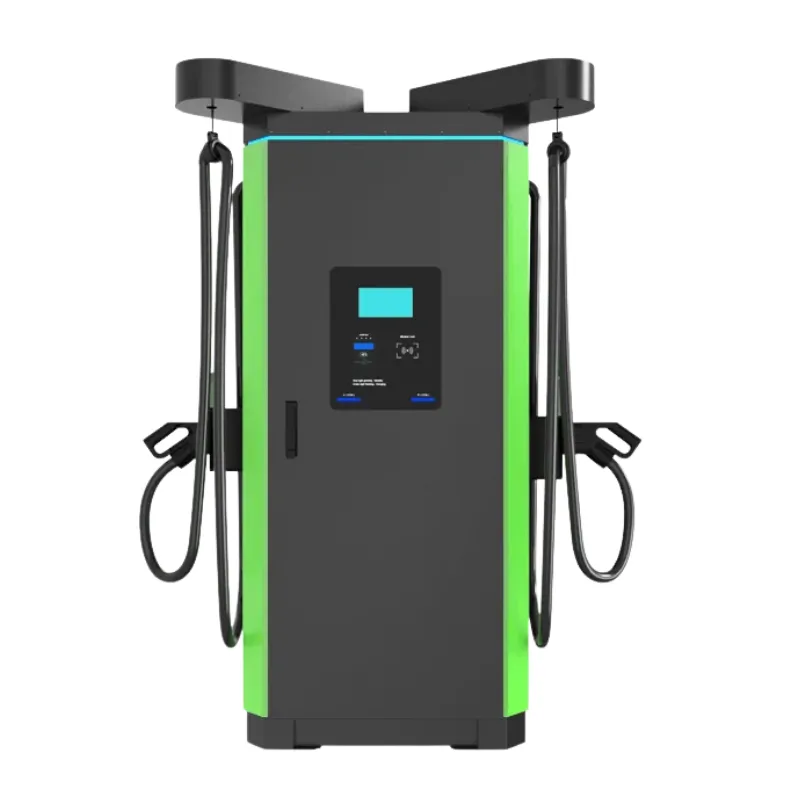
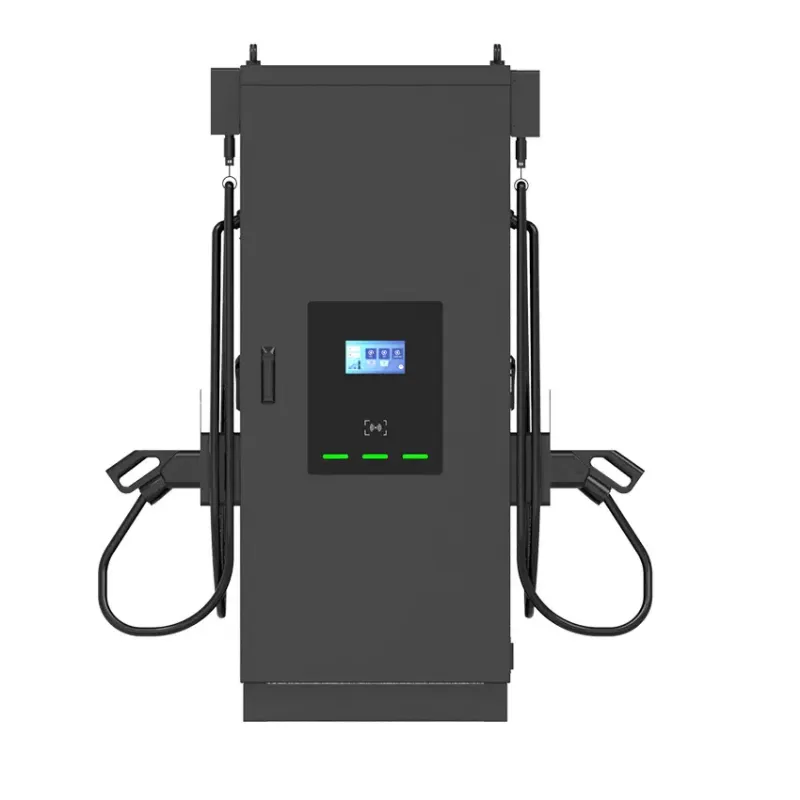
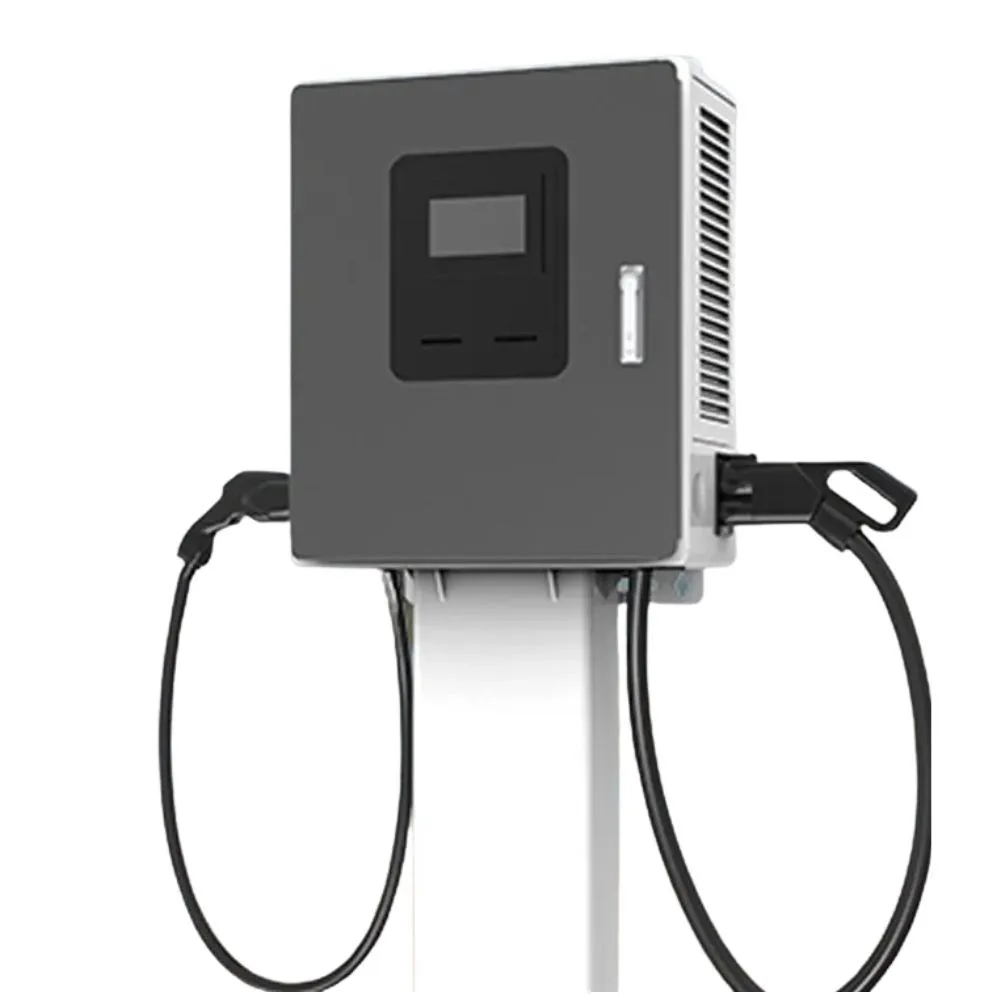
The charger should not be the reason you stay with a software vendor. Every UC, CC and HC unit communicates over OCPP 1.6J and 2.0.1 on Ethernet, with 4G and Wi-Fi as options, and starts a session by RFID or QR code. We do not sell a CSMS in this guide and do not claim a specific platform has certified our units; tell us the platform you are leaning towards, the number of ports and your payment set-up via the contact page, and we will reply with a configuration proposal and quotation breakdown that includes the communication options you need.
Payback calculator
Example values are filled in — replace them with your own quotation, tariff and traffic figures.
- Energy sold per month
- —
- Net margin per month
- —
- Simple payback
- —
Simple payback = total investment ÷ (energy sold × (price − energy cost) − fixed costs), using 30 days per month. Taxes, financing, subsidies and utilisation growth are not included.
Frequently asked questions
- What is the difference between OCPP and OCPI?
- OCPP governs the communication between chargers and the network that manages them; OCPI is a protocol among multiple charging networks and the apps that serve drivers, so a driver using one provider can find and pay at another operator's charger. OCPP sits below your CSMS, OCPI sits above it. The definitions are those used in 23 CFR 680.104.
- Do I need roaming for a small site?
- Not on day one if your customers pay by card or app at the charger, but roaming brings drivers who already use another provider's app. Ask the vendor whether OCPI roaming is included, what version it supports and what it costs per session or per month.
- Can I change CSMS vendor without replacing chargers?
- Usually yes if the chargers speak OCPP and the vendor lets you repoint them, but you also need your session history, tariffs, driver accounts and RFID lists in an exportable form. Put the export and the notice period into the contract before you sign.
- Which software do EVCSTAR chargers work with?
- EVCSTAR DC chargers support OCPP 1.6J and 2.0.1, so they can connect to a back end that supports either version. Send us the name of the platform you plan to use, with the features you need, through the contact page, and we will confirm the configuration with our engineers.
References
- [1]23 CFR 680.116: Data submission and reliability. Legal Information Institute, Cornell Law School (US federal regulation).
- [2]23 CFR 680.104: Definitions (OCPP, OCPI, Plug and Charge, charging network). Legal Information Institute, Cornell Law School (US federal regulation).
- [3]OCPI background. EVRoaming Foundation.