Business guide
Charging Franchise or Independent Station? A Due-Diligence Checklist
EV charging station franchise or independent? A due-diligence checklist built on 23 disclosure items, a worked comparison and the V-Green Philippines offer.
- Prepared by
- EVCSTAR Engineering Team
- Published
- Reading time
- 5 min
- Sources
- 4 references
At a glance
- FDD delivery before signing or paying (US rule)
- 14 calendar days
- Disclosure items in the US Franchise Rule
- 23
- Minimum lease in the V-Green Philippines offer (2025)
- 5 years
- Site size sought by V-Green (2025)
- 30–1,000 m²
Key takeaways
- 1An EV charging station franchise trades control and margin for a brand, a network and (sometimes) funded equipment; building independently keeps the revenue and the risk. The decision turns on who owns the hardware, who sets the price and what happens when the contract ends.
- 2The US Franchise Rule (16 CFR 436) is a useful benchmark even outside the US: the franchisor must hand over a disclosure document with 23 items at least 14 calendar days before you sign or pay, and a franchisor that makes earnings claims needs written substantiation (Item 19).
- 3The best-known 2025 offer for the Philippines, V-Green, was described by CleanTechnica (31 July 2025) as a site-partner model: the partner supplies the site, the company funds the equipment and operation, with a revenue-sharing agreement and a minimum five-year lease, and no split percentage or revenue figure was published.
- 4Ask for the numbers a brochure leaves out: the revenue split, the fee and royalty schedule, who sets tariffs, who owns the chargers at the end, and utilisation at comparable existing sites.
On this page
Short answer: an EV charging station franchise makes sense when the franchisor brings something you cannot build yourself, such as a driver base, funded equipment or a site pipeline, and the contract shows exactly how the money is split; building independently makes sense when you already control a good site and want to keep the revenue, the pricing and the equipment at the end.
Two models that are often mislabelled
Most “franchise” offers in charging are really one of three different deals, and only one of them is a franchise in the legal sense.
| Model | Who owns the chargers | Who pays for the grid connection | What you earn | Main risk |
|---|---|---|---|---|
| Franchise | You | You | All sales minus fees and royalties | Fees paid before the site earns |
| Site partner (host) | The company | Often the company | A revenue share or lease income | Long lease, little control over price |
| Independent | You | You | All sales | You carry every cost and the utilisation risk |
The July 2025 launch of V-Green’s Philippine programme shows the difference. CleanTechnica described a franchise-style offer in which the company funds and manages the installation, the three-phase connection and 24/7 operation and maintenance; the partner brings a site of 30 to 1,000 square metres in Metro Manila, Cebu City or Davao, near three-phase power and with a solid concrete foundation. In return the partner receives a revenue-sharing agreement and a minimum five-year lease. That is closer to a site-partner deal than a franchise, and the article gives no revenue split, no fees and no return figures. Compare any such offer with the financing options you would have as an independent owner.
A due-diligence checklist built on the 23 disclosure items
The US Franchise Rule is a useful checklist even if you are not in the US, because it lists what an honest franchisor should be able to tell you. Under 16 CFR 436.2 the franchisor must give the disclosure document at least 14 calendar days before you sign a binding agreement or pay anything. The Federal Trade Commission’s page says the document holds 23 items. Translate the ones that matter most into questions for a charging offer.
| Disclosure item | What to ask a charging franchisor |
|---|---|
| Items 5, 6 (initial and other fees) | Entry fee, royalty, network or software fee, marketing fund; are they a percentage of sales or per charger? |
| Item 7 (estimated initial investment) | Equipment, civil works, grid connection, deposits and the three-month working capital line; who pays the utility |
| Item 8 (sources of products) | Must you buy chargers and software from the franchisor or its affiliates? Can you use another OCPP-compatible charger? |
| Item 12 (territory) | Is the territory exclusive, and can the franchisor open its own stations beside yours? |
| Item 17 (renewal, termination, transfer) | Term, exit costs, who owns the chargers and the customer data afterwards |
| Item 19 (financial performance) | Is there any earnings claim, on what basis, and what share of outlets reached it? |
| Item 20 (outlets and franchisee information) | Openings and closures over three years; contact details of current and former franchisees |
| Items 3, 4, 21 (litigation, bankruptcy, financial statements) | Disputes with franchisees, and whether the franchisor can fund its promises |
The rule says that if a franchisor makes no earnings claim it must say so, and if it does it needs a reasonable basis and written substantiation. A charging offer that quotes monthly returns without that paper is a sales pitch. In the Philippines, we did not verify which disclosure rules apply, so ask a local lawyer to review the contract and tell you what you are entitled to see.
A worked comparison, with assumptions
Run the same site through both models before you decide. The numbers below are assumptions to show the method, not terms from any franchisor and not EVCSTAR prices.
Assumptions: one 60 kW DC unit, 8 sessions a day of 30 kWh, so 240 kWh a day or 7,200 kWh over 30 days; tariff to drivers US$0.40 per kWh; electricity cost US$0.15 per kWh.
| Line (per month) | Independent | Franchise with 8% royalty | Site partner with 30% revenue share to the company |
|---|---|---|---|
| Sales | US$2,880 | US$2,880 | US$2,880 |
| Electricity | US$1,080 | US$1,080 | paid by the company in this model |
| Royalty or share | none | US$230 | US$864 to the company |
| Left for the site owner before fixed costs | US$1,800 | US$1,570 | depends on the contract: you may receive only the lease or the remaining share |
The independent owner keeps more per month but pays for equipment and connection upfront; the franchise owner also pays those and gives up a slice; the site partner invests least and earns least. If the same site would sell 3 sessions a day instead, the independent monthly margin falls to US$675 (90 kWh × 30 days × US$0.25), so the capital you put in decides how many years you wait. Enter your own prices and sessions in the payback calculator and compare with the build-cost breakdown.
Control, data and what happens at the end
The clauses that hurt later are about control, not about the royalty. Check who sets the tariff, whether you can change the network if service is poor, who holds the payment account, who owns the charging data, and whether the chargers stay at the site when the lease ends. Ask how drivers pay (see payment options for operators). A franchisor that insists on proprietary hardware locks you in; one that accepts any charger that supports OCPP 1.6J or 2.0.1 leaves you free to move.
Hardware you can take with you
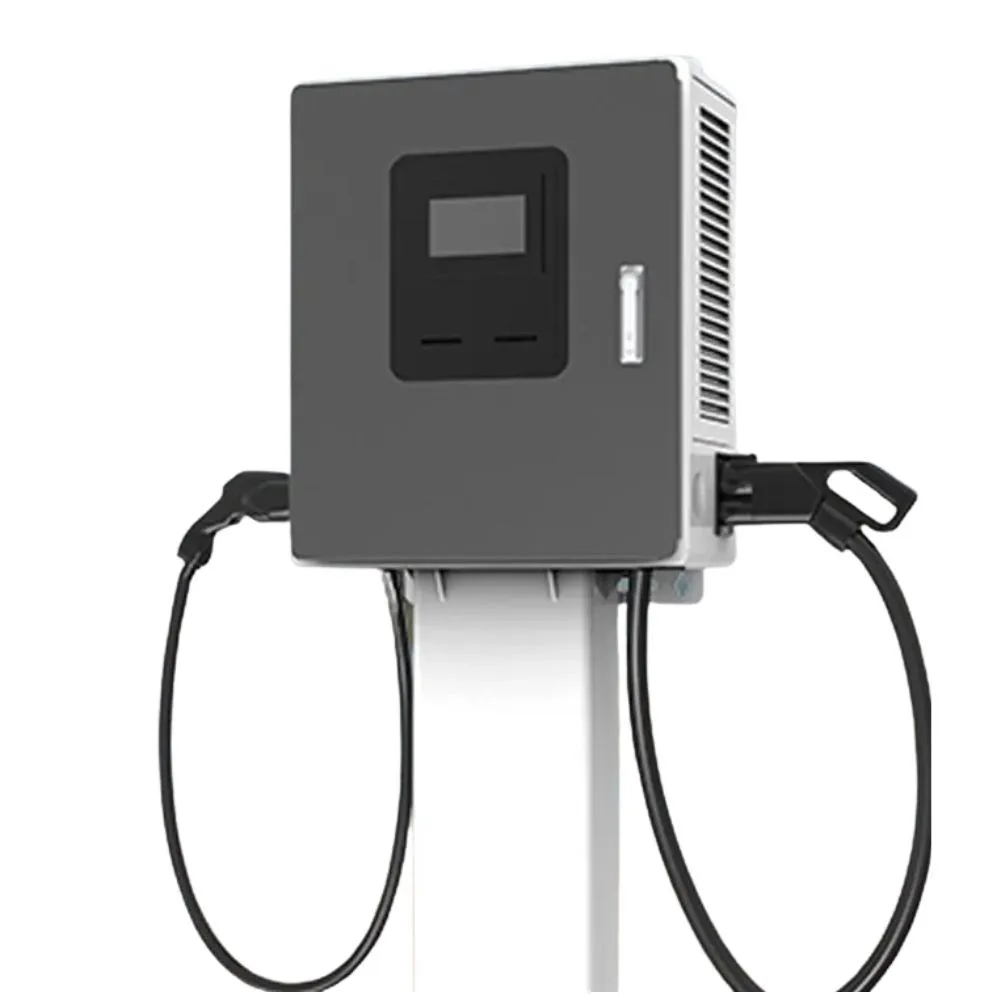
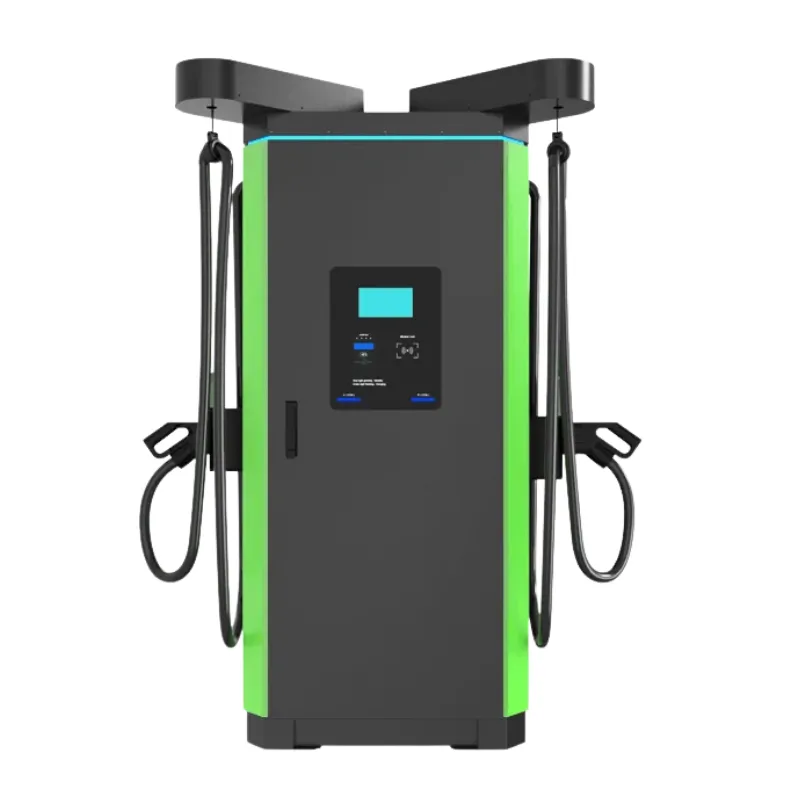
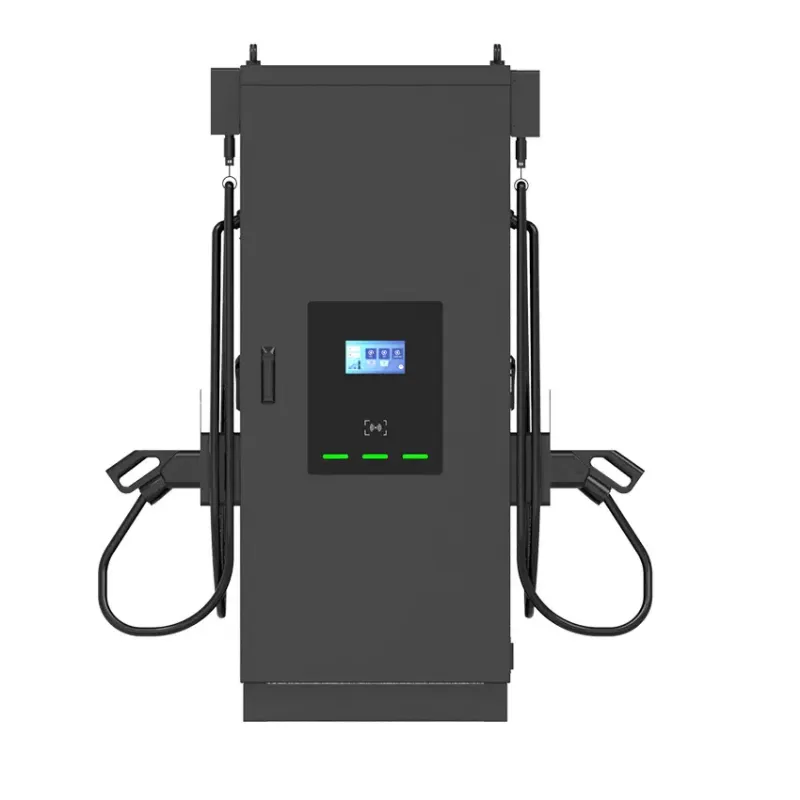
If you build independently, or negotiate the right to bring your own equipment, the charger choice follows the site, not the contract. For stays of an hour or more and limited grid capacity, the HC series (20 to 60 kW, wall or pedestal) is the usual starting point; for urban stations with two bays, the CC series at 120 or 180 kW; for highway sites, the UC series. All EVCSTAR DC models support OCPP 1.6J and 2.0.1, and the warranty is 12 months (see the warranty page).
Send us the site voltage, the available capacity, the number of bays and any equipment rules in the franchise draft through the contact page. We reply with a configuration proposal and quotation breakdown that you can lay beside the franchisor’s offer.
Payback calculator
Example values are filled in — replace them with your own quotation, tariff and traffic figures.
- Energy sold per month
- —
- Net margin per month
- —
- Simple payback
- —
Simple payback = total investment ÷ (energy sold × (price − energy cost) − fixed costs), using 30 days per month. Taxes, financing, subsidies and utilisation growth are not included.
Frequently asked questions
- Is an EV charging station franchise cheaper than building my own?
- Not necessarily. Some offers ask for no upfront investment because the company funds the equipment, but you then give up part of the revenue for the term of the contract. Others charge fees and royalties on top of your own capital. Put every payment, in both directions, into one table and compare it with an independent build in the payback calculator.
- Are there EV charging station franchises in the Philippines?
- In July 2025 CleanTechnica reported that V-Green planned to offer a charging business to Filipino landowners, with the company funding equipment and operation and the partner providing the site under a revenue-sharing agreement and a minimum five-year lease. The article gives no split, fee or return figure, and the Philippine rules for franchise disclosure were not something we verified, so ask a local lawyer what the franchisor must disclose.
- What should I ask for before signing a charging franchise?
- Ask for the full disclosure document or its local equivalent, the contract in writing, the list of existing sites with contact details for current and former partners, audited financials of the franchisor, and the utilisation and revenue of comparable sites. Treat any earnings claim without written substantiation as marketing.
- Can I run my own station on a franchisor's network later?
- It depends on the contract. Hardware that speaks OCPP 1.6J or 2.0.1 can be moved between back-end providers, but a franchise agreement may tie you to one network, one tariff structure and approved equipment. Check the exit clause and who owns the chargers and the customer data.
References
- [1]16 CFR 436.2: Obligation to furnish documents. Legal Information Institute, Cornell Law School (US federal regulation).
- [2]16 CFR 436.5: Disclosure items. Legal Information Institute, Cornell Law School (US federal regulation).
- [3]Franchise Rule. US Federal Trade Commission.
- [4]V-Green subsidiary offers charging station business to Filipinos (31 July 2025). CleanTechnica.