Business guide
Best Location for an EV Charging Station: A Site Scoring Method
Best location for an EV charging station: score traffic, dwell time, grid access, competition and lease terms. Worked example comparing three sites.
- Prepared by
- EVCSTAR Engineering Team
- Published
- Reading time
- 5 min
- Sources
- 3 references
At a glance
- Dwell activity within reach of the chargers (MIDA, 2026)
- 30-90 min, within 150 m
- Competitor mapping radius (MIDA, 2026)
- 10 km urban, 30 km corridor
- Grid connection lead time (MIDA, 2026)
- 6 weeks to 24 months
- NEVI minimum ports per station (23 CFR 680.106)
- 4 ports
Key takeaways
- 1The best location for an EV charging station is the one where drivers already stop for 20-90 minutes and the grid can deliver the power cheaply; a vendor guide (MIDA, August 2026) suggests natural activity within 150 m of the chargers and matching power to dwell, 150 kW and up for 20-minute stops.
- 2Grid access usually decides the project: the same guide gives connection lead times from about 6 weeks (spare capacity) to 24 months (new substation) and $15,000-$300,000 in cost; these are one vendor's ranges, so ask the utility.
- 3Score every candidate on the same weighted sheet before you negotiate; our worked example shows how a quiet but well-powered lot can beat a busy site that needs a new substation.
- 4If you plan to use US federal NEVI funds, a station needs at least four network-connected ports, and corridor stations need 150 kW per port and 24/7 access (23 CFR 680.106).
On this page
Short answer: the best location for an EV charging station is a site where drivers already have a reason to stay for the time your chargers need, where the utility can deliver the power at a known cost, and where a lease lets you keep the site long enough to earn the money back.
What makes a site good
Seven criteria cover almost every decision, and grid access is the one that most often kills a project. The list below combines the siting checklist of the U.S. DOE Alternative Fuels Data Center with an equipment vendor’s guide (MIDA Power, August 2026); the second source is marketing material, so its numbers are marked as vendor figures.
| Criterion | What to check | Why it matters |
|---|---|---|
| Traffic and EV share | Daily vehicle counts, local EV registrations | Sets the demand ceiling |
| Trip purpose | Is charging the reason for the trip, or an add-on? | Decides price you can ask and power you need |
| Dwell time | Activity of 30-90 min near the chargers (MIDA) | Matches kW to how long cars stay |
| Grid access | Distance to substation, spare transformer capacity, lead time | Decides cost and opening date |
| Competition | Existing and announced DC sites within 10 km urban, 30 km corridor (MIDA) | Splits the same demand |
| Real estate | Lease length, exclusivity, rights for transformer pad and signage | Protects the investment |
| Expansion room | Space and power to add bays | Lets you grow without a second connection fee |
AFDC adds practical items: proximity to incoming power and possible metering upgrades, wireless internet, weather, lighting and safety, space to enter and exit vehicles, clear paths to building entrances, signage, and early input from the utility.
Match power to dwell time
Choose charger power from how long cars stay, not from the biggest cabinet in the catalogue. MIDA gives an example of 150 kW and above for 20-minute stops and 120 kW for 60-minute stops. Our own reading of that: a mall or restaurant stop of 45-90 minutes does not need 360 kW per car, and a motorway stop of 15-25 minutes does. Note that a two-gun 360 kW cabinet shares power between its two connectors, and most cars cannot take 360 kW on one connector.
| Site type | Typical stay (our estimate) | Power approach |
|---|---|---|
| Motorway or corridor | 15-30 min | High-power DC, several bays |
| Supermarket, retail | 30-60 min | Mid-power DC and some AC |
| Hotel, workplace | Hours | AC, low cost per bay |
| Fleet depot | Overnight or between shifts | Scheduled DC or AC, see the depot business case |
Grid access first, then everything else
Ask the utility for capacity before you fall for a location. MIDA reports connection lead times from about 6 weeks with spare capacity to 24 months for a new substation, at roughly $15,000-$300,000, and says sites above 1 MW need a medium-voltage connection. These are one vendor’s ranges; get the utility’s own figures. Use the grid capacity calculator to size the connection you need, and read about the transformer cost before you commit.
Worked example: scoring three sites
A weighted sheet turns a gut feeling into a comparison. Weights and scores below are assumptions for illustration. Score each site 1 (poor) to 5 (excellent) and multiply by the weight.
| Criterion (weight) | Site A: motorway lay-by | Site B: supermarket car park | Site C: retail park, edge of town |
|---|---|---|---|
| Traffic and EV share (20%) | 5 | 4 | 2 |
| Dwell fit (15%) | 3 | 5 | 4 |
| Grid access (25%) | 1 | 4 | 5 |
| Competition (15%) | 2 | 3 | 4 |
| Lease and rights (15%) | 3 | 4 | 4 |
| Expansion room (10%) | 4 | 3 | 5 |
| Weighted score (out of 5) | 2.85 | 3.90 | 3.95 |
Site A has the best traffic but a score of 1 on grid access (a new substation is needed), so it falls well below B and C. Site C edges out Site B (3.95 against 3.90) with the best grid and expansion position, though B has the better traffic and dwell fit. A gap that small is a tie, and the tie-break is a payback run: put each site’s connection cost and expected sessions into the payback calculator. If A’s connection quote proves lower than assumed, its score changes, which is the point of rescoring after every utility reply.
Rules that can fix the minimum site size
If public funding is involved, the design rules come before the site. For US NEVI-funded stations, 23 CFR 680.106 requires at least four network-connected ports, and corridor-serving DC stations need each port rated for at least 150 kW continuous, open 24 hours a day, 7 days a week. That minimum steers you to sites with room for four bays and a connection of several hundred kVA. The regulation text we read gives no distance from the corridor, station spacing or amenity requirements. Check your own country’s rules.
Equipment that suits the site
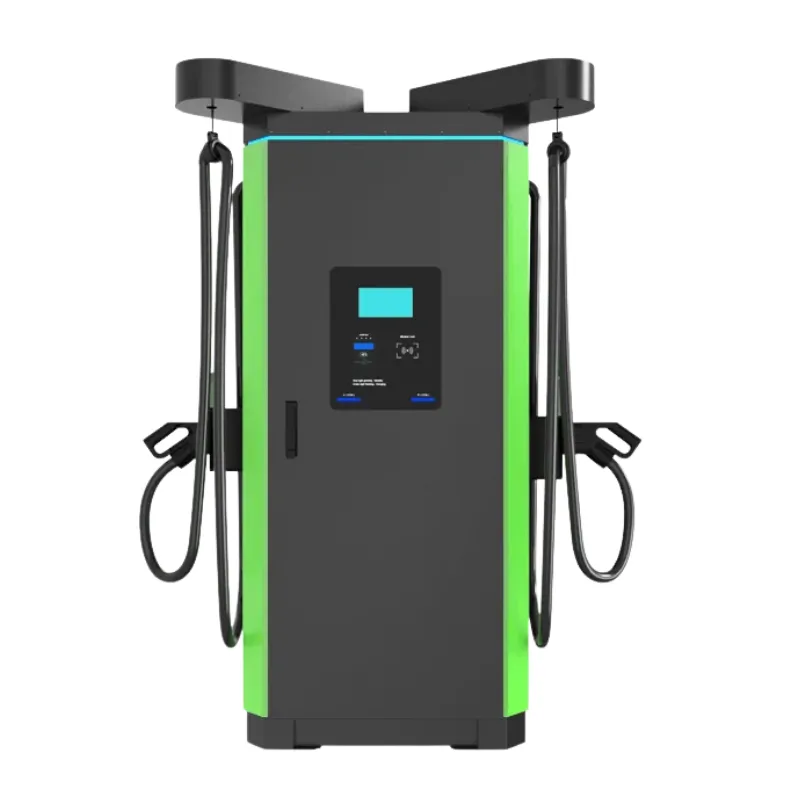
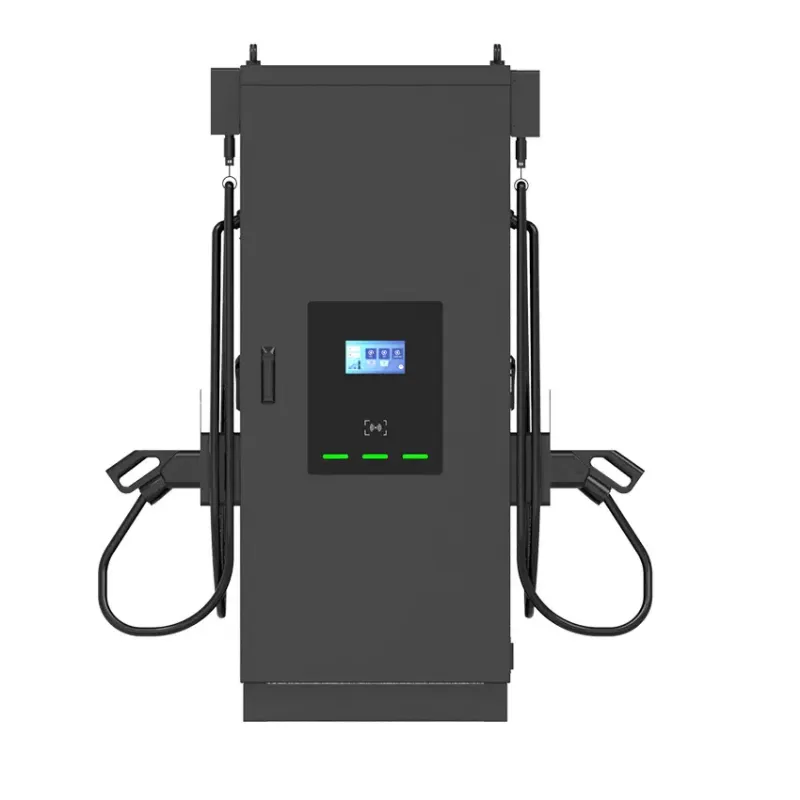
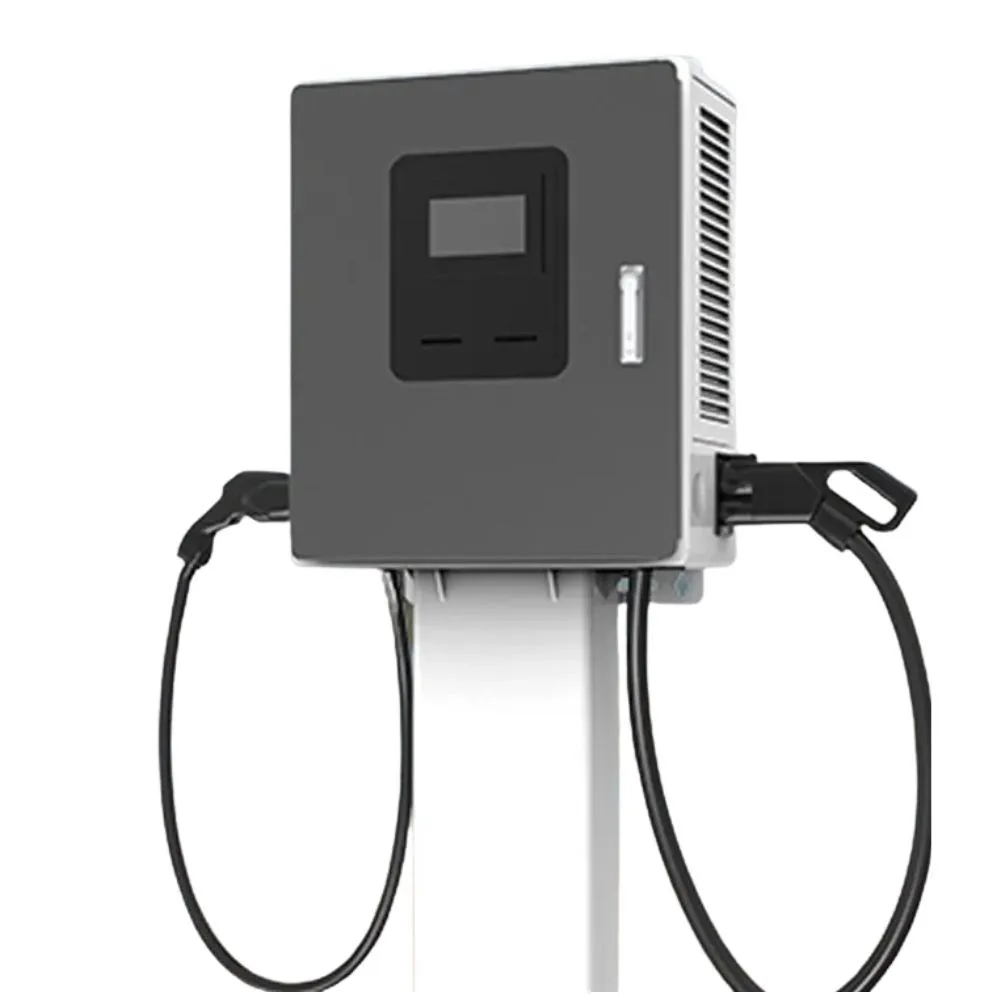
Pick the series after the site is scored, not before. For high-turnover corridor sites, the UC series (60-360 kW, two-gun cabinets with dynamic power sharing) or the CC series where space is limited; for small yards and mid-stay sites, the HC series. Equipment runs up to +55 °C and supports OCPP 1.6J and 2.0.1. Price depends on power, cable and connector set, options and site conditions: send us your shortlist with voltage, available kVA, number of bays and connector standard through the contact page, and we will return a configuration and a quotation breakdown for each site so you can compare them in the calculator.
Payback calculator
Example values are filled in — replace them with your own quotation, tariff and traffic figures.
- Energy sold per month
- —
- Net margin per month
- —
- Simple payback
- —
Simple payback = total investment ÷ (energy sold × (price − energy cost) − fixed costs), using 30 days per month. Taxes, financing, subsidies and utilisation growth are not included.
Grid capacity calculator
- Spare power for charging
- —
- Input current per charger (400 V)
- —
- Chargers at full power
- —
Spare power = kVA × 0.95 power factor × (1 − margin) − existing peak load. Input current ≈ charger kW ÷ (√3 × 400 V), with power factor and 95 % efficiency added for DC chargers. With dynamic load management more chargers can share the same capacity at reduced power. Always confirm with your electrical engineer and the grid operator.
Frequently asked questions
- What is the most important factor when choosing an EV charging location?
- Two factors have to be right together: a reason for drivers to stop for roughly the time your chargers need, and a grid connection you can afford and get in time. A busy road with no spare utility capacity and a quiet lot with a ready transformer are both weak. Score both before you look at anything else.
- How much traffic do I need?
- We found no neutral public threshold, so we give none. Use the payback calculator at low, base and high utilisation and see how many sessions per bay per day your site must reach. Then check local traffic counts and EV registrations to see whether that number is plausible. The MIDA guide suggests that markets unable to support about 15% utilisation across all operators should be avoided, which is a vendor view.
- Is a highway or a shopping centre better?
- It depends on who you want to serve. Highway and corridor sites sell charging as the purpose of the trip and need higher power; retail and hotel sites sell charging as an add-on to a visit and can use lower power per bay. MIDA says corridor and depot sites tend to command premium prices. The fleet depot case is different again, see the fleet depot business case.
- How far should the site be from a transformer or substation?
- There is no single distance. The cost depends on available capacity at the existing transformer, cable length, trenching and whether a new transformer is needed. MIDA suggests upsizing cable when the run from the switchboard exceeds 300 m to limit voltage drop. Ask the utility for a capacity statement and a connection quote before you sign a lease.
References
- [1]DC charging site selection: where is the golden location (14 August 2026). MIDA Power (equipment vendor; figures are the vendor's own).
- [2]Infrastructure Development for Electric Vehicle Charging (installation checklist, costs per connector). U.S. Department of Energy, Alternative Fuels Data Center.
- [3]23 CFR 680.106: Station design (ports, power, availability). Legal Information Institute, Cornell Law School (US federal regulation).