Business guide
Payment Options for Public EV Chargers
EV charger payment options for public sites: card terminal, app QR code, RFID and roaming compared, with UK, US and EU contactless rules.
- Prepared by
- EVCSTAR Engineering Team
- Published
- Reading time
- 3 min
- Sources
- 4 references
At a glance
- UK contactless rule (reg. 5, 2023)
- New public points ≥ 8 kW
- UK rapid reliability (reg. 7)
- 99% per calendar year
- NEVI payment rule
- 23 CFR 680.106(f)
- Methods in the OEM range
- RFID, QR code, card terminal
Key takeaways
- 1Regulators are converging on contactless card payment: UK regulation 5 (2023) requires it on new public charge points of 8 kW and above and on existing rapid ones, and the US NEVI rule (23 CFR 680.106) requires contactless debit and credit acceptance plus a phone or text option, with no membership.
- 2An app or QR code is cheapest to deploy but excludes drivers without your app; a card terminal costs hardware, a transaction fee and a data link at every charger, but removes the sign-up step.
- 3RFID suits fleets, workplaces and members; it is not a public payment method by itself, and roaming needs a back-end that supports it.
- 4In the UK, rapid charge points must be reliable for 99% of the time on average over a calendar year (regulation 7), so a payment terminal that fails counts against you if it takes the charger out of service.
On this page
Short answer: the best payment option for a public EV charger is a contactless card terminal alongside an app or QR code, with RFID reserved for fleets and members. Regulators in the UK and US already treat contactless as the baseline for public sites, so the decision now is where to put the terminal and who pays for its failures.
Four ways a driver can pay
Each method moves cost and friction to a different party.
| Method | Driver needs | Your cost | Best for |
|---|---|---|---|
| Contactless card terminal (POS) | A bank card | Terminal hardware, acquirer fees, data link | Highway hubs, retail, any public site |
| App with QR code | Smartphone, signal, account | Back-end and app, payment gateway fee | Destination and workplace charging |
| RFID card or fob | A card issued by an operator | Card issuing and back-office | Fleets, depots, members |
| Plug and Charge (ISO 15118) | Compatible car and contract | Certificate management on the back-end | Repeat drivers on large networks |
We have not checked which EVCSTAR models support Plug and Charge, so ask us for the specific model before you write it into a tender. The OEM page lists RFID, app QR code and a POS or Payter card terminal as the payment options we can configure.
What the rules say
The legal baseline is already contactless in the UK and US federal programme.
- United Kingdom. The Public Charge Point Regulations 2023, regulation 5, require contactless payment on new public charge points of 8 kW and above, on rapid charge points already in operation, and on existing points that become public, each within one year of the Regulations coming into force. Contactless means paying at a terminal with a payment card, with no prior contract needed. Regulation 6 deals with payment roaming and regulation 7 sets 99% average reliability for rapid points, measured per calendar year. We did not read the commencement date, so check it.
- United States. Under 23 CFR 680.106(f), unless charging is permanently free, stations must offer contactless payment accepting major debit and credit cards plus an automated toll-free number or SMS option, accessible for people with disabilities and people with limited English, with no membership and no throttling by payment method. This applies to the federally funded programme.
- European Union. The AFIR outline we could open says newly built chargers above 50 kW need a card reader or similar device from 13 April 2024 and existing ones by 1 January 2027. That is a summary, not the article text, so confirm the scope with the regulation itself.
Everywhere else, no source we read set a rule; treat card payment as a commercial advantage and check the local regulator.
Where payment hardware fails
The terminal is the most failure-prone part of the pedestal. A broken card reader makes a good charger unusable to anyone without your app, and in the UK a rapid charge point counts as reliable only if its status is available, charging or reserved, so an out-of-order status hits the 99% figure. Practical rules:
- put the terminal on the same cabinet as the charger it controls, with clear numbering for multi-bay sites
- keep a fallback method that works offline or with weak signal, such as RFID for known drivers
- ask who handles terminal replacement and card-scheme certification; it is usually the terminal vendor, not the charger maker
- on commercial AC, a MID-certified meter supports billing by kWh where required
The operating cost guide lists network and payment fees as recurring items alongside electricity.
Picking payment options for your range
Choose by who your customers are, not by what is possible. A fleet depot can run on RFID and a back-end invoice. A retail car park wants card terminals on fast units and QR code on slow ones. A corridor hub needs both, plus a phone or text fallback if you serve the US federal programme.
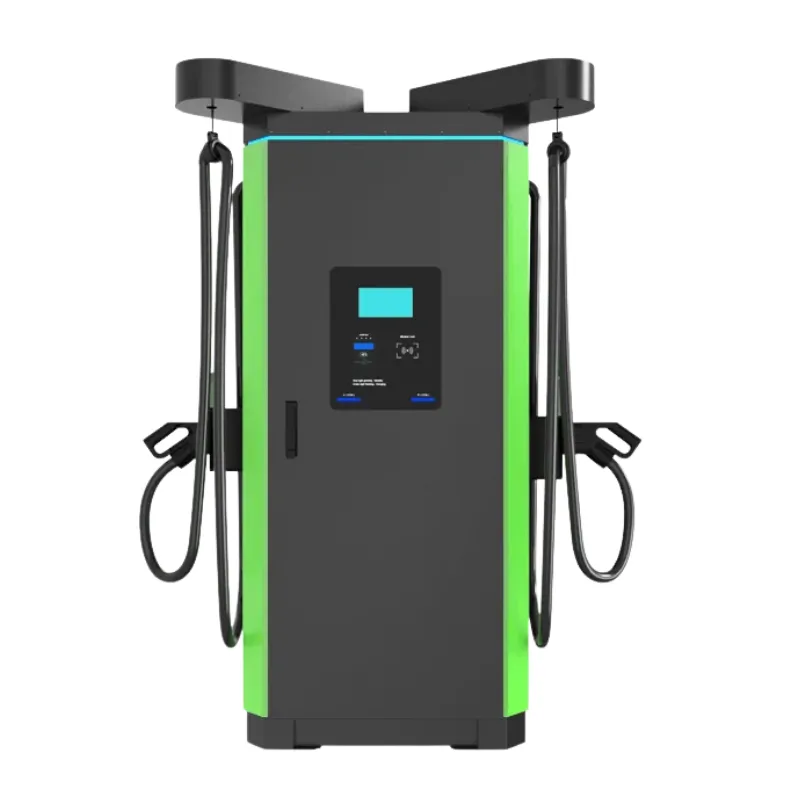
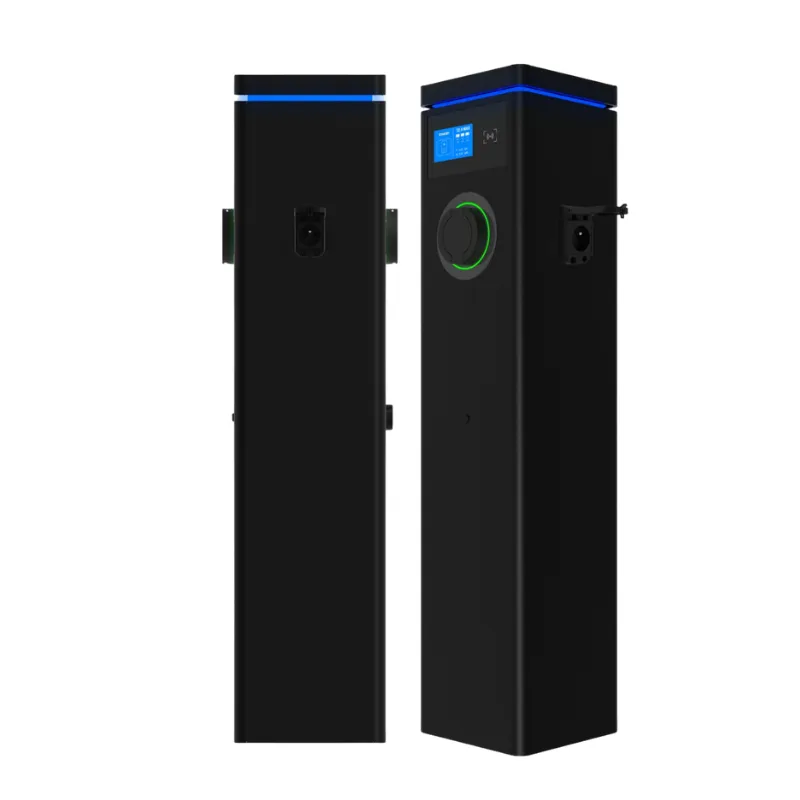
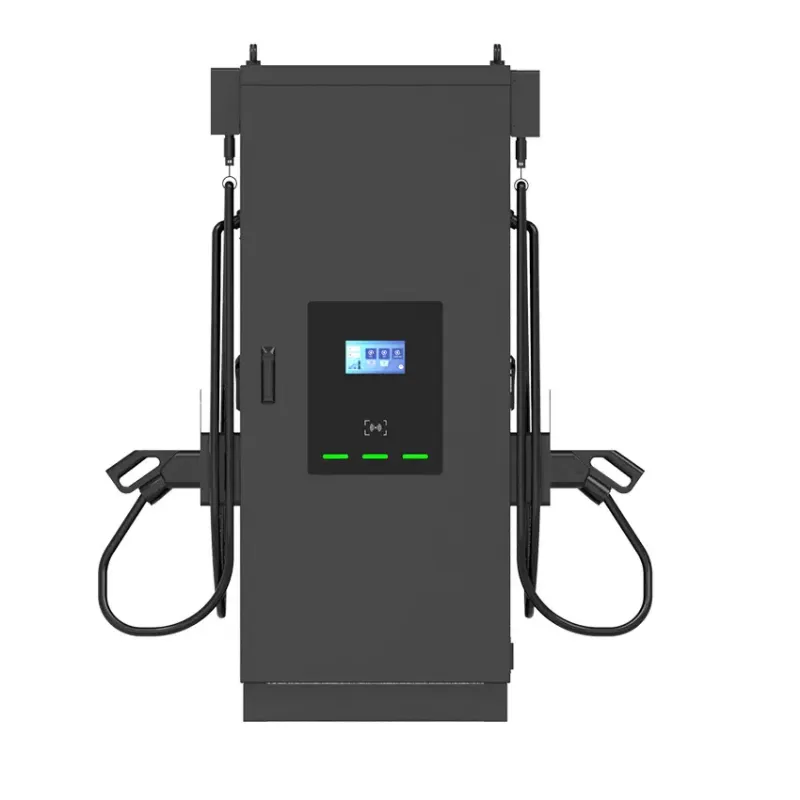
On our range, UC and CC cabinets are public-site units, and CPO is the commercial AC post. Payment options are part of the configuration, as set out on the OEM and ODM page. Send us your country, the series you are considering and how drivers should pay, using the contact page, and we will return a configured quotation with the payment hardware itemised.
Frequently asked questions
- Do public chargers have to take bank cards?
- In several markets, yes. UK regulation 5 requires contactless payment on new public charge points of 8 kW and above and on existing rapid charge points; 23 CFR 680.106(f) requires contactless debit and credit acceptance at federally funded US stations unless charging is permanently free; the outline we read of the EU AFIR says new chargers above 50 kW need a card reader from 13 April 2024. Check the full text and the date in force for your country.
- Is an app plus QR code enough?
- Not where contactless is mandatory, and not for visitors who just want to pay and leave. QR code payment works well as one of several methods. In the US federal rule, a phone or text option is required alongside contactless, and no membership may be required.
- Can drivers from other networks use my chargers?
- Only if your back-end supports roaming. UK regulation 6 covers payment roaming; the other markets we checked leave it to the network. Ask your charge point management provider which roaming hubs it supports.
- Which payment options can EVCSTAR chargers carry, and what do they cost?
- The OEM range lists RFID, app QR code and a POS or Payter card terminal, and a MID-certified meter on commercial AC. Which options are available varies by series. Cost depends on the configuration, so send us your market, series and payment preference through the contact page and we will return a configured quotation.
References
- [1]The Public Charge Point Regulations 2023, regulation 5: Contactless payment. legislation.gov.uk (UK Government).
- [2]The Public Charge Point Regulations 2023, regulation 7: Reliability. legislation.gov.uk (UK Government).
- [3]23 CFR 680.106: Station operations. Legal Information Institute, Cornell Law School (U.S. federal regulation).
- [4]Regulation (EU) 2023/1804 on alternative fuels infrastructure (AFIR), summary of Article 5. EUR-Lex.