State guide
EV Fast Charging in Victoria: Network Tariffs and Regional Sites
EV fast charging Victoria business guide: five distributors, why DC chargers miss the 2026-27 kerbside tariff trials, the 160 MWh rule and regional programs.
- Prepared by
- EVCSTAR Engineering Team
- Published
- Reading time
- 4 min
- Sources
- 6 references
At a glance
- Electricity distributors
- 5 (Vic)
- Kerbside EV trial tariffs (2026-27)
- AC only, under 44 kW
- Time-of-use opt-in threshold
- 160 MWh a year or less
- EVs on Victorian roads
- More than 100,000 (2026)
Key takeaways
- 1Victoria has five electricity distributors (CitiPower, Powercor, United Energy, AusNet, Jemena), and which one serves your site decides the tariff, the connection process and who you phone.
- 2The 2026-27 kerbside EV tariff trials are for AC chargers under 44 kW only; the AER says DC chargers are on highways with larger load that does not suit these structures, so a DC fast-charging site is on a standard business tariff.
- 3The AER says chargepoint operators using 160 MWh a year or less can opt into a time-of-use tariff, while sites above 160 MWh are treated as able to respond to more complex price signals (demand-based).
- 4The state moved from subsidies to rules in April 2026 (EV charging regulatory statement, more than 100,000 EVs on Victorian roads); the 2021 Destination Charging program funded regional fast-charge plugs, so check what is already built before choosing a site.
On this page
Short answer: an EV fast-charging business in Victoria is shaped less by a subsidy than by which of the five distributors serves the site and what business tariff it puts you on, because the new 2026-27 EV tariff trials are for small AC kerbside chargers and leave DC fast charging out.
Who connects you
Five distributors divide the state, and each runs its own connection and tariff process. Energy Victoria lists them as follows.
| Distributor | Area serviced |
|---|---|
| CitiPower | City and inner suburbs |
| Powercor | Western suburbs and western Victoria |
| United Energy | Southern suburbs and the Mornington Peninsula |
| AusNet | Outer northern and eastern suburbs and eastern Victoria |
| Jemena | Northern and north-western suburbs |
For a regional highway site that usually means Powercor in the west or AusNet in the east. Supply is the Australian standard three-phase system at 50 Hz; the nominal low-voltage level is 230/400 V (often still called 415 V in the trade), and large DC chargers are typically connected at the low-voltage board or through a dedicated transformer. We read this level from secondary sources only, so have the distributor confirm the supply point, the available capacity and the connection works in writing.
Network tariffs: the 2026-31 period
Read the AER decision before you model the bill: DC chargers are not in the new EV trials. The Australian Energy Regulator’s April 2026 decision approved the distributors’ tariff structure statements for 2026-31, from 1 July 2026. In it, the AER records that the five distributors notified kerbside EV tariff trials to start in 2026-27, and that the trials share these features:
| Feature | What the AER says |
|---|---|
| Eligibility | AC kerbside chargers with supply capacity under 44 kW |
| Daytime incentive | All trials have a solar-soak charge of 1 kWh/day to encourage daytime charging; United Energy refers to a 1 c/kWh daytime network charge |
| Concessions | Zero fixed charges and export rewards in all five trials; peak charges at half the standard residential equivalent in the CitiPower, Powercor and United Energy trials |
| Why DC is out | DC chargers are typically on highways with larger load that does not suit these structures, and those places lack the daytime solar surplus |
The AER also states the opt-in rule that matters for you: chargepoint operators consuming 160 MWh a year or less can opt into a time-of-use tariff, whereas EV load above 160 MWh a year can reasonably be considered capable of responding to more complex price signals. A single 150 kW charger at modest utilisation can pass or miss that line depending on volume, so run your expected kWh through the payback calculator. The Victorian Government told the AER the trials should be rejected in their current form and wanted tariffs for all public charging; the AER can only assess them if they are proposed as full tariffs for 2031-36, but encourages broader trials. Exact tariff names and prices come from each distributor’s 2026-27 pricing proposal, which we did not read.
What the state is doing
Victoria has moved from grants to regulation. Energy Victoria says there are more than 100,000 EVs on Victorian roads, and that in April 2026 it released an EV charging regulatory statement to unlock more chargers; the page’s target is half of new light vehicle sales being ZEVs by 2030. The 2021 programs included Destination Charging Across Victoria, which delivered hundreds of DC fast charging plugs; the original $5 million announcement aimed to put drivers within about one hour of a fast charger in any town. We could not open the regulatory statement itself, so we do not describe its individual actions. One related fact is from the AER: CitiPower, Powercor and United Energy received a waiver (22 October 2025, expiring 30 June 2031) to install up to 100 kerbside EV chargers, at least 5% of them vehicle-to-grid, as a trial. Those are distributor-owned kerbside units and the AER has set conditions for fair third-party access, so they are not a direct competitor to a DC hub but are a signal of how distributors view the market.
Regional sites
Regional Victoria is where public money already went, so map what exists before you choose a town. The Destination Charging program was announced with 80% of funding to go to regional sites in the 2021 coverage we found, and the state says it delivered hundreds of DC plugs. That tells you two things: coverage on the main corridors is not empty, and several regional plugs are 50 kW or lower power. We could not verify a current count by site. Practical checks for any regional site: which distributor and which feeder, the upgrade cost for a 150 kW or larger connection, flood and bushfire exposure, and the dwell-time case (a stop with food and toilets, not a bare roadside). Use the grid capacity calculator with the number of dispensers you want.
How EVCSTAR equipment fits
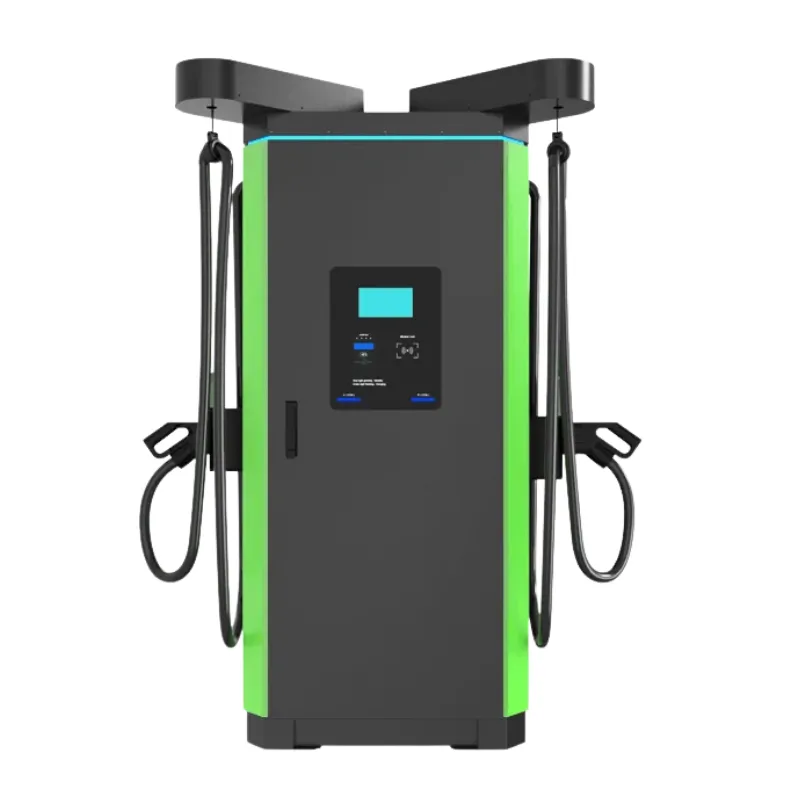
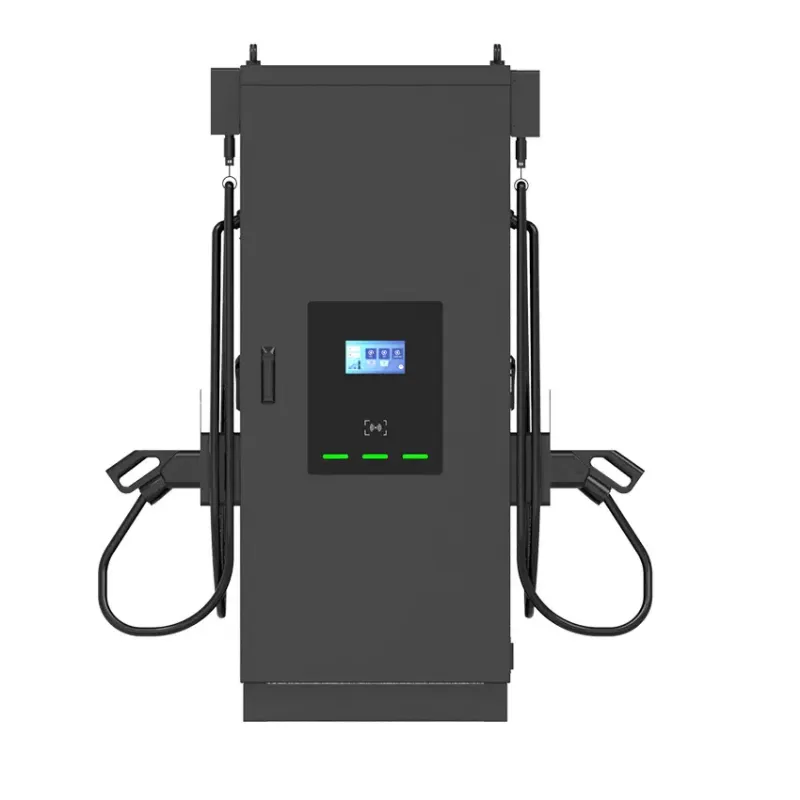
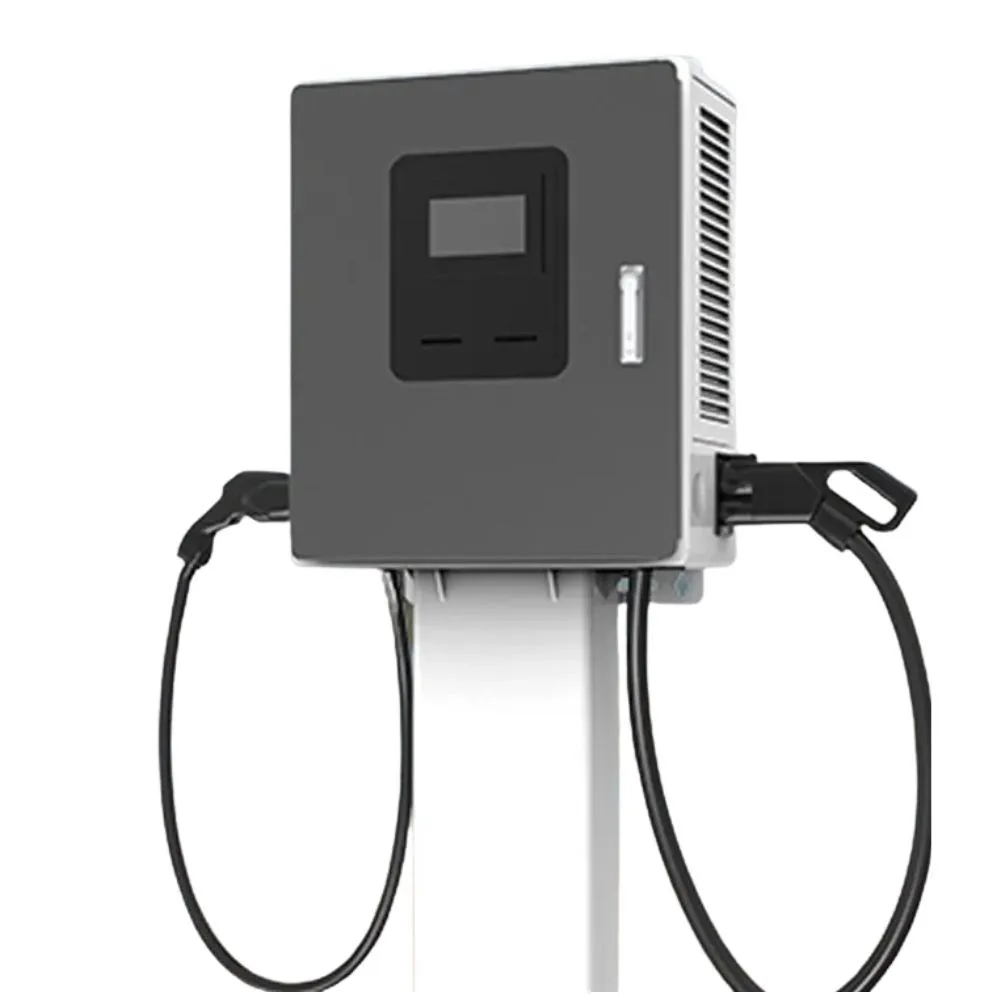
For Victorian sites the European-style builds apply: CCS2, three-phase 400 V. The UC series (60–360 kW) suits highway and regional hub sites with dynamic power sharing between guns, which helps keep the connection size, and the demand cost, down. The CC series (120 and 180 kW) suits sites with a limited connection, and the HC series (20–60 kW) suits destination stops with long dwell. All support OCPP 1.6J and 2.0.1 and operate to +55 °C, which matters on a Mallee summer day. We cannot state that any model meets Australian electrical approval requirements, such as RCM compliance, or a distributor’s connection rules; we can supply test reports and technical documents to support your application, and you should confirm the requirements with Energy Safe Victoria and your distributor first. See our standards guide for the basics.
Payback calculator
Example values are filled in — replace them with your own quotation, tariff and traffic figures.
- Energy sold per month
- —
- Net margin per month
- —
- Simple payback
- —
Simple payback = total investment ÷ (energy sold × (price − energy cost) − fixed costs), using 30 days per month. Taxes, financing, subsidies and utilisation growth are not included.
Frequently asked questions
- Can my DC fast-charging site use the new Victorian EV tariffs?
- Probably not the trial tariffs. The AER says all five distributors notified kerbside EV tariff trials starting in 2026-27, limited to AC kerbside chargers with supply capacity under 44 kW, because DC chargers are typically on highways with larger load. Your site will be assigned a standard business tariff; the AER notes that operators using 160 MWh a year or less can opt into time-of-use. Ask your distributor which tariff your connection size and expected kWh would be placed on.
- Which distributor serves my site?
- Energy Victoria lists five: CitiPower (city and inner suburbs), Powercor (western suburbs and western Victoria), United Energy (southern suburbs and the Mornington Peninsula), AusNet (outer northern and eastern suburbs and eastern Victoria) and Jemena (northern and north-western suburbs). Boundaries are by street, so use the distributor map on that page or ask the distributor before you buy land.
- Does a charging site need a planning permit in Victoria?
- A secondary comparison (a South Australian government document) reports that clause 62.02-1 of the Victoria Planning Provisions removes the need for a buildings-and-works permit for an EV charging station unless the local scheme specifically requires one, and that it was unclear whether a canopy is covered. We could not open the clause itself, so confirm the current wording and any overlays with the council before you design the site.
- Is there state funding for a new fast-charging site now?
- We found no open Victorian grant round for private DC fast charging. The state's own page says its 2021 ZEV roadmap programs delivered hundreds of DC fast charging plugs under Destination Charging Across Victoria (a $5 million grant program announced in December 2021) and that its April 2026 approach is a regulatory statement rather than a new funding round. Check Energy Victoria's grants page and your council.
References
- [1]Find your energy distributor. Energy Victoria, page updated 24 July 2026.
- [2]Zero emissions vehicles (incl. EV charging regulatory statement, April 2026). Energy Victoria, page updated 16 April 2026.
- [3]Attachment 13 – Tariff structure statement, Final decision – AusNet Services distribution determination 2026–31. Australian Energy Regulator, April 2026.
- [4]CitiPower, Powercor and United Energy ring-fencing waiver: EV charging infrastructure. Australian Energy Regulator.
- [5]Response to the Australian Energy Regulator's final decision. United Energy, 2026.
- [6]Zero Emission Vehicle Charging Blitz (Destination Charging Across Victoria). Solar Victoria / Victorian Government.