Market brief
EV Charging Stations in Myanmar: Power Reliability and Equipment Choice
EV charging station in Myanmar: Yangon on 8 hours of grid power in 2025, 1,701 MW produced vs 4,400 MW demand, 51 approved stations, what to verify first.
- Prepared by
- EVCSTAR Engineering Team
- Published
- Reading time
- 3 min
- Sources
- 3 references
At a glance
- Power produced vs demand (5 Jan 2025)
- 1,701 MW / 4,400 MW
- Yangon scheduled supply (Jan 2025)
- 8 hours a day
- Approved pilot charging stations (2023)
- 51
- Pilot EV import window (2023)
- 2 selected firms
Key takeaways
- 1Grid power is the limiting factor: in January 2025 Myanmar produced 1,701 MW against average demand of 4,400 MW, and Yangon went to a scheduled 8 hours a day, often less in practice.
- 2The state-promoted EV programme is real but narrow: imports were opened in 2023 to two selected companies, 51 charging stations were approved in a pilot, and later reporting links the EV and charging business to the ruling family.
- 3Verifiable data are scarce. We found no current count of chargers, registered EVs or tariffs, so any business case rests on assumptions you must check on the ground.
- 4Any charger here should be designed to run with an alternative supply (solar, battery or generator) and tolerate outages and voltage swings; the grid alone cannot support a public service.
On this page
Short answer: an EV charging station in Myanmar is possible only as a power project first and a charging project second. With grid production at about 39% of demand and rolling blackouts in Yangon, a site that depends on the public supply alone will not earn money, so the sensible design pairs a small number of chargers with solar, storage or generator capacity, and starts from verified local conditions.
What the numbers say about the grid
The grid cannot be assumed. On 5 January 2025, Radio Free Asia reported that Myanmar produced 1,701 MW against an average daily demand of 4,400 MW, a shortfall of roughly 2,700 MW, and that production had fallen by at least a third since the 2021 coup. The same day the Yangon Electricity Supply Corporation put the city on a rotating schedule of 8 hours a day: its 40-plus townships were split into three groups, each getting two 4-hour intervals, and residents reported actual supply often fell short. Nationwide there were 29 hydro, 27 gas, 2 coal and 6 solar plants. In March 2026 AsiaNews wrote that blackouts in many cities last much of the day, making it hard to recharge vehicles. We could not find reliable 2026 supply figures, so treat the 2025 data as the last verified snapshot.
| Item | Figure | Source |
|---|---|---|
| Produced, 5 Jan 2025 | 1,701 MW | RFA, 2025 |
| Average demand | 4,400 MW | RFA, 2025 |
| Yangon schedule | 2 x 4 hours a day | RFA, 2025 |
| Power plants (2025) | 29 hydro, 27 gas, 2 coal, 6 solar | RFA, 2025 |
What the EV programme actually is
Policy interest is high, but it is narrow and politically tied. In September 2022 the regime-created National Steering Committee invited firms to import EVs; of 26 applicants, two Chinese-linked companies, Chin Dwin Shan Construction and NPK Motors, were selected on 24 January 2023 for a pilot running to the end of 2023. At the same time the committee approved 51 charging stations, 7 on the Yangon–Mandalay Expressway and 7 in Naypyidaw, with more promised on the Mandalay–Lashio and Yangon–Mawlamyine roads, and the Minister said power would come mainly from solar (BNI, 2023). AsiaNews (March 2026) reports that new petrol and diesel car imports are banned, EVs and parts get preferential tax treatment and EVs are exempt from the odd-even plate rationing introduced on 7 March 2026, and that the sector is dominated by companies linked to the leader’s family. Customers are a small urban elite. Anyone considering supply into this market should take legal advice on sanctions, licensing and counterparties.
Designing a site that survives the grid
Treat the charger as the last link in a hybrid power system. Practical options, to be engineered per site:
- Solar plus battery sized for the daily charging energy, with the grid as top-up. Use the grid capacity calculator to size the peak power you need and the payback calculator to test the economics when a generator or battery is in the loop.
- Generator-backed sites such as fuel stations, which can host a generator on site. The cost of diesel-made kWh will set your price floor.
- Fleet depots and hotels with their own supply and predictable parking time, where lower-power AC works.
- Power quality protection: surge protection, voltage-range tolerance and automatic restart after outages.
What we could not verify
Several core inputs were not available from sources we could open. Current charger counts, registered EVs, electricity tariffs for charging, import duty rates, whether the 2023 pilot stations were built, the standard connector on the local fleet (many imports are Chinese models, so GB/T or CCS2 are plausible but unconfirmed) and the supply voltage at your site. Each of these should be confirmed by a local partner before a quotation.
How EVCSTAR equipment fits
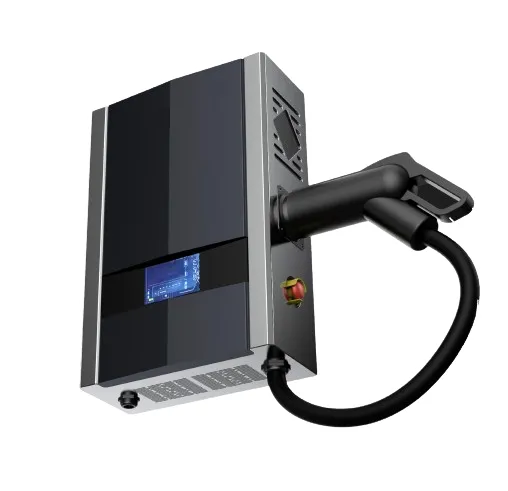
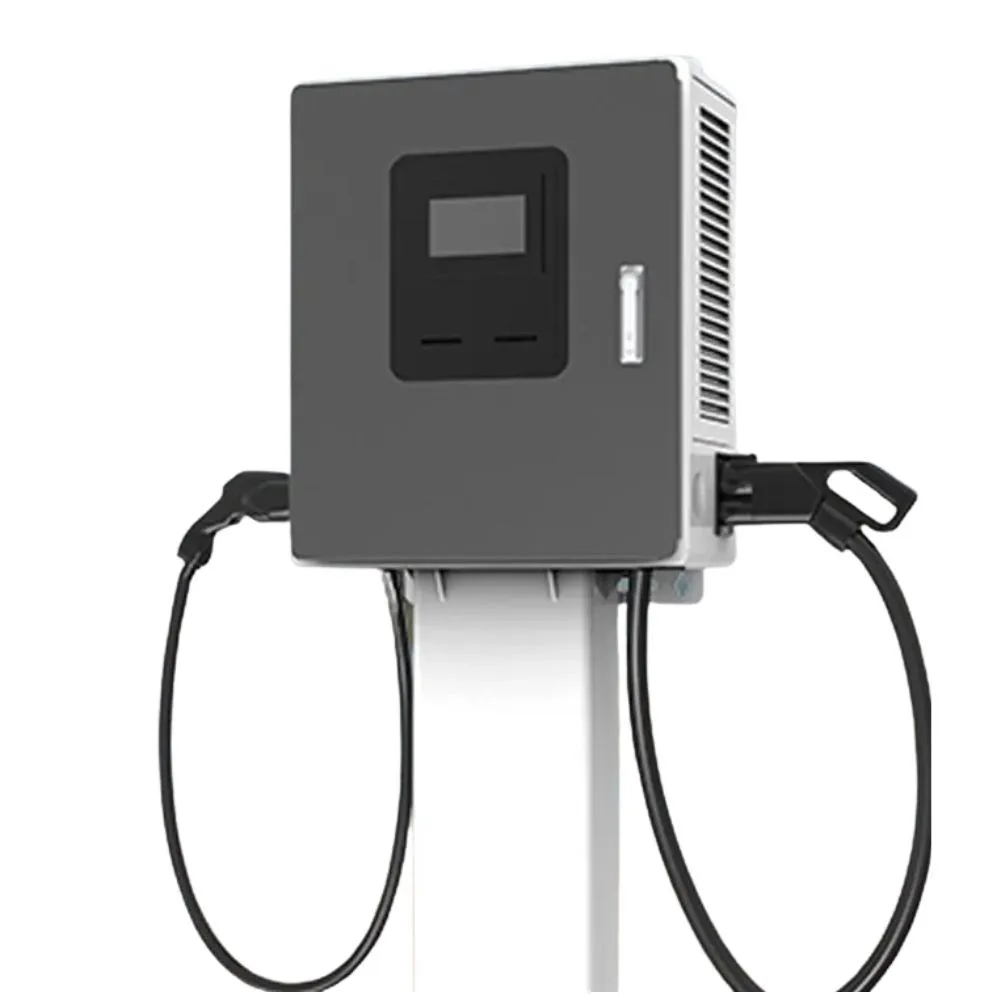
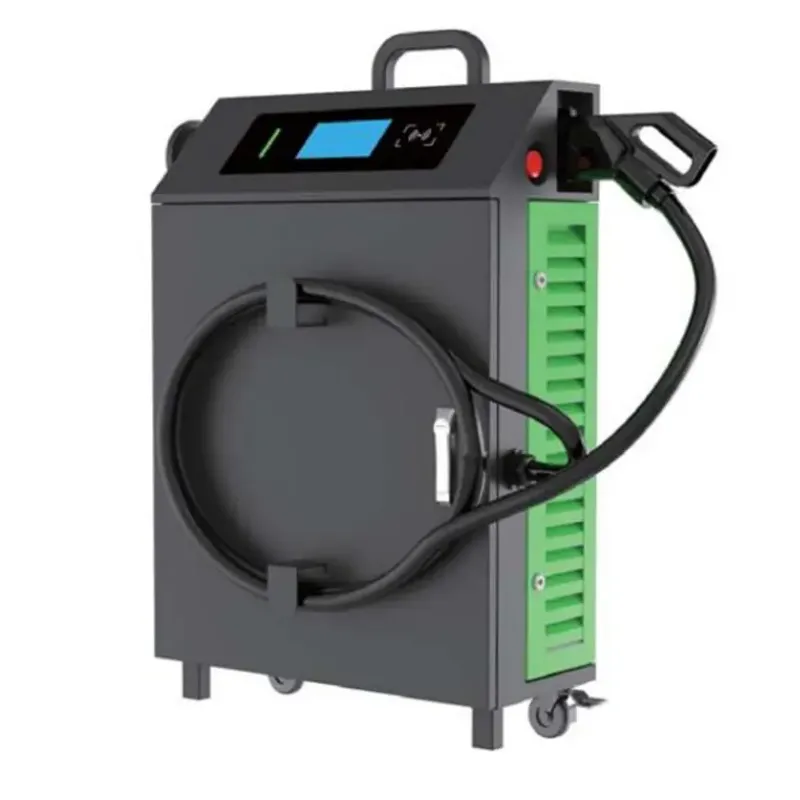
Keep it small and modular: the FE series AC wallbox for sites with a stable supply, the SC series (15–30 kW) or HC series (20–60 kW) DC for commercial sites, and the MC series mobile DC where a fixed connection is unrealistic. Our chargers operate up to +55 °C, useful for the hot season, and support OCPP 1.6J and 2.0.1 for remote monitoring. We do not claim any local approval for a model. We can provide technical files to support importer and customs steps; see standards.
Grid capacity calculator
- Spare power for charging
- —
- Input current per charger (400 V)
- —
- Chargers at full power
- —
Spare power = kVA × 0.95 power factor × (1 − margin) − existing peak load. Input current ≈ charger kW ÷ (√3 × 400 V), with power factor and 95 % efficiency added for DC chargers. With dynamic load management more chargers can share the same capacity at reduced power. Always confirm with your electrical engineer and the grid operator.
Frequently asked questions
- Can the Myanmar grid support public EV charging?
- Not reliably on its own. Radio Free Asia reported on 6 January 2025 that the country produced 1,701 MW against average demand of 4,400 MW, and Yangon was put on about 8 hours of power a day in two 4-hour blocks, sometimes less. AsiaNews (March 2026) reported blackouts lasting much of the day in many cities. A site needs its own backup or generation, and its design should assume daily interruptions.
- How many public chargers are there?
- We could not verify a current number. In 2023 a regime committee approved 51 charging stations in a pilot, including 7 on the Yangon–Mandalay Expressway and 7 in Naypyidaw, with power meant to come mainly from solar (BNI, 2023). Whether they were built, and how many are operating, we do not know.
- Who can import EVs and chargers?
- In 2023 only two companies, Chin Dwin Shan Construction and NPK Motors, were selected from 26 applicants to import EVs and accessories in a pilot period to 31 December 2023. Current import licensing for chargers is not something we could confirm; ask a local licensed importer and the relevant ministry. Export controls, sanctions and payment channels also need separate legal advice before any quotation.
- What do you need to confirm before ordering equipment?
- Supply voltage and frequency at the site (Myanmar uses a 50 Hz system; confirm the voltage), vehicle connector types in the local fleet, the backup supply, import permits and customs duties, and who will provide service. We can supply technical documents and test reports to support the process.
References
- [1]Junta implements severe power cuts in two major cities. Radio Free Asia, 6 January 2025.
- [2]Junta looks to jump-start electric vehicle market with installation of charging stations. Development Media Group via Burma News International, 20 February 2023.
- [3]Fuel shortages: Myanmar limits traffic, promotes Chinese electric vehicles. AsiaNews, 6 March 2026.