Market guide
EV Charging in Nigeria: Grid Gaps, Generators and Hybrid Sites
EV charging station Nigeria guide: about 48 public stations, a ~4,000 MW grid, zero import duty from 2026 and how to design a site that survives outages.
- Prepared by
- EVCSTAR Engineering Team
- Published
- Reading time
- 3 min
- Sources
- 2 references
At a glance
- Public charging stations (late 2025)
- ≈ 48
- Grid supply
- ≈ 4,000 MW
- Average end-user tariff (2025)
- N124.30 / kWh
- EV import duty (2026)
- 0% (was 5%)
Key takeaways
- 1Nigeria had roughly 48 public charging stations in late 2025, mostly in Lagos and Abuja, against more than 500 in South Africa (Automotive World, August 2026) — the market is early and nearly empty.
- 2The grid supplies about 4,000 MW to more than 220 million people, so any commercial site needs a plan for outages: a generator, solar or battery sized to the charger, not just a grid connection.
- 3Policy has turned supportive: VAT-exempt EVs since 2024, import duty cut from 5% to zero in 2026, and tax waivers for nearly 4,000 EVs in the first half of 2026.
- 4The vehicle base that matters first is fleets, ride-hailing and the 15 million motorcycles; cars are about 2% of one importer's sales, so size the first site small.
On this page
Short answer: an EV charging station in Nigeria is a power-supply project first and a charging project second — with about 48 public stations nationwide and a grid of roughly 4,000 MW for over 220 million people, the sites that work are small, fleet-anchored and built as hybrids with solar, storage or a generator.
The starting position
Nigeria is early: the numbers are small in every direction. Automotive World (August 2026) counts roughly 48 public charging stations at the end of 2025, mostly in Lagos and Abuja, and the country’s Energy Transition Plan projects about 60 by 2030. South Africa has more than 500. On the vehicle side, Geely’s local partner Tim Motors reports new-energy vehicles at 2% of its Nigerian sales, and the local EV maker Saglev says extended-range sales have doubled this year. The two- and three-wheeler market is far larger: more than 15 million motorcycles, with battery-swap start-ups MAX and Spiro named as key players.
| Item | Figure | Source year |
|---|---|---|
| Public charging stations | ≈ 48 | late 2025 |
| Stations projected by 2030 | ≈ 60 | Energy Transition Plan |
| Motorcycles | > 15 million | 2026 |
| EV share of the vehicle parc, target | 60% by 2050 | 2026 |
Why the grid decides the design
A connection does not equal supply. The grid delivers about 4,000 MW, roughly 20 W per head of population, which Automotive World compares with about 180 W in Pakistan and 3,530 W in the United States. NERC asked distribution companies in November 2024 to ensure that Band A customers receive 20 hours of supply a day (Nairametrics, 2026), which tells you what the premium band is expected to deliver and that other bands get less. A DC charger idle for six hours of outage per day earns nothing.
The same article points out the carbon trap: a 1–5 kW portable generator converts fuel at 15–20% efficiency, so a generator-fed charger can be no cleaner than petrol per kilometre. That is the argument for solar and storage rather than diesel alone.
What a resilient site looks like
Design the energy source before choosing the charger.
- Grid, if the DisCo can commit to a feeder or band. NERC’s 2025 report gives an average allowed tariff of N124.30/kWh (about $0.08), the lowest among 14 African markets it surveyed. Your band-specific rate comes from your DisCo.
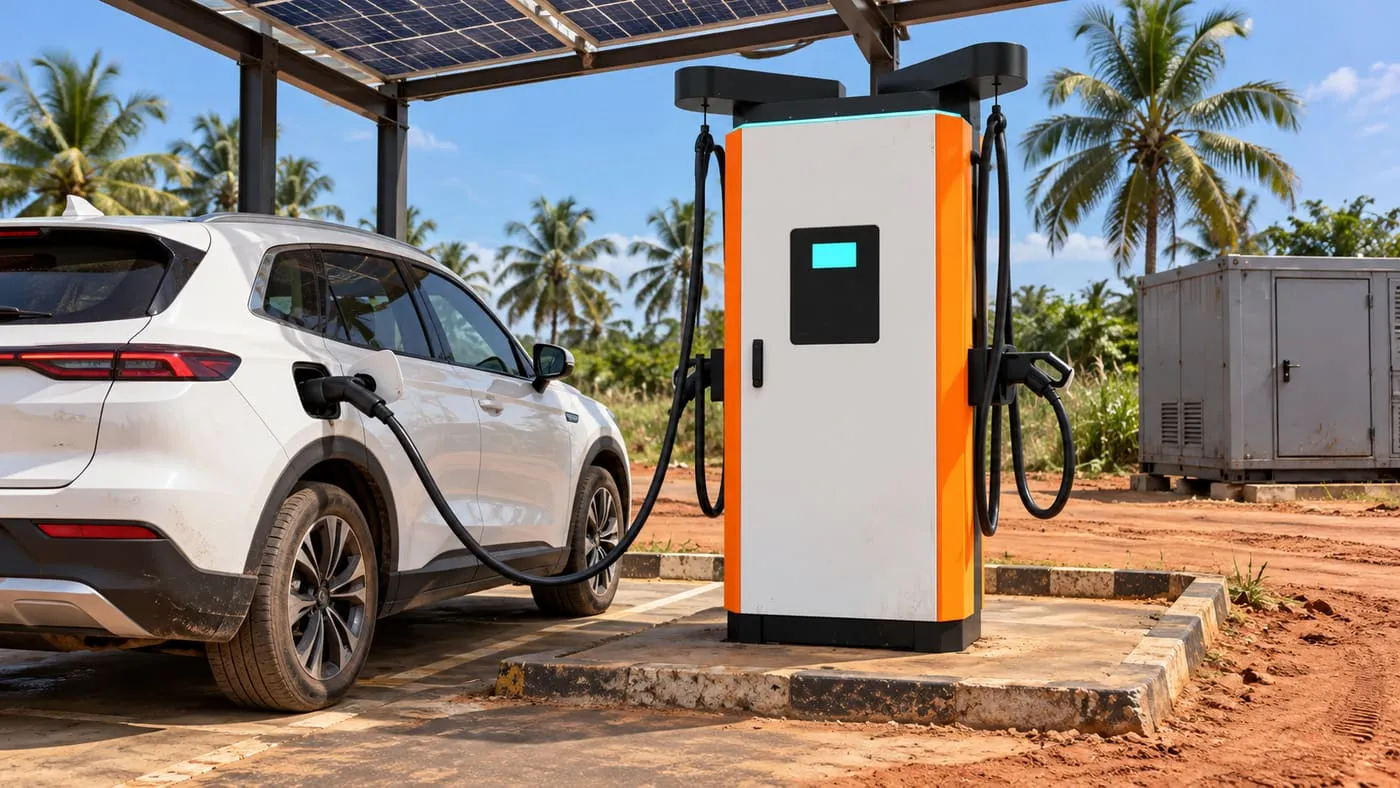
- Solar plus battery for the daytime base. Size the battery to the number of fast sessions per outage, not to total daily energy.
- Generator as the last layer, with the charger set to a power limit that matches the generator.
- Smart charging (OCPP) to cap power when running on backup.
Use the payback calculator with two energy costs — grid and backup — and weigh them by hours of supply, not by the nameplate tariff.
Policy and incentives
Recent policy lowers the vehicle price barrier, not the charging one. According to Automotive World: EVs have been exempt from VAT since 2024, the import duty fell from 5% to zero earlier in 2026, and Nigeria approved tax waivers for nearly 4,000 EVs in the first half of 2026, the first tranche of an incentive and local-assembly programme, with a target of EVs at 60% of the parc by 2050. The removal of the petrol subsidy in 2023 raised fuel costs, which helps the running-cost argument. We did not find a charging-station-specific subsidy, and equipment import duty and permitting for chargers need to be confirmed with a customs agent and the state authority.
Where to start
Anchor the site to a customer who has to charge on a schedule. In practice that means ride-hailing and logistics fleets, corporate campuses, estates in Lagos and Abuja, and a few highway stops. Begin with one or two DC units plus AC points, add generation as the utilisation shows, and avoid copying a 12-stall European hub.
How EVCSTAR equipment fits
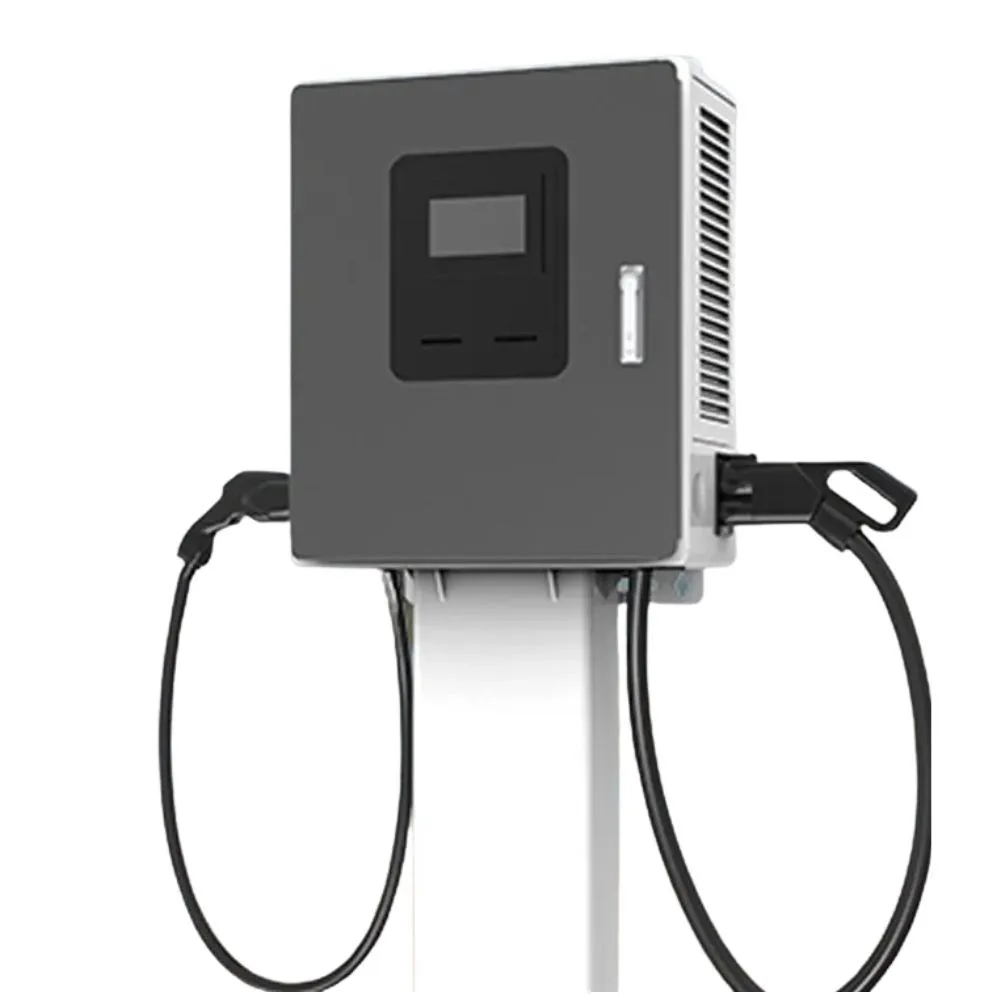
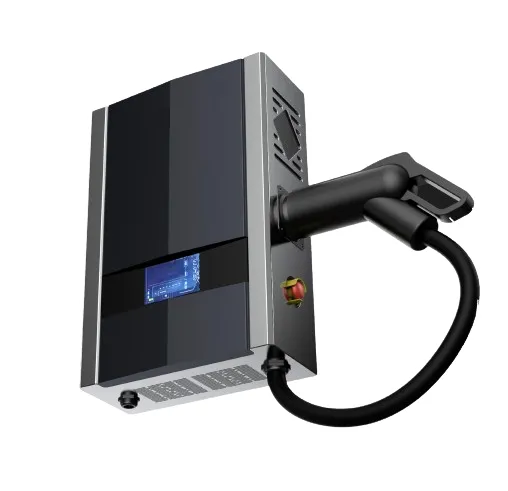
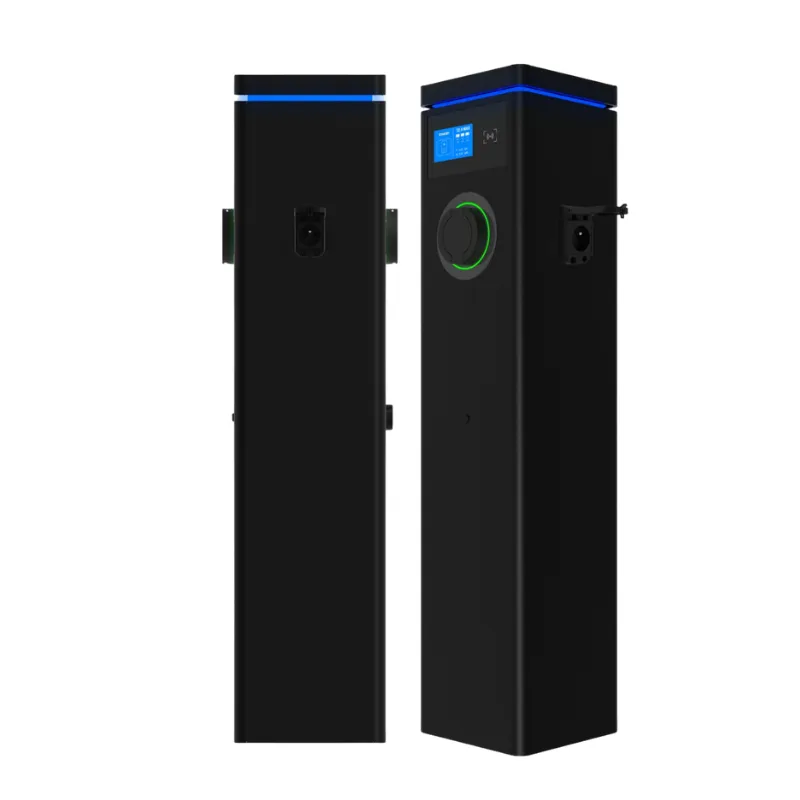
The SC series (15–30 kW) and HC series (20–60 kW) are the right size for a battery- or solar-backed site, and the CPO series suits estates and car parks. All our chargers are specified for operation up to +55 °C and support OCPP 1.6J and 2.0.1, so you can cap power by software when running on a generator. We can supply test reports and technical documents for any import or permitting process; we do not claim a Nigerian approval for a specific model. Ask us about wide-voltage input and surge protection for your feeder before ordering.
Payback calculator
Example values are filled in — replace them with your own quotation, tariff and traffic figures.
- Energy sold per month
- —
- Net margin per month
- —
- Simple payback
- —
Simple payback = total investment ÷ (energy sold × (price − energy cost) − fixed costs), using 30 days per month. Taxes, financing, subsidies and utilisation growth are not included.
Frequently asked questions
- Can an EV charging station run on the Nigerian grid alone?
- Not reliably. The grid supplies about 4,000 MW to more than 220 million people (Automotive World, 2026), and charging operators commonly rely on backup generation. Plan solar, storage or a generator sized to the charger, and treat the grid as the cheaper primary source when it is up.
- What does grid electricity cost for a charging site?
- NERC's 2025 annual report puts the average allowed end-user tariff at N124.30/kWh. Your own rate depends on your DisCo and tariff band, and we could not confirm the current Band A rate, so take the figure from your DisCo bill or the latest NERC order. Generator diesel or petrol will cost more.
- Are there incentives for importing EVs or chargers?
- Automotive World (August 2026) reports EVs have been VAT-exempt since 2024, EV import duty fell from 5% to zero earlier in 2026 and tax waivers covered nearly 4,000 EVs in the first half of 2026. We did not verify whether charging equipment has the same treatment; ask your customs agent.
- Which connector should I install?
- Cars are imported from several regions, so a mixed site is safest: Type 2 for AC and CCS2 for DC are the usual choices, with CHAdeMO added if used Japanese cars are in your catchment. Check the vehicles you expect before ordering.
References
- [1]Weak infrastructure complicates Nigeria's EV ambitions. Automotive World, 12 August 2026.
- [2]NERC says Nigeria's power tariff was Africa's cheapest in 2025. Nairametrics, 27 August 2026 (citing NERC 2025 annual report).