Market guide
EV Fast Charging in Sweden: Grid Capacity, Cold and Competition
EV fast charging station Sweden business guide: grid effect charges, new capacity-disclosure rule from July 2026, paused Klimatklivet fast-charge grants, cold.
- Prepared by
- EVCSTAR Engineering Team
- Published
- Reading time
- 4 min
- Sources
- 9 references
At a glance
- Chargeable share of new cars
- 66% (March 2026)
- Chargeable share of fleet
- About 16% (April 2026)
- Grid capacity disclosure
- From 1 July 2026, quarterly
- Klimatklivet public-charge cap
- Up to 50% of cost, 10–50 kW only
Key takeaways
- 1Sweden's public fast-charging subsidy is paused: Naturvårdsverket's Klimatklivet autumn round (19 October–6 November 2026) funds only 10–50 kW public charging for cars, because fast-charging build-out is judged to be slightly ahead of EV growth.
- 2The grid bill is the main risk: the effect charge can multiply fixed grid costs (one reported case: SEK 22,000 to SEK 66,000 on Orust), and sources disagree on whether the national 1 January 2027 deadline still stands, so get your grid company's tariff in writing.
- 3From 1 July 2026 every distribution grid company must publish, at least quarterly, the available capacity for new connections (SFS 2026:711), which lets you shortlist sites before you apply.
- 4Demand is real but the market is mature: about 16% of the car fleet was plug-in (April 2026) and 66% of new registrations in March 2026 were chargeable, so competitiveness depends on site, price and reliability.
On this page
Short answer: an EV fast-charging station business in Sweden is a bet on a mature, competitive market where public subsidy for DC fast charging is paused and the grid tariff, not the charger, is the line item most likely to break the budget.
Where the market is
Demand is clearly there, but the build-out is ahead of it. Power Circle reported in April 2026 that about 16% of the Swedish car fleet is plug-in (battery or hybrid) and that 66% of new registrations in March 2026 were chargeable, up from a 2025 average of 61%. The Swedish Energy Agency says that on the prioritised road network fast chargers are within 100 km of almost everywhere in Sweden, and within 60 km on European roads and designated national roads (page updated December 2025). Naturvårdsverket draws the same conclusion: it says Energimyndigheten judges fast-charging build-out to be somewhat ahead of the number of EVs on the roads. We could not find a verified 2026 count of public fast-charging points, so we do not quote one. For a new site that means competing on location, uptime and price against established networks; it does not mean filling a coverage gap on the main corridors.
Subsidy: what is open
Klimatklivet no longer pays for public fast charging. The table is from Naturvårdsverket’s rounds page and charging page.
| Item | Detail |
|---|---|
| Public charging bid rounds 2026 | 13–30 April and 19 October–6 November |
| Category in the autumn round | Public charging for cars, 10–50 kW (at least 2 kW with load balancing), at least four charge points |
| Fast charging | Paused; may return if future needs analyses show a gap |
| Maximum share | Up to 50% of investment cost |
| Location | Must be in an area open for bids on the agency’s map |
| Preliminary 2027 windows | 5–16 April and 18–29 October |
Naturvårdsverket notes that the 2025 round received a record number of fast-charging bids, which will add further build-out. A separate Energy Agency scheme for heavy-transport charging closed on 5 May 2026 (county administrative board summary); we did not read its terms.
Grid connection and the effect charge
Capacity and tariff structure decide which sites are viable. From 1 July 2026, SFS 2026:711 requires every distribution grid company to publish on its website, updated at least quarterly, geographically detailed information on available capacity for new connections, including whether a connection with conditions to limit or control draw is possible and how availability is calculated. Use it to shortlist sites, then request a firm quote.
On price, Ei’s rule is that grid tariffs must include a time-differentiated effect charge from 1 January 2027, and in 2026 Ei is following up on how the charges work. But TV4/TT reported on 9 April 2026 that the government had repealed the requirement that all grid companies introduce it from the coming year-end, and that Ei was reviewing five companies that already charge it, including Ellevio and Göteborgs Energi. Another page from Ei says the government has asked it to propose a new model by 12 April 2027. These sources do not agree, so confirm the status with the grid company. The cost of a bad design is shown on Orust: DN reported that Ellevio’s fixed charge for fast-charger connections rose from SEK 22,000 to SEK 66,000, four of five fast chargers cancelled their subscriptions, and the fifth was at risk. Test your site in the grid capacity calculator and use power limiting through OCPP smart charging.
Cold, snow and the site
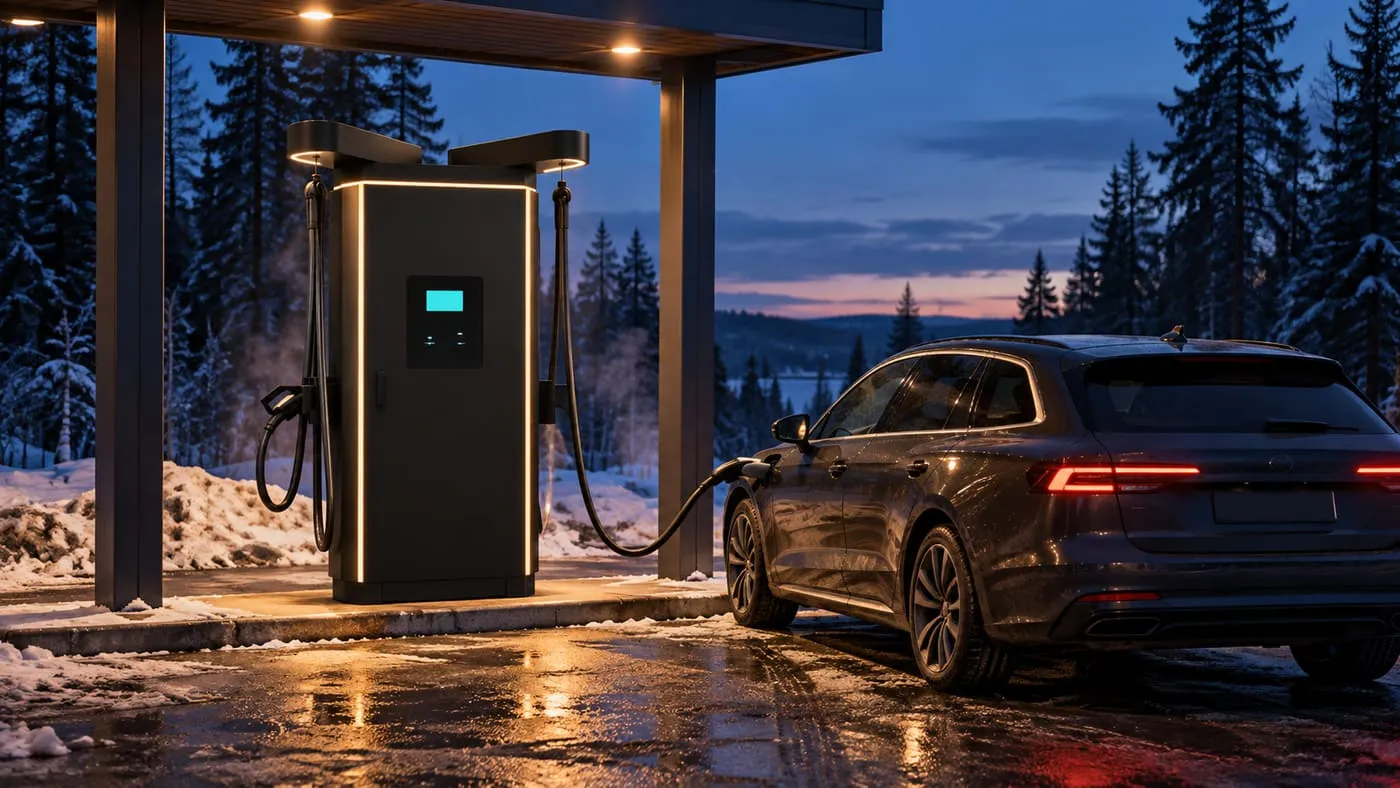
Specify for the north-south climate range. SMHI’s 1991–2020 annual mean temperature is 7–9 °C in southern Sweden and between -2 and +1 °C in the north. That is a range of conditions, not a single spec: ask for the rated minimum operating temperature for each model, check cable and connector options for ice and snow, and design snow clearance and canopy height with the contractor.
Standards in short
Sweden follows EU rules, so equipment is sold with CE marking and CCS2 connectors. The EU AFIR regulation also applies to public charging points; we did not read its current technical requirements here, so confirm the connector, payment and data rules for your power class with your supplier. See our standards guide for the CE, IEC and OCPP basics. Supply in Sweden is 400 V three-phase at 50 Hz in the normal case (a European standard; verify for your connection).
How EVCSTAR equipment fits
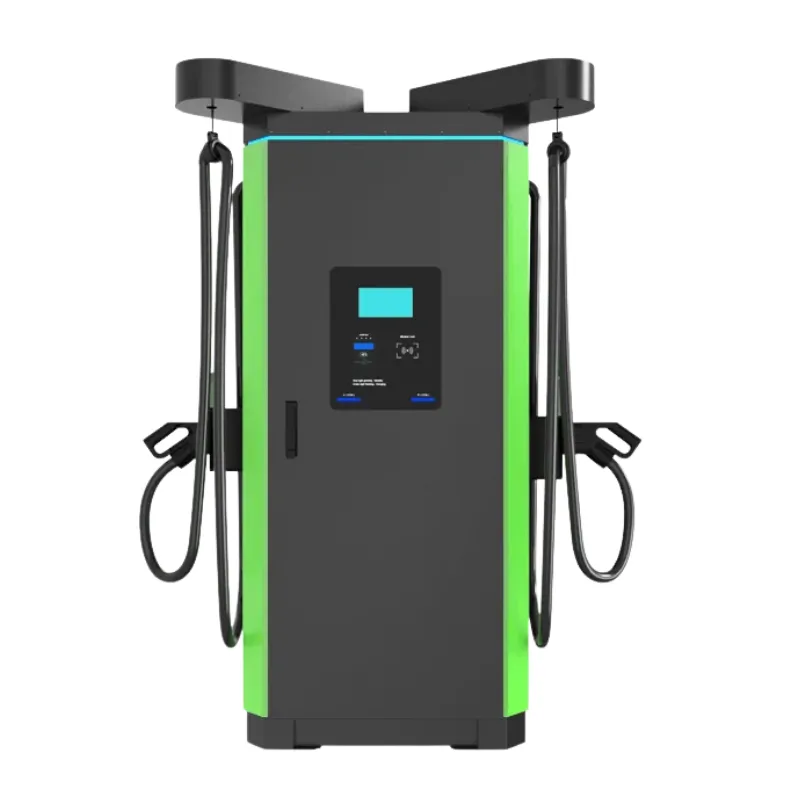
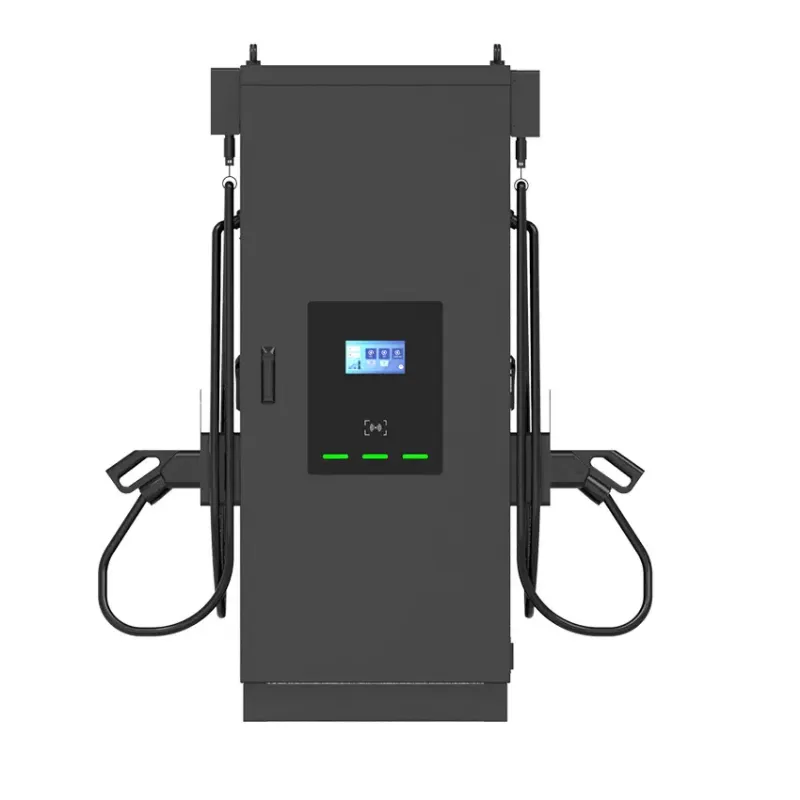
For Swedish sites the European builds are the relevant ones. The UC series (60–360 kW) suits highway and retail fast-charge sites with dynamic power sharing; the CC series (120 and 180 kW) suits sites where a smaller cabinet and a lower grid connection make sense. Both support OCPP 1.6J and 2.0.1 and CCS2 and operate to +55 °C. We cannot say a model holds any certificate or local approval; we can supply technical documents and test reports to help you complete the process with your grid company and inspector.
Grid capacity calculator
- Spare power for charging
- —
- Input current per charger (400 V)
- —
- Chargers at full power
- —
Spare power = kVA × 0.95 power factor × (1 − margin) − existing peak load. Input current ≈ charger kW ÷ (√3 × 400 V), with power factor and 95 % efficiency added for DC chargers. With dynamic load management more chargers can share the same capacity at reduced power. Always confirm with your electrical engineer and the grid operator.
Frequently asked questions
- Can I get a Swedish grant for a public DC fast-charging site?
- Not from Klimatklivet at the moment. Naturvårdsverket says the 19 October–6 November 2026 round supports only public charging for cars at 10–50 kW (at least four charge points, up to 50% of cost) and gives no support to public fast charging, though it may be reintroduced if needs analyses show a gap. Bids for non-public fleet charging go through other schemes, which we did not read; ask your county administrative board.
- What is the effect charge and does it apply to my charger?
- It is a grid tariff component linked to how much power you draw at peak times. Ei decided that grid tariffs must have a time-differentiated effect charge from 1 January 2027, but TV4/TT reported on 9 April 2026 that the government repealed the requirement for all companies to have it by then, and Ei is reviewing five companies that already use it. Treat the rule as unsettled. What matters is your own grid company's current tariff for your connection size.
- How do I find out whether the grid has capacity for my site?
- Since 1 July 2026 each distribution grid company must publish on its website, and update at least quarterly, the available capacity for new connections, including whether a flexible connection with limits on feed-in or draw is possible. Check the map for your grid company, then apply for a firm quote.
- How cold does it get, and does it matter for DC chargers?
- SMHI's 1991–2020 annual means were 7–9 °C in southern Sweden and between -2 and +1 °C in the north. Winter lows well below that occur and need specifying for the site. Our chargers are rated to operate up to +55 °C; for low-temperature operation, ask us for the rated minimum for the model and confirm the heating and cable options before ordering.
References
- [1]Laddstationer öppna för allmänheten (Klimatklivet). Naturvårdsverket.
- [2]Klimatklivets ansökningsomgångar 2026 och 2027. Naturvårdsverket, reviewed 27 August 2026.
- [3]Förordning (2026:711) om ändring i förordningen (2022:585) om elnätsverksamhet. Svensk författningssamling, published 28 May 2026.
- [4]Ei:s arbete 2026 inom området effektavgifter. Energimarknadsinspektionen.
- [5]Fem elnätsföretag granskas för avgiftsmodell. TV4 / TT, 9 April 2026.
- [6]Extremt höjd avgift slår ut alla laddstolpar. Dagens PS (citing DN), 27 January 2026.
- [7]Fler laddbara bilar än någonsin. Power Circle, 14 April 2026.
- [8]Charging infrastructure in Sweden. Swedish Energy Agency, updated 17 December 2025.
- [9]Jämförelse av normalperioder. SMHI.