Market guide
EV Charging Stations in Bangladesh: Power, Rules and Demand
EV charging station Bangladesh guide: the 11.36 Tk/unit BERC charging-station tariff (June 2026), SREDA and utility approvals, and what to build first.
- Prepared by
- EVCSTAR Engineering Team
- Published
- Reading time
- 4 min
- Sources
- 4 references
At a glance
- Charging-station tariff (2026)
- Tk 11.36 / unit
- Commercial tariff (2026)
- Tk 15.36 / unit
- Highway priority (2022 guideline)
- ≥ 50 kW every 100 km
- EV share target (2023)
- 30% by 2030
Key takeaways
- 1BERC set the electricity tariff for EV charging stations at Tk 11.36 per unit from 1 June 2026 (up Tk 1.74), against Tk 15.36 for commercial users — a dedicated, cheaper category if your site qualifies.
- 2A private charger that serves more than three EV owners is treated as a public charging station, so classification, approval and tariff have to be confirmed with SREDA and the electricity supplier.
- 3The Charging Guideline 2022 prioritises stations of at least 50 kW every 100 km along highways; every station must be inspected by the distribution licensee before connection.
- 4Vehicle demand is still thin: the national EV registration guideline (2023) targets 30% electric vehicles by 2030, but only about 20 premium EVs had been registered by early 2023.
On this page
Short answer: an EV charging station in Bangladesh is a regulated, utility-connected business — you need approval from SREDA, inspection by the distribution licensee, and you pay a dedicated charging-station tariff (Tk 11.36 per unit since 1 June 2026) — but the vehicle base is small, so the realistic first projects are a few well-placed stations, not a network.
What the 2026 tariff means for a station
The electricity price is the part of the business case the regulator has already fixed. BERC announced a new tariff on 3 June 2026, retroactive to 1 June, lifting the retail weighted average 16.68% to Tk 10.63 per unit. The Financial Express listed the rates that matter to a site owner:
| Category | Tariff from 1 June 2026 (Tk / unit) |
|---|---|
| EV charging stations | 11.36 (up 1.74) |
| Industrial, 33 kV | 12.75 |
| Commercial and offices | 15.36 |
| Residential, 401–600 units | 15.01 |
The demand charge was reported as unchanged for all consumer types. A charging station therefore buys energy about Tk 4 per unit below the commercial rate, and the gap is why the category matters when you decide how to register the site. Back in 2022 the Power Division secretary had already said that the station tariff would be set below the residential rate to encourage charging stations; the figures above supersede the Tk 7.6 he quoted then (The Daily Star, February 2022).
Use the payback calculator with Tk 11.36 as the energy cost, your own retail price and a realistic utilisation. Do not assume the highest-utilisation figures from other countries.
Who approves what
Three bodies touch every site: SREDA for the station, the distribution licensee for the connection, BRTA for the vehicles.
- Charging Guideline 2022. The Daily Star (October 2026) cites it for installation rules: an individual final sub-circuit, overcurrent protection, residual-current protection, proper earthing, and equipment rated for outdoor or damp locations, with installation and test records kept.
- Inspection. The distribution licensee tests the installation before connection; a periodic re-test follows.
- Classification. A private charger serving more than three EV owners is treated as a public station. Whether you are a private, shared or public operator decides the tariff, so settle this with SREDA and your supplier before ordering equipment.
- Vehicles. The Electric Motor Vehicle Registration and Operation Guideline 2023 (BRTA, under the Road Transport Act 2018) requires EVs to be on a government-approved model list and registered like any other vehicle.
Rules change quickly, so treat the above as the checklist of questions to put to SREDA, not as a substitute for the current text.
Where the cars are — and are not
Demand is the constraint, not the grid. The 2023 registration guideline sets a goal of at least 30% of motor vehicles being electric by 2030, yet BRTA had registered only around 20 EVs, from brands such as Tesla and Porsche, between September 2022 and April 2023. Battery-run rickshaws, vans, bicycles and easy-bikes are explicitly outside that guideline and therefore outside the cars a public fast charger would serve.
For an investor this points to three realistic customer groups: private cars at home and workplace (AC), fleets and ride-hailing operators (AC or compact DC at a depot), and highway sites where the guideline gives priority to stations of at least 50 kW every 100 km. The 2022 Daily Star report also quoted a one-kilometre minimum spacing between stations; check whether that still applies to your location.
What to build first
Start with the smallest site that proves a utilisation number.
| Site type | Suggested starting size | Why |
|---|---|---|
| Office, hotel, mall car park | 2–4 AC points, 7–22 kW | Long dwell time, no DC connection upgrade |
| Fleet or ride-hailing depot | One 20–60 kW DC unit plus AC | Turnaround time matters, one tariff category |
| Highway or fuel-station forecourt | 60 kW and above DC, single or dual gun | Matches the 50 kW-per-100 km priority |
Use the grid capacity calculator before you apply for a larger sanctioned load: the BUET expert quoted in The Daily Star notes that even 3.5–7.4 kW chargers can need a fresh capacity check, and a 60 kW DC unit is a different order of connection. Nominal supply is 230 V single-phase and 400 V three-phase at 50 Hz; confirm the available capacity and transformer with your distributor.
How EVCSTAR equipment fits
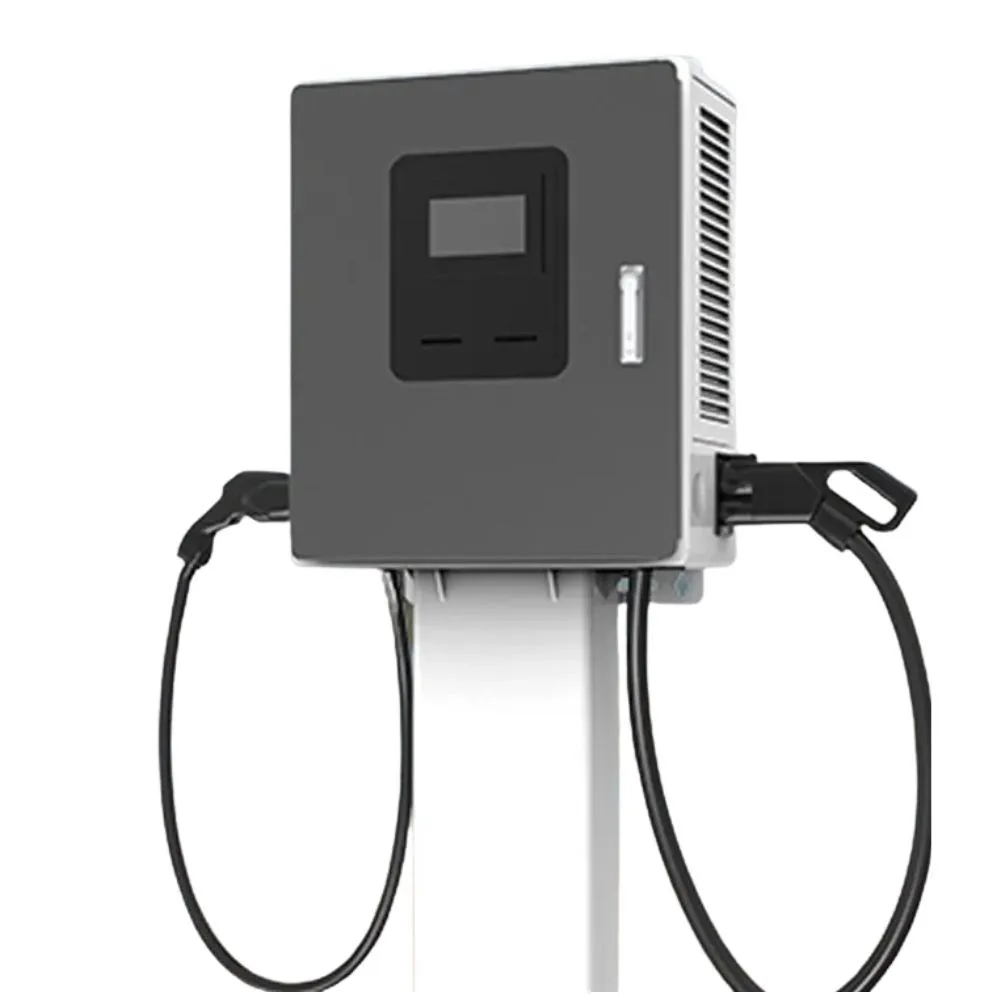
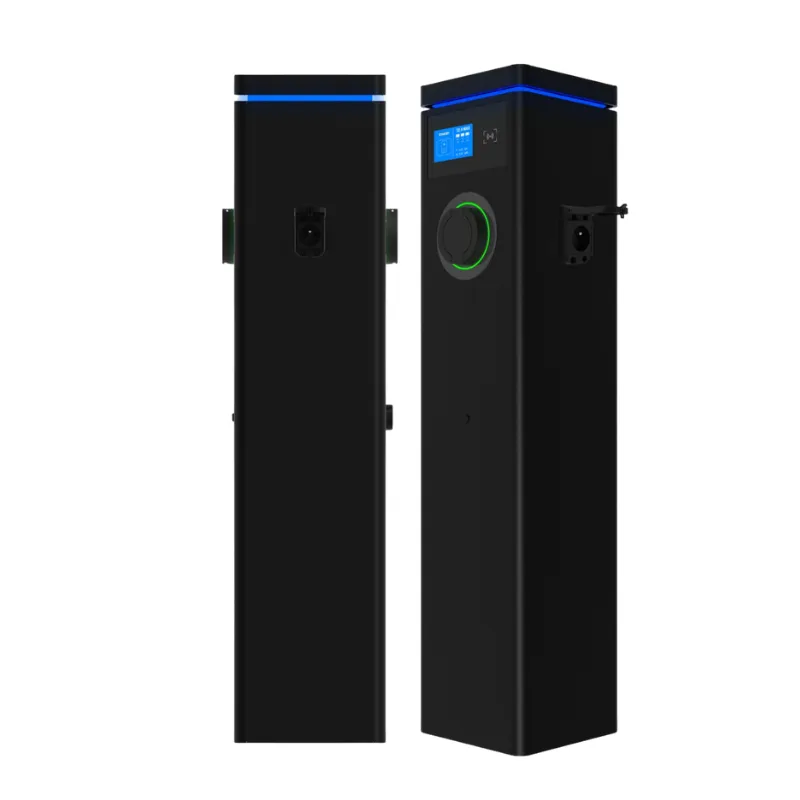
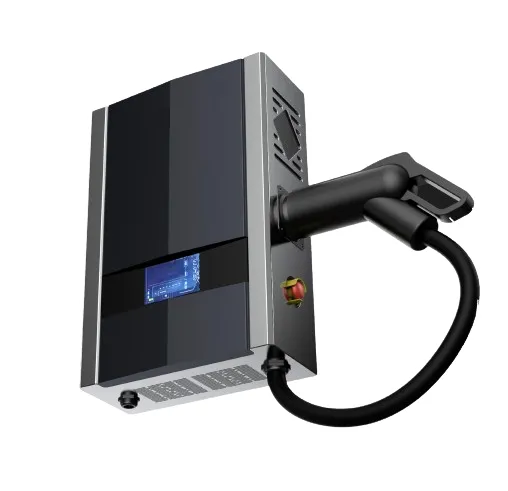
For Bangladesh we would start from the HC and SC wall-mounted DC units, with CPO for shared AC sites. The HC series (20–60 kW) and the SC series (15–30 kW) are sized for depots, hotels and forecourts where a larger grid connection is slow to obtain, and the CPO series gives two AC outlets per unit for car parks. All our chargers are specified for operation up to +55 °C and support OCPP 1.6J and 2.0.1, which suits Dhaka summers and the back-end software operators are likely to choose. We can supply test reports and technical documents to support your SREDA and utility application; we do not claim any Bangladeshi approval for a specific model. Confirm the connector mix and the supply voltage with us before ordering.
Payback calculator
Example values are filled in — replace them with your own quotation, tariff and traffic figures.
- Energy sold per month
- —
- Net margin per month
- —
- Simple payback
- —
Simple payback = total investment ÷ (energy sold × (price − energy cost) − fixed costs), using 30 days per month. Taxes, financing, subsidies and utilisation growth are not included.
Frequently asked questions
- What do charging stations pay for electricity in Bangladesh?
- After the BERC tariff revision effective 1 June 2026, the EV charging station category is Tk 11.36 per unit, reported by The Financial Express as Tk 1.74 higher than before. Commercial users pay Tk 15.36. Demand charges were reported as unchanged, and the exact figure for your connection voltage should be taken from the BERC order and your distributor (DESCO, DPDC, BPDB or REB).
- Can I put a charger in a private car park and sell charging?
- Under the 2022 guideline as summarised by The Daily Star (2026), a facility serving more than three EV owners is treated as a public charging station. Its classification, approvals and tariff must be confirmed with SREDA and the electricity supplier before you sell energy.
- Which connectors should I plan for?
- The sources read did not list a mandated connector. Cars imported into Bangladesh come from several markets, so plan AC with Type 2 and DC with CCS2 plus CHAdeMO where Japanese used cars are common, and confirm the mix against the vehicles in your catchment.
- Is a 7 kW home charger a problem for the house wiring?
- Chargers of 3.5 kW and 7.4 kW can need a fresh capacity check against the sanctioned load, according to the BUET expert quoted by The Daily Star (2026). The guideline calls for an individual final sub-circuit, overcurrent and residual-current protection and proper earthing.
References
- [1]Electricity prices hiked across the board. The Financial Express (Bangladesh), June 2026.
- [2]Bringing EV Charging Home: A Guide for Bangladesh Owners. The Daily Star, 4 October 2026.
- [3]Electric Vehicles: Govt finally makes guideline for registration, operation. The Daily Star, April 2023.
- [4]Establish charging station networks to ramp up EV adoption. The Daily Star, 16 February 2022.