Market guide
EV Charging in Cambodia: EDC Supply, Tariffs and Early Sites
EV charging Cambodia guide: Prakas 0389 licensing, EAC price caps (KHR 1,050 AC, 1,350 DC per kWh, 2025), EDC supply terms and where early sites make sense.
- Prepared by
- EVCSTAR Engineering Team
- Published
- Reading time
- 5 min
- Sources
- 6 references
At a glance
- EAC cap, AC (2025)
- KHR 1,050 / kWh
- EAC cap, DC to 250 kW (2025)
- KHR 1,350 / kWh
- Registered EVs (Sep 2026)
- 22,793
- Public / partner chargers (Sep 2026)
- 460
Key takeaways
- 1Cambodia regulates public charging through Prakas No. 0389 (Ministry of Mines and Energy, 2025): MME sets policy and permits, the Electricity Authority of Cambodia (EAC) licenses providers and sets tariffs, and EDC supplies and assesses grid capacity.
- 2The EAC price list is a ceiling, not a floor: KHR 1,050 per kWh for AC, KHR 1,350 for DC up to 250 kW and KHR 1,450 above 250 kW (reported November 2025), so your revenue per kWh is capped by regulation.
- 3Licensed operators were reported in 2025 to buy electricity below the consumer tariff and to need no transformer investment, deposit or connection fee; confirm the current terms with EDC before you model margins.
- 4The market is small but growing fast: 22,793 registered EVs (16,926 cars) and 460 public or partner chargers in September 2026, against a 2030 target of 30,000 electric cars.
On this page
Short answer: EV charging in Cambodia is now a licensed, price-capped business: you need an MME permit and an EAC licence, you may not charge above the EAC rates (KHR 1,050 per kWh AC, KHR 1,350 DC up to 250 kW, reported 2025), and in return licensed operators were reported to buy power below the consumer tariff from EDC without paying for a transformer, a deposit or a connection fee.
Who decides what
Three bodies split the work, and the order you approach them matters. Prakas No. 0389, the Prakas on principles and procedures for governing and regulating EV charging services, was launched in June 2025 after a consultation in December 2024. The ministry’s own summary gives the roles below.
| Body | Role under Prakas 0389 |
|---|---|
| Ministry of Mines and Energy (MME) | Policy, permits to develop and operate stations, technical and safety standards, monitoring |
| Electricity Authority of Cambodia (EAC) | Licenses charging service providers and sets charging tariffs |
| Electricité du Cambodge (EDC) / licensed distributor | Reliable supply to the station, grid-capacity assessment, integration with the national grid |
The Prakas recognises home, semi-public (workplaces, schools), public and standalone stations. The summary we read does not list technical limits, so ask MME for the current technical and safety annex before you finalise a charger specification.
The price ceiling is the business model
Your selling price is capped by the EAC, so margin comes from the electricity cost and from utilisation. Charging was first priced at KHR 1,600 per kWh in 2023, a figure reported at about US$0.40. In 2025 the EAC cut it after a public consultation held 9 to 24 June; the decision was reached on 7 July and licensees were told on 28 July to apply the new rates. In November 2025 Khmer Times reported the full list:
| Charging type | EAC ceiling (per kWh) |
|---|---|
| AC | KHR 1,050 (about US$0.26) |
| DC fast, up to 250 kW | KHR 1,350 |
| DC super-fast, above 250 kW | KHR 1,450 |
Two consequences. First, a 1,350 to 1,450 KHR ceiling means DC fast charging earns only a few hundred riel more than AC per kWh, so sites need high throughput to cover the heavier equipment. Second, the same report says prices are monitored through a national application showing the official tariff, so discounts are allowed but premiums are not. Confirm with the EAC how it classes a two-gun cabinet whose combined rating is above 250 kW, because the tier may follow the cabinet or the gun.
What EDC offers licensed operators
The reported supply terms are unusually light, and they should be verified in writing. The Khmer Times report says licensed operators can buy electricity at a lower price than the consumer tariff and need make no transformer investment, deposits or connection fees. We did not find EDC’s published wholesale rate, so we cannot give a figure; ask EDC for the tariff class, the metering arrangement and any demand component. Our guide to demand charges shows why a fast-charging site should ask that question even when the headline price is low.
EDC is also a competitor of sorts: the same report says it planned to install 30 more stations in Phnom Penh and the provinces by January 2026, at least one per province, and the authority expected two to three per province by early 2026. Public chargers that EDC owns will sit on the same corridors you may want.
Where the demand is
Cambodia has few EVs but they are multiplying, and cars are a minority of the national fleet. SEA.co reports one registered EV in 2018, more than 16,000 by early 2026 and about 127 percent growth in 2025. By September 2026 Cambodianess cited 22,793 registered EVs: 16,926 cars, 4,974 motorcycles and 893 three-wheelers, within 8.58 million registered vehicles at August 2026. Those same figures show about 7.26 million fuel-powered motorcycles, so the EV transition is mostly a two-wheeler story that a car-focused DC site will not capture alone. The 2024 to 2030 national policy targets 30,000 electric cars, 720,000 electric motorcycles and 20,000 electric tricycles; the earlier road-tax cut in 2025 supports that goal.
Network supply is also changing. Cambodianess reports 460 public and partner-operated chargers as of 15 September 2026 and 18 flash-charging stations being built in Phnom Penh, Siem Reap and Preah Sihanouk for completion by the end of 2026, with a full charge in about 10 minutes (no power rating given). Ride-hailing fleets, logistics vans and tourist routes between those three cities are the use cases with visible demand; confirm any traffic assumption with your own counts.
Planning a first site
Start with a small number of well-placed guns and an upgrade path rather than a big hub. Check the following before you spend on civil works:
- Supply voltage and phase at the site, and the transformer capacity EDC will allocate. We did not find a published voltage standard in the sources we read, so confirm it with EDC.
- Heat and humidity: equipment should be rated for high ambient temperature and have a sealed, tropical-rated enclosure.
- Backup and surge protection: ask EDC about supply reliability on your feeder and add surge protection and monitoring accordingly.
- Payment and reporting: the EAC monitors prices through a national app, so ask the EAC how charging data must be reported.
Use the payback calculator with the capped tariff to see how many kWh per day a site needs, and the operating cost guide for the cost side.
Which EVCSTAR series suit a first Cambodian site
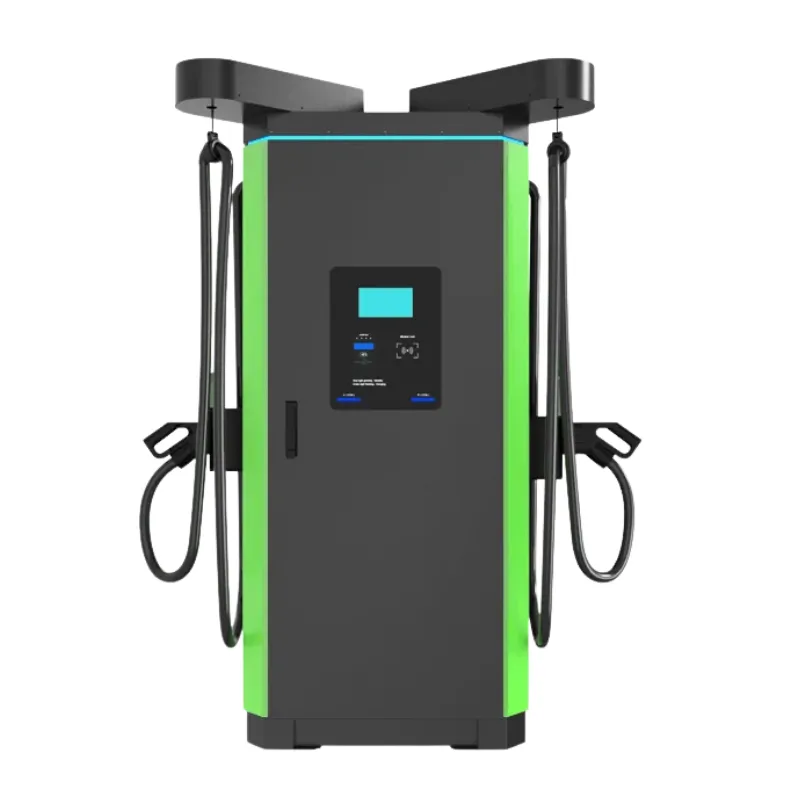
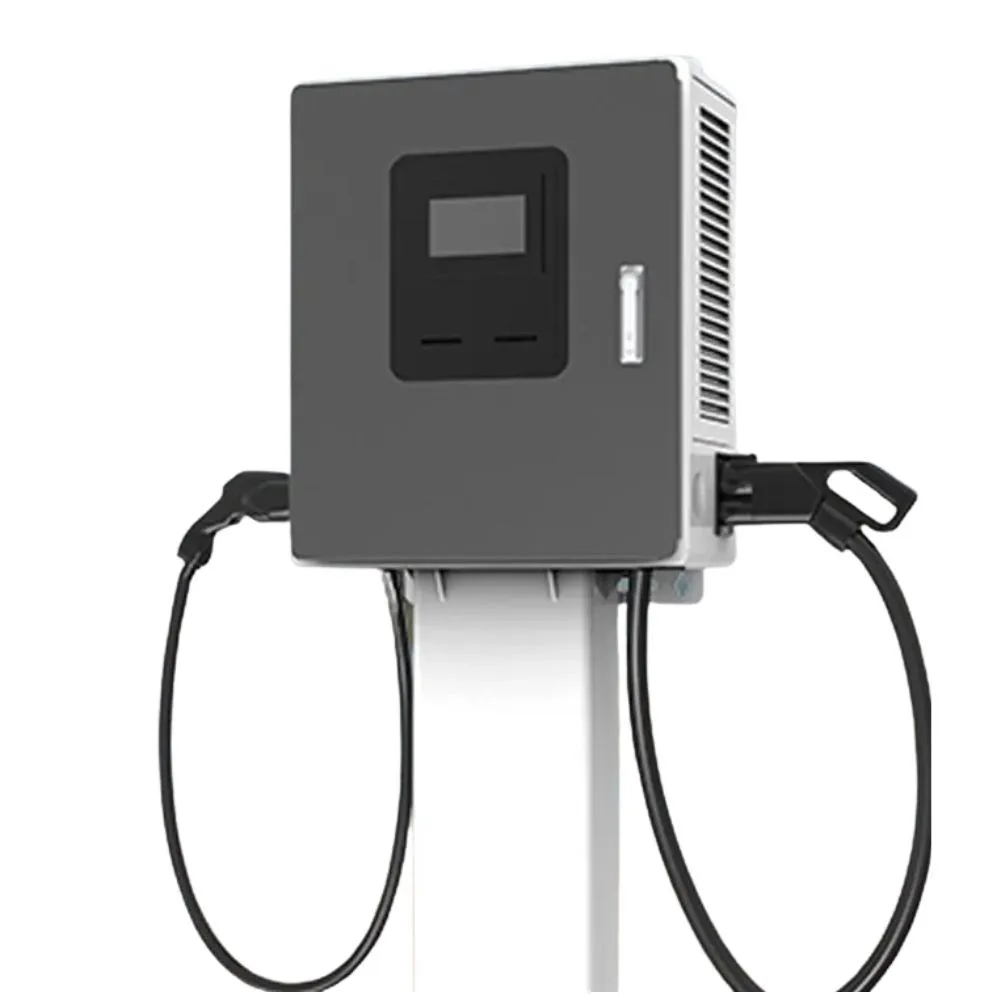
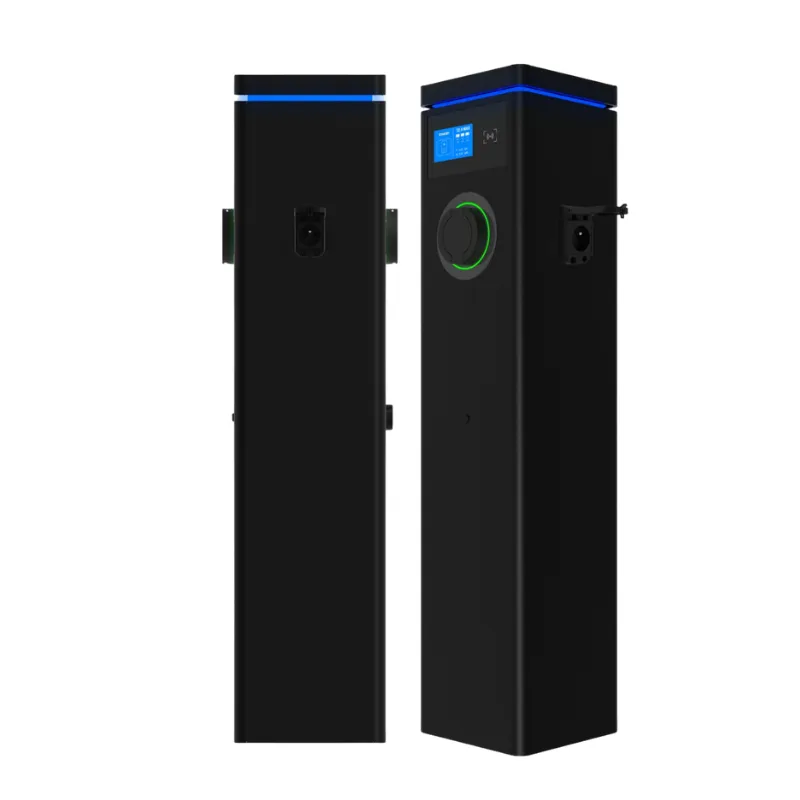
Match the series to the vehicle mix, not to the biggest number on the brochure. The CPO series (two 3.7 to 22 kW guns) suits hotels, malls and fleet yards where cars park for hours and the AC ceiling of KHR 1,050 applies. The HC series (20 to 60 kW) fits a first DC point on a small grid allocation. The UC series is for corridor and city hubs; its 360 kW cabinet is a two-gun unit with each CCS gun limited to 200 A, about 200 kW at 1,000 V, so one vehicle cannot draw the full 360 kW. All series support OCPP 1.6J and 2.0.1 and operate up to +55 °C.
We cannot say a model satisfies the MME technical annex or an EAC condition; we can supply test reports and technical documents to support your permit file. To get a configured proposal and quotation breakdown, send us the site voltage, number of guns, connector standards and available grid capacity through the contact page.
Payback calculator
Example values are filled in — replace them with your own quotation, tariff and traffic figures.
- Energy sold per month
- —
- Net margin per month
- —
- Simple payback
- —
Simple payback = total investment ÷ (energy sold × (price − energy cost) − fixed costs), using 30 days per month. Taxes, financing, subsidies and utilisation growth are not included.
Frequently asked questions
- Do I need a licence to run a public EV charging station in Cambodia?
- Yes in practice. Under Prakas No. 0389 the Ministry of Mines and Energy issues permits for developing and operating stations and the EAC licenses charging service providers. Khmer Times reported in November 2025 that some stations were operating without legal status because they had not applied. Confirm the permit and licence steps for your station type (home, semi-public, public or standalone) with MME and the EAC before you order equipment.
- Can I set my own price per kWh?
- Only up to the ceiling. The EAC rates reported in 2025 are maximums (KHR 1,050 AC, KHR 1,350 DC up to 250 kW, KHR 1,450 above 250 kW) and licensees may charge less. Stations that apply the wrong price can be fined and, in some cases, lose their licence. Build the business case on the cap, not on an open-market price, and confirm the current schedule with the EAC.
- What does a charging station cost to equip for Cambodia?
- Price depends on configuration: power level, cable and connector mix, options and site conditions. Send us the site data (supply voltage, number of guns, connector standards, available grid capacity) through the contact page and we will return a configured proposal with a quotation breakdown. For early planning, the payback calculator lets you test the capped tariff against your own cost inputs.
- Which connector standards should I plan for?
- We did not find a published national connector rule in the pages we read, and Cambodia's vehicle fleet includes imports from several markets. Ask MME which technical standards its permit process refers to, and check which connectors the vehicles in your catchment actually use. Our DC chargers can be configured with CCS2, CHAdeMO or, for North American builds, CCS1 and NACS; our AC range uses Type 2.
References
- [1]Cambodia establishes framework for electric vehicle charging infrastructure (Prakas No. 0389). Ministry of Mines and Energy, Cambodia.
- [2]Government lowers EV charging price to support EV adoption. Segmenty.
- [3]Electricity Authority plans nationwide EV charging rollout by 2026 (Khmer Times, 19 November 2025). Segmenty (reproducing Khmer Times).
- [4]Cambodia to deploy 18 EV flash-charging stations as electric vehicle use grows (September 2026). Cambodianess.
- [5]Cambodia's electric revolution: from one vehicle to thousands (17 June 2026). SEA.co.
- [6]Cambodia reduces road tax and charging fees to boost EV adoption (27 August 2025). S&P Global AutoTechInsight.