Market guide
EV Charging Station Business in the Philippines: Rules, Costs, Sites
EV charging station business Philippines guide: RA 11697, DOE accreditation per location, the 5% parking rule and 1,694 charging points (June 2026).
- Prepared by
- EVCSTAR Engineering Team
- Published
- Reading time
- 4 min
- Sources
- 6 references
At a glance
- DOE-counted charging points (June 2026)
- ~1,694
- Accredited providers (DOE figure)
- 316
- Mapped public stations with DC fast
- 137 of 800
- Dedicated EV parking rule
- 5% at 20+ slots
Key takeaways
- 1Charging for a fee is a regulated activity: under RA 11697 and DOE Department Circular DC2023-05-0011, providers must be DOE-accredited as operator, service or supplier, and each station location must be registered individually (per a secondary guide; confirm with DOE).
- 2The market is still small: DOE counted about 1,694 charging points in June 2026, including 528 two-wheeler battery-swap points, and an independent map listed 800 stations of which 137 offer DC fast charging.
- 3RA 11697 requires buildings and establishments with 20 or more parking slots to dedicate at least 5% to EVs, new buildings first and existing ones on the timeline of the national EV roadmap, which creates host-site demand for chargers.
- 4Completely built charging stations imported under the Act are exempt from duties for eight years from the Act taking effect in 2022, which is a deadline to check before you plan an import.
On this page
Short answer: an EV charging station business in the Philippines is regulated and still small: you need DOE accreditation for the activity and registration of each location under RA 11697, the market had about 1,694 DOE-counted charging points in June 2026, and the 5% parking rule creates host sites for operators who can supply and run chargers.
What RA 11697 changes for a charging business
The Electric Vehicle Industry Development Act (RA 11697), in force since 11 May 2022, makes the DOE the lead agency for EV charging. It created the Comprehensive Roadmap for the Electric Vehicle Industry (CREVI), whose EV and charging-station component is the DOE’s, published each year by 30 September. Implementing rules were issued on 6 September 2022 in 45 sections. The Act’s incentives matter for equipment: manufacturing, charging-station operation and related activities may be evaluated for the Strategic Investment Priority Plan, and completely built charging-station imports are exempt from duties for eight years from the Act’s effectivity (2022). Check whether that window still covers your planned import date.
| Topic | What the sources say | Status for you |
|---|---|---|
| Lead agency | DOE leads charging stations and the CREVI | Contact DOE first |
| Fleet quota | 5% EV in covered fleets (logistics, delivery, hotels, utilities and others) on a CREVI timeline | Creates customers for fleet depots |
| Parking | 5% dedicated EV slots at 20+ slots | Creates host sites |
| Import duties | Exempt for completely built stations for eight years from 2022 | Confirm end date |
| Penalties | Not found in the sources we read | Read the IRR |
Accreditation and registration: the step most investors miss
Charging for a fee is not a retail shop licence; it is an accredited activity. An Emerhub guide (a commercial source, not the DOE) says Department Circular DC2023-05-0011 requires accreditation for anyone who provides charging for a fee, in three classes (operator, service, supplier), and that every station location is registered individually through the DOE portal. It also describes pricing rules requiring unbundled charging fees, with fee changes reported to the DOE before they take effect. The guide’s other steps are ordinary Philippine business paperwork: SEC or DTI registration, BIR registration, a mayor’s permit, a building permit and an electrical permit, and an electrical engineer’s certification with an inspection certificate before energisation. We could not open the DOE’s own circulars, so use this as a checklist of questions, not as the rule.
If you plan to host chargers for someone else, ask the DOE whether the host also needs accreditation or only the operator does. Foreign ownership limits for the operating company were not covered in any source we read and need legal advice.
The 5% parking rule: who the customers are
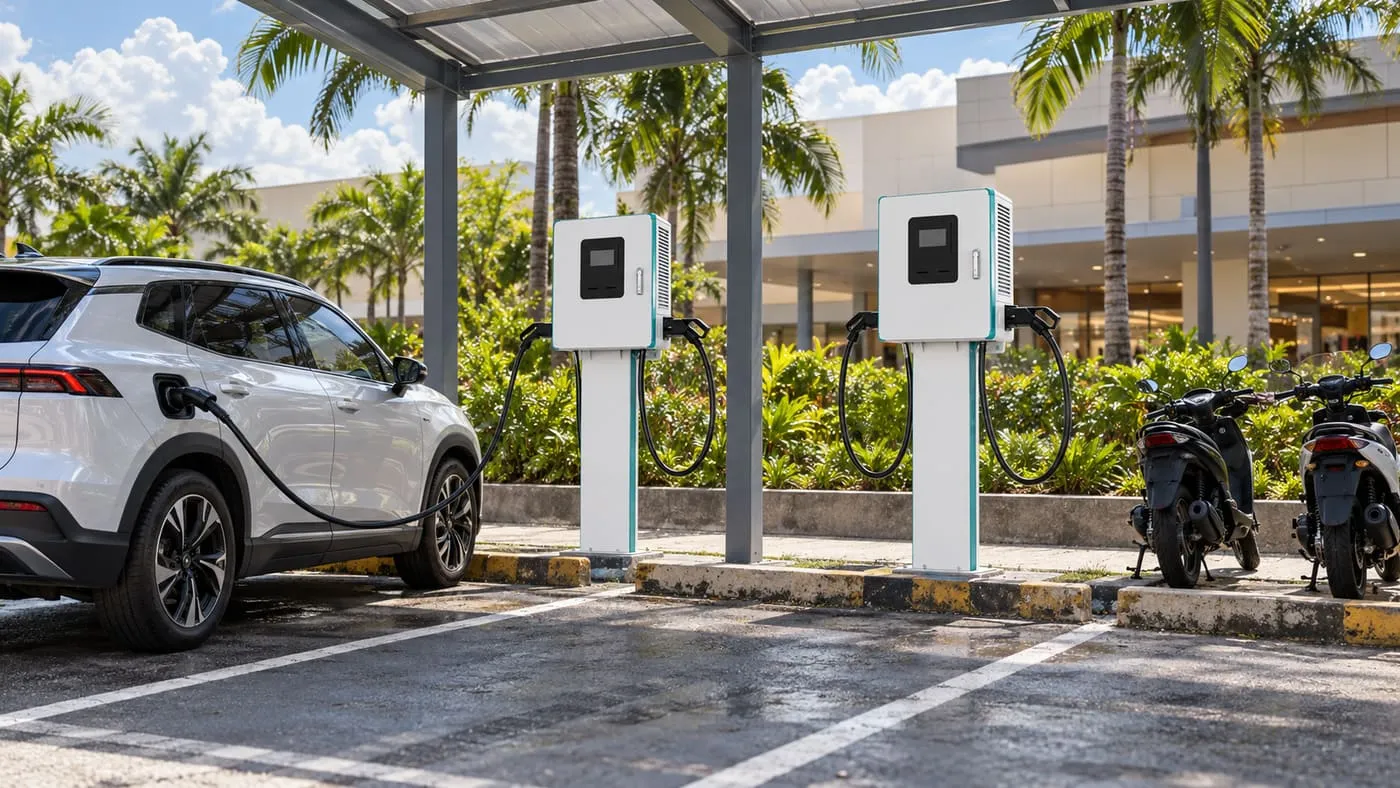
For a hardware supplier or operator, the parking rule is the sales lead list. Legal summaries state that buildings and establishments with 20 or more parking slots need at least 5% dedicated to EVs, that new private and public buildings come first, and that existing buildings follow the CREVI timeframe. One law-firm article adds that a local government may not issue a construction or renovation permit unless the EV parking mandate is met. The CREVI decides when dedicated slots must have charging, and the building owner has first priority to install it, with a station provider as the alternative. Gasoline stations selected under the Act must designate space for public commercial charging, and the DOE may withhold permits where space is inadequate. Practical sizing: a mall with 1,000 slots needs at least 50 EV slots (our arithmetic), and the AC versus DC split depends on dwell time.
Where the market stands, and how the grid enters
Demand is early-stage, so site choice and utility cooperation matter more than headline growth. Citing DOE, Expressway.PH put the national total at about 1,694 charging points in June 2026, including 528 two-wheeler battery-swap points, with 316 accredited providers. Its own map counted 800 distinct public stations, 137 with DC fast charging. A guide mentions a target of 7,300 stations by 2028 that we could not trace to a primary source, so we do not rely on it.
On the grid, the Philippines runs at 60 Hz. The guide notes that the local distribution utility, for example Meralco in its franchise area, assesses the load and endorses the connection, and that this is most demanding for DC fast chargers. We did not find a published EV-specific tariff in the sources we read; ask the utility which commercial rate applies, whether demand charges apply, and how long the service upgrade takes. Use the grid capacity calculator and the payback calculator with those answers, not with a national average.
Choosing the first sites
Start with sites that have a fixed host and predictable dwell: malls, fuel stations obliged to host charging, and fleet depots. Fleet quotas under the Act create depot demand from logistics, delivery, hotel and utility fleets, and the 5% parking rule creates retail and office demand. Highway corridors are the harder case because they need a strong grid feeder; check the DOE directory for existing fast chargers on the route before you buy land.
How EVCSTAR equipment fits
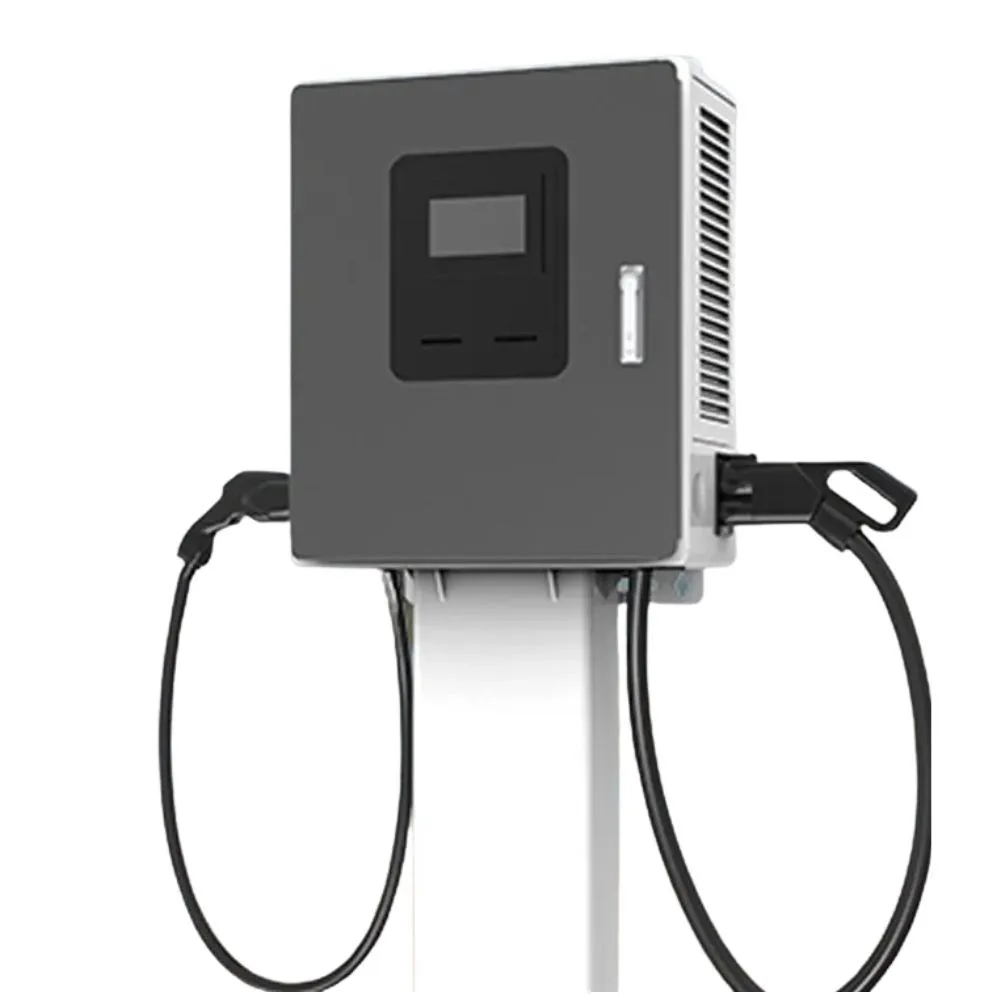
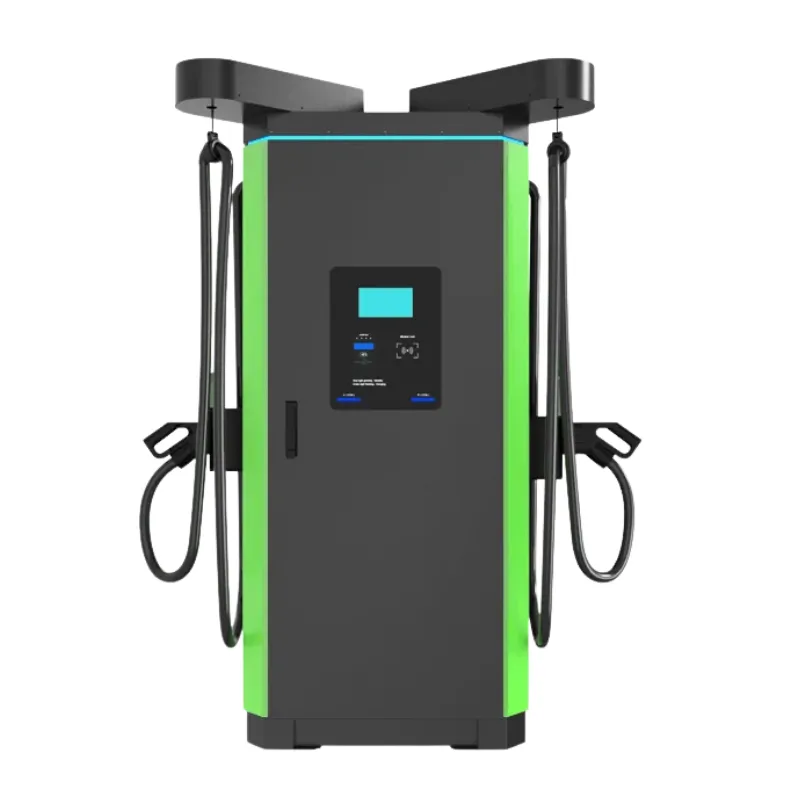
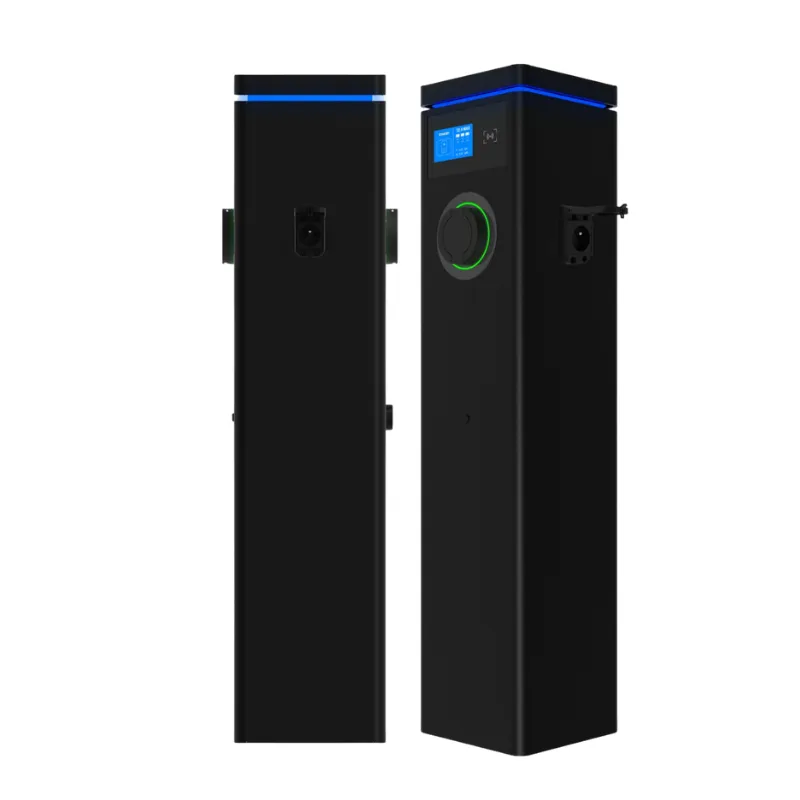
For a first Philippine portfolio, the CPO series (2 x 3.7–22 kW) suits mall and office parking, the HC series (20–60 kW) suits fleet depots and fuel-station forecourts with a limited connection, and the UC series (60–360 kW) suits a fast-charge hub. Chargers operate up to +55 °C, which is relevant for tropical outdoor installations, and support OCPP 1.6J and 2.0.1 for back-office reporting. We cannot state that any model is accredited, registered or compliant with Philippine rules; the accreditation attaches to the provider and the location. We can supply test reports and technical documents to support your DOE and utility process. See EV charging standards for connector and protocol background.
Payback calculator
Example values are filled in — replace them with your own quotation, tariff and traffic figures.
- Energy sold per month
- —
- Net margin per month
- —
- Simple payback
- —
Simple payback = total investment ÷ (energy sold × (price − energy cost) − fixed costs), using 30 days per month. Taxes, financing, subsidies and utilisation growth are not included.
Frequently asked questions
- Do I need DOE accreditation to run a charging station in the Philippines?
- A commercial guide citing Department Circular DC2023-05-0011 says anyone providing charging for a fee must be accredited by the DOE in one of three classes: operator (collects fees from users), service (construction, installation, data, payment and maintenance) or supplier (sells equipment). It also says each station location must be registered separately. We could not open the DOE circular itself, so read it on the DOE website or ask the DOE before committing.
- What is the 5% parking rule under RA 11697?
- Buildings and establishments with 20 or more parking slots must dedicate at least 5% of the total slots to EVs. Legal summaries say new private and public buildings are covered first, existing buildings must comply within the timeframe set by the national EV roadmap (CREVI), and the roadmap decides when dedicated slots must also have a charging station. The building owner has first priority to install one. Check the CREVI edition in force for dates.
- How big is the charging market today?
- Small but growing. Expressway.PH, citing DOE, reported about 1,694 charging points in June 2026, 528 of them two-wheeler battery-swap points, and 316 accredited providers. Its own map listed 800 distinct public stations with 137 offering DC fast charging. The counts use different units, so do not add them together. An investor should check the DOE directory for sites near a proposed location.
- Do I need a grid connection approval?
- A commercial guide says the local distribution utility, for example Meralco in its franchise area, assesses the load and endorses the connection, which matters most for DC fast chargers. Requirements differ between distribution utilities and electric cooperatives, so ask the one that serves the parcel for a load study, lead time and cost before you buy land.
References
- [1]Electric Vehicle Industry Development Act (RA 11697): summary. Enviliance (legal summary).
- [2]Philippines promulgates Implementing Rules and Regulations of the EV Industry Development Act. Enviliance (opening section only).
- [3]The rise of electric vehicles in the Philippines. Conventus Law (law-firm article).
- [4]How many EV charging stations are in the Philippines. Expressway.PH, June 2026 (citing DOE).
- [5]How to start an EV charging station business in the Philippines. Emerhub (commercial guide, secondary).
- [6]Duterte signs electric vehicle measure into law / DOE role. Power Philippines, 27 April 2022.