Market guide
EV Fast Charging in Germany: Grid Connection, Eichrecht and Market Entry
EV fast charging station Germany business guide: 56,572 fast points (Sept 2026), LSV notice within two weeks, Eichrecht billing and grid delays.
- Prepared by
- EVCSTAR Engineering Team
- Published
- Reading time
- 5 min
- Sources
- 6 references
At a glance
- Public fast points (1 Sept 2026)
- 56,572
- Total public points
- 214,334 (9.38 GW)
- Deutschlandnetz motorway sites open
- 100 of 200 (Sept 2026)
- Commissioning notice
- Within 2 weeks
Key takeaways
- 1Germany already had 56,572 public fast charge points on 1 September 2026 (Bundesnetzagentur), up from 49,904 on 1 February 2026, so a new site competes with a dense and fast-growing field.
- 2Three legal gates matter most: notify the Bundesnetzagentur within two weeks of commissioning (LSV, in force 1 January 2026), bill with a conformity-assessed meter system under Eichrecht, and obtain a grid connection, which is where federal projects are slipping.
- 3The state-backed Deutschlandnetz has 100 of 200 motorway sites open (September 2026) and its schedule has moved to 2027 and partly 2028, mainly because of medium-voltage connections.
- 4Selling kWh is the legal norm: Eichrecht billing is by energy, and flat session fees or time fees are not allowed for public charging (vendor summary, to be confirmed with your Eichbehörde).
On this page
Short answer: an EV fast charging station business in Germany is a mature, fast-growing market with 56,572 public fast charge points on 1 September 2026, where entry depends less on subsidies than on three practical items: a grid connection that arrives on time, an Eichrecht-compliant meter system so you can sell by the kWh, and a notice to the Bundesnetzagentur within two weeks of commissioning.
How crowded the market already is
Germany added about 6,700 fast points in seven months, so assume your site opens into a denser field than today’s map shows. The Bundesnetzagentur register showed 157,762 normal and 56,572 fast public points on 1 September 2026, a combined 9.38 GW of simultaneously available power, and notes that the numbers include notifications not yet completed. On 1 February 2026 the fast-point count was 49,904, up 34% on a year earlier, and 17,049 of those exceeded 299 kW (electrive, from Bundesnetzagentur data).
| Indicator | Figure | Date |
|---|---|---|
| Fast public points | 56,572 | 1 Sept 2026 |
| Normal public points | 157,762 | 1 Sept 2026 |
| Points above 299 kW | 17,049 | 1 Feb 2026 |
| Largest operator by points | EnBW mobility+, 11,608 | 1 Feb 2026 |
| North Rhine-Westphalia points | 38,861 | 1 Feb 2026 |
Bavaria still leads in fast chargers and installed capacity, while North Rhine-Westphalia leads in total points. Position the site where dwell time, traffic or fleet demand is not already covered; the register and its map are free to inspect before you choose a plot.
The Deutschlandnetz: competitor, partner and warning
The federal network shows both the demand for fast charging and the real schedule risk. Four winners of the February 2024 tender (E.ON Drive Infrastructure, Autostrom Nord, Fastned and TotalEnergies) build and operate the motorway sites for the federal government. The 100th of 200 unmanned motorway rest-area sites opened in September 2026, with three dual-point dispensers delivering up to 400 kW per point. The original end-2026 completion date is no longer realistic; Johannes Pallasch said in November 2025 (as reported by electrive) that sites would still open in 2027 and a few in 2028, and the article names medium-voltage connections as the main cause.
Read this as a planning lesson: even a publicly backed program with priority could not get every connection on time. Build the connection timeline into your own financial model before you commit to a plot.
Grid connection: low voltage, medium voltage and the 30 kW line
Start the grid request before you sign the land lease. The Bundesnetzagentur’s low-voltage FAQ says a construction cost contribution (Baukostenzuschuss) may be charged only on demand above 30 kW, that a capacity shortage can delay a connection but is not a final reason for refusal, and that the network operator must explain obstacles, remedies and time needed. It covers only low voltage, so for a multi-dispenser DC site you will normally deal with a medium-voltage procedure under the operator’s own terms; we did not find a nationwide fee schedule, and costs vary by network area.
Controllable devices under section 14a EnWG can receive a reduced network charge if the operator can limit them (temporary reduction to 4.2 kW). That mostly concerns home and workplace AC; for a public DC site, ask the network operator for the applicable network charge and tariff. Use the grid capacity calculator to size the transformer need before the first conversation.
Eichrecht: the billing rule that shapes the hardware
If you sell energy by the kWh, the measuring system must be conformity-assessed and the driver must be able to verify the result. The Mess- und Eichgesetz and the Mess- und Eichverordnung are the legal basis. According to VDE:
| Requirement | What it means in practice |
|---|---|
| Conformity assessed system | Meter plus the data-processing unit are assessed together; a compliant meter alone is not enough |
| Display | Charging data visible on the charger; the driver can check energy and price calculation afterwards |
| Signed data | Each record carries values, unit, timestamp, device ID and customer or transaction ID, digitally signed |
| Backend | Receives signed data and lets the driver verify it |
A vendor handbook summary also states that tariffs may be based on kWh only, with flat session or time fees not allowed; treat this as a point to confirm with your state calibration authority, because the VDE page we read says time is also subject to calibration when it is billed. Which state Eichbehörde supervises you, and how they audit, was not covered by the sources we read.
Registration and the LSV rules
The Ladesäulenverordnung applies to publicly accessible points regardless of who owns the land or whether access is restricted. The new version, signed 23 December 2025 and in force from 1 January 2026, implements EU Regulation 2023/1804 (AFIR). Operators must report commissioning within two weeks, report decommissioning and operator changes without delay, and prove compliance with the technical requirements on request. The Bundesnetzagentur can demand retrofits and prohibit operation for missing proof or missing notification. The excerpt we read contained no payment or ad-hoc-charging details; read the AFIR payment and data provisions before choosing terminals and back office.
How EVCSTAR equipment fits
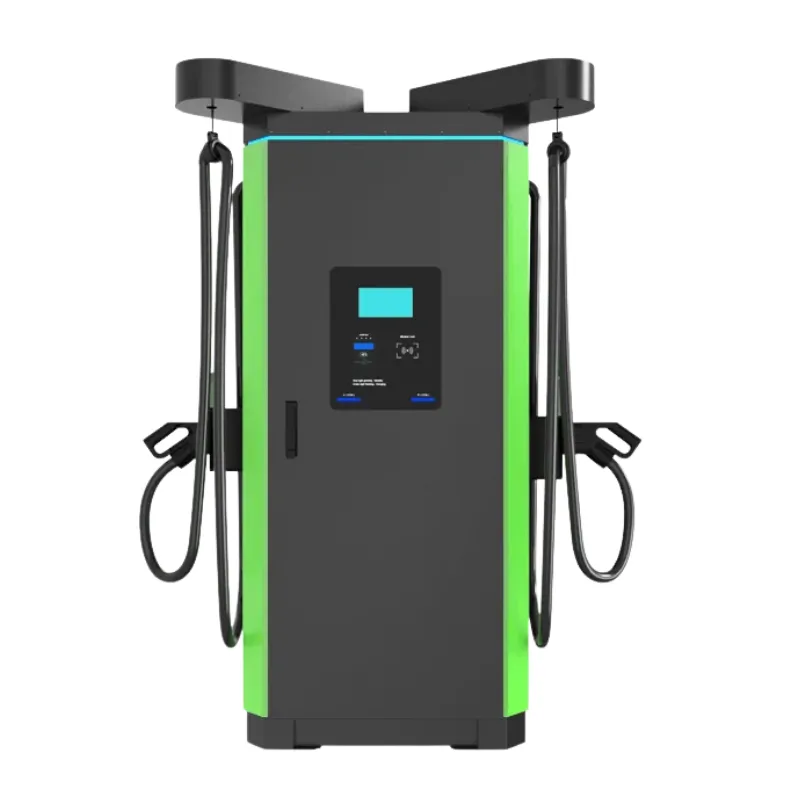
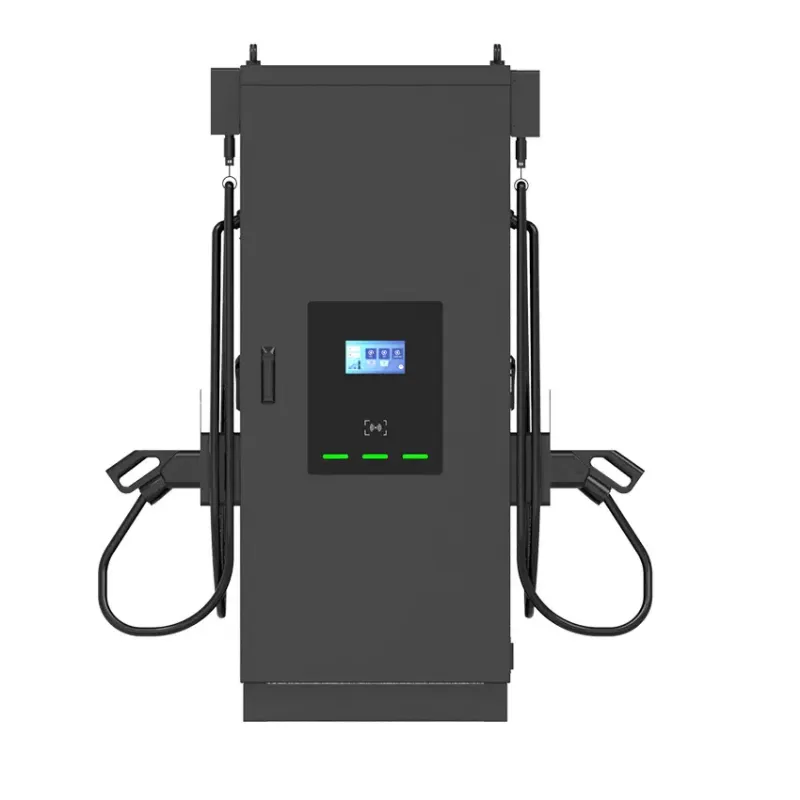
For an urban or highway-adjacent fast-charging site in Germany, the UC series (60–360 kW, CCS2) and the CC series (120 and 180 kW) are the relevant starting points. Both support OCPP 1.6J and 2.0.1, which matters for roaming and back-office integration, and operate up to +55 °C. Eichrecht conformity, however, is a property of the specific charger, meter and software combination. We cannot state that any model already holds the conformity assessment; please ask us which technical documents and test reports we can supply, then confirm the combination with your Eichbehörde and your back-office provider before ordering. See also EV charging standards for connector and protocol background.
Grid capacity calculator
- Spare power for charging
- —
- Input current per charger (400 V)
- —
- Chargers at full power
- —
Spare power = kVA × 0.95 power factor × (1 − margin) − existing peak load. Input current ≈ charger kW ÷ (√3 × 400 V), with power factor and 95 % efficiency added for DC chargers. With dynamic load management more chargers can share the same capacity at reduced power. Always confirm with your electrical engineer and the grid operator.
Frequently asked questions
- Do I have to register a public charging station in Germany?
- Yes. Under the Ladesäulenverordnung that took effect on 1 January 2026, the operator must notify the Bundesnetzagentur electronically of commissioning no later than two weeks afterwards, and of decommissioning or an operator change without delay. The Bundesnetzagentur can ask for proof of the technical requirements and can prohibit operation if notification or proof is missing (LSV sections 4 and 5). Notices go through its online Meldeportal.
- What is Eichrecht and why does it affect a charger purchase?
- Eichrecht is the German calibration law (Mess- und Eichgesetz and Mess- und Eichverordnung). When energy is sold, the measured value must come from a conformity-assessed system, shown on the station display, with signed data records the driver can verify later. VDE notes that a compliant meter alone is not a compliant system; the assessment covers the meter plus the unit that processes and sends the data. Ask the manufacturer for the conformity documents of the exact charger and meter combination.
- Is a medium-voltage connection necessary for a fast-charging site?
- Bundesnetzagentur guidance on low-voltage connections says a construction cost contribution applies only to the demand above 30 kW. A multi-dispenser DC site usually exceeds what a low-voltage service can supply, and electrive reports that medium-voltage connections are the main reason the federal Deutschlandnetz is running late. Request the grid study early and confirm the voltage level and cost with the local network operator.
- Can a private operator still enter the market after the Deutschlandnetz tenders?
- The tenders themselves were awarded: four winners for the motorway sites (E.ON Drive Infrastructure, Autostrom Nord, Fastned and TotalEnergies) after the February 2024 awards. Private sites outside those lots, such as retail, depot and urban locations, are not part of the tender. Competition is real, with EnBW mobility+ listed at 11,608 points in early 2026.
References
- [1]Elektromobilität: Öffentliche Ladeinfrastruktur. Bundesnetzagentur, data as of 1 September 2026.
- [2]Ladesäulenverordnung (LSV 2026). Bundesministerium der Justiz / Bundesamt für Justiz.
- [3]Deutschland kratzt an der Marke von 50.000 Schnellladepunkten. electrive.net, 10 March 2026.
- [4]100 von 200 Deutschlandnetz-Standorten an der Autobahn fertig. electrive.net, 28 September 2026.
- [5]FAQ Ladeeinrichtungen: Netzanschluss. Bundesnetzagentur.
- [6]Eichrechtskonformes Laden. VDE.