Market guide
EV Fast Charging in Ireland: ESB Networks, Grants and Motorway Plans
EV fast charging station Ireland business guide: 60 km hub spacing, EUR 21m TII grant round, 2,500+ public points, 18.9% BEV share in 2025.
- Prepared by
- EVCSTAR Engineering Team
- Published
- Reading time
- 3 min
- Sources
- 5 references
At a glance
- Public charging points (2025)
- 2,500+
- New BEVs registered (2025)
- 23,601 (18.9%)
- Hub spacing on national roads
- Max. 60 km
- TII first round (2024)
- Up to EUR 21m
Key takeaways
- 1Ireland's national road plan asks for a high-power pool every 60 km, and the first EUR 21 million TII round (2024) required 1,200 kW per pool with at least four 150 kW points, on sites within 3 km of a motorway or dual carriageway.
- 2Demand is real but the public network is still thin: over 2,500 public charging points at the end of 2025, against 23,601 new battery-electric cars registered that year (18.9% share, up about 35%).
- 3Grid connection for 150 kW-and-above sites goes through ESB Networks, which does not own or operate chargers; it connects them. Connection charges and lead times were not published on the pages we read, so ask for a written offer.
- 4Single-carriageway national roads are the current gap: a June 2025 ZEVI/TII round named 53 more hubs and 175 points over 1,200 km, so the remaining opportunity is private sites off those routes, hotels, retail and depots.
On this page
Short answer: an EV fast charging station business in Ireland is a bet on a fast-growing car fleet with a thin public network. The state has defined what a motorway hub must look like (1,200 kW every 60 km), so a private operator’s best opening is a well-located site off those routes where ESB Networks can give a connection of 150 kW or more.
What the state has already specified
The national road plan sets hub size and spacing, and it sets the bar for your design. TII’s first grant round (2024, up to EUR 21 million) targeted pools of 1,200 kW every 60 km on motorways and dual carriageways, with at least four 150 kW points per pool. It was open to private operators such as service-area operators, hotels and retailers, and the site had to be publicly available and within 3 km of the road. Money went to construction, installation, civil works and local authority consent fees, awarded competitively under GBER State Aid rules, with online targets of December 2025.
The second layer covers single carriageways. In June 2025 the Government named 53 more hubs, 175 fast and ultra-fast points and EUR 7.9 million in grants across more than 1,200 km of national single-carriageway road, with a maximum 60 km between hubs (electrive, 2025).
| Round | Roads | Size | Funding |
|---|---|---|---|
| TII round 1 (2024) | Motorway, dual carriageway | 1,200 kW pools, 4+ x 150 kW | Up to EUR 21m |
| ZEVI/TII LDV round (2025) | National single carriageway | 53 hubs, 175 points | EUR 7.9m |
The demand side
Ireland’s EV fleet is growing faster than its chargers. In 2025 Ireland registered 23,601 new battery-electric cars, about 35% more than 2024 and a record, an 18.9% share of 124,954 new cars; plug-in hybrids added about 14.8% (EAFO, 2026). The Government reported over 196,000 EVs on the road in October 2025, passing the Climate Action Plan target of 195,000 (ESB, 2025). EAFO counted over 2,500 public charging points and noted lower density than many European neighbours and limited rural coverage.
Existing network: ESB and everyone else
ESB’s ecars network is the incumbent, so a new site should aim at what it does not cover. ESB reports a EUR 23 million project (EUR 10 million Climate Action Fund, EUR 13 million ESB) that built 55 hubs of 3 to 8 vehicles, upgraded 100 AC points to DC and improved about 500 others, with network availability of about 99% (ESB, 2025). That availability figure is the benchmark drivers will compare you against, which is a reason to choose chargers with remote monitoring and a service plan from day one.
Connecting to the grid
Power class decides the process. ESB Networks sorts public charge points as standard (up to 22 kW), fast (up to 50 kW) and high-power (150 kW and above), and says it connects rather than owns chargers. A four-point 150 kW hub is a large connection request, so apply early and ask for capacity and date in writing. We could not find published connection fees or timelines; treat both as per-site quotes, and use the grid capacity calculator to size the request and the payback calculator to test it.
How EVCSTAR equipment fits
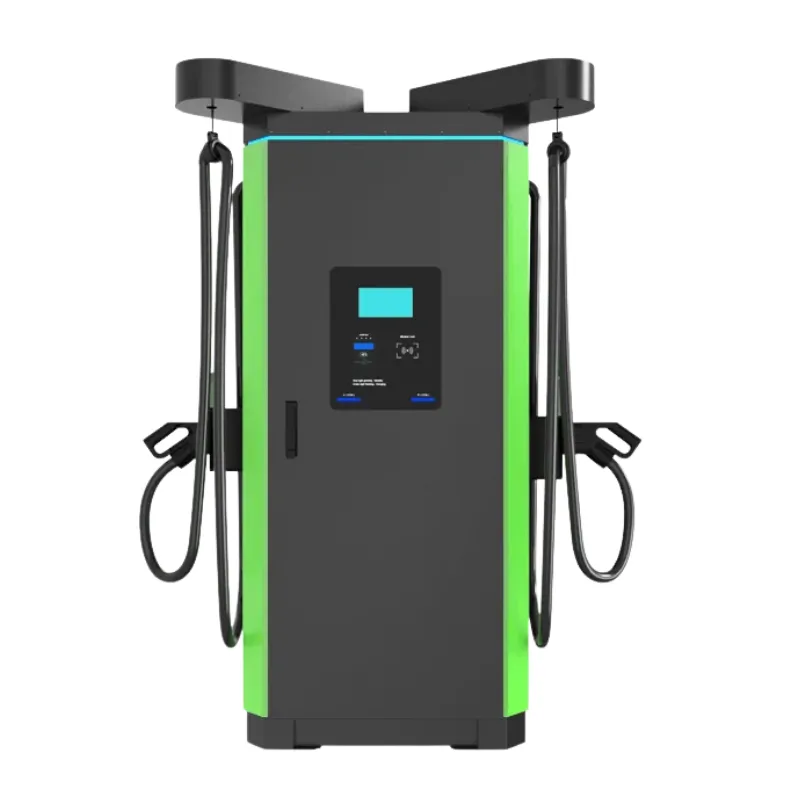
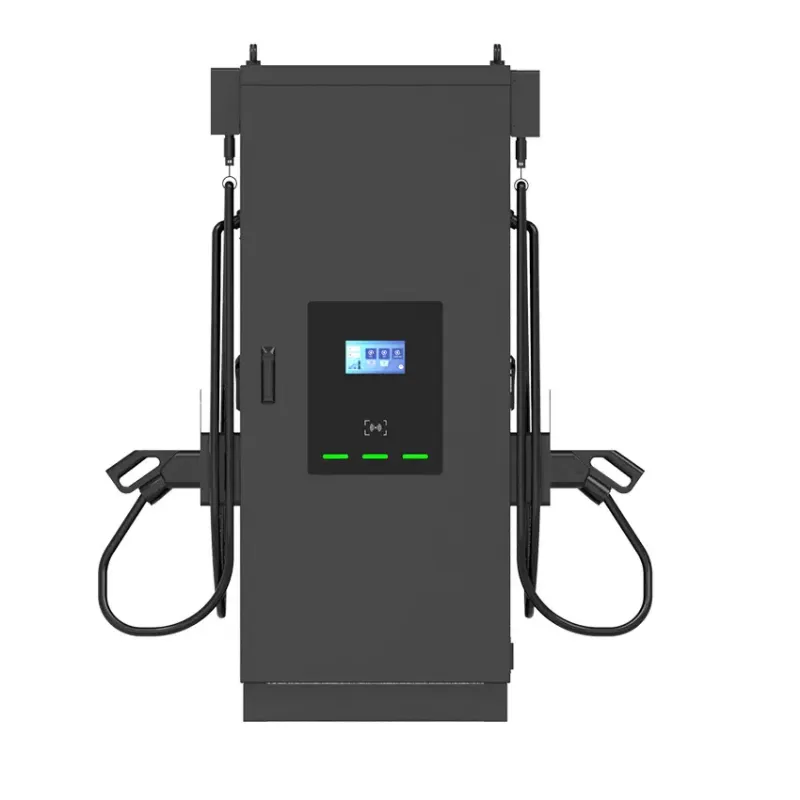
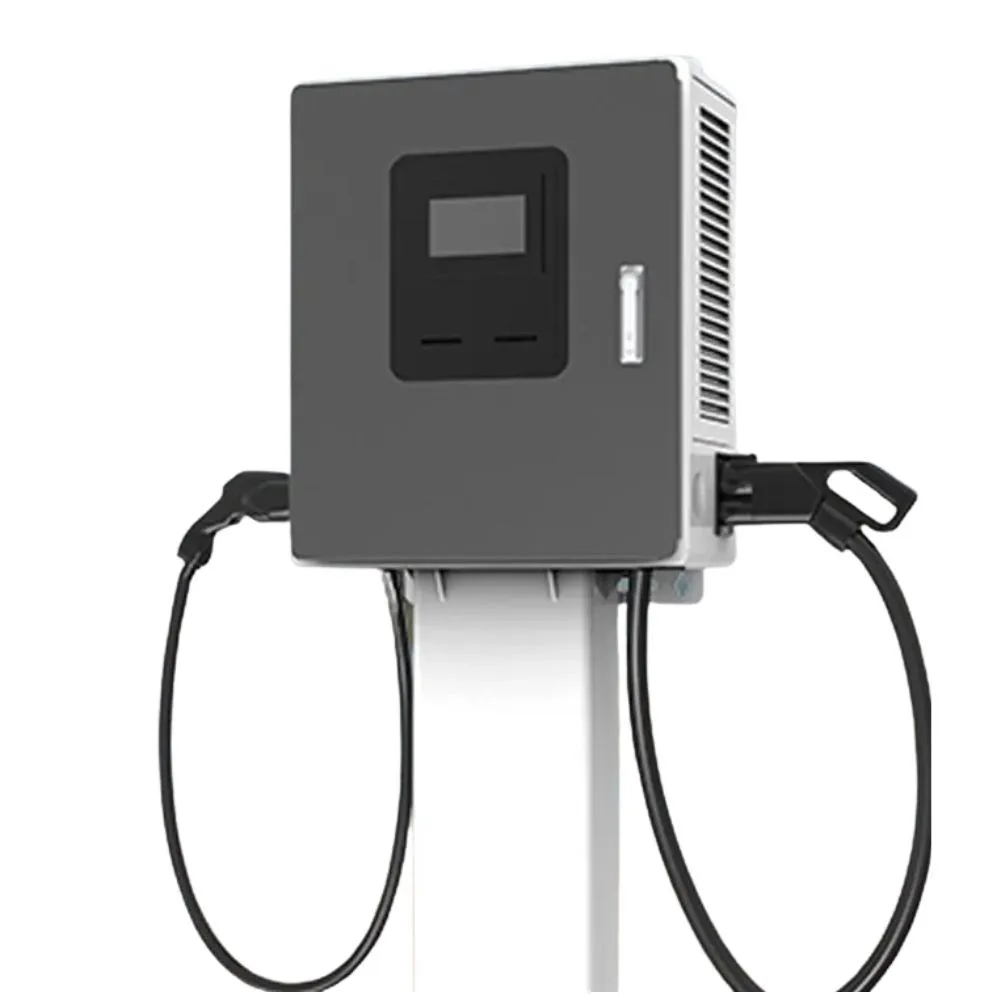
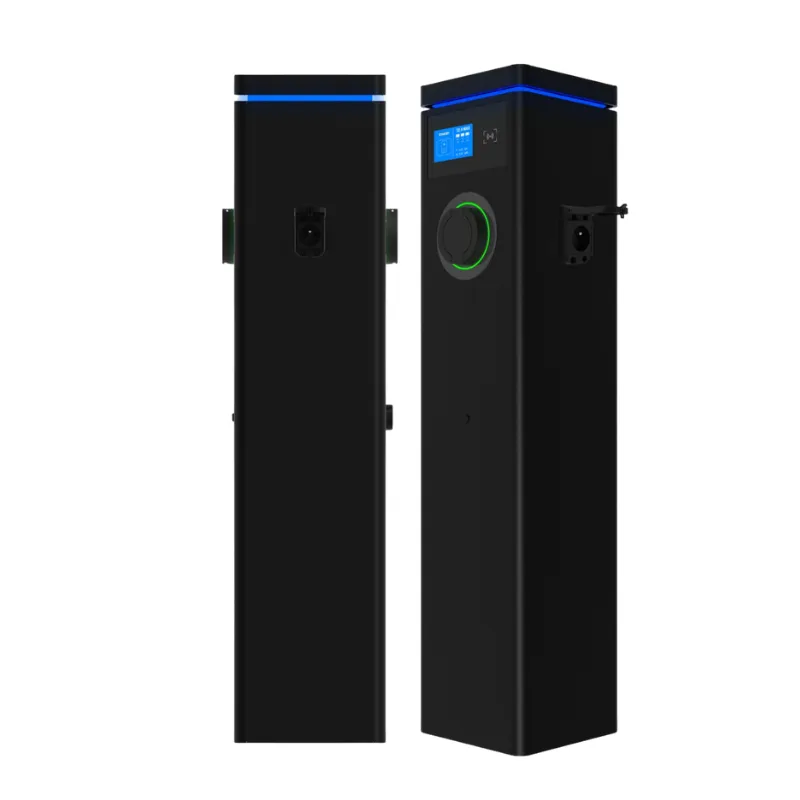
A grant-style hub of four or more 150 kW points maps to the UC series (60–360 kW, dual gun with dynamic power sharing), with the CC series and HC series for smaller destination sites. For hotels and car parks, the CPO series gives 2 x 3.7–22 kW AC. EU sales need CE marking and a MID-certified meter for kWh billing; see standards. We can provide test reports and technical documents to support your CE file, grid application and grant paperwork. We do not state that a model already holds any approval, and grant eligibility rules about equipment should be confirmed with TII.
Grid capacity calculator
- Spare power for charging
- —
- Input current per charger (400 V)
- —
- Chargers at full power
- —
Spare power = kVA × 0.95 power factor × (1 − margin) − existing peak load. Input current ≈ charger kW ÷ (√3 × 400 V), with power factor and 95 % efficiency added for DC chargers. With dynamic load management more chargers can share the same capacity at reduced power. Always confirm with your electrical engineer and the grid operator.
Frequently asked questions
- Who connects a high-power charging site to the grid in Ireland?
- ESB Networks, the distribution operator. It states that it does not own, install, operate or maintain public or private charge points; its role ends at the network connection. It groups public points as standard (up to 22 kW), fast (up to 50 kW) and high-power (150 kW and above), and runs a separate connection process for developers. We did not find published fees or lead times.
- Is there grant money for fast chargers in Ireland?
- Yes, through Zero Emission Vehicles Ireland (ZEVI) with Transport Infrastructure Ireland delivering the national road rounds. The 2024 round offered up to EUR 21 million in total with a competitive process under GBER State Aid rules; the grant percentage was not stated on the page we read. A June 2025 round awarded EUR 7.9 million for 53 hubs. Check the current call and rates with ZEVI/TII before you plan on a grant.
- How many public chargers does Ireland have?
- The European Alternative Fuels Observatory reported over 2,500 public charging points nationwide for 2025 and noted lower density than many European neighbours and limited rural coverage. ESB reported building 55 new hubs (3 to 8 vehicles each) and upgrading 100 AC points to DC under a EUR 23 million project.
- Which connectors and protocols should the chargers use?
- As an EU market, Ireland uses CCS2 for DC and Type 2 for AC. Our chargers support OCPP 1.6J and 2.0.1, which most Irish roaming and back-office platforms use; confirm the platform you plan to connect to.
References
- [1]Ireland's electric vehicle market 2025: rebound, growth, record BEV sales. European Alternative Fuels Observatory (European Commission).
- [2]Minister Ryan launches new EUR 21 million grant scheme to boost EV charging infrastructure. Transport Infrastructure Ireland, 2024.
- [3]Ireland to receive 53 new fast charging hubs. electrive, 18 June 2025.
- [4]Electrification of transport. ESB Networks.
- [5]How ESB is helping Irish drivers go electric. ESB, 13 November 2025.