Market guide
EV Charging in the Netherlands: Grid Congestion and Fast-Charging Hubs
EV fast charging station Netherlands business guide: 6,626 fast points, 15,000 businesses waiting for a grid connection, ACM rules and how to size a hub.
- Prepared by
- EVCSTAR Engineering Team
- Published
- Reading time
- 3 min
- Sources
- 5 references
At a glance
- Fast-charging points (Mar 2026)
- 6,626
- Public charge points (2025)
- ≈ 210,000
- Battery-electric cars (Apr 2026)
- 689,051
- Businesses waiting for a grid link (Aug 2026)
- ≈ 15,000
Key takeaways
- 1The Netherlands had 6,626 fast-charging points in March 2026 (RVO) — but the binding constraint for a new hub is the grid connection, not demand: NL Times reports about 15,000 businesses nationwide waiting for a connection (August 2026).
- 2Since the regulator ACM published its congestion measures (November 2024), the practical route to a faster connection is to accept limited or flexible transmission capacity, backed by batteries and load management.
- 3Public points reached almost 210,000 in 2025 against about 63,000 in 2020 (ANP analysis of RVO data), so the market is crowded; a new hub needs a location advantage, not just a plug count.
- 4Design for the queue: size the first phase to the capacity you can actually get, and make the charger able to throttle (OCPP smart charging) so extra power can be added later.
On this page
Short answer: an EV fast charging station in the Netherlands is limited by electrical capacity far more than by customers — about 15,000 businesses are waiting for a grid connection — so the winning design is a hub sized to the capacity you can get, with batteries and software to stretch it.
The numbers behind the market
The Dutch market is already large, and fast charging is its smallest and fastest-growing layer. The Netherlands Enterprise Agency (RVO) counted more than 126,000 regularly accessible charging points and 79,025 limited-access points in March 2026, plus 6,626 fast-charging points; battery-electric passenger cars numbered 689,051 (MobilityEnergy, April 2026). An ANP analysis of RVO data puts total public charge points at almost 210,000 in 2025, up from about 181,000 a year earlier and about 63,000 in 2020 (MobilityEnergy, January 2026). Amsterdam alone has about 16,000 and Rotterdam over 11,000.
| Measure | Value | Date |
|---|---|---|
| Public charge points (all types) | ≈ 210,000 | 2025 |
| Fast-charging points | 6,626 | March 2026 |
| Battery-electric cars | 689,051 | April 2026 |
| Electric and plug-in hybrid cars | almost 1.2 million | 2025 |
Why the queue exists
Congestion is a physical shortage of transmission capacity, and it is not being cleared quickly. ACM, the regulator, describes grid congestion as a shortage of capacity at various points on the grid caused by electrification and renewable generation (November 2024). NL Times (August 2026) reports that about 15,000 businesses nationwide are waiting for a connection, that Enexis has 11,000 customers on its waiting list, and that Utrecht reopened its list only on 1 July 2026. The cause of delay on the build side is objections: TenneT’s operational director says they add on average two years to grid projects. TNO (February 2026) adds that ACM prioritisation decisions leave it uncertain whether new charging points can be connected in time.
What ACM’s rules let you do
The regulator’s measures are the toolbox for getting a smaller or conditional connection sooner. ACM’s overview lists new ways for buyers to secure transmission capacity, including during scarcity; incentives to use scarce capacity more efficiently; paid options for system operators to prevent or solve congestion; and information on capacity requests in congestion areas. We have not read the grid code itself, so ask your network operator which of these (limited-time or flexible contracts, for example) apply to your postcode. Do not plan a hub around a full-power firm connection until you hold a written offer.
Hub design when power is the scarce resource
Start from the megawatts you can have, then choose the cabinet count.
- Ask for the available capacity and the date, in writing, at three candidate sites.
- Run the numbers in the grid capacity calculator: how many 150–360 kW sessions fit in the capacity, and what happens at peak.
- Pick a modular power-sharing cabinet so the first phase is smaller than the final one. Dynamic power distribution between dispensers keeps a half-empty hub productive.
- Add storage only where the tariff or the connection justifies it; the payback calculator will show whether it does.
TNO points to flexibility — smart charging, dynamic tariffs and shared batteries — as the route to make room, and a Utrecht trial reported by other researchers cut congestion time with dynamic grid tariffs. Choose a charger that supports OCPP smart charging from the start.
How EVCSTAR equipment fits
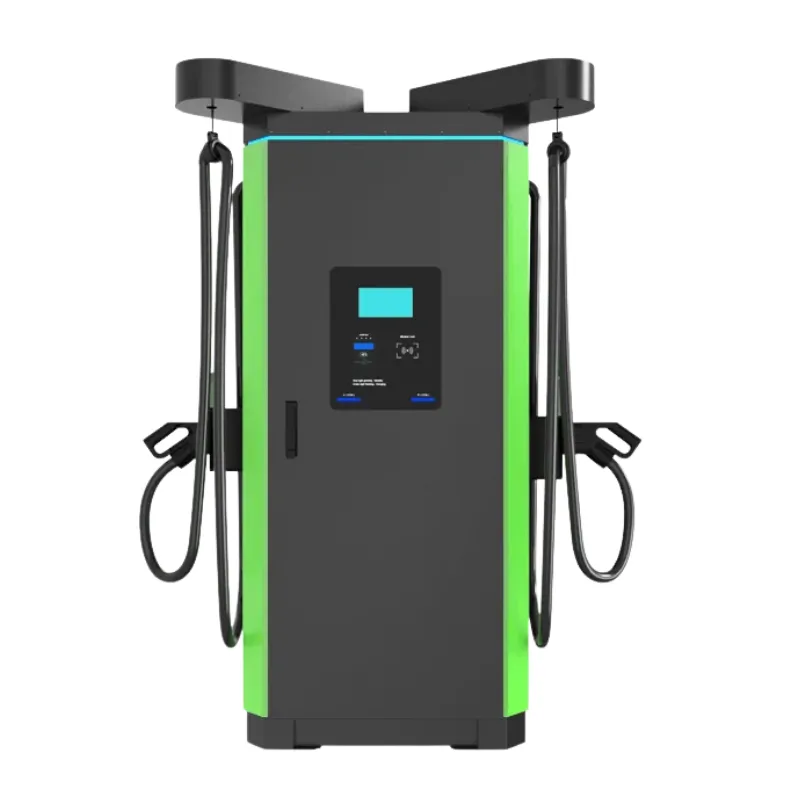
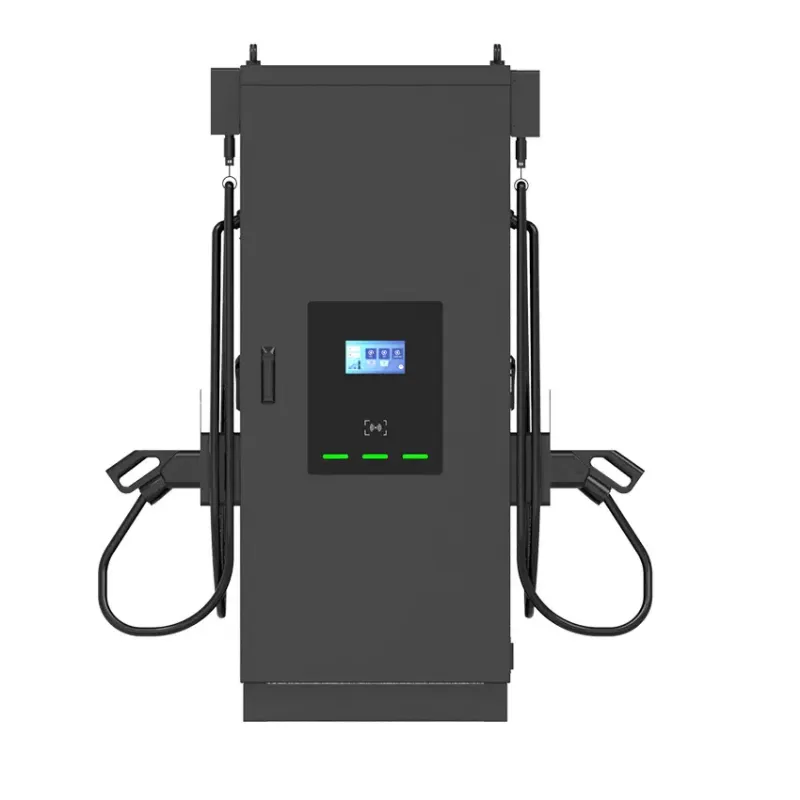
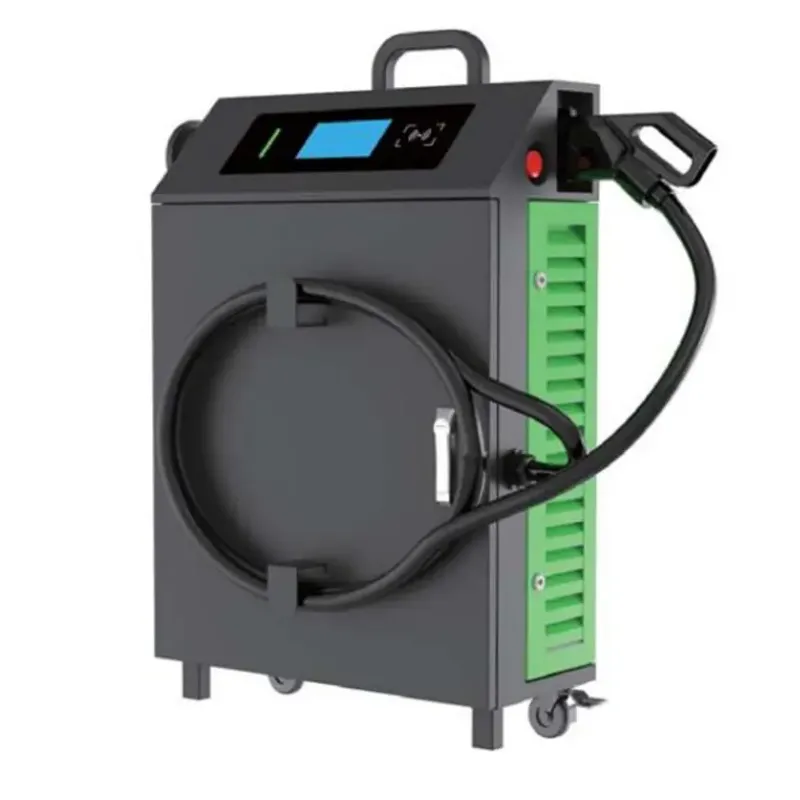
The UC series (60–360 kW, dual-gun dynamic power sharing) suits a motorway or retail hub with a decent connection; the CC series (120/180 kW) suits sites with a modest one. For temporary or construction-period capacity, the MC mobile series can bridge a delayed connection. All support CCS2, OCPP 1.6J and 2.0.1, and operate up to +55 °C. CE and metering (MID) requirements apply in the EU; we can provide test reports and technical documentation to support your own conformity and grid-operator application, and we do not claim any specific Dutch approval for a model. See standards for the checklist.
Grid capacity calculator
- Spare power for charging
- —
- Input current per charger (400 V)
- —
- Chargers at full power
- —
Spare power = kVA × 0.95 power factor × (1 − margin) − existing peak load. Input current ≈ charger kW ÷ (√3 × 400 V), with power factor and 95 % efficiency added for DC chargers. With dynamic load management more chargers can share the same capacity at reduced power. Always confirm with your electrical engineer and the grid operator.
Frequently asked questions
- How long does a grid connection for a fast-charging hub take in the Netherlands?
- No official figure for charging hubs was found. NL Times (August 2026) reports about 15,000 businesses nationwide waiting for a connection and objection procedures adding on average two years to grid expansion projects, so ask the network operator for a written date before committing to a site.
- What can I do if my area is congested?
- ACM's 2024 measures include new ways to secure transmission capacity during scarcity, incentives for efficient use of capacity and paid options for operators to relieve congestion. In practice that means asking for a limited or time-restricted connection and combining it with a battery or power limiting.
- Is the Dutch market saturated with fast chargers?
- There were 6,626 fast-charging points in March 2026 for 689,051 battery-electric cars (RVO via MobilityEnergy), roughly one fast point per 100 cars. Saturation is local: look at dwell patterns and nearby competitors for each site rather than the national total.
- Which connector does a Dutch hub need?
- CCS2 for DC and Type 2 for AC, the European standard. Confirm payment, roaming and metering requirements for your own business model with your legal adviser.
References
- [1]Number of fully electric passenger cars in the Netherlands approaching 700,000. MobilityEnergy, 2 April 2026 (citing RVO).
- [2]Number of public charging points more than tripled in five years. MobilityEnergy, 26 January 2026 (ANP analysis of RVO data).
- [3]ACM publishes overview of measures against grid congestion. Netherlands Authority for Consumers and Markets (ACM), November 2024.
- [4]From grid congestion to resilience: flexibility accelerates the mobility transition. TNO, 16 February 2026.
- [5]Local objections delay Dutch power grid expansion amid severe congestion. NL Times, 3 August 2026.