Market guide
EV Charging in Latvia: Sadales Tikls, Grants and Transit Sites
EV charging station Latvia guide: 2,051 charge points in 2025 (1,168 DC), 19.3% plug-in share of new cars, EU-funded corridor projects, grid steps.
- Prepared by
- EVCSTAR Engineering Team
- Published
- Reading time
- 3 min
- Sources
- 4 references
At a glance
- Charging points (end 2025)
- 2,051 (1,168 DC)
- Growth in 2025
- +77%
- BEV share of new cars (2025)
- 7.1%
- BEV + PHEV share (2025)
- 19.3%
Key takeaways
- 1Latvia ended 2025 with 2,051 charging points, up 77% in a year, and more than half (1,168) are DC — the network is being built fast, mostly by a few large operators on the TEN-T corridors.
- 2Electric cars are still a small base: plug-ins took 19.3% of new passenger-car registrations in 2025 (BEV 7.1%), so utilisation outside Riga and the main roads is the open question for a new site.
- 3Grid connection goes through the distribution operator Sadales tikls and tariffs are set by the regulator SPRK; we could not confirm current connection fees or tariff rates and they must be requested per site.
- 4EU money (CEF AFIF, EXPAND-E) has funded the 150 kW and 350 kW corridor build-out, so the unserved gaps are secondary roads, regional towns and depots rather than the motorway.
On this page
Short answer: the EV charging station market in Latvia is small but growing quickly — 2,051 charging points at the end of 2025 — and the motorway layer is already being filled by large, EU-co-funded operators, so a new investor should look at regional towns, depots and secondary roads where the corridor networks stop.
Market snapshot
Growth is rapid but the starting point is low. The European Alternative Fuels Observatory reports the network growing from 1,157 points at the end of 2024 to 2,051 at the end of 2025, a rise of 77%: 883 AC and 1,168 DC. About a third are DC at 150–350 kW and about a third AC at 7.5–22 kW. Demand is moving in the same direction. Of 22,506 new passenger cars registered in 2025, 1,602 were battery-electric (7.1%, up 27% on 2024) and 2,742 plug-in hybrids (12.2%), 19.3% together against 11.8% in 2024. Vans are growing from a small base: 179 battery-electric vans, up from 57.
| 2025 indicator | Value |
|---|---|
| New passenger cars registered | 22,506 |
| Battery-electric (share) | 1,602 (7.1%) |
| Plug-in hybrid (share) | 2,742 (12.2%) |
| Charging points: AC / DC | 883 / 1,168 |
Who is building
The corridor network is a competition between a handful of well-funded operators. Ignitis Latvija (brand Ignitis ON) announced in May 2024 a EUR 115 million plan: up to 200 fast-charging stations with 550 connection points by the end of 2025 and more than 1,000 stations by the end of 2026, with a station roughly every 10 km on the A1–A6 motorways and every 20–31 km on A7–A21 (LSM, 2024). Those are the operator’s targets; we have not seen confirmation that they were met. On the EU side, CINEA lists Latvia among the nine countries in EXPAND-E Cohesion, which co-funds 150 kW and 350 kW points for light and heavy vehicles with up to EUR 70.58 million overall.
For a newcomer the message is that a standard 150 kW motorway pair next to a fuel station will face well-funded neighbours. The less contested options are the ones a corridor plan skips.
Where a new site can still win
Look for dwell time and captive users, not passing trade.
- Transit stops on secondary routes and border-region towns where the 40 km regional spacing in the Ignitis plan leaves long gaps.
- Logistics and bus depots. Electric buses reached a 39.1% share of Latvian bus registrations in 2025 (54 vehicles), and electric vans are growing; overnight depot charging has predictable load.
- Hotels, shopping centres and employers with AC 7–22 kW points, where the car parks anyway.
- Heavy-vehicle access. EU corridor projects fund 350 kW points; a truck bay with room to manoeuvre is an asset that cars-only sites lack.
State purchase aid has existed for buyers (EUR 4,500 for a new EV in the 2022 scheme, LSM, January 2022) but that article is old and we did not find a current charging-site subsidy; treat funding as a question to put to the ministries and to CINEA.
Grid connection and power costs
Connection is the step with the longest lead time and the least public data. Applications go to the distribution operator (Sadales tikls for most customers) and rates are regulated by SPRK. We could not retrieve current connection charges or the tariff structure for charging sites, so do not budget from rules of thumb: ask for a capacity offer with a date at each candidate site. The grid capacity calculator shows what a 2 × 150 kW or 4 × 60 kW layout would demand, so you can ask for the right connection size the first time, and the payback calculator lets you test it against the retail price you expect.
How EVCSTAR equipment fits
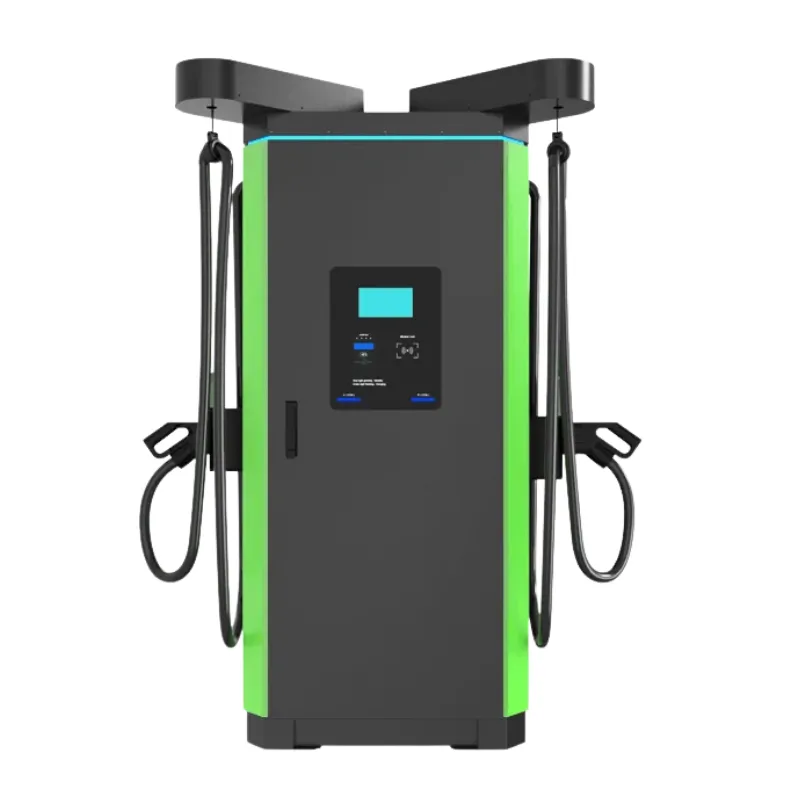
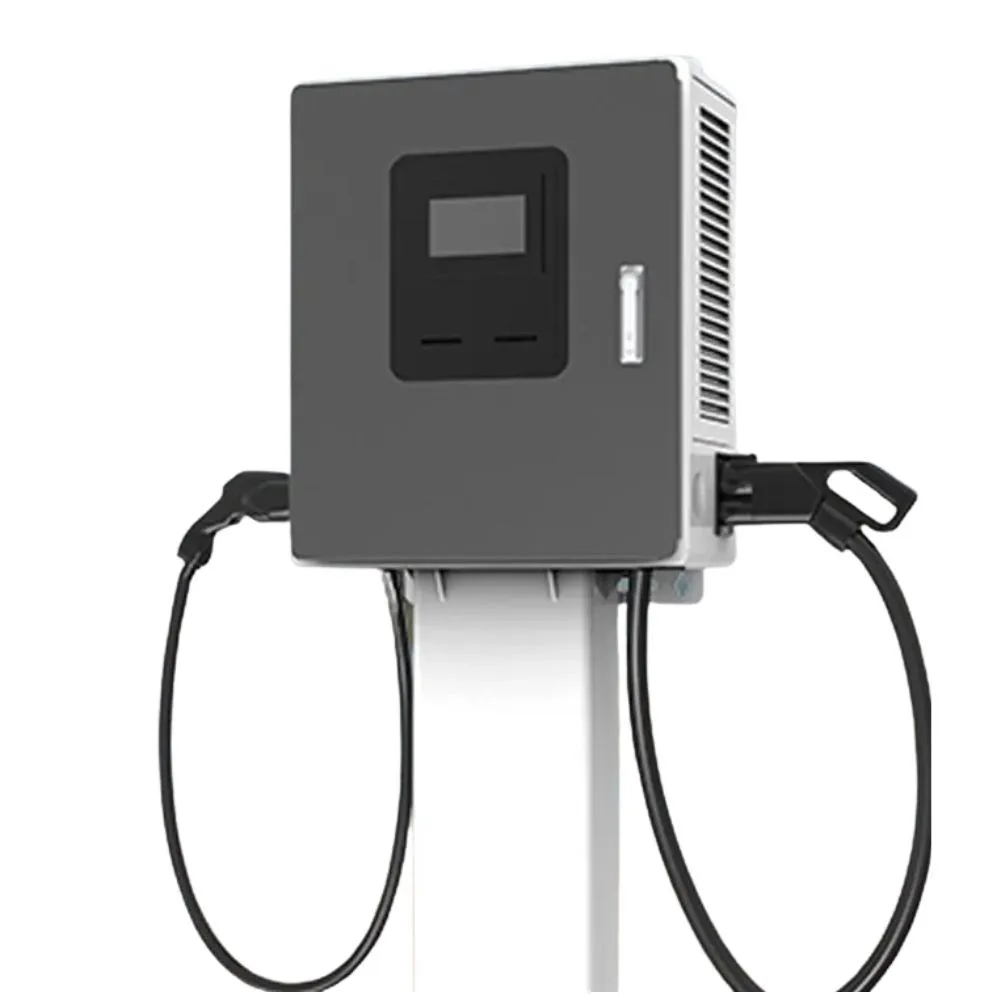
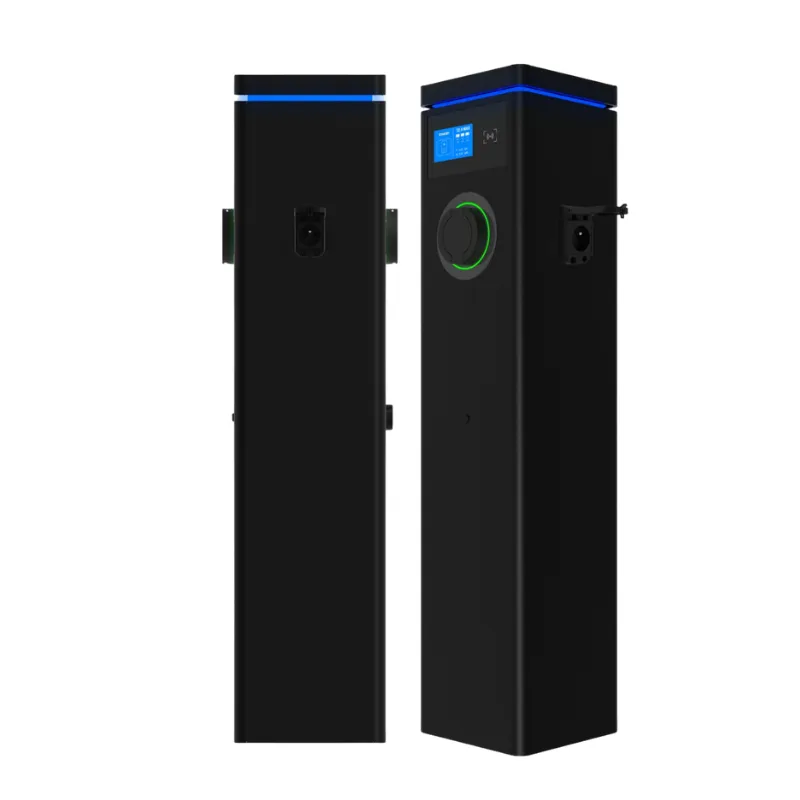
For Latvian secondary-road and depot sites, the HC series (20–60 kW) and the UC series (60–360 kW, dual gun) cover the range, with CPO for hotels and car parks. Equipment sold into the EU needs CE marking and, for billing by the kWh, a MID-certified meter; see standards. We can supply test reports and technical documents to support your CE file and grid application; we do not state that a given model already holds an approval. Our chargers are specified for operation up to +55 °C; for Baltic winters please ask us for the low-temperature rating of the exact model.
Grid capacity calculator
- Spare power for charging
- —
- Input current per charger (400 V)
- —
- Chargers at full power
- —
Spare power = kVA × 0.95 power factor × (1 − margin) − existing peak load. Input current ≈ charger kW ÷ (√3 × 400 V), with power factor and 95 % efficiency added for DC chargers. With dynamic load management more chargers can share the same capacity at reduced power. Always confirm with your electrical engineer and the grid operator.
Frequently asked questions
- How many EV charging points does Latvia have?
- The European Alternative Fuels Observatory counted 2,051 charging points at the end of 2025 (883 AC and 1,168 DC), up from 1,157 a year earlier. About a third of all points are DC at 150–350 kW.
- Is there EU funding for charging stations in Latvia?
- Latvia is one of nine countries in EXPAND-E Cohesion, a CEF Alternative Fuels Infrastructure Facility project with up to EUR 70.58 million EU funding for 150 kW and 350 kW points across several countries (CINEA). Whether a new call is open and what your project would qualify for must be checked with CINEA and the Latvian ministries; we did not find a current national scheme.
- Who connects a charging site to the grid in Latvia?
- The distribution operator for most of the country is Sadales tikls; an application is made per site. We could not verify current connection charges, lead times or the tariff for charging sites, so request a written offer for capacity and date.
- Which connector is required?
- As an EU member, Latvia uses Type 2 for AC and CCS2 for DC. Our chargers also support OCPP 1.6J and 2.0.1 and operate up to +55 °C, which covers Baltic winters at the hot end of the range; confirm the low-temperature rating for your site with us before ordering.
References
- [1]Latvia's electric vehicle market 2025: BEV and PHEV sales, heavy duty. European Alternative Fuels Observatory (European Commission), 3 February 2026.
- [2]Lithuanian Ignitis to invest in electric car charging network in Latvia. LSM English, 13 May 2024.
- [3]EU network of charging stations electrifies long-distance driving. CINEA (European Commission).
- [4]Electric vehicle purchase aid to be available in spring in Latvia. LSM English, 21 January 2022.