Planning guide
How Many Chargers Does a Fleet Depot Need?
How many chargers does a fleet need? Size a depot from kWh per day and the charging window: a 40-van worked example gives 40 ports but under 300 kW.
- Prepared by
- EVCSTAR Engineering Team
- Published
- Reading time
- 5 min
- Sources
- 2 references
At a glance
- AC 6.6 kW, 100 kWh van from empty (NREL 2024)
- about 15 h
- Medium/heavy-duty energy use (NREL 2024)
- 2.4 kWh/mile
- Light-duty energy use (NREL 2024)
- 0.29 kWh/mile
- Our 40-van example, nightly energy
- 2,324 kWh
Key takeaways
- 1Energy per night divided by the charging window gives the average power the depot must supply, and that, not the number of vehicles times the charger rating, sets the grid connection; NREL (November 2024) shows overnight dwell lets a 6.6 kW AC charger refill a 100 kWh van in about 15 hours.
- 2For overnight fleets plan one port per vehicle so every van is plugged in at the same time, then use load management to cap the site draw; in our 40-van example that is 40 ports, 440 kW unmanaged and about 280 kW managed.
- 3Short turnarounds change the answer: a 30-minute AC session at 11 kW adds only 5.5 kWh, so multi-shift fleets need DC ports sized from the energy each vehicle must take in the gap.
- 4Heavier vehicles scale the energy: NREL puts medium- and heavy-duty operation near 2.4 kWh/mile against 0.29 kWh/mile for light-duty vehicles, about eight times as much.
On this page
Short answer: a fleet depot needs one charging port for every vehicle that is parked at the same time, sized by the charging window rather than by the vehicle count; work out kWh per night, divide by the hours you can truly charge, and use load management so the grid connection follows that average instead of the sum of every charger rating.
Start with duty cycle and dwell
The pattern of return, dwell and departure decides the charger type before any arithmetic. Joint Tech’s 2026 guide sorts fleets into four patterns, and its first, overnight return to depot, has a 10 to 12 hour window that suits AC at 7.4 to 22 kW with one port per vehicle. Its multi-shift pattern has 30 to 120 minutes between assignments, where a 30-minute AC session at 11 kW adds only 5.5 kWh, so selective DC at 50 to 150 kW is needed. The 24/7 pattern puts DC at the centre. NREL reaches the same conclusion for vans: its November 2024 report says an Amazon-type delivery van with a 100 kWh battery and 153 miles of rated range takes about 15 hours to fill from empty on a 6.6 kW AC charger, and the report concludes that AC of that kind is sufficient for long overnight dwell but not for midday or en route charging.
| Pattern | Window | Typical charger | Ports |
|---|---|---|---|
| Overnight return | 10 to 12 h | AC 7.4 to 22 kW | 1 per vehicle |
| Multi-shift | 30 to 120 min | DC 50 to 150 kW plus AC | vendor guide: 3 to 6 vehicles per DC port |
| 24/7 operation | irregular | DC 100 to 350 kW | sized from queue and dwell |
| Daytime dwell | working hours | AC, often solar-matched | 1 per vehicle |
Energy per day, then power
Three numbers give the energy: vehicle count, daily distance and kWh per distance, plus charging losses. NREL says light-duty vehicles use about 0.29 kWh/mile on a sales-weighted basis and medium- and heavy-duty vehicles about 2.4 kWh/mile, roughly eight times more, so mixing the two in one estimate misleads. The same report calls smart or managed charging a fundamental part of planning because it reduces peaks and avoids costly grid upgrades. Use your own telematics for kWh per mile; the vehicle’s rated range and battery size, as in NREL’s 100 kWh and 153 miles (about 0.65 kWh per mile), give a starting point for a van.
Then divide: average power equals nightly kWh divided by the hours in which vehicles are actually plugged in. Not every van arrives at the first minute of the window, so use the effective hours, not the clock window.
A 40-van worked example
Forty vans, 80 miles a day each, one 100 kWh pack per van. The inputs below come from NREL’s van figures and are otherwise our assumptions, labelled as such; this is arithmetic, not a customer case.
| Step | Calculation | Result |
|---|---|---|
| Energy per mile | 100 kWh / 153 miles (NREL van) | 0.65 kWh/mile |
| Battery energy per van | 80 miles x 0.65 | 52 kWh |
| Energy from the grid per van | 52 / 0.90 (assumed 90% charging efficiency) | 58 kWh |
| Nightly energy, 40 vans | 40 x 58.1 | 2,324 kWh |
| Effective window | assumed, after staggered arrivals | 10 h |
| Average power | 2,324 / 10 | 232 kW |
| Design power with 20% margin | 232 x 1.2 (margin is our assumption) | about 280 kW |
| Unmanaged peak | 40 ports x 11 kW | 440 kW |
| Time to refill one van at 11 kW | 58.1 / 11 | 5.3 h |
At 400 V three-phase the managed figure is about 400 A per phase against 640 A for the unmanaged peak (kW divided by 1.732 x 0.4 kV, power factor taken as 1). That gap is the reason to use load management, which is also how a depot controls the demand charges explained in our demand charges guide. A caution on figures you may see: Joint Tech’s 100-van example puts nightly energy at 7,000 kWh and a managed peak of 150 to 200 kW, but 200 kW over a 12-hour night delivers only 2,400 kWh, so that managed peak cannot meet the stated energy. Always check that average power times hours covers the energy.
Top-ups and DC ports
Add DC only for the vehicles that cannot wait. For a midday top-up of 25 kWh at 60 kW, charging takes about 25 minutes; add an assumed 10 minutes to park, connect and move, and one 60 kW of output serves about 1.7 vehicles an hour. Multiply by the length of the gap and the number of vehicles that need it. A depot with 40 vans where 10 need a top-up in a 90-minute gap needs roughly 6 hours of DC port time in that gap, which is about four 60 kW outputs. The bay geometry for those ports is in the site layout guide; heavy vehicles need the wider access NREL says they require, because many light-duty bays cannot physically take a truck.
Choosing EVCSTAR equipment for a depot
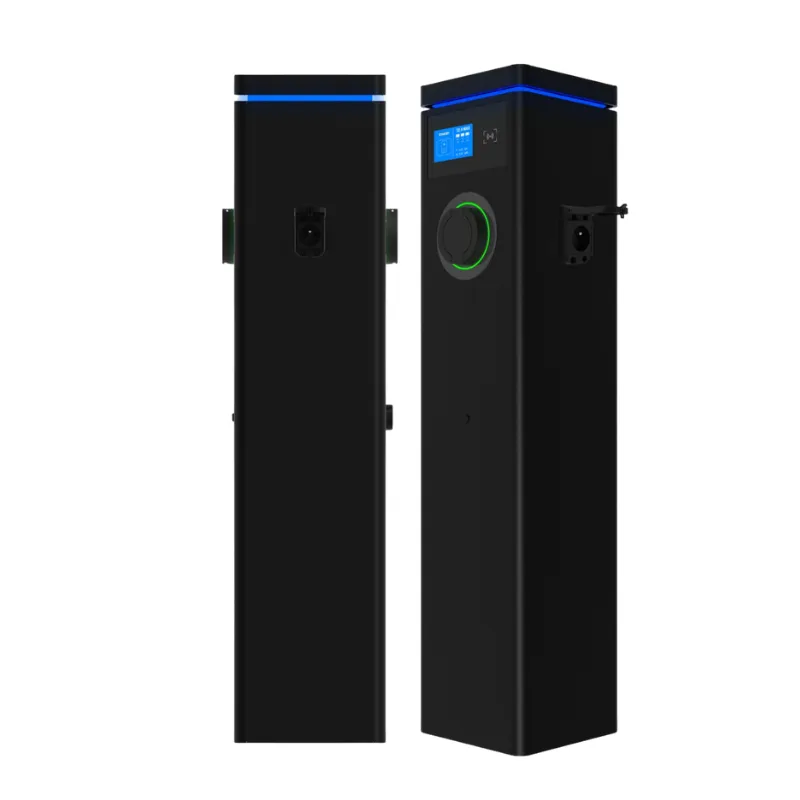
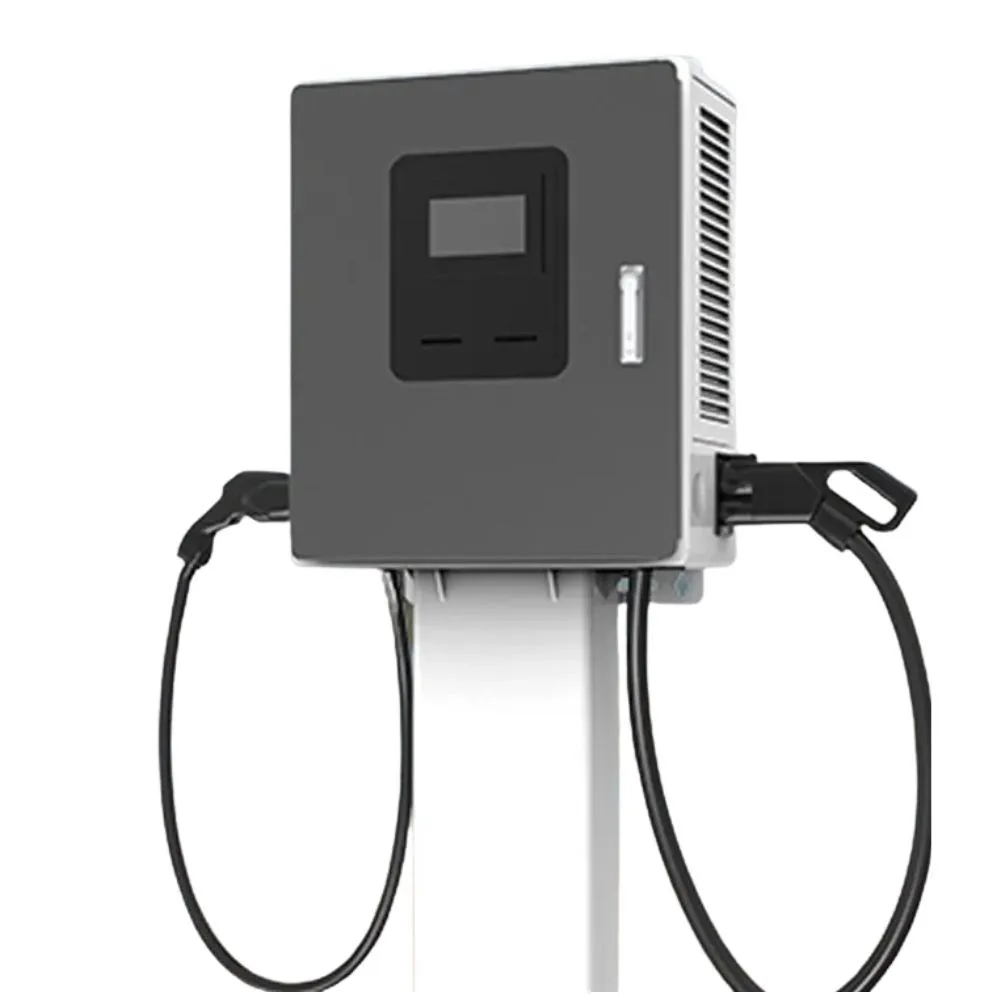
Match the port to the dwell. For the overnight base in the example, 40 ports of 11 kW is 20 units of the CPO series in its 2 x 11 kW, three-phase version (two points per unit), or single-point FE series wallboxes on a wall. The CPO spec lists OCPP 1.6J / 2.0.1 and group load management that shares a site current limit across up to 10 chargers without a back-end, with site-wide control through an OCPP platform. For turnarounds the HC series gives 20 to 60 kW DC on a wall or pedestal at about 93 A per phase for 60 kW. Whether a vehicle accepts 11 kW or 22 kW AC is set by its onboard charger, so check each vehicle model first.
Send the vehicle models, daily distances, arrival and departure times and the available supply capacity through the contact page, and we will reply with a configuration proposal and quotation breakdown. To test the supply side use the grid capacity calculator, and to test the economics use the payback calculator alongside the fleet business case.
Payback calculator
Example values are filled in — replace them with your own quotation, tariff and traffic figures.
- Energy sold per month
- —
- Net margin per month
- —
- Simple payback
- —
Simple payback = total investment ÷ (energy sold × (price − energy cost) − fixed costs), using 30 days per month. Taxes, financing, subsidies and utilisation growth are not included.
Grid capacity calculator
- Spare power for charging
- —
- Input current per charger (400 V)
- —
- Chargers at full power
- —
Spare power = kVA × 0.95 power factor × (1 − margin) − existing peak load. Input current ≈ charger kW ÷ (√3 × 400 V), with power factor and 95 % efficiency added for DC chargers. With dynamic load management more chargers can share the same capacity at reduced power. Always confirm with your electrical engineer and the grid operator.
Frequently asked questions
- How many chargers do I need per vehicle?
- For vehicles that park overnight, one port per vehicle, because they all arrive together and each occupies a port for the whole window. One vendor guide gives 1:1 for overnight return-to-depot fleets and says DC ports serve 3 to 6 vehicles each in multi-shift use. Shared ports work only if vehicles are moved or schedules are staggered, so test it against your dispatch plan.
- Should a fleet depot use AC or DC chargers?
- Use AC where vehicles sit for 8 hours or more and DC where the gap between shifts is 30 to 120 minutes. NREL says AC Level 2 is sufficient for longer overnight dwell but not for midday or en route charging. Most depots mix: AC for the overnight base and a few DC ports for top-ups.
- How big should the grid connection be?
- Start from nightly kWh divided by the hours you can really charge, add a margin for growth and cold weather, and compare it with the connected load of all chargers. Load management lets you size for the first figure. Confirm with the utility, and test options in the grid capacity calculator.
- Which EVCSTAR chargers suit a van depot?
- The CPO series gives two 11 kW or two 22 kW AC ports per unit, which suits an overnight depot, and the HC series offers 20 to 60 kW DC on a wall or pedestal for turnarounds. Send us the vehicle models, onboard charger limits and shift pattern and we will propose a configuration.
References
- [1]Electric Medium- and Heavy-Duty Vehicle Charging Infrastructure Attributes and Development, NREL/TP-5R00-91571 (November 2024), sections 4.1 and 4.2. National Renewable Energy Laboratory (U.S. Department of Energy).
- [2]EV Fleet Depot Charging Guide for CPOs (2026), duty cycle patterns and last-mile delivery section. Joint Tech.