Free tool
EV Charging Time Calculator (DC Fast Charging)
Estimate how long a DC fast-charging session takes: battery size, charger power and the vehicle’s peak acceptance give minutes from your start level to 80 %.
- Prepared by
- EVCSTAR Engineering Team
- Published
- Reading time
- 1 min
- Sources
- —
Key takeaways
- 1Charging time ≈ energy added ÷ effective power; effective power is the lower of the charger output and what the car accepts.
- 2A bigger charger only helps if the vehicle can take the power — many cars peak between 100 and 250 kW.
- 3Sessions slow down sharply above 80 %, so public DC sites plan around 10–80 % top-ups.
Charging time calculator
Estimate = energy added ÷ (lower of charger and vehicle peak power × 0.8). Real sessions depend on battery temperature and the vehicle's charging curve, and slow down sharply above 80 %.
How the estimate works
The calculator takes the energy needed to go from your starting state of charge to 80 % and divides it by an effective charging power. Effective power is the lower of the charger output and the vehicle’s peak DC acceptance, multiplied by 0.8 to reflect that a car does not hold its peak power for the whole session.
| Battery | Charger | Vehicle peak | 10 → 80 % (estimate) |
|---|---|---|---|
| 60 kWh | 60 kW | 100 kW | ≈ 53 min |
| 75 kWh | 120 kW | 150 kW | ≈ 33 min |
| 75 kWh | 180 kW | 150 kW | ≈ 26 min |
| 100 kWh | 360 kW | 250 kW | ≈ 21 min |
Using the result to size a site
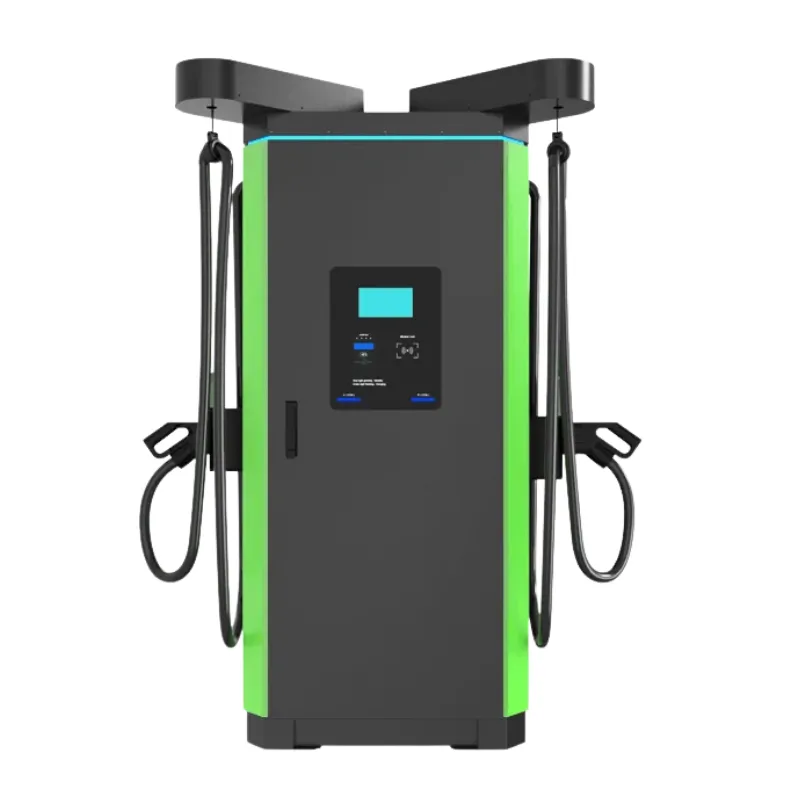
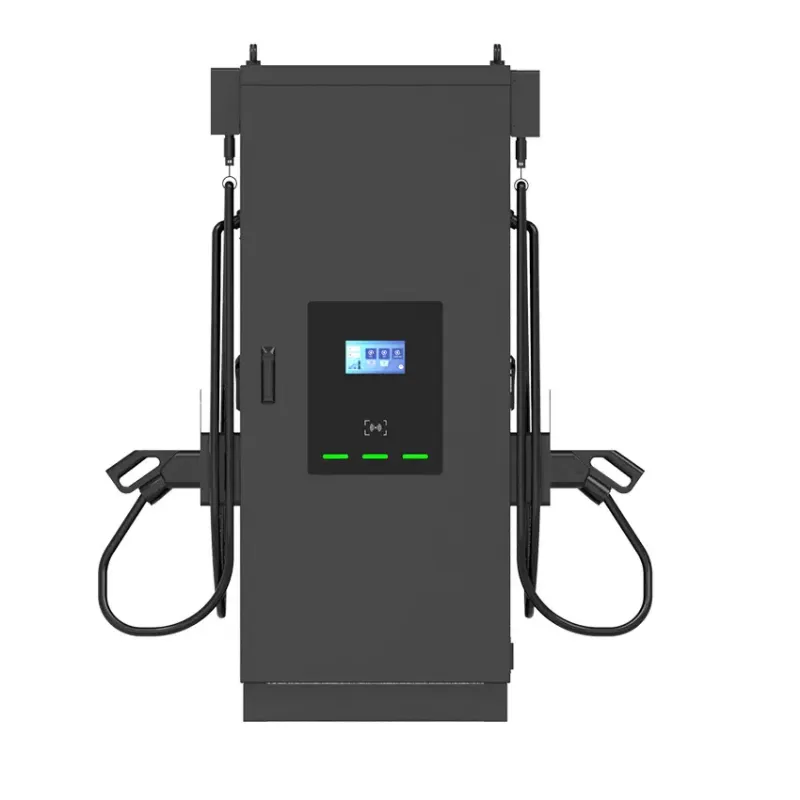
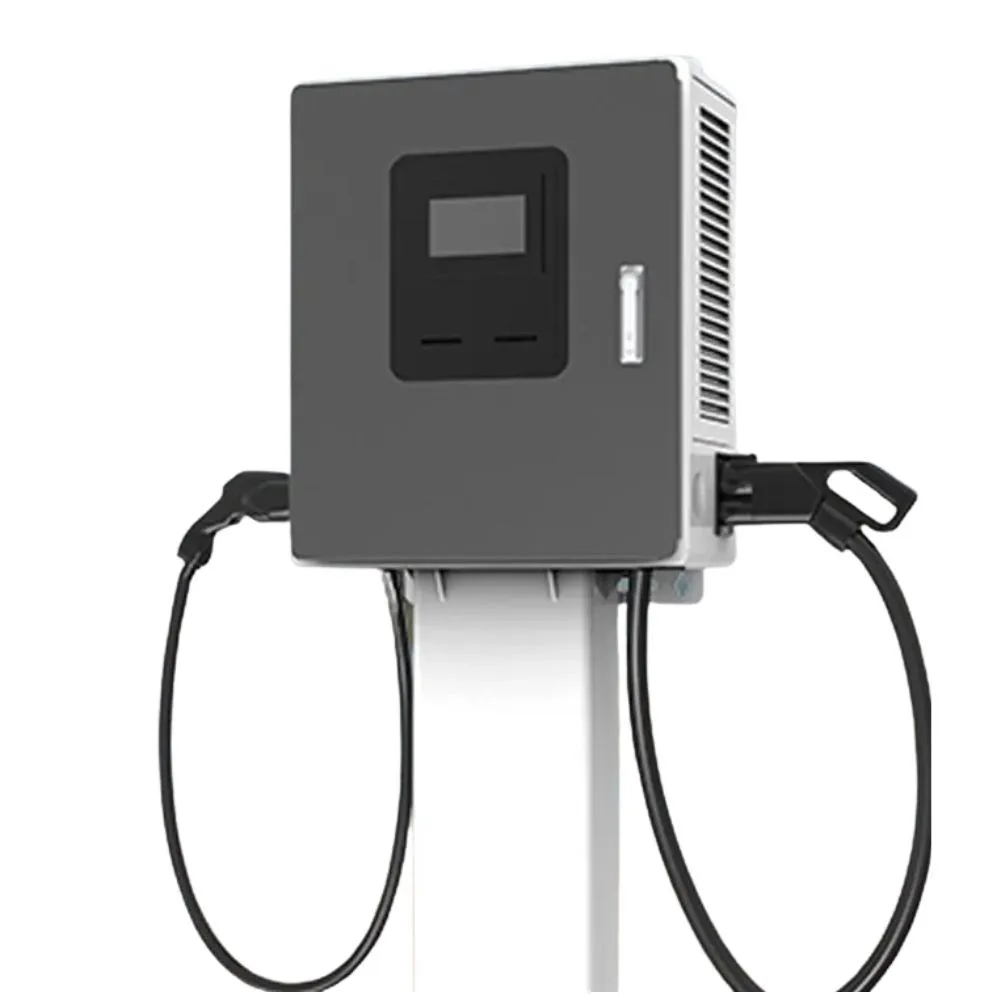
Session time decides how many cars one charger can serve per hour. At a highway stop where drivers want to leave within half an hour, a 180–360 kW dual-gun cabinet such as the UC Series keeps bays turning over. Where cars stay an hour or more, 40–60 kW units like the HC Series deliver a full top-up at a far smaller grid connection.
Frequently asked questions
- Why does charging slow down after 80 %?
- The battery management system reduces current as cells approach full charge to protect them. The last 20 % can take as long as the first 70 %.
- Does a 360 kW charger charge every car faster than a 180 kW charger?
- Only cars that can accept more than 180 kW. For a car that peaks at 150 kW, both chargers deliver the same session time. High power pays off at sites where vehicles with high acceptance stop, or where two cars share one dual-gun cabinet.